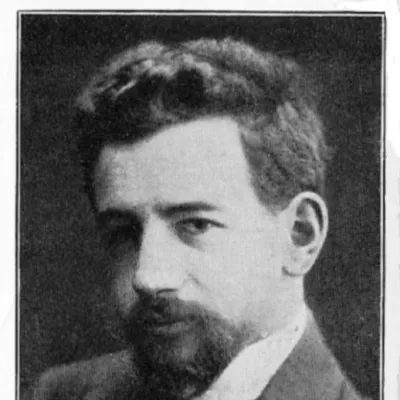
Siegfried Jacobsohn
Human Design Chart
Biography
His first contribution in Die Welt am Montag was published in March 1901. In June 1902 he became editor of the magazine, his contract lasting for three years. In September 1902 he also assumed the role of theatre critic in Berlin for the Viennese daily Die Zeit.
Following a journey through Europe lasting for several months during which he visited Vienna, Rome and Paris he returned to Berlin planning to establish a theatre magazine. The first edition of this magazine, which he named Die Schaubühne, solely specialised in the theatre and was published on 7 September 1905.
From 1913 onwards Jacobsohn gradually opened up the "rag," as he like to call his magazine, to include political topics. In April 1918 he changed the name to Die Weltbühne and developed it into a pacifist forum for the German Left.
After World War I, Jacobsohn promoted the work of Leopold Jessner, the artistic director of the State Theatre in Berlin.
Jacobsohn had an extremely pugnacious personality. He died on 3 December 1926, aged 45. Kurt Tucholsky briefly assumed editorship of Die Weltbühne until May 1927. His task was then taken over by Carl von Ossietzky until the last edition was published on 7 March 1933, when it was banned by the Nazi Party. The archives were confiscated and have subsequently disappeared without a trace.
The Human Design of Siegfried Jacobsohn: Projector 2/4
Projector 2/4 — Design at a Glance
Siegfried Jacobsohn's design inclined towards a focused and penetrating perception. As a projector, he did not have an intrinsic source of life energy from the undefined Sacral Center. Instead, his aura acted like an intense beam of light directed specifically at weaknesses or uncertainties in his surroundings. This configuration allowed him to immediately identify flaws in other people's systems.
The challenge of this design lay in the nature of communication: Directly addressing these deficiencies could be perceived as aggressive or unpleasant by those around him, similar to a bright light shining directly into someone's face. The optimal strategy for him was to wait for an honest and respectful invitation before sharing his insights. Through patience, he could effectively utilize his potential without causing resistance.
If Siegfried Jacobsohn lived according to this principle of waiting for invitations, he would be rewarded with success. If he ignored this approach and instead tried to impose his viewpoint or constantly educate others, it would sooner or later lead to his non-self theme: Bitterness. His energy flow was rhythmic; phases of high activity had to be balanced by necessary rest periods to avoid burnout, as societal structures often did not accommodate these specific needs.
Self-Projected Authority
Siegfried Jacobsohn's design established a deep rooting in identity, characteristic of the Self Authority – a configuration exclusive to projectors. This structure created a particular openness but came with the risk of being distracted by external motoric energies. The central challenge was not to get lost in this receptivity or constantly seek external energy.
His inner truth lay in his identity. Decisions were made through self-conversations or dialogues with others, if invited. Crucial was listening to one's own internal voice and distinguishing the spontaneous self from the calculating mind. This immediate expression revealed his uniqueness to those around him.
Alternatively, he was guided by a physical feeling that drew him geographically or thematically in certain directions. By following this inner attraction and staying true to his direction, he could become an orientation point for others. Here lay his specific potential for success and impact. The defined center of authority carried this responsibility; his intuition had precedence over any rational analysis or external expectations.
The 2/4 Profile — Hermit / Opportunist
Siegfried Jacobsohn was marked by Profile 2/4, which created a constant tension between the need for solitude and the desire for community. He oscillated between Line 2 of the Hermit, requiring time in the
Single Definition — Defined & Open Centers
Siegfried Jacobsohns design inclines towards clear, identity-driven communication. His defined G Center grants him a firm sense of self-identity and direction; he knows where he belongs without needing to force others to follow his path. This inner security flows into his defined Throat Center: His voice speaks not from fleeting impulses or external expectations but from this stable identity. He can express his truth with honesty and clarity, as the source of his words is reliable—he says what fits his essence, not just what his mind conceives at the moment.
At the same time, his chart reveals a high sensitivity to external fields through several open centers. His open Head Center makes him vulnerable to mental pressure and the temptation to seek answers that are not his own; he tends to question whether he is thinking correctly rather than simply listening. The open Ajna Center amplifies this: He absorbs concepts and opinions from his environment without automatically interpreting them as his own truth, making him a mirror for other ideas but also potentially leading to confusion if he identifies with these thoughts.
His open Heart Center lacks consistent willpower in the sense of competition; he is not designed to make promises or prove his worth through performance. Instead, he tends to get caught up in spirals of self-doubt when trying to meet others' expectations. The open Sacral Center also means that he does not have constant generative energy; he takes on the vitality of his environment and can amplify it but risks overexertion as he is not designed to sustain this "borrowed" boost long-term. This configuration shows someone who knows their own direction and articulates it linguistically precisely, yet must remain mindful to avoid getting entangled in the mental, emotional, or energetic fields of others.
Channels for inspiring presence and creative expression.
Siegfried Jacobsohns design points to a tendency towards public, exemplary presence. He showed himself as someone who drew the attention of others through the authentic life of his own individuality and inspired them to express their unique qualities. This effect was not primarily created through verbal explanations but by demonstrating his creative identity.
This dynamic was determined by Channel 1-8. This connection between the G Center and the Throat Center functioned as a public outlet for creative potential and leadership. Gate 1 provided the mutative perspective of self-expression, while Gate 8 enabled contributions to the group. Siegfried Jacobsohn was designed to inspire others to be braver simply through his presence or specific performances. Since this channel does not have built-in social adaptability, it required patience and the development of specific communication skills to wait for the right moment and effectively convey his contribution. His success depended on having his individual dedication recognized and praised by others; only then was the inspiring process complete.
Parallel to this, other energetic streams influenced him. Gate 19 connected him with themes around resources, territory, spirituality within a community, and seeking a partner in a safe environment. Gate 33 brought the necessity of withdrawal and reflection into play; without this pause, experiences would have merely been repeated rather than processed. Gate 44 demanded awareness and responsiveness during interactions, storing transformations in cellular memory, which required willpower. Finally, Gate 24 stood for mental mutation and renewal in the rhythm of the pulse, a process of inner silence and evaluation of personal knowledge. Additionally, Gate 12 in the Throat Center emphasized the influence of emotional mood on communication, often acting poetically or reservedly, shaping the quality of his expressions.
Individual Circuitry — Circuit Signature
Siegfried Jacobsohn's design indicated a tendency towards impulsive, inspiring impulses. He was someone who acted on spontaneous inspirations that directly translated into expression. This configuration came from the Knowledge Circuit, whose core theme is walking one’s unique path and transforming new knowledge. However, in Jacobsohn's case, this circuit was not fully continuous; he only had the Channel of Inspiration (Gate 1–8). This channel connected his Throat Center directly to his Identity Center. This meant that inspiring impulses from the mind (Head) were immediately translated into his voice and expression without long filtering processes. Since he had a Simple Definition, these linked centers formed a clear, coherent energy flow: inspiration met the ability to articulate. It was not a complex web of separate forces but rather a focused line. The general description of the Knowledge Circuit also mentions creative flashes or emotional waves from other channels and centers like the Solar Plexus; however, these were not activated in Jacobsohn and thus did not form part of his direct energetic experience. His expression was primarily marked by the direct coupling of inspiration and voice, a mechanism that fostered quick intuitive responses that drew immediately on individual identity and were carried outward.
Right Angle Cross of the Four Ways 4
Siegfried Jacobsohn's design carried the imprint of the right cross of the four paths, a configuration that points to a deep connection with spiritual or metaphysical dimensions. This structure suggested that his innermost self was driven by a search for higher meaning and hidden connections. In Human Design, this cross often marks personalities whose life path is not primarily defined by material achievements but rather by the pursuit of knowledge beyond the visible.
For Siegfried Jacobsohn, this likely meant an internal stance always striving to penetrate the surface of things and understand the underlying principles. It was a deeply rooted need to grasp the essence of reality, not just intellectually, but on an existential level. This configuration shaped his way of perceiving the world: less as a place of mere action, but as a field full of symbolic and spiritual significance. His energy aimed at uncovering these hidden layers and perhaps bringing them into a form that could touch or inspire others without claiming universal truth.
Saturn Return · Uranus Opposition — Life Cycles
Siegfried Jacobsohn's design laid a tendency towards structural breaks and necessary realignments, often accompanied by a feeling of estrangement from previous conditions. This energy demanded a detachment from the established status quo to find a new, more authentic expression. The Uranus aspect marks in this context not only sudden changes but also the compelling necessity to shed old identities or roles when they contradict rather than serve the true nature of the design.
In 1918, at the age of 37, this energetic shift became concrete: The stage was renamed Die Weltbühne. This career event was not an arbitrary step but a visible manifestation of the internal dynamics driven by Uranus influence. The renaming signaled an expansion of horizons and a demarcation from earlier boundaries that may have been felt as too confining. Siegfried Jacobsohn showed himself in this phase to be someone ready to break established structures to meet broader, more contemporary demands. The energy of Uranus acted here as a catalyst for a necessary transformation shifting the focus from a mere stage to a world-encompassing perspective. This change underscored his design's ability to respond to societal shifts with clear new forms rather than clinging to old patterns.
Projector · Self-Projected Authority — Synthesis
Siegfried Jacobsohn lived a life deeply marked by the search for authenticity and the expression of a unique perspective. His design as a projector, combined with authority in self and the profile of natural talent/networker, points to someone destined to recognize patterns and make these insights accessible to others (Channel 1-8). The ability to see and communicate the potential of others was complemented by the need to regularly withdraw to gain inner clarity (Line 2), before reengaging with his community (Line 4). This oscillation between isolation and connection shaped his approach to the world.
Central to Jacobsohn's essence was a paradox of openness and the need for self-assertion. As a projector, he strongly perceived the energy of others, making him vulnerable to external influences. Simultaneously, the knowledge of his own inner truth - spontaneously expressed (authority in self) - propelled him to boldly express new perspectives and initiate changes (Channel 1-8). The Uranus opposition in his cycle, marked by a name change, indicates that he repeatedly turned away from conventions to realize his vision.
1 Defined Channel
Incarnation Cross - Right Angle Cross of the Four Ways 4
Solar Return
The Solar Return shows the moment when the sun returns to its exact birth position - your personal solar year.
Life Cycles
Discover the life cycles with a detailed triple view (birth chart, cycle chart, composite).
Human Design Profile
- Type
- Projector
- Strategy
- Wait for the respectful invitation
- Authority
- Self-Projected Authority
- Profile
- 2/4 - Hermit / Opportunist
- Definition
- Single Definition
- Incarnation Cross
- Right Angle Cross of the Four Ways 4
- Date of Birth
- 28.01.1881 17:00
- Place of Birth
- Berlin, Germany
Frequently Asked Questions
What was Siegfried Jacobsohn's Human Design type?
What Profiles did Siegfried Jacobsohn have in Human Design?
What Authority did Siegfried Jacobsohn have?
What incarnation cross did Siegfried Jacobsohn have?
When was Siegfried Jacobsohn born?
Discover your own Human Design
Are you also a Projector? Find out in a personal reading how to unfold your leadership qualities and recognize the right invitations.
More Personalities
Back to overviewSissy Spacek
Alain-Fournier

Anémone
Angeli

Ann-Margret

Bourvil