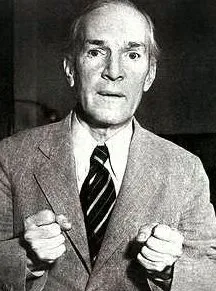
Upton Sinclair
Human Design Chart
Biography
The Sinclair family had its roots in the ruined Southern aristocracy. His father, a liquor salesman, was an alcoholic, and his disease coupled with the family’s poverty overshadowed much of Upton’s early life. However, he spent part of his childhood living with his wealthy grandparents, and the extremes that he experienced reportedly influenced him to later become a socialist. In 1888, his family moved to New York. A religious boy who loved literature, Upton did well academically, and when he was 14, he entered New York City College. At 15, he began writing dime novels and ethnic jokes to pay for his studies. In 1897, he enrolled at Columbia University, again paying his way by writing.
His first novel, "Springtime and Harvest," was published in 1901, followed in 1903 by "The Journal of Arthur Stirling." Three more novels were published between 1903 and 1906, but all sold poorly. His fame came with the publication of "The Jungle," and the proceeds from its sales were used to establish a commune for left-wing writers called the Helicon Home Colony; within a year, it was destroyed by fire. Now nationally known, Sinclair ran for Congress in New Jersey on the Socialist Party ticket but was unsuccessful. Disagreements over the cause of World War I eventually split the Party, and Sinclair resigned.
In 1914, he moved to Croton-on-Hudson, New York where he joined a community of radicals, but the following year, he relocated again, this time to Pasadena, California. He continued to write politically based novels as well as books about religion and education through 1924.
Human Design Analysis: Upton Sinclair as Manifesting Generator 6/2
Manifesting Generator 6/2 — Design at a Glance
Upton Sinclair revealed himself as a person who, through his configuration as a manifesting generator, possessed hybrid energy. He had the constant power of a generator but reacted with the lightning-fast expressiveness of a manifestor. This connection allowed him to skip steps and quickly pull things into his life.
This speed, however, brought two specific challenges. First, he tended to overlook important stages, which led to him having to return later to fill in missing pieces. This could quickly lead to frustration as the expected smooth process was disrupted. Second, he reacted to numerous impulses simultaneously and began multiple projects at once. Without strict adherence to his strategy—waiting and responding to life—his creative drive threatened to turn into overwhelm.
Crucial to his satisfaction was the constant check-in with his Sacral Center. Only when this inner center gave a clear "yes" at every step could he effectively use his energy. In this state of playful engagement, it was even beneficial for him to work on various tasks in parallel rather than focusing on a single thing. His productivity thus depended on whether he stayed in the flow of reaction and consulted his inner authority.
Emotional Authority
Upton Sinclair revealed himself as someone who did not make decisions in the heat of the moment, but rather subjected them to a necessary period of maturation. His design featured emotional authority, meaning that his defined Emotional Center was the internal decision-making authority – regardless of which other centers were also defined. This configuration subjected him to a constant wave of emotional highs and lows. The world always appeared colored by his current mood: the same thing could be perceived as inspiring in one moment and deeply negative in the next.
For his design, however, the immediate feeling was only a snapshot, a first impression that did not yet represent the truth. Quick, spontaneous actions based on such emotion could have negative consequences. Instead, his mechanics required patience. He had to take the time to let decisions mature, often by going over them multiple times overnight. Only when the intense feelings subsided and emotional distance was gained did clarity and calmness set in. This process was essential for long-term, life-defining decisions. Upton Sinclair learned to properly take his time and ask himself multiple times before acting. Only in this way could he ensure that his choice was based on deeper insight and not on temporary mood swings.
The 6/2 Profile — Role Model / Hermit
Upton Sinclair's Design set a tendency towards deep introspection and later wisdom. In his youth, before the age of 30, he acted as a role model, learning through trial and error. This phase was marked by experiments and withdrawal after failures, a typical pattern of Line 6/2 in its early expression. He sought his own experiences to find his role.
Around age 30, the sixth line activated. Sinclair metaphorically retreated into a "cave" to reflect on his previous experiments with distance. This period served for healing and deep self-awareness. The mechanics describe here the transition from mere experimenting to reflection. The sixth line strives for reason, justice, and securing a defensible world for future generations. It controls emotions to set conditions for relationships and children.
The second line brought extremes and eccentricities into his rhythm. From the outside, his actions could appear bizarre, yet they created a valuable range. In the "fall" of this line, his natural actions were sun-oriented, while he made earth-bound aspects appear artificial. From this cave of reflection, he later emerged as a wise person. Others sought his proximity to partake in his life wisdom and learn the ability for deep introspection. His design showed how personal extremes and rational control can contribute to general world improvement.
Single Definition — Defined & Open Centers
Upton Sinclair's Human Design shows a tendency towards a powerful, willful expression that draws from a clear inner identity and immense vitality. His defined Throat Center, linked with the Heart and Sacral Centers, enabled him to translate his intentions and energy directly into the world. He had the ability to say and do what he wanted, supported by the generative power of his Sacral motor. This configuration marked him as someone who could easily and honestly express his truth, as long as he listened to his inner response.
At the same time, a complex emotional dynamic was evident. His defined Solar Plexus acted as an inner authority, meaning he did not make decisions in the moment but had to wait for the emotional wave to gain clarity. This need to go through emotions before acting stood in contrast to his general sense of urgency.
On the other hand, Upton Sinclair was vulnerable to external influences through open Centers in Head, Ajna, Spleen, and Root. His open Head and Ajna Centers made him receptive to mental inspirations and concepts from the environment, which he should not interpret as his own, constant truth. He tended to be swayed by doubts or questions from others if he did not trust his emotional authority. Additionally, his open Spleen Center was sensitive to health and survival signals from the environment, leading him to cling to people or situations that gave a false sense of security. The open Root Center absorbed external stress, which could pressure him to act faster than his own energy allowed. These open Centers required a conscious distance from conditioning fears and mental noise to not overload his defined strength.
Channels for intimacy, reflection, change and community.
Upton Sinclair understood human interaction through the lens of intimacy, reflection, and communal exchange. His design inclined him to experience relationships not just as emotional connections but as deep, transformative processes.
The Channel of Union 59-6 rooted in a powerful connection between sexuality and emotional wave. This configuration promoted intensity in interpersonal relationships that could be both personal and fruitful. Sinclair understood that true intimacy required patience – a process strengthened by waiting for emotional clarity. His ability to quickly enter the aura of others allowed him to create confidentiality and nourish creative endeavors.
The Channel of the Lost Son 13-33 led him to collect experiences and later reflect and share them. As a natural listener, he stored information and secrets, which he then transformed into deeper truths. This reflective ability helped him understand complex societal patterns and share these insights with others.
The Channel of Transience 36-35 drove him to seek new experiences, often through creating crises or changes. This restless desire for emotional depth led him to live life intensely and share these experiences as wisdom.
The Channel of Community 37-40 emphasized the importance of cooperation and mutual support. Sinclair understood that successful communities rested on clear agreements and the will to make progress together. His ability to build bridges between individuals contributed to finding a respected place in a group.
Additionally, Gates like 15 (collective behavior), 10 (integration), and 7 (leadership) shaped his way of moving in society. This combination of intimacy, reflection, experience-seeking, and community-building marked Sinclair's unique path through life.
Tribal Circuitry — Circuit Signature
Upton Sinclair showed a close connection between emotion, communication, and identity. His design linked the Throat, Solar Plexus, and Identity Centers directly. This shaped a cyclical way of finding meaning: he reflected on past experiences to gain emotional insights that he shared with others. The Channels 'Lost Son' and 'Transience' drove this process, which flowed in waves and was based on learning from history.
Parallel to this, the Ego Circuit worked through the Channel 'Community'. This linked the Heart and Solar Plexus Centers, fostering mutual support and cooperation. Since there was no direct link to the Sacral Center, pauses were necessary to build resources for the common good. It was about fair giving and taking.
Furthermore, the Archer Circuit was active, specifically through the Channel 'Union'. This linked the Sacral with the Solar Plexus Center. This connection brought primal energies of protection, care, and preservation of the family. It served survival and the nurturing of one's genetics, linked with the life force of the Sacral Center.
Although Upton Sinclair had a simple definition, these Centers formed a cohesive group. Energies did not flow in isolation but as an integrated system that connected emotional depth, social cooperation, and instinctive protection. This created a personality strongly oriented towards interpersonal bonds and sharing life experiences.
Left Angle Cross of the Plane 2
Upton Sinclair's Human Design profile featured the Left Cross of Level 2. This configuration shaped a fundamental inclination to engage with deeper, often unseen forces that determine human destiny and societal structures. It was not a superficial observation but an inner drive that compelled him to penetrate the hidden mechanisms of power and suffering.
The Left Cross of Level 2 connects specific energy centers that foster an intense search for the truth behind the facades. Those with this configuration tend to see through the illusions of the surface and instead examine the raw, often painful realities. For Upton Sinclair, this was not an abstract philosophy but a living experience. His attention focused on the gap between what was publicly presented and what actually occurred in the shadowy corners of society.
This energetic alignment imparted a strong sense of responsibility, not just to recognize injustices and systemic flaws but also to name them. It was a stance of relentless honesty towards himself and the world. The Level 2 of this cross added an additional sharpness to this perception, enabling him to identify the structural causes of problems rather than just dealing with symptoms. His path was thus marked by a persistent effort to understand the hidden laws of life and society and integrate these insights into his actions and work.
Saturn Return · Uranus Opposition · Chiron Return · 2nd Saturn Return — Life Cycles
Upton Sinclair's creative and political impulses were channeled through clear temporal structures. His design indicated a tendency to take decisive steps at specific astrological nodes. In 1906, at the age of 28, his first Saturn Return occurred. This cycle often marks the transition from an experimental phase to a more stable responsibility. That year, Doubleday, Page & Company published *The Jungle*, which immediately became a bestseller. His design supported the condensation of years of groundwork into a concrete, public result.
Later, in 1919 at the age of 41, the Uranus Opposition came into play. This configuration often demands a reassessment of established structures and the courage to take new paths. Sinclair published *The Brass Check*, which redirected his career and institutionalized his critical stance.
His second Saturn Return in 1934, at the age of 56, brought another phase of consolidation and public responsibility. Sinclair switched to the Democratic Party and won its nomination for the California gubernatorial elections. This step aligned with the energy of the second Saturn Ring, which often requires the integration of personal convictions into larger societal roles. Sinclair's life demonstrated how these cyclical energies structured his literary and political ambitions and led to measurable successes.
Manifesting Generator · Emotional Authority — Synthesis
Upton Sinclair lived a life marked by a profound drive for understanding and transformation. The combination of sacral energy (Sacral Center) and emotional authority points to a person who is constantly driven by inner impulses but must filter these through intense emotional processing. This inner dynamic, combined with the ability to effect change through communication and action (defined Throat Center), led to a lifestyle characterized by swift, impulsive actions followed by phases of deep reflection and evaluation. The Channel of Union also indicates a strong connection to intimacy and a deep search for authentic relationships, which nourished his creative essence.
A central paradox in Sinclair's design lay in the tension between the need for quick action – typical of the manifesting aspect – and the necessity to allow decisions to mature through the emotional wave. This discrepancy led him to initiate and set things in motion (as evidenced by events in 1906 and 1934), but also to retreat and reassess his actions repeatedly (Line 6 in the Profile). The cycles showed that success and career often went hand in hand with phases of intense inner struggle, pointing to a life marked by constant transformation and a quest for meaning.
4 Defined Channels
Incarnation Cross - Left Angle Cross of the Plane 2
Solar Return
The Solar Return shows the moment when the sun returns to its exact birth position - your personal solar year.
Life Cycles
Discover the life cycles with a detailed triple view (birth chart, cycle chart, composite).
Human Design Profile
- Strategy
- To respond - wait for something to respond to
- Authority
- Emotional Authority
- Profile
- 6/2 - Role Model / Hermit
- Definition
- Single Definition
- Incarnation Cross
- Left Angle Cross of the Plane 2
- Date of Birth
- 20.09.1878 09:00
- Place of Birth
- Baltimore, MD, United States
Frequently Asked Questions
What was Upton Sinclair's Human Design type?
What Profile did Upton Sinclair have in Human Design?
What Authority did Upton Sinclair have?
What incarnation cross did Upton Sinclair have?
When was Upton Sinclair born?
Discover your own Human Design
Are you also a Manifesting Generator? Find out in a personal reading how to unfold your multi-talents and direct your energy wisely.
More Personalities
Back to overviewAldair

Alizée

Angeli

Arletty
Artus

Balthus