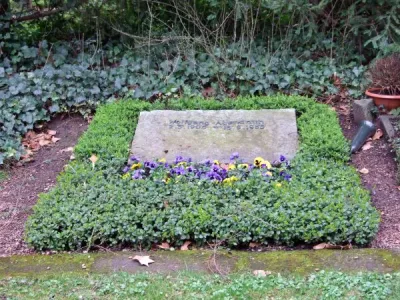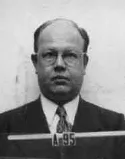
Willy Fowler
Human Design Chart
Biography
Fowler was the doctoral advisor at Caltech for Donald D. Clayton, who became the leader of the next generation of nuclear astrophysicists.
Willy Fowler was a lifelong fan of steam locomotives, and owned several working models of various sizes. He died on 14 March 1995, aged 83, in Pasadena, California.
The Human Design of Willy Fowler: Reflector 3/6
Reflector 3/6 — Design at a Glance
Willy Fowlers design inclined him towards the highest receptivity to surrounding energy. As a Reflector, he lacked defined centers, meaning that constant, personal energies were absent from his life. Instead, he acted as a mirror of humanity and perceived impulses from his environment and forces of nature—from seasons to planetary constellations—especially intensely. This configuration shaped his lifestyle: It was important for him to live in harmony with natural cycles. For significant decisions, he waited at least one month, or one lunar cycle. This strategy allowed him to find people and spaces that suited him well. When living according to his design, he could observe freely without attachment and be rewarded with a feeling of joyful surprise. Deviations from this path often led to deep, lasting disappointment about himself or the state of the world. His essence thus did not show through fixed structures but rather through the ability to reflect and respond to the current state of his surroundings.
No Inner Authority
Willy Fowler lacked an internal physical authority—a rare condition that fundamentally shaped his decision-making process. Instead of relying on a firm inner compass, he sought orientation in exchanges with other people. This openness allowed him to view issues from numerous perspectives and activate latent potentials through energetic interactions in his open centers.
Evaluating this multifaceted information was a complex process requiring time and solitude. Willy Fowler had to learn to sit alone to distill the essence from the mass of impressions. Only then could he distinguish what made sense and truly belonged to him. Over time, he developed the ability to filter out the essential elements and structure them meaningfully—his specific capital for success as a Projector.
A key aspect for him was being in an environment where he felt comfortable. There, he met the right people with whom he could confidently discuss decision-making processes. This deep exchange sharpened his sense of what was right for him and helped him refine his unique intelligence without external pressures.
The 3/6 Profile — Martyr / Role Model
Willy Fowler revealed himself as someone who throughout his life oscillated between playful experimentation and a quest for wise overview. His design as Profile 3/6 clearly divided his development into two parts: In the first three decades, he primarily acted from Line 3, driven by the desire to find his role through trial and error. This phase was marked by curiosity and a certain lightness, but it also carried uncertainty about where these experiments would lead.
Only with the first Saturn return, around age thirty, did his focus fundamentally shift. Line 6 became active and prompted him to withdraw to reflect on accumulated experiences. Willy Fowler henceforth carried both youthful playful joy and an adult analytical perspective within himself—similar to a person embodying their eight-year-old and eighty-year-old selves simultaneously.
Especially influential was the 7.3 line: It challenged him to critically question every institutional order and work out leadership roles through personal experimentation rather than conforming to existing structures. Over time, this could lead to skepticism towards established authorities. In his later years, around age fifty, these experiences coalesced into unique wisdom. Willy Fowler thus became a role model whose charm and deep understanding of human connections inspired others without falling into rigid patterns.
No Definition — Defined & Open Centers
Willy Fowler's design stood out due to the complete absence of defined centers - a so-called 'Open Body' design. This meant that he lacked a constant internal energy source for willpower, emotional stability, or mental clarity, instead functioning as a sensitive receptor of his environment. His open Head Center and Ajna Center made him vulnerable to mental pressure and confusion; he tended to engage with questions that were not his own and often sought external inspiration to find focus rather than relying on inner certainty.
The undefined G Center shaped his relationship to identity and direction: Willy Fowler had no fixed self-image but reflected the energies of those around him. He did not actively seek a life path, instead waiting to be initiated through correct places and relationships. His open Heart Center led to frequent pressure to prove his worth or make promises he could not keep due to a lack of constant willpower energy - a classic conditioning cycle of non-self.
His open Sacral Center meant an unstable energy flow; he was no source of persistent work effort but absorbed and amplified the energy of his environment, leading to exhaustion under overload. The undefined Solar Plexus Center made him a mirror for foreign emotions; he picked up moods without identifying them as his own and often avoided confrontation out of fear of emotional turbulence.
His open Spleen Center made spontaneous decisions risky because intuitive perception could be skewed by fears or false conditioning. Finally, his open Root Center absorbed external stress and adrenaline, making him vulnerable to chaos and burnout when trying to escape environmental pressure rather than trusting his inner authority. Willy Fowler lived in a state of maximum permeability, whose challenge was not to merge with the energies he absorbed.
Channels & Gates
Willy Fowler exhibited a pronounced inclination towards leadership and the need to project future-oriented patterns. This attitude stemmed from Gate 7, which in Human Design embodies the role of the leader personality and together with Gate 31 forms Channel Alpha. This channel drove him to acknowledge societal hierarchies as necessary frameworks and test his visions through experiments. Simultaneously, he had the ability to anchor experiences in collective memory. Gate 13 acted like a rear-view mirror: it gathered secrets and stories to reflect them within the context of time. This fostered Fowler's deep sense of purpose and awareness of human progress continuity, anchoring his collaboration with others on a level of shared humanity.
Alongside this structural and historical perspective, he possessed strong potential for individual creativity. Gate 1 represented unique, creative mutation and emphasized the here and now. It allowed him to create new things without limitations, always based on the right timing. As an externalizing role, he acted directly from this individual perspective. This was complemented by Gate 2, which defined receptivity as the basis of every reaction. This gate identified mutations as a foundation for new evolutionary directions and enabled him to redirect outer changes into meaningful channels. While other gates offered various perspectives, Gate 2 marked the single correct point of adaptation. Together, these elements formed a design that combined leadership with historical depth, spontaneous creativity, and receptive evolution.
Circuit Signature
Willy Fowler's design was characterized by fundamental openness. With no centers defined and no channels existing, he lacked any fixed energetic structure in Human Design. This did not mean he was empty or passive; rather, he possessed the full spectrum of human possibilities without being restricted by predefined patterns. His nature resembled a mirror: he could take in, reflect, and understand every situation, person, and energy without claiming it as his own 'truth.' This configuration allowed him to step into various roles deeply and empathize with others' perspectives. However, lacking an internal, automatic authority or constant energetic flow for security, decision-making often proved difficult for him since he lacked a compass needle guiding him directly from within. Instead, he had to learn to react to external signals and be guided by his intuition rather than planning from the mind. His strength lay in his ability to act as a neutral observer who could diffuse conflicts through understanding without taking sides. He was a master of adaptation, absorbing and transforming the energy of his environment. This flexibility made him an ideal mediator between different worlds since he himself did not hold rigid beliefs that might repel others. His life unfolded less according to a fixed plan than as a series of reactions to what came his way - always open to new possibilities, free from the burden of forcing a specific outcome.
Right Angle Cross of the Sphinx 3
Willy Fowlers Design carried the imprint of the right Sphinx 3 Cross. This configuration combined a deep, often unconscious connection to the collective subconscious with a specific kind of perception and interaction. The name "Sphinx" points towards the mysterious; Willy Fowler delved into the enigmatic, hidden layers of human existence through this element. As part of the "right" side of this structure, his focus was less on actively shaping or consciously directing events but rather on receiving and processing impulses from this deep reservoir.
The Sphinx 3 represents collective memory and archetypal patterns that permeate humanity. Willy Fowler thus revealed himself as someone who felt these underground currents. His way of being was marked by a certain gravity – not in a negative sense, but as an anchoring in what is old and enduring. He served as a channel for these ancient wisdoms without necessarily having to intellectually decipher them. The mechanics of this cross mean that the energy of the subconscious directly flowed into his experiential world. Willy Fowler lived in constant contact with what goes beyond individual selfhood. It was a passive yet intensive participation in the great whole. His presence was characterized by this quiet, deep resonance with collective patterns of past and present.
Saturn Return · Uranus Opposition · Chiron Return · 2nd Saturn Return — Life Cycles
Willy Fowlers Design showed a tendency towards profound analytical condensation. This structure already manifested during his first Saturn Return cycle, often marking the consolidation of earlier efforts. In 1936, at age 25, Fowler successfully earned his doctorate in nuclear physics from the California Institute of Technology (Caltech). This academic success was no coincidence but aligned with the typical dynamics of this time point: years of groundwork condensed into a solid, recognized result.
Later, his chart indicated capacity for comprehensive fulfillment of personal purpose during the Chiron Return cycle. This period functions in Human Design mechanics as a phase of bloom, where the Incarnation Cross – assuming strategy and authority were observed – fully unfolds its effect and meaning becomes experiential. In 1957, at age 46, Fowler published the groundbreaking work "Synthesis of the Elements in Stars." This publication was not isolated but marked the peak of a long developmental line. It documented the moment when his specific life task crystallized and shaped his enduring contribution to science. The mechanics of his design thus supported both early structural anchoring as well as later content completion.
Reflector · No Inner Authority — Synthesis
Willy Fowler was an open reflector whose life was characterized by deep resonance with his environment. Without defined centers, he intensely perceived the energy of others and nature – a capacity that made him a mirror image of external influences. This openness manifested in his experimental drive (Line 3) until around age 30, a time of testing and seeking experiences. Later, with the activation of Line 6, he increasingly found a withdrawn space for reflection and synthesis of these collected impressions. Thus, he lived a life marked by constant adaptation to the flow of environment and integration of diverse perspectives, rewarded by moments of joyful surprise.
A central paradox in his design lay in the interplay between openness and the need for guidance (Gate 7). As a reflector, he did not have a constant inner direction, yet Gate 7 pointed towards a natural ability to recognize patterns and guide others. This likely led to an internal tension: the desire to point a way without having a firmly defined inner authority. He tested future perspectives through experiments (Channel Alpha), always mindful of reflecting and mirroring the energy of the moment – a life between letting be and shaping possibilities.
Incarnation Cross - Right Angle Cross of the Sphinx 3
Solar Return
The Solar Return shows the moment when the sun returns to its exact birth position - your personal solar year.
Life Cycles
Discover the life cycles with a detailed triple view (birth chart, cycle chart, composite).
Human Design Profile
- Type
- Reflector
- Strategy
- Wait a lunar cycle (approx. 28 days)
- Authority
- No inner authority - learn more
- Profile
- 3/6 - Martyr / Role Model
- Definition
- No Definition
- Incarnation Cross
- Right Angle Cross of the Sphinx 3
- Date of Birth
- 09.08.1911 13:15
- Place of Birth
- Pittsburgh, PA, United States
Frequently Asked Questions
What was Willy Fowler's Human Design type?
What profile did Willy Fowler have?
What authority did Willy Fowler possess?
What incarnation cross did Willy Fowler carry?
When was Willy Fowler born?
Discover your own Human Design
Are you also a Reflector? Find out in a personal reading how to find the right environment and understand your unique mirror effect.
More Personalities
Back to overviewBaekhyun

Jihyo

Nadar
Rune Aanderaa

George Abell

Wolfgang Abendroth