
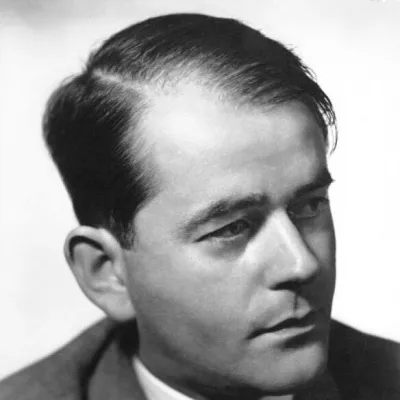
Albert Speer
Human Design Chart
Biography
An architect by training, Speer joined the Nazi Party in 1931. His architectural skills made him increasingly prominent within the Party, and he became a member of Hitler's inner circle. Hitler commissioned him to design and construct structures, including the Reich Chancellery and the Nazi Party rally grounds in Nuremberg. In 1937, Hitler appointed Speer as General Building Inspector for Berlin. In this capacity he was responsible for the Central Department for Resettlement that evicted Jewish tenants from their homes in Berlin. In February 1942, Speer was appointed as Reich Minister of Armaments and War Production. Using misleading statistics, he promoted himself as having performed an armaments miracle that was widely credited with keeping Germany in the war. In 1944, Speer established a task force to increase production of fighter aircraft. It became instrumental in exploiting slave labor for the benefit of the German war effort.
After the war, Speer was among the 24 major war criminal defendants charged by the International Military Tribunal for Nazi atrocities.
What does Generator 6/3 mean for Albert Speer?
Generator 6/3 — Design at a Glance
Albert Speer's design revealed a tendency towards extreme endurance and strength. As a Generator, he had plenty of sacral energy, which made him robust and persistent like a workhorse – provided this power found the right outlet. His life force was not released through spontaneous initiatives but responded to signals from the outside world. The motto of his design was: do not initiate, wait until an inner signal gives a clear 'yes' before acting with full intensity.
This mechanism carried two specific risks for him. If he tackled tasks that did not give him intrinsic joy, he wasted his reserves and tended towards exhaustion. Conversely, it was harmful to hold him back from projects where his inner self still wanted to work with power. Living in harmony with this strategy of reacting to impulses from the gut rewarded him with a sense of deep fulfillment and satisfaction. If he missed this path – for example by constantly acting on his own without internal confirmation – he would eventually encounter persistent frustration and a noticeable lack of energy. His effectiveness therefore depended crucially on whether he used his enormous capacity where his design signaled a resonant response.
Emotional Authority
Albert Speer was subject to emotional authority, meaning that his defined Emotional Center carried his inner decision-making process. This configuration gave him a specific dynamic: his perception and judgment fluctuated with the waves of his emotions. In one moment, he could be totally enthusiastic about an idea, in the next view it negatively. His immediate feeling was only a snapshot, not necessarily the deeper truth. As a result, quick, spontaneous decisions based on emotion often proved problematic for him.
The mechanics of his inner authority required patience. The more time he took to let a decision mature, the clearer his inner voice became. It was necessary that he allowed himself to dither and rethought decisions multiple times, ideally sleeping on them overnight. Over time, intense feelings subsided, emotional distance grew, and calmness set in. Only then was the process complete and an informed choice possible. This rule applied regardless of all other defined centers in his chart: as long as the Emotional Center was active, this authority took precedence over any other inner voice. This shaped his approach to long-term life decisions significantly.
The 6/3 Profile — Role Model / Martyr
Albert Speer's 6/3 Profile revealed him as someone who sought an extraordinary life far from standards. In the first thirty years, he primarily lived the energy of the Explorer (Line 3), manifesting in numerous self-experiments and inner restlessness. This phase was not just about accumulating experiences but part of a continuous search for perfection that should never be ordinary.
After Saturn's return, this dynamic changed without extinguishing entirely. Line 3 remained permanently active, so experimentation slowed down but continued. Simultaneously, responsibility and wisdom came to the fore. Albert Speer used his unusual experiences to become a visionary role model combining humor with deep insight.
This profile linked the search for justice without expectations (Line 6) with the necessity of adaptation and martyrdom (Line 3). Crisis corrections happened from pure feelings while striving for attention was recognized as potentially dangerous. The sixth line allowed him to look beyond the process of finding meaning towards innocence, where he learned to value experience for its own sake, not merely as a means to an end. Thus, a stance emerged that was both adventurous and marked by ancient soul wisdom.
Split Definition — Defined & Open Centers
Albert Speer's Design indicates a tendency towards firm self-determination and energetic endurance, paired with the necessity to wait for emotional clarity. His defined G Center gave him a reliable identity and sense of direction; he intuitively knew where he was headed without relying on others. Together with his defined Heart Center, he possessed permanent willpower and the ability to keep promises as well as control his own resources. The also defined Sacral Center generated a constant vital energy source that was only correctly activated through reactions to external requests – initiatives without invitations quickly led to exhaustion or resistance.
This powerful foundation stood in contrast to his open centers. His open Head Center made him vulnerable to mental pressure and doubt from outside; he tended to engage with foreign questions rather than trusting his inner authority. Similarly, his open Ajna Center caused concepts and theories to be often misinterpreted as personal truth, leading to uncertainty when no clear answer was available. His open Throat Center created a drive to force attention through speaking or acting instead of waiting for natural invitations. Finally, his open Root Center absorbed external stress from the environment, making him vulnerable to adrenalized pressure and overextension if he tried to push this foreign impulse as his own. His emotional authority in the Solar Plexus Center required patience; decisions were only correct after the emotional wave had subsided and clarity had set in – a process often disrupted by the mental noise of his open centers.
Channels for intimacy, community and intuitive presence.
Albert Speer showed himself to be someone whose design carried a deep, almost magnetic ability to merge in relationships. This trait came from the Channel of Union 59-6, a connection between sacral sexuality and emotional wave. This channel created a strong desire for intimacy that required patience: only by waiting out one's own emotional cycles could clarity arise as to whether a connection was truly fruitful or would end in confusion.
At the same time, the Channel of Perfect Form 57-10 shaped his way of acting. Here intuitive insight from the Spleen Center connected with behavior in the G Center. This allowed him to move existentially and unburdened through the world, driven by a deep instinct for physical well-being and aesthetic perfection. His actions were less cognitively planned than spontaneous reactions to what was perceived as "not right" in his surroundings – a process of self-perfection that influenced others through his example.
In interpersonal dynamics, the Channel of Community 37-40 also played a role. It connected the emotional search for belonging with the willpower of the heart. For Albert Speer, this meant that real connections could not be closed spontaneously but had to be carefully formulated over time. It was about fair agreements and finding a respected place within a larger structure, where the emotional wave determined when such an agreement would be viable for both sides.
Additionally, Gates like 36 (Crisis as Movement) and 15 (Collective Rhythm) contributed to his inner landscape, while Gate 27 provided the impulse towards care and species maintenance. This constellation described a person who shaped their environment through intuitive adaptation and intense, time-dependent bonds – less by conscious planning than by following deeply rooted energetic streams.
Tribal Circuitry — Circuit Signature
Albert Speer's Design shows a tendency towards cooperative action and the protection of existing structures. This attitude arises from two separate but parallel operating energetic fields.
His Ego Circuit connected his Heart Center and Solar Plexus Center through Channel 37-40 "Community." This promoted an understanding of reciprocity – the principle of giving and taking in groups. Since there was no connection to the Sacral Center, this social dynamic required necessary pauses for resource regeneration.
Parallel to this, the Archer Circuit operated. Here, Channel 6-59 "Coupling" connected the Sacral Center with the Solar Plexus. This brought a primal energy of protection, defense, and preservation of one's genetics – the instinctive power of mother and father to maintain their family.
A third aspect was evident in the Integration Circuit. Channel 10-57 "Perfect Form" linked the Identity Center with the Spleen Center. This channeled intuitive knowledge into a concrete, self-affirming action in the present moment to secure one's own survival.
These three circuits did not form a continuous chain in Albert Speer but rather separate blocks: social cooperation, genetic protection, and individual perfection worked alongside each other without directly transitioning into one another.
Left Angle Cross of the Plane 1
Albert Speers Human-Design profile featured the left cross of Level 1. This configuration established a specific energetic alignment that manifested in a profound connection with the material and physical aspects of life. It was a pattern focused on the concrete, visible, and tangible.
In Human Design, this cross describes an energy intent on translating ideas into graspable reality. It does not operate in abstract or purely mental spaces but seeks anchorage in the physical world. For Albert Speer, this meant his natural inclination lay in creating structures and forms that should endure. The energy of this cross promotes a mindset of creation in the material realm where results are always tangible and lasting.
This mechanical foundation shaped his approach to tasks and projects. It was less about theoretical considerations than about implementation into concrete forms. The left cross of Level 1 endows strength in dealing with matter, space, and form. Albert Speer lived this energy by focusing on what could be seen and touched. His orientation was clearly towards the creation of physical realities, moving from the invisible to the visible. This formed the core of his energetic identity in this aspect of his design.
Saturn Return · Uranus Opposition · Chiron Return · 2nd Saturn Return — Life Cycles
Albert Speers design showed a tendency toward structural condensation that manifested in concrete, tangible results. In 1933, at age 28, he was tasked with preparing the Tempelhofer Field parade ground for an NS mass rally on May 1st. This marked his first Saturn Return: a cycle where years of groundwork and inner maturity often coalesce into a stable, visible outcome. For his chart, this moment tested his ability to materialize form and established it as a stabilizing force.
Later, however, his design also revealed another dynamic: the sudden disruption of existing orders by external, unexpected forces. In 1945, at age 40, Uranus Opposition occurred. That year, Speer was appointed Hitlers successor – an event that radically questioned his own position and influence. This configuration does not describe internal instability but rather the pressure from disruptive upheavals from outside that break old structures. While Saturn Return symbolized establishment and consolidation, Uranus Opposition revealed the fragility of these achievements in light of historical crises. Thus, Speers design oscillated between a need for enduring form and the experience that external transformations can dissolve these forms at any moment.
Generator · Emotional Authority — Synthesis
He was a Generator whose life was marked by a strong drive towards activity and endurance (sacral energy). This potential manifested in taking on tasks requiring long concentration and creative effort – especially when these were linked with inner passion. Emotional authority, however, required time for decisions to gain clarity about his feelings. This led to an ongoing shift between enthusiasm and doubt that helped him view situations from various perspectives before committing. The profile as a role model and experimenter reinforced this process through a constant search for new ways and experiences beyond conventional standards.
A central paradox in his design lay in the interplay of sacral energy and emotional wave. The capacity for endurance (Sacral Center) was repeatedly interrupted by the need for emotional maturation, creating an internal tension between the desire for immediate action and the requirement to make decisions only after thorough reflection. This created a field of tension between the urge to shape things and materialize them (Pairing Channel) and the necessity to consider his feelings and their impact on the environment.
3 Defined Channels
Incarnation Cross - Left Angle Cross of the Plane 1
Solar Return
The Solar Return shows the moment when the sun returns to its exact birth position - your personal solar year.
Life Cycles
Discover the life cycles with a detailed triple view (birth chart, cycle chart, composite).
Human Design Profile
- Type
- Generator
- Strategy
- To respond - wait for something to respond to
- Authority
- Emotional Authority
- Profile
- 6/3 - Role Model / Martyr
- Definition
- Split Definition
- Incarnation Cross
- Left Angle Cross of the Plane 1
- Date of Birth
- 19.03.1905 11:15
- Place of Birth
- Mannheim, Germany
Frequently Asked Questions
What was Albert Speer's Human Design type?
What Profile did Albert Speer have in Human Design?
Which Authority guided Albert Speer?
What incarnation cross did Albert Speer have?
When was Albert Speer born?
Discover your own Human Design
Are you also a Generator? Find out in a personal reading how to use your sacral energy correctly and discover deep satisfaction.
More Personalities
Back to overviewAaliyah

Alexia

Angèle

Anne-Marie

Arcángel

Arno
