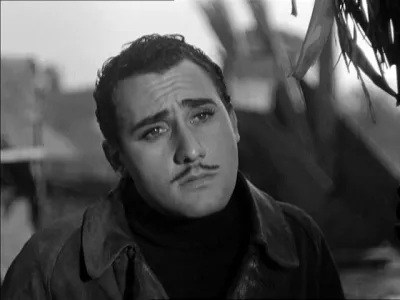
Alberto Sordi
Human Design Chart
Biography
Alberto Sordi as a Projector 2/4 in Human Design
Projector 2/4 — Design at a Glance
Alberto Sordi was someone who could immediately recognize weaknesses in systems and interpersonal dynamics. His Human Design Type Projector endowed him with a dense, focused aura, comparable to a bright flashlight that would be directed toward dark spots in the environment of his counterpart. However, this ability to identify flaws in the system was only effective when he did not act directly or confrontationally. A direct approach to problems would often have been perceived as unpleasant, similar to shining a light beam into someone's face.
Instead, Alberto Sordi was most effective through an agreeable, radiant presence. By embodying harmony himself, he attracted others who then asked for his advice of their own accord. His strategy involved waiting for respectful and honest invitations rather than offering unsolicited observations. Since Projectors do not have a defined Sacral Center, Alberto Sordi did not possess a constant intrinsic energy source. He experienced phases of high productivity followed by necessary rest periods for regeneration. Living according to this design and awaiting the invitation led him to success. Ignoring these dynamics would eventually lead to his non-self theme: bitterness. Thus, his path was characterized by guiding others through invitations and protecting his own energy through targeted recovery.
Emotional Authority
Alberto Sordi's Design showed a tendency towards emotional wave motion. He appeared as someone whose perception of the world was strongly colored by his current mood. In one moment he could be totally enthusiastic, in the next view the same thing negatively. These fluctuations were not signs of unreliability but expressions of his inner authority: the defined Solar Plexus Center.
This emotional authority was subject to a permanent wave of ups and downs. His feeling at any given moment often only reflected a snapshot, an initial impression that did not necessarily reflect his deeper truth yet. Quick, spontaneous decisions made directly from this transient emotion could therefore have negative consequences.
For Alberto Sordi it was essential to take time. The longer he let a decision mature, the deeper and more comprehensively he could perceive the situation. This process required patience and repeatedly sleeping on important questions. Through hesitation and questioning over time, intense feelings would subside. He gained emotional distance, leading to clarity and calmness. Only then had he gone through the decision-making process and could act without being driven by transient moods. This was especially true for long-term decisions that significantly influenced his life path.
The 2/4 Profile — Hermit / Opportunist
Alberto Sordi showed a constant fluctuation between the urgent need for withdrawal and the desire to spend time with chosen people. His Design indicated a tendency to move in a secure environment where he could clearly communicate when he sought company and when he wanted solitude. This dynamic arose from the tension between Line 2, which called for isolation for inner purification, and Line 4, which maintained a network of familiar contacts.
During his alone time, Sordi immersed himself in internal processes to gain clarity. Only after satisfying this need did he return from
Single Definition — Defined & Open Centers
Alberto Sordi's Human Design profile indicated a tendency towards deep, time-consuming emotional processing. His defined Solar Plexus Center acted as an inner authority: He was designed to wait out the waves of his emotions before gaining clarity. This mechanism meant that truth did not reveal itself in the "now," but only after completing the emotional cycle. His also defined Root Center provided physical pressure and endurance to move forward in the world, often coupled with this emotional rhythm.
At the same time, Alberto Sordi showed himself as receptive to external influences through several open centers. His open Head and Ajna Centers lacked a consistent mental structure; he tended to pick up mental pressure waves or confusion from his environment rather than holding onto his own firm concepts. This could manifest in an internal monologue seeking inspiration or projecting doubts that were not originally his. His open G Center lacked a fixed identity; he reflected the directions and energies of his surroundings, making him vulnerable to losing himself in relationships or searching for "borrowed" security.
His open Heart Center also lacked consistent willpower. He was not designed to make competitive promises or prove his worth through effort; instead, he risked spiraling into self-doubt when trying to meet expectations. His open Sacral Center did not have a constant energy flow for generative work; he absorbed the vitality of others and could become overburdened or exhausted as he was unsure when "enough" had been reached. Finally, his open Spleen Center lacked spontaneous survival instinct; he was vulnerable to absorbing fears from his environment or acting impulsively to simulate a sense of security, often leading to unhealthy attachments.
Channels for the expression of feelings and moods.
Alberto Sordi exhibited profound emotional volatility that significantly shaped his interactions with the world. This dynamic arose through Channel 39-55, which connects the Root Center with the Solar Plexus. This mechanism generated a pulsating wave between ecstatic joy and melancholic uncertainty. Sordi was designed to live in this full alchemy of emotions rather than rationalizing them. Through his provocation, he could draw out and sense the moods of others instinctively; he felt who matched his mood. This allowed him to appear authentic and wait for the right mood for each action.
Additionally, specific Gates influenced his design. Gate 12 emphasized the influence of emotional mood on communication and was linked with poetic expression as well as individual creativity. Gate 11 promoted a harmonious assessment before acting, where visual memories and collective ideas were prominent. Gate 36 introduced cyclical crisis movements that prepared the ground for new experiences, while Gate 6 functioned as an elemental building block for further development through friction and regulated emotional boundaries.
In the realm of resources and spirituality, Gate 19 sought a safe environment with territory and promoted spiritual approaches within the community. Gate 30 contributed to recognizing feelings and the desire for positive experiences, where illusions were accepted as part of the learning process. Finally, Gate 52 defined self-imposed pauses for concentration and pattern correction, creating a Buddhist silence that could lead to stress without clear goals. This combination formed a person who used his emotional depth as a creative engine.
Individual Circuitry — Circuit Signature
Alberto Sordi's design indicated a tendency towards impulsive, emotional outbursts. He was someone whose inner wave movements were directly linked with his physical reactions. This configuration stemmed from the Knowledge Circuit, which in him activated only a specific part: the channel between Solar Plexus and Root Center. This channel, "Emotions Freeing," connected his emotional depth with his immediate bodily energy.
While the general circuit often emphasizes creative innovation or new identity, Alberto Sordi had only this one connection. His experience was thus not marked by mental mutations or inspired ideas but rather by the direct translation of feeling into action impulse. The emotional wave from the Solar Plexus Center flowed without filter directly into the Root Center, leading to spontaneous, pulsating reactions. It was a simple definition, making this energy clear and unambiguous, not scattered or divided.
His experience was one of direct emotional discharge. When emotions arose, they sought immediate release in the physical world. This shaped him as someone who did not think long or strategize but acted when emotional tension reached a certain point. The melancholy and creativity of the circuit showed less as intellectual creation but as raw, acoustic presence of his inner states. His identity was inseparable from this ability to transform emotions into immediate reality without rationalizing or dampening them.
Right Angle Cross of Eden 2
Alberto Sordis Design carried the imprint of the right cross of Eden. This described a life direction characterized by a deep connection to material life and natural rhythms. His system was designed to function in the physical world by utilizing the resources and opportunities around him to create prosperity and stability.
This configuration pointed to someone whose energy flow was closely linked with the earth, food, and basic needs for survival. Alberto Sordi appeared as someone who appreciated and understood life in its concrete, tangible form. His task was to accept the gifts of life and use them meaningfully without working against the natural flow.
The right cross of Eden emphasized an attitude of gratitude and trust in being provided for by life itself. Alberto Sordi lived with a focus on the here and now, recognizing joy in simple things and the importance of community and family. His design promoted a deep understanding of how to find harmony in everyday life and how material security serves as a foundation for personal growth. This energy shaped his actions and interactions with the world around him.
Saturn Return · Uranus Opposition · Chiron Return · 2nd Saturn Return — Life Cycles
Alberto Sordi's Human Design profile revealed a tendency towards cyclical turning points where inner maturity became visible to the outside world. This structure showed him developing particular clarity and radiance during certain life phases, which was recognized by his environment. The Uranus opposition often marks a moment of liberation or breakthrough, when old structures break apart to allow for new expression. For Alberto Sordi, this effect manifested in 1960 at the age of 40: he received the David di Donatello Award for "They Called It the Great War" as Best Actor. This success was not coincidental but aligned with the mechanical logic of his design, where long-term developmental steps condensed into concrete results.
Later came the Chiron Return, a fulfillment cycle between the ages of 49 and 51, during which one's incarnation cross unfolds and meaning becomes experiential—if lived according to one’s strategy. For Alberto Sordi, this phase peaked in 1972 at the age of 52 when he received the Silver Bear for "Investigation" at the International Film Festival Berlin. This success confirmed the inner alignment of his design: the ability to authentically reflect deep human connections and thus generate resonance. Both events illustrate how Alberto Sordi's chart marked specific moments of validation and public appreciation that directly corresponded with the energetic cycles of his Human Design.
Projector · Emotional Authority — Synthesis
Alberto Sordi lived as a Projector, whose energy was oriented towards recognizing the potential and weaknesses in his environment (Gate 39). This ability to uncover flaws in the system came with an emotional depth (defined Emotional Center), which exposed him to constant ups and downs of feelings. He needed time to let decisions mature and grasp the truth behind his initial impressions – a patience demanded by his emotional wave. This inner dynamic shaped his work and was evident in how he illuminated human nature.
A central paradox lay in Sordi's deep desire for solitude (Line 2) alongside a longing for community (Line 4). This oscillation between withdrawal and social interaction fueled his creativity in the Knowledge Circuit, where he generated new knowledge through innovative impulses and processing personal experiences. Recognition of his work (verified successes in 1960 & 1972) seemed to affirm him while he was simultaneously carried by the emotional wave of his defined Solar Plexus Center – a tension field between public perception and inner experience.
1 Defined Channel
Incarnation Cross - Right Angle Cross of Eden 2
Solar Return
The Solar Return shows the moment when the sun returns to its exact birth position - your personal solar year.
Life Cycles
Discover the life cycles with a detailed triple view (birth chart, cycle chart, composite).
Human Design Profile
- Type
- Projector
- Strategy
- Wait for the respectful invitation
- Authority
- Emotional Authority
- Profile
- 2/4 - Hermit / Opportunist
- Definition
- Single Definition
- Incarnation Cross
- Right Angle Cross of Eden 2
- Date of Birth
- 15.06.1920 07:25
- Place of Birth
- Rome, Italy
Frequently Asked Questions
What was Alberto Sordi's Human Design type?
What profile did Alberto Sordi have?
What authority did Alberto Sordi possess?
What incarnation cross did Alberto Sordi have?
When was Alberto Sordi born?
Discover your own Human Design
Are you also a Projector? Find out in a personal reading how to unfold your leadership qualities and recognize the right invitations.
More Personalities
Back to overviewSissy Spacek

Alain-Fournier

Anémone

Ann-Margret

Arletty

Arno