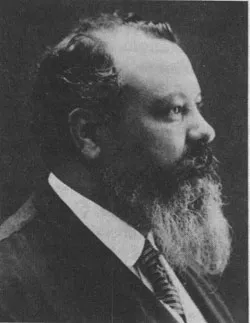
Photo: Wikimedia Commons
Albrecht von Wallenstein
Human Design Chart
Biography
Wallenstein joined the Hungarian army where he distinguished himself by his brilliant achievements as a Field General, one of the great commanders. When the 30 Years War broke out, he entered the service of Emperor Ferdinand II. Winning a series of victories, 1925- 29, he was given the titles of Duke of Mecklenburg and General of the Baltic and Oceanic Seas.
In 1609 he married a rich widow and became influential at the Vienna court. He was rewarded with the Duchy of Friedland, which he expanded, introducing agricultural reforms and controlling thousands of prosperous acres.
Wallenstein had vaulting ambitions for an empire and political power, and he began to earn significant enemies. He was called "the madman" for the fury of his temper when unleashed.
His overweening ambition led to his dismissal in 1630, but he was reinstated to defend the empire against Swedish attack. He recovered Bohemia but was defeated by Gustavus Adolphus at Lutzen in 1632 and was once more dismissed. His intrigues led to an imperial proclamation of treason. Finally his own officers deserted him, and he was murdered in his own bedroom on the late evening of 25 February 1634 greg. Assassins entered and ran him through with their swords, in Eger, Bohemia.
Albrecht von Wallenstein — Manifestor with Profile 5/1
Manifestor 5/1 — Design at a Glance
Albrecht von Wallenstein emerged as a pioneer and leader whose design was destined to guide the world towards a new future. His inner self carried the vision of a great whole, akin to an emperor in ancient Rome who planned the empire without personally stepping onto every battlefield. He delegated execution to others while setting strategic direction himself. However, this broad perspective inevitably led him to be misunderstood and polarizing. Since his thinking often extended beyond that of his surroundings, he found admiration and followers among some, yet encountered rejection or even hatred from others. His greatest pain point lay in the conflict between vision and acceptance. To find the right following, it was crucial for his design to inform others about his intentions early and precisely. This strategy of informing served to preempt resistance and create clarity. Living by this strategy rewarded him with a sense of inner peace. Ignoring this path led instead to a persistent, deep-seated anger within him. Thus, his life was marked by the tension between the necessity of communicating his vision and the resulting emotional reactions from those around him.
Emotional Authority
Albrecht von Wallenstein revealed himself as someone whose internal compass needle was strongly guided by emotional waves. His design carried an emotional authority rooted in a defined Emotional Center. This meant that this instance always took precedence over all other defined centers, regardless of any additional strategies or profiles present in his chart. He experienced constant fluctuations in feelings; the world appeared colored through his current mood state. What seemed inspiring at one moment could appear negative the next. For Albrecht von Wallenstein, however, such a first impression was merely a snapshot and not necessarily his deeper truth. Quick, spontaneous decisions based on such emotion often had negative consequences for him. His strategy involved taking time to reflect. He needed patience and let decisions mature overnight multiple times. Only when intense feelings subsided and emotional distance was gained did clarity and calmness set in for him. This process of reflection and repeated deliberation was crucial for long-term life decisions, ensuring that his actions were based on a stable inner truth rather than fleeting moods.
The 5/1 Profile — Heretic / Investigator
Albrecht von Wallenstein demonstrated someone who used deeply rooted insights to offer practical solutions during crises for others. His design as a 5/1er – Hero and Researcher – inclined him towards accumulating knowledge through years of intensive research (Line 1) that he later provided for problem-solving in his environment (Line 5). This configuration gave him almost magnetic appeal; others actively sought out his answers and advice.
The mechanics of his design, however, posed specific challenges. Gate 47 on Line 5 conveyed the ability to offer clear, meaningful solutions during crises without being personally affected by the weight of the situation. Simultaneously, Gate 12 on Line 1 required a necessary withdrawal to deepen these insights and prepare for social contexts. Without strict boundaries, there was a risk that Albrecht von Wallenstein would be exhausted by constant demands from his surroundings, similar to an expert breaking under the burden of countless questions. His path lay in finding balance between the isolated research process and public application of his knowledge to use his gifts optimally without overloading himself.
Single Definition — Defined & Open Centers
Albrecht von Wallenstein was characterized by a defined Ajna Center, generating consistent mental concepts and theories. His mind was a reliable source for strategic planning, formed from an inner conviction, uninfluenced by external opinions. This cognitive structure flowed into his defined Throat Center, making his communication directly spring from his thoughts; he spoke what he conceptualized, manifesting his ideas through words and actions with consistent clarity.
At the same time, Albrecht von Wallenstein had a defined Solar Plexus Center, functioning as an inner authority. His decisions followed the rhythm of an emotional wave; he needed time to navigate between feeling phases and achieve emotional clarity before acting. This depth allowed him a slow, careful assessment of situations where the true nature of people and events revealed itself.
In contrast, his Head Center was open, making him vulnerable to external mental pressure and confusion. He tended to internalize others' questions or engage with problems that were not his own, potentially getting caught in a whirlpool of doubts. His open G Center meant he lacked a fixed identity or direction, finding these through interaction with his environment and the right places. He relied on being initiated by others to recognize his path rather than declaring it himself.
Further open centers – Heart, Sacral, Spleen, and Root – made him sensitive to conditioning regarding willpower, energy, security, and stress. He absorbed the vitality and pressure of his environment, which could lead to overextension or giving false promises to prove his worth. His wisdom lay in not accepting external influences as his truth but trusting his emotional clarity and mental concepts.
Channels for emotional depth, logical clarity and change.
Albrecht von Wallenstein's social impact and strategic communication were strongly influenced by his inner emotional wave. His design inclined him towards passionate yet capricious expression, which only became powerful when the internal mood was right. This resulted from Channel of Openness 22-12: Here Gate of Openness (22) in the Solar Plexus connected with Gate of Caution (12) in the Throat Center. This configuration meant he did not arbitrarily deploy his articulation power and emotional radiance but only released it when allowed by the inner wave – a strategy to transmit transformative impulses onto his environment without being dulled by poor timing.
Parallel to this, Albrecht von Wallenstein organized complex information logically and in detail. Channel of Accepting 17-62 linked Gate of Opinions (17) in the Ajna Center with Gate of Details (62) in the Throat Center. This gave him the ability to translate visual patterns into clear language and structure information so it was understandable. He sought logical coherence; what did not fit his mental model, he could not accept. This process served to bring order to the chaos of events and communicate his perspective precisely.
Another defining aspect was seeking new experience through Channel of Transience 36-35. Gate of Crisis (36) in the Solar Plexus drove him to use inadequacies as a catalyst for change, while Gate of Change (35) in the Throat Center translated these impulses into action. Albrecht von Wallenstein learned through emotional depth and direct experience, often by breaking existing patterns to uncover new ones.
Additionally, individual Gates influenced on a collective level: Gate 47 helped him recognize sense coherence from confusing past images, while Gate 11 used visual memories to assess the situation before acting. In his design, Gate 49 promoted responding to tribal principles through emotional clarity, and Gate 45 bound energy to hierarchy and possession. Gate 4 supported him in developing formulas for future security, while Gate 30 fostered control over inner feelings and acceptance of limitations as fate.
Collective Circuitry — Circuit Signature
Albrecht von Wallenstein was someone whose internal flow was marked by a closely interwoven network of emotion, intellect, and expression. His defined centers – Solar Plexus, Ajna, and Throat Center – formed one continuous group, suggesting an integrated way of processing: thoughts and feelings flowed directly into communication.
This connection was made concrete through three specific circuits. The Knowledge Circuit linked his Solar Plexus with the Throat Center (Channel 'Openness'). This generated a pulsing energy that immediately translated emotional waves into expression – an impulse to participate in one's individual identity. Parallel to this, the Understanding Circuit worked via Channel 'Accepting', connecting Ajna with the Throat Center. Here focused visual logic was prominent: rational insights were structured and strategically formulated to make them accessible to others. Additionally, the Meaning Circuit also operated between Solar Plexus and Throat Center (Channel 'Transience'). This channel brought a cyclical, collapsing emotional quality aimed at reflecting past experiences and sharing their meaning with others.
Overall, this resulted in no isolated thinking or feeling but an ongoing exchange process: emotions from the past (Meaning) and innovative impulses (Knowledge) merged with clear strategy (Understanding) and were carried outward through the Throat Center. Albrecht von Wallenstein lived this connection of inner processing and external sharing as one continuous experience.
Left Angle Cross of Informing 2
Albrecht von Wallenstein's Human Design chart indicated a tendency towards clear, direct, and often unadorned communication. He was someone who openly expressed his thoughts and intentions without diluting them with diplomatic pleasantries or lengthy detours. This attitude stemmed from the configuration of the left cross of Communication 2 in his Human Design chart.
This specific structure grants a person a natural ability to convey information precisely and effectively. It is not about rhetorical brilliance or persuasive artistry, but rather the straightforward transmission of facts and truths as they are perceived. For Albrecht von Wallenstein, this meant that his words were often felt as unequivocal and direct. He avoided veiling messages; instead, he valued immediate understanding of the core message. This direct communication style characterized his interactions and ensured that his instructions and opinions were clearly heard, regardless of how well they were received. It was a mechanism of clarity that left little room for misunderstandings but also offered limited space for subtle implications.
Saturn Return · Uranus Opposition · Chiron Return — Life Cycles
Albrecht von Wallenstein's Human Design chart indicated structural turning points marked by external events. In 1611, at the age of 28, he moved to Prague as Chamberlain to Bohemian King Matthias. This corresponded with his first Saturn Return: a cycle in which years of groundwork often condenses into a solid result and new responsibilities are taken on. Later, his life showed the effects of the Uranus Opposition. In 1623, at age 40, Ferdinand renounced a contract extension and implemented a massive devaluation of circulating currency in December. This configuration often brings unexpected breaks or crises that dissolve existing structures and force adaptation. The peak of his development came with the Chiron Return. In 1632, at age 49, Wallenstein was appointed Generalissimo with extended powers. This fulfillment cycle marks the flowering of one's incarnation cross: if lived according to strategy and authority, life's meaning increasingly unfolds in everyday experiences here. The appointment was no coincidence but a concrete manifestation of this cyclical peak, where essence reaches its full range.
Manifestor · Emotional Authority — Synthesis
He was a Manifestor whose life was marked by a profound drive for creation and leadership (Manifestor Type). This pioneering spirit combined with an emotional authority that compelled him to deliberate thoroughly yet endowed him with a strong ability to grasp and express moods (Emotional Authority, Channel 22-12). As Hero/Researcher (5\/1 Profile), he sought deep knowledge to offer solutions, which drew others' attention – a role he embraced while also feeling the need to distance himself. The defined Mental Center (Ajna Center) supported his ability to develop concepts and influence others through his thoughts.
A central paradox in his design lay in the tension between the desire for control and influence (Manifestor), as well as the emotional wave that compelled him to let decisions mature over longer periods. The ability to forge new paths and initiate changes (Knowledge Circuit) met an inner need to surrender to his feelings and await their course. This led to a dance between impulsive actions and the need for emotional clarity, manifesting in phases of ascent and crisis (documented events during Saturn Return and Uranus Opposition).
3 Defined Channels
Incarnation Cross - Left Angle Cross of Informing 2
Solar Return
The Solar Return shows the moment when the sun returns to its exact birth position - your personal solar year.
Life Cycles
Discover the life cycles with a detailed triple view (birth chart, cycle chart, composite).
Human Design Profile
- Type
- Manifestor
- Strategy
- To inform others before acting
- Authority
- Emotional Authority
- Profile
- 5/1 - Heretic / Investigator
- Definition
- Single Definition
- Incarnation Cross
- Left Angle Cross of Informing 2
- Date of Birth
- 14.09.1583 16:14
- Place of Birth
- Friedland, Czech Republic
Frequently Asked Questions
What was Albrecht von Wallenstein's Human Design type?
Which Profile did Albrecht von Wallenstein have?
What Authority determined Albrecht von Wallenstein?
What incarnation cross did Albrecht von Wallenstein have?
When was Albrecht von Wallenstein born?
Discover your own Human Design
Are you also a Manifestor? Find out in a personal reading how to use your initiation power peacefully and dissolve resistance.
More Personalities
Back to overviewChristian-Jaque

Kesha

Lucebert

Masaccio

Papus
Petrarch