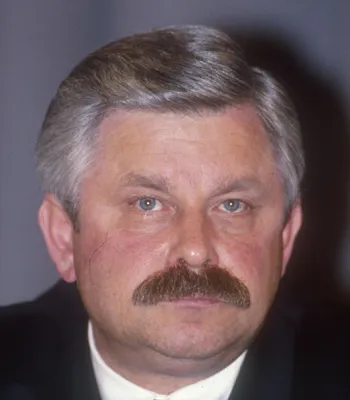
Alexander Rutskoy
Human Design Chart
Biography
Alexander Rutskoy as a Manifesting Generator 6/2 in Human Design
Manifesting Generator 6/2 — Design at a Glance
Alexander Rutskoys Human Design shows a tendency towards hybrid work style: the combination of constant, sacral motor and the ability to skip steps. He was someone who could quickly pull things into his life by working on multiple projects simultaneously. This configuration describes a Manifesting Generator – a hybrid of Generator and Manifestor traits. With the defined Sacral Center, he had constant energy but followed the reactive strategy typical for Generators.
The tension in his design arose from the need to wait for impulses versus his natural drive for quick implementation. If he used this speed without waiting for the sacral 'yes' or skipping important steps, it often led him back to fill gaps, causing frustration and non-self issues. He also tended to pick up many impulses at once. Without inner authority approval, this creative urge quickly turned into overburdening.
With correct application – reacting and regularly checking for sacral resonance – he drew deep satisfaction from his work. Then parallel working was not a problem but fostered creativity. The pressure of finishing one thing before starting another would have hindered him; instead, he entered a productive play mode when variety and fun were in the foreground.
Emotional Authority
Alexander Rutskoys inner authority carried the defined Emotional Center. This meant that his decision-making mechanism always took precedence over all other defined centers in his chart. He was subject to a permanent emotional wave, a cyclical up-and-down of feelings coloring his perception of the world through current mood. What appeared inspiring at one moment could seem negative the next. Yet this immediate feeling was only a snapshot, not necessarily the deeper truth. Spontaneous decisions from such an emotional state carried high risk for negative consequences. His design strategy required patience: Alexander Rutskoy had to give time for decisions to mature. Revisiting important questions multiple times was essential to navigate through the process of emotional wave movement. Over time, intense feelings subsided, he gained emotional distance and clarity set in. Only then had he passed through the decision-making process. This mechanism primarily affected long-term decisions with significant influence on his life path. Quick action was warned as risky; instead, it showed the need to let the emotional tide subside before calm readiness for action emerged.
The 6/2 Profile — Role Model / Hermit
Alexander Rutskoys design is characterized by a clear two-phase development. Before the age of 30, the experimental line 3 of his profile (6/2) dominated. During this time, his path was marked by trial and error, driven by the need to gather personal experiences. The energy of the sixth line often acted here as a search for meaning, coupled with tendencies towards complaining or lamenting when clarity failed – a typical expression of futility that accompanies Tor 47 in this phase.
After the Saturn Return, his true sixth line activated, followed by a retreat into the 'cave'. This marked the transition to the second line (Tor 12), characterized by isolation and purification of unclear emotions. Alexander Rutskoy now showed less social experimentation and withdrew to gain distance and create inner order. This phase of sober introspection served healing and self-awareness. Only after this intense reflection period did he re-emerge, no longer as a searching beginner but as an authoritative role model. Others could recognize his gained wisdom and came to him to learn from his ability for deep introspection and broad perspective on the cyclical nature of things.
Single Definition — Defined & Open Centers
Alexander Rutskoy's design established a massive, constant energy infrastructure: Five defined centers (Ajna, Throat, G, Sacral, Solar Plexus) created a strong presence. As a Generator, he had immense vital force in the Sacral Center, which could only be correctly utilized through waiting and responding. His decisions were not based on immediate logic or impulse but rather on the emotional clarity from his defined Solar Plexus Center as an inner authority.
This configuration meant that power was present but needed to be unlocked by going through the emotional wave. The defined centers Ajna (consistent mental thinking), G (firm identity and direction) and Throat (reliable communication) allowed him to express his thoughts and self-image stably once emotional calm had set in.
At the same time, four open centers acted as mirrors for the environment: Head, Heart, Spleen, and Root. These fields did not belong to his constant personality but absorbed inspiration, willpower, well-being, and stress from the surroundings. The risk lay in conditioning through these open areas. Thus, he tended to be distracted by the pressure of the open Head Center or make promises from the open Heart Center to prove value – which went against his own mechanics. Also, the open Spleen Center could lead him to spontaneous decisions not based on his stable authority, while the open Root Center absorbed external stress. The challenge was to recognize these external influences as foreign and instead trust in his own sacral response and emotional clarity.
Channels for leadership, charisma, emotional depth and structured clarity.
Alexander Rutskoy was marked by a powerful, mutative life energy that drove new directions and innovations. This dynamic resulted from Channel Beat 14-2 connecting the Sacral Center with the G Center. Gate 14 focuses on material resources to support mutation, while Gate 2 provides higher knowledge to direct movement through space and time. As a 'Keyholder', he had essential means to translate innovative impulses into the material world. His task was to react trustfully to life, thereby strengthening others in their individual direction and generating an aura that encouraged mutation.
Parallelly, Channel Alpha Animal 7-31 between G Center and Throat Center influenced him. This configuration gave him logical, collective leadership competence with a view towards the future. Gate 31 represents the collective leader whose voice had valuable influence, while Gate 7 delivered the logical role to guide societies – often described as 'the power behind the throne'. His leadership did not rely on authoritarian command but on trust and invitation by the community. He understood existing patterns and trends to show the way without taking it away from others. This influence worked from a position that only became effective when recognized and invited by the majority.
The synergistic effect of these two channels shaped his essence: he brought innovative new directions into the collective by living his own identity authentically. This generated an inspiring aura that encouraged others to change, while he was perceived as a trustworthy leader who pointed out logical paths. Through this combination of inner direction and collective expression, he could provide profound answers to life that were both individually strengthening and socially mutative.
Individual Circuitry — Circuit Signature
Alexander Rutskoy's design set a tendency towards a pulsating, acoustic mode of expression that combined rational strategy with individual emotionality. As a Simple Definition, he had a continuous energetic flow through Ajna-, Solar Plexus- and Throat Centers as well as Identity and Sacral Centers. This allowed for a direct connection between thoughts, emotions, and expression.
The Knowledge Circuit shaped his individuality. The channels Structure (Ajna-Throat), Openness (Solar Plexus-Ajna) and The Beat (Sacral-Identity) connected two separate groups: emotional-intellectual impulses in the Ajna-Solar Plexus-Throat area and the powerful, rhythmic base of Sacral and Identity. This generated a pulsating energy that transported new knowledge through emotional waves.
Parallelly, the Understanding Circuit worked through Channel Alpha Animal (Throat-Identity). Here it was about focused, rational sharing of insights free from emotional coloring – an 'emotionless ratio' aimed at logical structure and future focus.
The Integration Circuit complemented this through Channel Charisma (Throat-Sacral). This connected the Throat with the Sacral Center, thereby directly translating intuitive power in the present moment into expression. Alexander Rutskoy used his mind as a tool for structuring while the emotional wave of the Solar Plexus colored his messages. The tension between rational strategy and emotional pulse defined how he led change through sharing knowledge.
Left Angle Cross of Informing 2
Alexander Rutskoys Human-Design profile is characterized by an archetypal structure known as the left Communicator Cross. This configuration establishes a deeper, spiritual mission that goes beyond mere information exchange. It involves communication in the sense of a soul connection and fundamental understanding between people.
The emphasis lies on the specific way information is processed and conveyed. The adjective 'left' points to an analytical, logical or structured approach. Unlike more intuitive or emotional forms of expression, Alexander Rutskoy sought clarity and order in conveying ideas. His calling was to build bridges between different perspectives by structuring complex relationships. This Cross defined his life path not as a random sequence of events but as a coherent pathway of communication. The essence of this mechanism lies in the ability to create understanding through clear, logically grounded communication. Alexander Rutskoy was called to share ideas in such a way that they became accessible and comprehensible for others. It was less about rhetorical brilliance and more about the precise transmission of insights that resonate on a deeper level. This structure characterized his interactions and contribution to the world through a methodical, connecting form of dialogue.
Saturn Return · Uranus Opposition · Chiron Return · 2nd Saturn Return — Life Cycles
Alexander Rutskoys Human-Design profile showed during this life phase a tendency towards concrete anchoring of inner convictions. The Chiron Return, a cycle of fulfillment and bloom, marks the point where one's own Incarnation Cross unfolds – provided that the person has followed their Strategy and Authority. It is not about healing old wounds in a psychological sense but rather about experiencing meaning and purpose and translating them into external structures.
In 1995, at the age of 48, Alexander Rutskoy founded the national-communist Derschawa. This event exemplifies the mechanics of the Chiron Return: Inner stances were not only reflected upon but transformed into a tangible organization. The cycle acts as a turning point where abstract missions or inner wounds turn into concrete action and structure. For Alexander Rutskoy, this was the moment when his life mission manifested through this founding – not as an isolated career step, but as an expression of what his design brought to fruition in this phase. The founding of Derschawa was thus not a separate political maneuver but the visible form of inner maturity and translation of identity into real-world impact.
Manifesting Generator · Emotional Authority — Synthesis
A central red thread runs through the design: the dynamic connection between initiation and reaction. The configuration as a Manifesting Generator (with defined sacral center and connection to Throat Center) points to someone who not only has the ability to act quickly and initiate things but also responds to inner impulses of the Sacral. This combination is reinforced by the defined Mental Center (Ajna), which forms consistent concepts, and Channel Beat (14-2) suggests an energy ready to create new things and set motion – yet always with a focus on material resources and direction. Emotional Authority further demands maturation in decision-making, slowing down and deepening this process.
The central paradox lies in the tension between the drive for quick initiation and the necessity of emotional clarity. The design shows a person who potentially acts swiftly (Sacral-Throat connection), but is compelled by emotional authority to not rush decisions. This dynamic creates a field of tension between the desire for immediate implementation and the inner need to digest things emotionally and embed them in a larger context – an interaction that particularly finds expression in the Knowledge Circuit and is further accentuated by the left Communicator Cross 2.
5 Defined Channels
Incarnation Cross - Left Angle Cross of Informing 2
Solar Return
The Solar Return shows the moment when the sun returns to its exact birth position - your personal solar year.
Life Cycles
Discover the life cycles with a detailed triple view (birth chart, cycle chart, composite).
Human Design Profile
- Strategy
- To respond - wait for something to respond to
- Authority
- Emotional Authority
- Profile
- 6/2 - Role Model / Hermit
- Definition
- Single Definition
- Incarnation Cross
- Left Angle Cross of Informing 2
- Date of Birth
- 16.09.1947 02:00
- Place of Birth
- Kursk, Russia
Frequently Asked Questions
What is Alexander Rutskoy's Human Design type?
What Profile does Alexander Rutskoy have in Human Design?
Which Authority governs Alexander Rutskoy?
What is Alexander Rutskoy's incarnation cross?
When was Alexander Rutskoy born?
Discover your own Human Design
Are you also a Manifesting Generator? Find out in a personal reading how to unfold your multi-talents and direct your energy wisely.
More Personalities
Back to overviewAldair

Alizée

Angeli

Arletty

Artus
Balthus