Ali Bongo
Human Design Chart
Biography
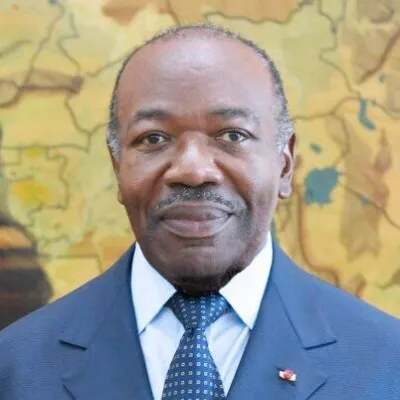
Bongo is the son of Omar Bongo, who was President of Gabon from 1967 until his death in 2009. During his father's presidency, he was Minister of Foreign Affairs from 1989 to 1991 and represented Bongoville as a Deputy in the National Assembly from 1991 to 1999; subsequently he was Minister of Defense from 1999 to 2009. He was the candidate of the Gabonese Democratic Party (PDG) in the August 2009 presidential election, which followed his father's death. According to official results, he won the election with 42% of the vote. Bongo is also President of the PDG.
What does Projector 1/3 mean for Ali Bongo?
Projector 1/3 — Design at a Glance
Ali Bongo's design shows a tendency towards focused perception: He is someone who immediately recognizes systemic errors. His aura appeared like a bright light beam hitting weak spots in his surroundings – comparable to a flashlight shining into the dark. However, this ability to identify flaws was only effective when he did not intervene directly.
The mechanics of the Projector type explain this: Direct criticism is often perceived as unpleasant, similar to a light beam in someone's face. Instead, Ali Bongo was most effective through his role model function. By showing harmonious patterns himself, he attracted others who then asked for his solutions. His strategy involved waiting for an honest invitation to avoid resistance and exercise leadership.
Furthermore, his undefined Sacral Center influenced his energy management. Without constant intrinsic life force, he went through phases of high productivity followed by necessary rest periods to prevent burnout. Traditional work models often did not account for this need. If Ali Bongo lived according to this design – with patience for invitations and respect for his energy cycles – he was rewarded with success. Ignoring this structure led to the non-self theme of bitterness. His chart thus described a life task: leadership through attraction rather than enforcement, paired with conscious rest.
Self-Projected Authority
Ali Bongos's design shows a tendency towards extreme openness, coupled with the risk of being distracted by external motoric energies. As a Projector with rare authority in Self, his inner truth lay in his identity. Decision-making did not occur through analytical reasoning but rather spontaneous self-dialogues or conversations if invited. Crucial was distinguishing between spontaneous, unreflective expressions of his true nature and thoughts of the mind. This immediate self-expression served to make his uniqueness recognizable to others.
Alternatively, a physical feeling acted as a compass guiding him geographically or thematically in a specific direction – towards something or away from it. This physical attraction or repulsion was his genuine guide. By following this inner direction and not getting lost in energy chasing, he could become a directional leader for others. His specific success potential lay not in acting for the sake of action but in clearly aligning with his own identity, serving as an example to others. The constant danger was losing himself in this great openness and chasing after energy rather than listening to the spontaneous voice of Self or physical impulses.
The 1/3 Profile — Investigator / Martyr
Ali Bongos's design shows a tendency towards synthesis from theoretical depth and practical experimentation. His Profile 1/3, the Researcher and Experimenter, describes a life path characterized by learning and testing with error integration. The Sun in Gate 49 dominated as the driving force of the 'Law of Necessity' and revolutionary thinking. This created a drive for complete theoretical security often conflicting with Line 3: the necessity to act practically and accept errors as learning steps.
The authenticity of his judgment emerged from this combination. When Ali Bongo deemed something right, he had both theoretically examined it and practically tested it on heart and gut. The energy of Line 1 ensured that he understood the principle; Line 3 provided adaptability and courage to engage connections and learn from mistakes. This process of trial and error was central to his development. He needed to learn to tolerate criticism and share knowledge, even if this meant renewal at the cost of critique. His viability depended on recognizing revolutionary principles but also securing their support in real contexts. The dilemma lay between the perfectionist drive for knowledge and an accepting attitude towards practical setbacks necessary for his renewal.
Single Definition — Defined & Open Centers
Ali Bongo's design established a consistent, trustworthy identity: His defined Ajna, Throat, and G Centers formed a stable triangle. He always thought in the same way, spoke clearly from his personal direction, and had a firm sense of self-worth. This structure was constantly 'on,' giving him a reliable voice that he could use to inspire others or show new paths.
In contrast, Heart (Willpower), Sacral (Vitality), Solar Plexus (Emotions), Spleen (Intuition), and Root (Stress) were open. This meant no constant energy source in these areas but a high sensitivity to the environment. Ali Bongo tended to absorb and amplify foreign emotions or stress rather than experiencing them as his own. The challenge was not falling into the cycle of proof-seeking (open Heart) or exhaustion from 'borrowed' energy (open Sacral).
Instead, he should use his stable mental and identity structure to act as an observer of emotional and energetic waves in his environment. Rather than reacting spontaneously to external pressure or clinging to unhealthy attachments (open Spleen), he could decide through trust in his inner authority when to withdraw for clarity. His strength lay not in asserting will or constant availability, but in clearly radiating his own truth and direction without getting entangled in the fluctuating fields of others.
Channel 8-1: Inspiration — Channels & Gates
Ali Bongo displayed a dual expression: on one hand, he acted as a living example that inspired others simply through presence; on the other, he conveyed innovative structures with intellectual clarity. This dynamic results from Channel Inspiration 1-8, which connects the G Center (Identity) to the Throat Center. Here, the energy of Gate 1, which demands brave and individual self-expression, flows directly into Gate 8, making this contribution publicly visible. Ali Bongo was geared towards leading through authentic living rather than just words; his impact depended on staying true to himself and receiving recognition without social conformity.
Parallel to this, Channel Structuring 23-43 shaped his communication strategy. This channel connects the Ajna Center (Mind) with the Throat Center via Gate 43 (Insight) and Gate 23 (Assimilation). It enabled Ali Bongo to clearly articulate spontaneous breakthroughs and efficiency-enhancing ideas. However, since this channel requires patience, he had to wait for the right timing so that his innovative perspectives would be accepted rather than rejected as foreign. Only when insights were properly understood could they change structures.
In the background, Gates like 49 (Revolution/Principles) and 4 (Formulas/Future Security) shaped a consciousness of collective principles and logical assurance. Together with Gate 13 (Continuity/Memory) and Gate 10 (Integration/Behavioral Rules), they created a context in which Ali Bongo's leadership was based on both emotional resonance and strategic planning. His design required a balance between the spontaneous, inspiring power of the individual and the patient, structured mediation of new ideas to the collective.
Individual Circuitry — Circuit Signature
Ali Bongos design set a tendency towards a pulsating, acoustic expression style rooted in his unique path. His Knowledge Circuit indeed connected the Ajna Center (mental clarity), the Throat Center (expression), and the Identity Center (Heart/Willpower). This direct connection created a flow of innovative ideas through emotional filtering to concrete articulation.
The inspiration from Channel 1-8 promoted new impulses, while Channel 43-23 provided structuring. The energy worked creatively and focused on transforming unique knowledge through the expression of personal identity into words and actions driven by an inner emotional wave.
As Ali Bongo had a Simple Definition, these connected centers formed a coherent, continuous stream without internal contradictions or separate energy blocks. His design thus showed him as someone who not only received new insights but also shaped them through his specific identity and directly carried them into the world. The focus was clearly on transformation through authentic expression, supported by the pulsating format-energy of this circuit that linked creativity with a certain melancholy.
Right Angle Cross of Explanation 1
Ali Bongo demonstrated a fundamental disposition characterized by an inner impulse to unravel confusion. His design indicated a tendency to transform darkness into light and translate bewilderment into clear understanding. This dynamic originated from the right cross of Explanation 1, also known as the Clarity Cross. It is a profound, often intuitive or unconscious mechanism aimed at uncovering things and making their true meaning visible beneath the surface.
The focus here was not on imposing a specific truth but rather on the natural ability to penetrate situations thoroughly. This manifested as a persistent quest for transparency or silent observational skills that enabled sudden insights. For Ali Bongo, explaining and clarifying was thus not a conscious act of argumentation but an inner drive to reveal the essence. The mechanism worked such that complex or unclear states were structured and made understandable through this internal dynamic without falling into dogmatic prescriptions. It was about creating understanding by uncovering the hidden, a quality that significantly shaped his way of perceiving and interacting with his environment.
Saturn Return · Uranus Opposition · Chiron Return · 2nd Saturn Return — Life Cycles
Ali Bongo's design marked the age of 50 as a turning point towards full personal purpose realization. This corresponds to the Chiron Return, a cycle of bloom where the inner structure of the Incarnation Cross – assuming a life according to strategy and authority – increasingly manifests outwardly and becomes experientially meaningful. In 2009, he was elected and sworn in as President of Gabon. This event illustrates the character of this cycle: not as healing old wounds but as a moment when lifelong work converges on a clear goal and personal destiny becomes publicly effective.
Later, Saturn Returns solidified this position. The second Saturn Return around age 57 marks the maturation of authority and structure under pressure. In 2016, at age 57, Ali Bongo was re-elected but under controversial circumstances. For his design, this was not an isolated incident but rather an expression of a cycle where established power structures are tested for their sustainability. The controversies reflect the mechanical challenge of exercising authority and stabilizing it through proven reliability and clear boundaries. These phases show how internal maturation processes translate into external political realities: first as confirmation of the path (Chiron), later as rigorous testing of the resulting position (Saturn).
Projector · Self-Projected Authority — Synthesis
A central thread throughout Ali Bongo's design is the dynamic interaction between inner clarity and the need for external validation. The defined Ajna, Throat, and G Centers point to a strong conceptual thinking ability and clear self-expression (Channel 23/43), which is reinforced by open centers – particularly Solar Plexus, Root, and Spleen. This openness makes him susceptible to external influences and conditioning, leading to a search for validation and a need to secure himself in relationships (open Heart Center). The Investigator/Experimentor Profile type (1/3) underscores this process of learning through experience but also the vulnerability to accumulate experiences that may not necessarily align with his own truth.
The central paradox lies in the tension between the potential for authentic leadership and inspiring expression (Channel 1/8, Gate 7), and simultaneous vulnerability to external influences and fear of isolation (open centers). While the design points towards a clear inner direction, openness requires constant navigation through others' energies, which can lead to an internal conflict between wanting to be true to oneself and needing acceptance. This dynamic shapes his ability to generate and communicate knowledge but also challenges him to remain true to himself.
2 Defined Channels
Incarnation Cross - Right Angle Cross of Explanation 1
Solar Return
The Solar Return shows the moment when the sun returns to its exact birth position - your personal solar year.
Life Cycles
Discover the life cycles with a detailed triple view (birth chart, cycle chart, composite).
Human Design Profile
- Type
- Projector
- Strategy
- Wait for the respectful invitation
- Authority
- Self-Projected Authority
- Profile
- 1/3 - Investigator / Martyr
- Definition
- Single Definition
- Incarnation Cross
- Right Angle Cross of Explanation 1
- Date of Birth
- 09.02.1959 01:45
- Place of Birth
- Brazzaville, Congo
Frequently Asked Questions
What is Ali Bongo's Human Design type?
What Profile does Ali Bongo have in Human Design?
What authority determines Ali Bongo's decision-making?
What incarnation cross is assigned to Ali Bongo?
When was Ali Bongo born?
Discover your own Human Design
Are you also a Projector? Find out in a personal reading how to unfold your leadership qualities and recognize the right invitations.
More Personalities
Back to overviewSissy Spacek

Alain-Fournier

Anémone

Ann-Margret

Bourvil

Hergé