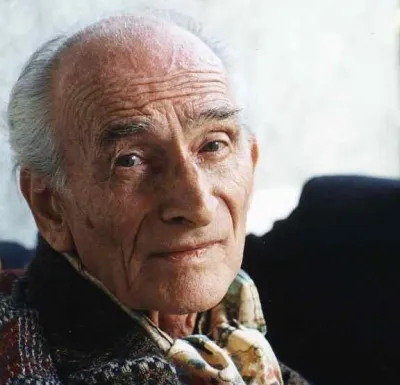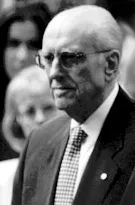
Andreas Papandreou
Human Design Chart
Biography
The son of a popular past Prime Minister, he established his political party, Socialist, on 3 September 1974, 12:50 PM EET, Athens. His country was exhilarated in 1981 when he and his party swept to power but turned bitter and unbelieving as the worst scandal in four decades overwhelmed Greece. Charges of corruption involved more than $210 million that disappeared from the Bank of Crete. Papandreou's administration was accused of embezzlement, kickbacks and bribery against high officials with a burning question, was Papandreou himself aware of what was going on and was he directly involved.
In 1988 Papandreou had heart surgery. The following year the tangle of accusations and suspicions toppled his flamboyant eight year rule. He already had bad press due to the highly public extramarital liaison with airline flight stewardess Dimitra Liani, 34, whom he had met in 1986. He divorced and they married on 13 July 1989, 7:30 PM EET, Athens.
Going to trial, he went through ten months of hearings which concluded in January 1992 with his acquittal when the prosecution was unable to prove his involvement.
He returned to politics as the Head of the Opposition. On 23 June 1996, Papandreou died of heart failure at his home in Athens.
Human Design Analysis: Andreas Papandreou as Manifesting Generator 3/5
Manifesting Generator 3/5 — Design at a Glance
Andreas Papandreou showed himself to be someone who possessed the ability to quickly draw things into his life and skip steps in the process. His design as a Manifesting Generator connected the constant energy of the sacral center with the direct projection through the Throat Center. This configuration allowed him not only to react but to act with a speed that pure generators could not match.
However, this speed was a double-edged sword. Often, his initiatives were too quick, causing important intermediate steps to be overlooked. In such cases, he had to backtrack and make up for the missing phases, which quickly led to frustration – the specific non-self theme of this type. Additionally, he tended to pursue multiple projects simultaneously, as he responded to many different impulses at once.
To make this enormous creative power useful, the strategy of responding was key for him. He had to answer to life and only proceed when his sacral center gave a clear "yes." Only by seeking this inner approval and taking regular breaks to check whether the projects were still fun could he experience deep satisfaction. In this state of "play mode," it was even necessary for him to seek variety rather than fixating on a single task.
Emotional Authority
Andreas Papandreou revealed himself as someone whose inner decision-making was strongly influenced by an intense emotional wave. As a carrier of Emotional Authority, he was subject to a constant up and down of his feelings, which filtered his perception of the world through the lens of his current mood. At one moment, he could be completely enthused about something, and in the next, he could completely negate the same situation. This configuration meant that his immediate feeling was only a snapshot and a first impression, not his deeper truth. Quick, spontaneous decisions that arose directly from such emotions often had negative consequences for him, as they were based on an unresolved foundation. The mechanics of his inner authority therefore required patience and time to allow decisions to mature. Only through multiple nights of reflection and consciously delaying action could the intense feelings subside. This process allowed him to gain emotional distance, gradually leading to clarity and calmness. Only after this maturation process had been completed did true decision certainty emerge. This strategy was particularly crucial for long-term course setting, as it ensured that the decisions made were not based on fleeting moods but on a stable, emotionally resolved foundation.
The 3/5 Profile — Martyr / Heretic
Andreas Papandreou revealed himself as someone who built his authority not through abstract dogmas, but through lived, practical experience. His design as an experimenter and hero established a foundational attitude that was skeptical of established truths; he believed in nothing until he had tested and verified it himself. This learning process, shaped by mistakes and mistrust of unproven claims, defined his way of seeing the world. Openness in him was always accompanied by a demand for concrete evidence, while pessimism was often overcome through a humorous, satirical detachment.
This attitude of Line 3 laid the groundwork for his role in Line 5, that of the hero. The wisdom gained from practice was attractive to others because it was seen as authentic and proven. Papandreou carried the weight of great societal expectations and projections. In times of crisis, he showed steadfastness and used his creativity to find practical solutions that won the trust of people. However, this configuration also carried the risk of failure in the spotlight, as every experiment was publicly visible. The necessity to assert himself against interference required a strong ego resilience to maintain the creative process despite external pressures. Thus, he became a storyteller, presenting his own, often painful experiences as lessons for others.
Single Definition — Defined & Open Centers
Andreas Papandreou was characterized by a constant, personal voice and a clear inner direction. His defined Throat Center gave him the ability to articulate messages reliably, while his defined G Center created a firm sense of self-identity and a sense of the correct life mission. This combination allowed him to communicate from a stable identity without being easily shaken by external expectations.
As a Generator with a defined Sacral Center, he had an enormous source of vital energy. However, his design required him to respond to questions rather than initiate to sustain this power. This dynamic was supported by his defined Solar Plexus Center, which acted as an emotional authority. Here, the necessity was to give the emotional wave time until clarity emerged before making important decisions. His defined Root Center also provided a constant pressure that propelled him forward and helped him deal with stress.
At the same time, Andreas Papandreou was vulnerable to conditioning in his open centers. His open Head and Ajna Centers meant that he absorbed mental inspirations and concepts from the environment without owning them as his own truth. This could lead to confusion when he tried to find answers to questions that were not his own. His open Heart Center made him susceptible to the pressure to prove his worth through promises or willpower, even though he did not consistently possess this energy. Additionally, his open Spleen Center tended to absorb the fears and health conditions of others, increasing the temptation towards spontaneity or clinging to unhealthy situations to gain a sense of security.
Channels for focus, self-acceptance, reflection and emotional clarity.
Andreas Papandreou's design established a basic attitude of intense focus and the exploration of his own behavior. The Channel of Concentration 52-9 connected the Root Center with the Sacral Center and created a calm, passive urge to stay still to grasp details and facts sharply. This format energy acted like an inner compass, holding him in place until his Sacral Center reacted to correct and perfect patterns. Simultaneously, the Channel of Exploration 34-10 between the Sacral and G Centers promoted the reinforcement of personal convictions. Here, it was about accepting and honoring himself by acting from his inner strength rather than being guided by external expectations.
This combination of focused logic and self-determined behavior shaped the way he moved in the world. Additionally, the Channel of the Lost Son 13-33 between the G and Throat Centers contributed to him collecting experiences, withdrawing to reflect on them, and only then communicating them once the lesson was understood. This gave his communication a deep, contemplative quality. The Channel of Recognition 30-41 between the Root and Solar Plexus Centers added another impulse: an intense emotional desire for new experiences driven by restlessness.
Influential Gates like Gate 7 (Leadership and Hierarchy) and Gate 1 (Uniqueness and Creative Mutation) underscored his role as someone who could walk new paths and challenge structures. Gate 2 (Receptivity and Direction) and Gate 16 (Collective Experimentation) showed his ability to respond to mutations in the collective and verbally process them. Overall, Andreas Papandreou was someone who acted through silent concentration, authentic self-behavior, and reflected experiential values, driven by a deep emotional need for change and a clear focus on what he deemed correct.
Collective Circuitry — Circuit Signature
Andreas Papandreou was a personality with a firm inner core and clear convictions. His design connected the Sacral with the Identity Center through the Centering Circuit. This connection strengthened his self-esteem and individual identity, enabling him to make bold, independent decisions. Since the Throat Center was not part of this circuit, these deep convictions often remained difficult to verbalize.
Parallel to this, the Understanding Circuit was at work. Here, the Channel of Concentration connected the Sacral with the Root Center. This gave him a focused, rational energy aimed at structured improvement and future-oriented logic. It was an emotionless ratio geared towards strategically sharing insights.
A third aspect was the Meaning Circuit. This was composed of two separate parts in him. On one hand, it connected the Throat with the Identity Center, allowing the articulation of his identity. On the other hand, it connected the Solar Plexus with the Root Center. This generated cyclical emotional waves dealing with the past. These feelings served to reflect on past experiences and recognize their meaning, to learn collectively from them. Overall, these three circuits shaped a profile that united inner strength, rational structure, and emotional reflection of the past.
Right Angle Cross of the Sphinx 1
Andreas Papandreou's Human Design profile indicated a tendency towards inner conflict, manifesting as a constant struggle between the desire for clear, defined structure and the urge for deep, often chaotic emotional truth. This configuration, known as the right cross of the Sphinx, described a life task of integrating these seemingly incompatible poles. Papandreou lived with the challenge that rational order and intuitive depth blocked each other rather than complementing each other. His design challenged him to not choose between logic and feeling, but to acknowledge both aspects as part of a greater whole. This tension shaped his inner stance: He sought a truth that was intellectually sound and emotionally resonant, which often led to a sense of incompleteness when only one of the aspects was present. The mechanics of this cross suggested that true stability could only be achieved through the acceptance of this duality, not by suppressing one of the two drives. Thus, Papandreou was someone who constantly oscillated between the necessity of definition and the indeterminacy of feeling, a dynamic that significantly shaped his inner experience and his way of dealing with himself and the world.
Saturn Return · Uranus Opposition · Chiron Return · 2nd Saturn Return — Life Cycles
Andreas Papandreou's Human Design profile indicated a tendency towards strategic turning points where inner convictions translated into concrete political structures. This was particularly evident during his Chiron Return, a fulfillment cycle that occurs between the ages of 49 and 51 and marks the unfolding of the individual's incarnation purpose. In 1968, at the age of 49, he was expelled and founded the Panhellenic Liberation Movement (PAK) in Sweden and Canada. This step was not a mere coincidence but an expression of how his life purpose was increasingly crystallizing in the external events during this phase.
Later came the second Saturn Return, a period often associated with the consolidation of life's work and the assumption of long-term responsibility. In 1974, at the age of 55, he returned to Greece and founded the social democratic Panhellenic Socialist Movement (PASOK). This founding reinforced the previously established direction and anchored his political visions permanently in the social fabric. Both events illustrate how the specific human design mechanisms worked in Andreas Papandreou: Cycles of maturity and fulfillment served as catalysts to transform abstract principles into tangible organizations that shaped his life path.
Manifesting Generator · Emotional Authority — Synthesis
Andreas Papandreou was a Manifesting Generator with a defined Sacral Center, giving him a constant life energy. This energy was channeled through the Channel of Concentration (52/9) into focused actions that oriented towards details and facts. His profile as an Explorer and Hero (3/5) indicates that he learned through his own experiences and made this knowledge available to others – a pattern that showed in repeated new beginnings and the building of new structures. Emotional authority required a maturing time for decisions, while the Manifestor component in his design allowed quick steps, which occasionally required corrections.
A central paradox in his design lay in the tension between the sacral reaction and the manifesting initiation. Although he primarily lived from the sacral center, the connection to the Throat Center gave him the ability to quickly initiate things. This led to a dance between waiting for the right impulse and proactively shaping events, which was evident in the documented events of his professional ascent. The combination of inner emotional depth and outer action power shaped his path.
4 Defined Channels
Incarnation Cross - Right Angle Cross of the Sphinx 1
Solar Return
The Solar Return shows the moment when the sun returns to its exact birth position - your personal solar year.
Life Cycles
Discover the life cycles with a detailed triple view (birth chart, cycle chart, composite).
Human Design Profile
- Strategy
- To respond - wait for something to respond to
- Authority
- Emotional Authority
- Profile
- 3/5 - Martyr / Heretic
- Definition
- Single Definition
- Incarnation Cross
- Right Angle Cross of the Sphinx 1
- Date of Birth
- 05.02.1919 12:00
- Place of Birth
- Chios, GRC
Frequently Asked Questions
What was Andreas Papandreou's Human Design type?
What Profile did Andreas Papandreou have in Human Design?
Which Authority guided Andreas Papandreou?
What incarnation cross was assigned to Andreas Papandreou?
When was Andreas Papandreou born?
Discover your own Human Design
Are you also a Manifesting Generator? Find out in a personal reading how to unfold your multi-talents and direct your energy wisely.
More Personalities
Back to overviewAldair

Alizée

Angeli

Arletty

Artus
Balthus