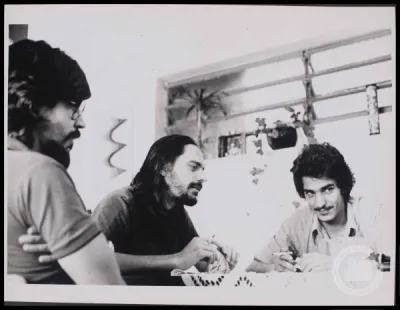
Photo: Wikimedia Commons
Bayard Rustin
Human Design Chart
Biography
Rustin worked in 1941 with A. Philip Randolph on the March on Washington Movement to press for an end to racial discrimination in the military and defense employment. Rustin later organized Freedom Rides, and helped to organize the Southern Christian Leadership Conference to strengthen Martin Luther King Jr.'s leadership; he taught King about non-violence. In 1963 Rustin served as principal organizer for the March on Washington for Jobs and Freedom. Rustin worked alongside Ella Baker, a co-director of the Crusade for Citizenship, in 1954; and before the Montgomery bus boycott, he helped organize a group called "In Friendship" to provide material and legal assistance to people threatened with eviction from their tenant farms and homes. Rustin became the head of the AFL–CIO's A. Philip Randolph Institute, which promoted the integration of formerly all-white unions and promoted the unionization of African Americans. During the 1970s and 1980s, Rustin served on many humanitarian missions, such as aiding refugees from Vietnam and Cambodia. At the time of his death in 1987, he was on a humanitarian mission in Haiti.
Later in life, while still devoted to securing workers' rights, Rustin joined other union leaders in aligning with ideological neoconservatism, and (after his death) President Ronald Reagan praised him.
Rustin was a gay man and, due to criticism over his sexuality, he usually acted as an influential adviser behind the scenes to civil-rights leaders. In the 1980s, he became a public advocate on behalf of gay causes, speaking at events as an activist and supporter of human rights.
Davis Platt, Bayard's partner from the 1940s, said "I never had any sense at all that Bayard felt any shame or guilt about his homosexuality. That was rare in those days.
Bayard Rustin as a Manifesting Generator 4/1 in Human Design
Manifesting Generator 4/1 — Design at a Glance
Bayard Rustin was someone who could quickly draw things into his life, driven by a hybrid energy. As an Manifesting Generator, he had constant sacral energy, which gave him the power to respond to impulses rather than initiate them himself. However, the connection between Motor and Throat Center also gave him Manifestor traits, allowing him to skip steps and move forward at high speed.
This speed was a double-edged sword. Rustin tended to do several things at once, as he responded to many different impulses and started parallel projects. If strategy and inner authority were not on his side, this creative drive quickly turned into frustration – his non-self theme. Sometimes he was too quick and skipped important stages, which meant he had to go back and make up for missing steps.
To effectively use his creative power, it was advisable for Rustin to react to life and only start when his sacral center gave a clear “yes”. With proper application, that is when variety and fun were in the foreground, he fell into a “play mode”. In this state, he drew deep satisfaction from his work, and parallel work on different projects was not an obstacle but a source of his energy.
Emotional Authority
Bayard Rustin moved through an emotional wave that shaped his entire experience. His inner authority lay in the defined Solar Plexus Center. This configuration meant that his feelings were subject to permanent fluctuations: in one moment, he could be enthusiastic about something, in the next, he could completely negatively assess the same situation. These mood colors were only snapshots, not an ultimate truth. Spontaneous decisions made directly from such an emotional peak often proved problematic.
The mechanics of his emotional authority required patience. To gain clarity, he had to let decisions mature, ideally overnight. Only when the intense feelings had subsided and emotional distance had been created, did calmness and a grounded insight set in. This process of “sleeping on it” was crucial for long-term, life-changing decisions. Only through this delay could he distinguish the deeper truth from the passing mood. His strategy was to take his time, to be hesitant, and to ask himself multiple times before acting. This way, he transformed the initial emotional turbulence into a stable, well-thought-out stance.
The 4/1 Profile — Opportunist / Investigator
Bayard Rustin was someone whose essence was deeply rooted and hardly swayed from his individual path. As a 4/1 Networker and Researcher, he had a big heart that needed to be protected from injuries. This configuration, the only fixed profile, marked the transition from “I” to “You”. Rustin created networks through friendliness and used confidential knowledge to find the right opportunities for experiences. His Fourth Line from Gate 36 allowed him to carry external information outward and investigate secret connections, often in the role of a double agent or crisis counselor.
At the same time, the First Line from Gate 10 determined his behavior through humility and adaptability. He accepted his place in a hierarchy as dictated by his genetics. Attempts from outside to change his behavior or give him “well-meaning impulses for change” triggered over-sensitive reactions in him. Whoever did not fully accept him as he was was quickly excluded from his heart. This led to him often being perceived by others as stubborn or not open to criticism. Once he, however, recognized his own nature and stabilized in his character, he became a rock in the storm, able to teach others magnificently.
Split Definition — Defined & Open Centers
Bayard Rustin was someone who had a reliable inner direction. His defined G Center gave him a firm sense of self-identity and the feeling of being lovable without being dependent on others. He had a clear compass for his life mission and could show others new paths without restricting their freedom. This inner security was connected to his defined Throat Center, which served as a pivot point for messages. His voice spoke from this reliable source, enabling him to articulate his truth with honesty and clarity. The interaction between identity and expression allowed him to show himself consistently and authentically.
At the same time, Rustin possessed immense vital energy. His defined Sacral Center generated daily energy that he used by reacting to life. He waited for questions or invitations to bring in his generative power and found satisfaction in activities to which he responded with an inner “yes”. This energy was channeled through his defined Heart Center, which gave him willpower and the ability to keep promises. He controlled his resources himself and used his energy to supply himself and his community, seeking recognition for his contribution. The constant pressure of his defined Root Center drove him to overcome existential challenges and thrive materially.
In contrast, his Head Center was open. Rustin had no consistent way of processing mental information and tended to engage with questions that were not his own. He could be overwhelmed by doubts that actually belonged to others and sometimes sought inspiration to relieve this mental pressure. His open Ajna Center made him receptive to concepts and ideas from the environment, which he did not interpret as personal truth. Additionally, his Spleen was open, making him vulnerable to survival fears. He tended to cling to people or situations that radiated a sense of security and well-being, even if they were not healthy for him, to alleviate the fear of survival.
Channels for change, rhythm, recognition, power and money.
Bayard Rustin was someone deeply embedded in the rhythm of life, driven by an inner logic that followed the biological flow rather than the mind. This attitude stemmed from the Rhythm Channel 5-15, connecting the Sacral Center to the G Center. Through Gate 5, he clung to firm habits, while Gate 15 integrated the diversity of society into this life flow. This channel determined his timing and magnetically drew others into his energy flow, advancing groups without succumbing to the emotional wave or the arrogance of the mind.
At the same time, he carried the burden of evolutionary responsibility. The Mutation Channel 60-3 connected his Root Center to his Sacral Center. Here, Gate 60, the Gate of Limitation, acted as a pivot point for all possibilities, paired with Gate 3, which created order from the chaos of a new beginning. This configuration generated a pulsating energy, often accompanied by melancholy when the inner pulse stopped. Rustin had to learn to accept this limitation and patiently wait for the mutation to break through his sacral reaction, rather than forcing it through arguments.
His actions were further shaped by the Channel of Exploration 34-10. This connected the inner strength of Gate 34 with the authentic behavior of Gate 10. It was about loving and honoring oneself independently of external expectations. Through this connection, he demonstrated to others through his own reactions the path to self-acceptance.
In interpersonal relationships, the Channel of the Money Line 21-45 was active. It connected the will of the Heart Center (Gate 21) with the authoritative voice of the Throat Center (Gate 45). Here stood the tension field between the need for control and service to the tribe. Rustin had to learn to take material responsibility without exploiting himself by finding the right rhythm between work and rest.
Additionally, Gates 36 and 6 colored his emotional landscape. Gate 36 brought the experience of crises and decline as a necessary process for new developments, while Gate 6 served as a fundamental building block for friction and further development. This combination underscored that growth for him was inseparable from emotional intensity and the experience of resistance.
Individual Circuitry — Circuit Signature
Bayard Rustin's design tended towards inner strength and strategic clarity, but was marked by separate energetic poles. As a person with split definition, he had two independent power centers that did not flow directly into each other but existed separately.
One pole connected the Sacral with the Root Center (Knowledge Circuit) as well as the Sacral with the Identity Center (Centering and Understanding Circuits). This configuration created a pulsating, innovative life force based on mutations and rhythmic exploration of one's identity. It fostered bold, individual convictions, which were often hard to verbalize, as the Throat Center was missing in this block.
The second, isolated pole connected the Solar Plexus with the Root Center (Purpose Circuit) as well as the Heart with the Throat Center (Ego Circuit). Here, cyclical emotional waves of the past reflected the meaning of past events. Parallel to this stood the ability to organize resources through giving and taking in the Throat and Heart Centers.
This separation meant that Rustin's innovative, identity-forming energy (Sacral/Identity) was not automatically connected to his emotional reflection or his resource work in communication. He had to consciously integrate these separate forces rather than being guided by a single, continuous flow.
Juxtaposition Cross of Crisis
Bayard Rustin's Human Design profile was characterized by the presence of the Crisis Cross, a configuration that created a specific internal tension that was not just everyday restlessness but a deep, structural dissonance. In Human Design, this cross describes a constellation where seemingly contradictory energetic patterns are directly opposed to each other. For Rustin, this meant that his internal compass often oscillated between opposing poles, necessitating a constant need to integrate and balance these forces.
This mechanical reality shaped his experiential world through a continuous confrontation with his own duality. It was not merely a psychological dilemma but an energetic reality that required a high capacity for conflict resolution. The structure of the Crisis Cross implies that peace and stability could only be achieved through the conscious acceptance and transformation of these internal contradictions. Rustin's design carried a burden of complexity that prompted him to constantly grapple with the question of how seemingly irreconcilable elements could be united into a functioning whole. This configuration created a backdrop against which his actions were always marked by the necessity of navigating and channeling these deep structural tensions constructively, without ignoring the underlying energy of the crisis.
Saturn Return · Uranus Opposition · Chiron Return · 2nd Saturn Return — Life Cycles
Bayard Rustin's design indicated a tendency towards profound structural change, manifesting in his life phases as cyclical condensation of responsibility followed by testing. His first Saturn Return around 1941 marked the beginning of a phase where years of groundwork condensed into tangible results. This is reflected in President Franklin D. Roosevelt signing a law in 1941 that prohibited discrimination in the defense industry and government agencies – a moment when systemic changes became tangible.
At the age of 41, during the Uranus Opposition, a phase of acute crisis and rupture began. This mechanism often manifests as confrontation with external constraints that challenge the inner structure. In 1953, Rustin was arrested in Pasadena and spent 60 days in jail after pleading guilty to a lesser charge of 'sexual perversion.' This event highlighted the sharp friction between individual existence and societal norms.
The Chiron Return around 1960, at the age of 48, marked a fulfillment cycle where his incarnation cross increasingly unfolded and became meaningful. However, this process is not without resistance. In 1960, Rustin was forced to resign from the SCLC by Adam Clayton Powell Jr. This crisis accompanied the blossoming of his life's purpose and showed how his inner purpose could assert itself even under pressure and sacrifice.
Manifesting Generator · Emotional Authority — Synthesis
He was a Manifesting Generator, whose life was powered by a deep, sacral energy (defined by the Sacral Center), enabling him to act swiftly. This energy flowed through a defined Throat Center channel (communication and manifestation), giving him a strong voice to initiate change. His profile as a Networker/Researcher (4/1) points to a deeply rooted individuality that led him to form connections while also protecting himself from external influences. The recurring crises, marked by Uranus Opposition and Chiron Return (cycles), as well as the Juxtaposition Cross, indicate a life marked by constant confrontation with existing structures and the building of new connections.
A central paradox lay in the combination of his manifesting energy and his emotional authority. He could act swiftly (Manifesting Generator), yet he needed time for his decisions to mature emotionally (Emotional Authority). This led to a tension between the impulse to act immediately and the necessity of grasping the emotional consequences of his actions. The channel of Mutation (Switch) intensified this internal conflict, pushing him to accept boundaries while simultaneously seeking new paths.
5 Defined Channels
Incarnation Cross - Juxtaposition Cross of Crisis
Solar Return
The Solar Return shows the moment when the sun returns to its exact birth position - your personal solar year.
Life Cycles
Discover the life cycles with a detailed triple view (birth chart, cycle chart, composite).
Human Design Profile
- Strategy
- To respond - wait for something to respond to
- Authority
- Emotional Authority
- Profile
- 4/1 - Opportunist / Investigator
- Definition
- Split Definition
- Incarnation Cross
- Juxtaposition Cross of Crisis
- Date of Birth
- 17.03.1912 00:30
- Place of Birth
- West Chester, PA, United States
Frequently Asked Questions
What was Bayard Rustin's Human Design type?
What Profile did Bayard Rustin have in Human Design?
What Authority guided Bayard Rustin?
What incarnation cross did Bayard Rustin have?
When was Bayard Rustin born?
Discover your own Human Design
Are you also a Manifesting Generator? Find out in a personal reading how to unfold your multi-talents and direct your energy wisely.
More Personalities
Back to overviewAaliyah

Aldair
Alexia

Alizée

Angèle

Angeli