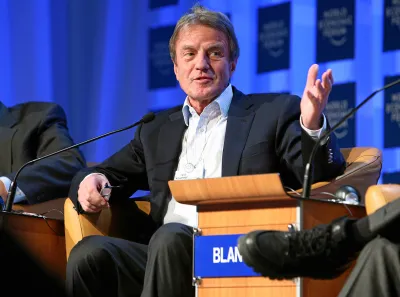
Bernard Kouchner
Human Design Chart
Biography
Kouchner worked as a physician for the Red Cross in Biafra in 1968 (during the Nigerian Civil War). His experience as a physician for the Red Cross led him to co-found Médecins Sans Frontières (Doctors Without Borders) in 1971, and then, due to a conflict of opinion with MSF chairman Claude Malhuret, he established Doctors of the World ('Médecins du Monde') in 1980.
Kouchner has three children (Julien, Camille and Antoine) by his first wife, Évelyne Pisier, a professor of law, and one child, Alexandre, by his present wife Christine Ockrent, a journalist and author.
Bernard Kouchner — Generator with Profile 1/3
Generator 1/3 — Design at a Glance
Bernard Kouchner showed himself to be someone who could only effectively use his enormous stamina and strength when he reacted to concrete impulses from his environment. His design as a Generator laid a tendency towards great endurance, comparable to a workhorse that generates a lot of energy – but only when that energy is available for the task at hand. The key mechanism here is the strategy of reacting: Not initiating, but responding to a signal from life is the key. When the sacral center, the center of life energy, sends a clear "yes," Bernard Kouchner can respond immediately with action and thus experience deep satisfaction and fulfillment.
However, this design harbors two specific pitfalls. First, the continuous execution of tasks that he has no inner desire to do leads to the waste of his valuable energy, which can lead to long-term exhaustion. Second, frustration arises when he is prevented from working on his heart projects, even though he still wants to continue working with full power. If Bernard Kouchner initiates independently, without waiting for an external signal, he is likely to encounter a feeling of persistent frustration and a lack of energy. His greatest strength lies in reacting intuitively to what speaks to him, thereby efficiently and fulfillingly deploying his energy.
Sacral Authority
Bernard Kouchner emerged as someone whose decision-making was based on an immediate, physical resonance. His design established the sacral authority that is only possible for the Generator type, and his strategy was identical to inner authority. This simplified the process of choice: instead of abstract planning, he reacted to external stimuli with a noticeable "gut feeling" or a surge of energy. These signals – often audible as grunting, humming, or a confirming "mm-hmm" – marked the moment when his sacral motor kicked in.
When Bernard Kouchner felt this way, he was driven by an inexhaustible energy and great enthusiasm. He could immerse himself in activities without questioning an external purpose; the joy of the action itself was enough. Additionally, his activated spleen center acted as a supportive instance. Through the connection with the sacral center, this allowed for quick, spontaneous reactions and a reliable access to instinctive perception. Bernard Kouchner was guided by this deep physical well-being, which allowed him to make decisions in an instant, based on what felt alive and right within him.
The 1/3 Profile — Investigator / Martyr
Bernard Kouchner revealed himself as someone who inseparably combined theoretical knowledge with practical experience. His design as a Researcher and Experimenter (Profile 1/3) indicated that he not only gathered insights but also tested them through personal action. This resulted in judgments based on double validation: on one hand, through the study of fundamentals, and on the other hand, through direct trial and error. When he deemed something good, he had previously tested it both intellectually and through practical application.
This attitude was reinforced by specific energies. Gate 44 in the Ego Center emphasized the need for clear agreements and hierarchies to achieve economic success and lasting harmony. It was about creating enforceable structures that order the collective. At the same time, Gate 33, which calls for withdrawal and adaptation, played a role. Here, the task was to emerge from isolation and share the insights gained. A lack of responsibility at this step could lead to abrupt relationship breakdowns, while responsible withdrawal contributed to success. Kouchner's path involved integrating these seemingly contradictory forces—the need for structured power and learning from failure—to develop well-founded, practically tested solutions.
Split Definition — Defined & Open Centers
Bernard Kouchner was marked by a design that combined constant mental clarity with a deep, intuitive body intelligence. His defined Ajna Center provided a consistent, trustworthy form of conceptual thinking; he was not easily influenced from the outside and processed data and creativity in a specific, repetitive way. This mental structure flowed directly into his defined Throat Center, allowing him to communicate the ideas conceptualized by his mind reliably and clearly.
At the same time, he had a defined G Center, which gave him a firm sense of self-identity and a clear sense of direction. He could support others in their orientation without being dependent on them, as he was rooted in his own love and mission. This inner stability was reinforced by his defined Sacral Center, which provided him with a vast source of vital energy. His strategy was not to initiate but to react to life; once he gave a confirming sacral response, the strength for persistent endurance was available to him.
His defined Spleen Center ensured spontaneous, intuitive judgments in the present moment, while his defined Root Center provided the necessary pressure to move forward in the material world and to survive.
In contrast, his undefined centers revealed specific vulnerabilities. His open Head Center tended to take on mental pressure and questions from others, leading to confusion if he did not trust his inner authority. The open Heart Center lacked consistent willpower; it was vulnerable to the urge to prove itself through promises, which could lead to a cycle of self-doubt if these promises could not be kept. Additionally, his open Solar Plexus absorbed the emotions of the environment, causing him to distinguish between his own feelings and the emotional waves of others to avoid emotional instability.
Channels for change, reflection, insight and care.
Bernard Kouchner was marked by a fundamental disposition that combined evolutionary change with the patience of experience. His design featured the Mutation Channel 60-3, connecting the Root Center with the Sacral Center. This connection brings the potential for sudden, unexpected changes, but requires the ability to accept limitation and move beyond the confusion of a new beginning. The accompanying melancholic energy is not a lack but the groundwork on which new mutations develop before they are revealed.
Parallel to this, the Lost Son Channel 13-33, connecting the G Center with the Throat Center, was at work. Here, Gate 13 gathers information and secrets, while Gate 33 withdraws to reflect on them. This process of maturation requires time to uncover underlying truths before they are communicated. It is the stance of the conscious observer who learns to trust their own experiential process rather than jumping to conclusions.
The way Bernard Kouchner articulated his perspectives was shaped by the Channel of Structuring 43-23, connecting the Ajna Center with the Throat Center, allowing for spontaneous insights that are then assimilated and clearly expressed. The goal is not to plan ahead but to formulate unique ideas simply enough to promote efficiency and change in organizations. Recognition arises when these unique ideas are communicated at the right time.
Additionally, the Channel of Preservation 27-50 was active, connecting the Sacral Center with the Spleen Center. Through Gate 27 of Care and Gate 50 of Values, there is a strong need to protect the clan and its structures. This energy ensures that resources and traditions are preserved, with the need to prioritize one's own health to effectively support others.
Individual Circuitry — Circuit Signature
Bernard Kouchner was marked by separate, parallel functioning energetic poles. His Split Definition formed two independent blocks: an instinctive area from Sacral, Root, and Spleen Centers, and another from Identity, Throat, and Ajna Centers. These blocks did not merge but existed as separate forces.
The Knowledge Circuit connected two isolated segments in him. On one hand, energy flowed from the Ajna to the Throat Center, promoting the ability to structure and articulate. On the other hand, the channel between the Sacral and Root Centers supported mutations and deviations from the known. These two aspects remained energetically separate.
In the Meaning Circuit, the channel 'The Lost Son' connected the Throat with the Identity Center, promoting the need to share emotional experiences and insights from the past to learn together. The energy flowed here cyclically and wave-like.
The Protector Circuit connected the Sacral with the Spleen Center via the channel 'Preservation', generating a primordial force for preservation, care, and protection of the family or one's genetic line. This instinctive care stood independently from the other circuits. Overall, these separate but internally coherent systems shaped Bernard Kouchners behavioral patterns: structured communication and mutative impulses on one side, emotional sharing and instinctive protection on the other, without these areas directly merging.
Right Angle Cross of the Four Ways 3
Bernard Kouchner was marked by a deep, often painful struggle with his own identity and place in the world. His design carries the signature of the right cross of the four paths 3, a configuration that does not seek external fame or easy success, but rather an inner, often solitary truth.
This structure describes a path defined by intense inner transformation and frequent crises. It is not about mere survival, but about the constant redefinition of the self through experiences of loss, isolation, or profound change. Bernard Kouchner was driven to not only endure these experiences but to transform them into a form of wisdom or a unique contribution that stems from personal depth.
The energy of this cross demands authenticity at the cost of social adaptation. It is a path of alchemy, where the raw and heavy aspects of life are transformed into something valuable. For Bernard Kouchner, this meant that his greatest strength came from his ability to integrate his own dark sides and wounds and develop a clear, though often solitary, direction from them. His influence did not come from dominance, but from the depth and integrity of his personal journey, which he offered to others as a mirror or guide.
Saturn Return · Uranus Opposition · Chiron Return · 2nd Saturn Return — Life Cycles
Bernard Kouchner showed himself in life phases marked by structural condensation and a drive for renewal. His design tended to confront him with major upheavals at certain age stages, demanding both stability and dissolution.
The first Saturn return marked a phase where years of groundwork condensed into a solid foundation. Here, it was about taking responsibility and clearly defining one's position in the world. Shortly after came the Uranus opposition, a time when the inner maturation process met the desire for freedom and change. This configuration described a pressure to question old structures and find new, authentic paths, often leading to sudden shifts.
A central point was the Chiron return. This cycle did not bring medical healing but a bloom of one's purpose. If Bernard Kouchner had followed his inner strategy, his incarnation purpose became experiential and meaningful in this time. It was a moment of fulfillment, in which life showed itself as a coherent whole.
The second Saturn return rounded off this development. It brought another level of maturity and stability. Here, it was no longer about the foundation but about mastery in handling one's authority and the long-term consequences of actions. These cycles marked Bernard Kouchner as someone who found deeper self-determination through structure and change.
Generator · Sacral Authority — Synthesis
A central red thread runs through the design: a deep, sacral energy (Sacral Authority, defined Sacral Center, Channel Mutation) paired with an unceasing drive to learn and transform through experience (Profile Researcher/Experimentor, Knowledge Circuit). This combination points to a way of life that is shaped by trying new paths and refining insights, driven by an inner vitality that is activated by external stimuli. The energy is not static but pulses and mutates (Channel 3-60), indicating adaptability and the ability to grow from mistakes.
A central paradox lies in the tension between the need for continuous exploration (Line 1/3) and the limiting nature of one's own energy (Gate 60). The defined Mental Center generates concepts, yet the sacral reaction determines when and how these ideas can be carried into the world. This creates a dynamic in which the mind recognizes new possibilities while the body sets the limits and optimal time for their implementation – a dance between the desire for unlimited exploration and the necessity to respect one's own energy.
4 Defined Channels
Incarnation Cross - Right Angle Cross of the Four Ways 3
Solar Return
The Solar Return shows the moment when the sun returns to its exact birth position - your personal solar year.
Life Cycles
Discover the life cycles with a detailed triple view (birth chart, cycle chart, composite).
Human Design Profile
- Type
- Generator
- Strategy
- To respond - wait for something to respond to
- Authority
- Sacral Authority
- Profile
- 1/3 - Investigator / Martyr
- Definition
- Split Definition
- Incarnation Cross
- Right Angle Cross of the Four Ways 3
- Date of Birth
- 01.11.1939 06:00
- Place of Birth
- Avignon, France
Frequently Asked Questions
What is Bernard Kouchner's Human Design type?
What Profiles does Bernard Kouchner have in Human Design?
What authority determines Bernard Kouchner's decisions?
Which incarnation cross is Bernard Kouchner assigned to?
When was Bernard Kouchner born?
Discover your own Human Design
Are you also a Generator? Find out in a personal reading how to use your sacral energy correctly and discover deep satisfaction.
More Personalities
Back to overviewAaliyah

Alexia

Angèle

Anne-Marie

Arcángel

Arno