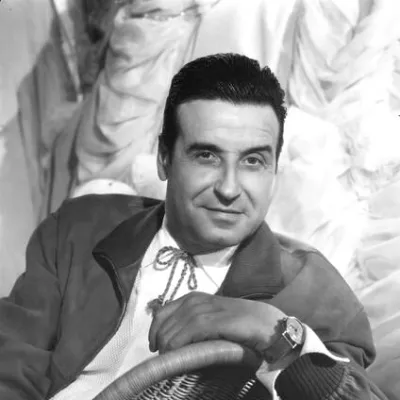
Boleslaw Barlog
Human Design Chart
Biography
Barlog's autobiography, Theater lebenslänglich, was published in 1981. He died in Berlin on 17 March 1999 shortly before his 93rd birthday.
Boleslaw Barlog as a Projector 3/5 in Human Design
Projector 3/5 — Design at a Glance
Boleslaw Barlog revealed himself as someone with a focusing aura that made system errors in his environment immediately apparent. His Human-Design type was Projektor, which described his energy like a bright flashlight: it shone directly on areas in others that were not functioning optimally or "in the dark." This configuration allowed him to quickly identify weaknesses.
However, the mechanics of his design suggested that addressing these errors head-on would provoke resistance. Instead of being confrontational, his strategy was to attract through his own harmony and wait for an honest, appreciative invitation from others. By setting a shining example himself, he invited others to ask about his insights rather than overwhelming them with his light.
Furthermore, Boleslaw Barlog did not have a defined Sacral Center, meaning he lacked a constant source of life energy. His energy management consisted of phases of high activity followed by mandatory rest periods to avoid burnout. Ignoring this cyclical pattern would have put him at risk. Living according to this design rewarded him with success; deviating from it brought the non-self theme of bitterness into play. His path was marked by the balance between his sharp perception and the patience required until others were ready to accept his leadership.
Splenic Authority
Boleslaw Barlog's Human Design suggests a tendency towards spontaneous and immediate decision-making. His inner authority resides in the defined Spleen Center, which means his Emotional and Sacral Centers are open – a configuration that only Projectors or Manifestors can have. The Spleen functions as his health and alarm system, equipped with an acute survival intelligence. This shows not as long-term strategy but as spontaneous inner knowledge: A subtle impulse signals immediately whether a situation, environment, or society is right for him. His instinct and physical well-being thus serve as reliable indicators of his health.
For Boleslaw Barlog, the rule was that the first, spontaneous impulse was the correct one. This served directly to protect him and allowed him to rigorously shield against harmful influences. Since this Spleen voice is a very fine, singular impulse in the moment, there was a risk it could be drowned out by other influences. This required from him high vigilance; occasionally withdrawing for decision-making might have been helpful. Because he always knew only in the moment what was right for him, his plans often changed frequently in the short term. Long-term commitments were therefore difficult and counterproductive. His design needed a lot of space and flexibility; he should commit as little as possible and act spontaneously to maintain his natural alignment.
The 3/5 Profile — Martyr / Heretic
Boleslaw Barlogs Design was characterized by a fundamental skepticism towards established truths. He initially believed nothing and had to personally test everything to understand it. This attitude of Line 3 of Profile 3/5, the experimenter and hero, dictated learning exclusively through trial and error as well as detailed work. Abbreviations were worthless to him because they neglected important details and limited genuine insight.
His practical experience formed the basis for his role as a hero or savior in Line 5. The self-acquired knowledge became a solution for others, exerting a strong attraction on those around him. People sought his advice because they were interested in his authentic, experiential authority. This heroic role flattered him but carried a specific risk: failure often occurred in the public eye.
The mechanics required him to carefully weigh each experiment. His energy was available only for practical solutions, coupled with a strong instinct for self-protection and defense. He had to remain vigilant to avoid being swayed from his path by external influences or temptations. The challenge lay in accepting attacks as part of necessary defense without losing himself in this role. His value lay in passing on only what he had validated through hard-won experience.
Single Definition — Defined & Open Centers
Boleslaw Barlog was characterized by a deeply rooted intuition and a constant existential pressure. His defined Spleen Center served as his personal authority, making decisions in the immediate present – not through rational analysis but through spontaneous instincts and non-verbal recognition of what was healthy and correct. This vital information allowed him to make trustworthy judgments based on an ongoing attunement with his body's intelligence. Simultaneously, his defined Root Center provided the necessary adrenalized pressure to survive and progress in the material world. This inner drive ensured a stable energy base that enabled him to handle challenges with a set form of stress management and nourish existential awareness.
This stable foundation stood in stark contrast to his numerous open centers, which functioned as mirrors reflecting his environment. His open G Center lacked a fixed identity or direction; instead, its sense of purpose crystallized only when he was in the right place and initiated by the correct surroundings. Similarly, his open Heart Center was not designed to assert willpower or ego, making him vulnerable to wanting to prove his worth unnecessarily rather than simply being himself. Likewise, his open Sacral Center lacked a constant energy flow, forcing him to learn how to avoid being overwhelmed by others' generative energy and set boundaries. Additionally, the open Head, Ajna, and Throat Centers acted as flexible mirrors for mental inspiration and communication, while the open Solar Plexus Center absorbed and amplified emotions from the environment without producing them constantly. This openness allowed him to adapt to various situations but challenged him to always trust his inner Spleen authority rather than being guided by external influences.
Channels for logical judgment and correction.
Boleslaw Barlog's design inclined towards a constant logical scrutiny of reality, driven by an insatiable urge for pattern correction and perfectionism. This attitude was evident through Channel 58-18, which connected the Root Center with the Spleen Center. Gate 58 provided vital life energy with the impulse to 'be better and more,' while Gate 18 acted as a sentry checking what was healthy or correct. This mechanism aimed to find satisfaction in the collective by reviewing patterns to determine if they brightened life.
The mechanics required careful selection of battles: correction and judgment should only be expressed when explicitly asked for, such as with the question 'Is something wrong here?' Uninvited criticism led to energy waste and conflicts; invited judgment brought solutions and peace. The challenge lay in not letting inner perfectionism manifest as constant self-criticism or projection onto others, which would otherwise have been perceived as pervasive dissatisfaction.
Additionally, Gate 17 of Success contributed by fostering logical teaching and organizing for the future. It rooted in maintaining fundamental human rights and aimed at individual emancipation. Genuine understanding was a prerequisite for this organization. Doubt was considered an essential part of this healthy process. Parallel to this, Gate 52 represented a self-imposed pause for reflection and concentration. This gate required intense focus on pattern correction; without clear goals, it could lead to stress, while productive use or depression were possible outcomes. This configuration shaped Barlog's approach to contributing through focused analysis and conditional judgment towards improvement.
Collective Circuitry — Circuit Signature
Boleslaw Barlog's design inclined toward clear, strategic intelligence. He was someone who used logical structures to pursue societal improvements – independent of emotional impulses. This orientation resulted from the Mind Circuit in his configuration.
This circuit focuses on improving society through logic, strategy, and structure. A central theme is sharing rational insights ideally free from conditioning. In Barlog's case, specifically Channel 18/58 was active. This channel connected the Spleen Center with the Root Center. Since both centers were in the same group, they formed a direct energetic flow.
The Spleen Center provided visual intuition and the ability to recognize patterns. The Root Center supplied necessary focus and driving force. Together, this connection enabled precise judgment capability. Barlog could thus analyze complex situations and develop strategic solutions based on facts rather than feelings. The energy of this channel was geared towards improving things and guiding them into a better future. Given that Barlog had a simple definition, this power worked coherently without internal contradictions between separate groups. His design marked him as someone who combined visual clarity with strategic action to share rational insights and optimize structures.
Right Angle Cross of Service 1
Boleslaw Barlog's inner compass was shaped by the right cross of service. This configuration established an archetypal dedication to serving the whole or others, driven not by ego-centric ambitions but rather by a deep spiritual responsibility. His design did not locate his existence in the cosmos through striving for individual greatness, but rather through a quiet, constant orientation towards the welfare of the community or higher principles.
This cross acted as a subtle background current that guided his decisions and life feelings beyond obvious mechanical aspects. It gave his personality a layer of self-sacrifice that was primarily reflected in his inner attitude. Challenges or suffering were not interpreted as personal defeats but understood as an integral part of a greater service. This structure created a foundation of quiet endurance and responsibility awareness. It determined the way Boleslaw Barlog perceived his role in the world: not as a center, but as a serving instance within a larger system. This inner disposition shaped his being sustainably and offered him a clear, though often unconscious, life task that transcended external recognition.
Saturn Return · Uranus Opposition · Chiron Return · 2nd Saturn Return — Life Cycles
Boleslaw Barlog's design was characterized by a clear tendency towards structural anchoring and institutional maturity. His life phases followed a rhythm of consolidation: in 1937 at the age of 31, he appeared as an assistant director under Wolfgang Liebeneiner and Helmut Käutner at UFA. This marked his first Saturn return, a cycle where years of groundwork often condense into solid professional foundations. The Uranus opposition in 1945 (age 39) brought a necessary transitional phase; Barlog contributed to the reconstruction of Berlin's theater landscape that year, reflecting the typical dynamics of this transit: old structures are dismantled to make way for new ones.
With his Chiron return in 1953 (age 47), his path entered a phase of fulfillment and visible recognition. In this year, he received the Cross of Merit of the Order of Merit of the Federal Republic of Germany. This cycle signals not healing but the flowering of one's purpose; if one lives according to their inner authority, the meaning becomes experiential and socially honored. The second Saturn return in 1963 (age 57) crowned this development: his membership in the Berlin Academy of Arts confirmed his lasting institutional anchoring. This sequence shows a life that did not drift in chaos but continuously gained weight and structure – from an assisting role through reconstruction to established mastery.
Projector · Splenic Authority — Synthesis
Boleslaw Barlog lived a path marked by a deep understanding of patterns and their correction (Channel 58/18). His ability to recognize
1 Defined Channel
Incarnation Cross - Right Angle Cross of Service 1
Solar Return
The Solar Return shows the moment when the sun returns to its exact birth position - your personal solar year.
Life Cycles
Discover the life cycles with a detailed triple view (birth chart, cycle chart, composite).
Human Design Profile
- Type
- Projector
- Strategy
- Wait for the respectful invitation
- Authority
- Splenic Authority
- Profile
- 3/5 - Martyr / Heretic
- Definition
- Single Definition
- Incarnation Cross
- Right Angle Cross of Service 1
- Date of Birth
- 28.03.1906 01:00
- Place of Birth
- Breslau, Germany
Frequently Asked Questions
What was Boleslaw Barlog's Human Design type?
What profile did Boleslaw Barlog have?
What authority did Boleslaw Barlog possess?
What incarnation cross did Boleslaw Barlog have?
When was Boleslaw Barlog born?
Discover your own Human Design
Are you also a Projector? Find out in a personal reading how to unfold your leadership qualities and recognize the right invitations.
More Personalities
Back to overviewSissy Spacek

Alain-Fournier

Anémone

Ann-Margret

Bourvil

Christian-Jaque