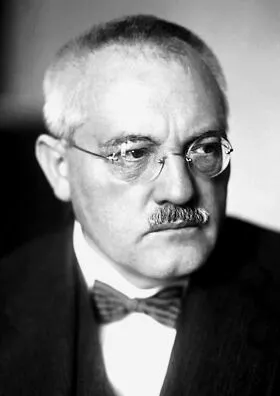
Carl Bosch
Human Design Chart
Biography
He died on 26 April 1940 in Heidelberg, Germany, after years of suffering from alcohol abuse and depression.
The Human Design of Carl Bosch: Generator 5/1
Generator 5/1 — Design at a Glance
Carl Bosch possessed immense and enduring strength that served him as a Generator. His design functioned like a strong workhorse, offering enormous energy potential for the materialization of tasks, but only under one specific condition. This power did not ignite through spontaneous initiatives or forcing goals, but exclusively in response to inner signals.
The central mechanics of his character lay in reacting rather than initiating. His sacral energy became effective when he responded to impulses from life and gave a clear 'yes' to his gut feeling. When Carl Bosch acted in harmony with these signals, responding to life's cues instead of forcing himself to take the first step, he experienced deep satisfaction and inexhaustible endurance.
Conversely, ignoring this strategy inevitably led to frustration and energy loss. If he did things that he had no inner desire for or if his heart project was hindered while he still felt full of power, his system fell out of sync. Such forced initiatives or suppression of impulses acted as stumbling blocks threatening to block his energy flow. His success thus depended less on sheer effort alone and more on whether his actions authentically responded to inner resonance. Only through this reactive stance could he unleash his full potential without succumbing to exhaustion or burnout.
Sacral Authority
Carl Bosch followed a clear inner logic: his decisions did not arise from analytical planning but as a direct physical response to external triggers. As a Generator, his strategy was reacting, which was identical with his sacral authority. This mechanism greatly simplified his process since he needed no separate instance for direction-finding.
His inner truth manifested physically: through a grunt, an 'Mhm', or a palpable surge of energy in the lower abdomen as a reaction to a stimulus. These signals were the clear 'yes'. When Carl Bosch followed this resonance, vital aliveness emerged. He had seemingly inexhaustible energy and tackled his tasks with great enthusiasm, fully immersed in the activity itself without needing an external purpose.
Additionally, the supporting role of the Spleen Center came into play here. This configuration allowed him quick, spontaneous reactions and immediate access to his instinctive perception. He could reliably guide himself from this physical well-being. The combination of sacral confirmation and spleen-supported speed shaped his way through life: vital, enthusiastic, and in constant resonance with what engaged him.
The 5/1 Profile — Heretic / Investigator
Carl Bosch revealed himself as someone who possessed deep experimental knowledge and offered it to others almost magnetically for problem-solving. His design inclined towards this dual nature: intense, often isolated research work stood in tension with the external expectation of seeing him as an authority during crises.
This aligned with the Profile Hero/Researcher (5/1). Line 1 described a lifelong process of identifying with experiments and developing skills through daydreaming to recognize patterns – a creative but also self-deceptive process where the realizability of plans often remained open-ended.
Simultaneously, the energy of Line 5 acted as an alluring force, comparable to the archetypal image of Casanova or the Femme Fatale. This charisma drew others in, especially during crises, with this allure functioning as a power instrument; people unconsciously sought his solutions and were willing to subordinate themselves.
This dynamic created a high risk of exhaustion if no clear boundaries were set. Carl Bosch had to learn to say 'no' to protect his research time from constant demands. Only in this way could he maintain the balance between private experimentation and public problem-solving without being drained. He used his gifts optimally by balancing the tension between deep knowledge and charismatic mediation.
Split Definition — Defined & Open Centers
Carl Bosch revealed himself through a design based on constant inner structure: defined Throat, G, Sacral, and Spleen centers formed his mechanical foundation. He had reliable expression and clear identity (G/Throat), inexhaustible vital energy in response rather than initiation (Sacral) as well as spontaneous, intuitive body intelligence in the present moment (Spleen). This constellation guaranteed him a constant presence in expression and energy availability.
In contrast, Head, Ajna, Heart, Solar Plexus, and Root centers were open. They served as situational antennae reflecting environmental pressure, emotions, and mental inspiration without identifying these as their own truth. The challenge lay in deconditioning: Carl Bosch tended to personalize external input or compensatorily use willpower and intellect. Thus, he could question whether he was inspiring enough (open Head Center) or trying to prove his worth through promises (open Heart Center). He also absorbed the emotions of his environment (more open Solar Plexus) as well as the adrenalized stress of others (open Root), making him vulnerable to overexertion if he did not recognize these states as borrowed.
The mechanics clearly distinguished between his own defined design and the borrowed states of the environment. Carl Bosch's strength lay in trusting his inner authority – the sacral response and the spleen-intuitive warning – rather than losing himself in mental confusion or emotional waves. By learning to use these open centers as mirrors instead of their own reality, he could efficiently apply his defined energy without being overwhelmed by external pressure. This allowed him to lead a stable and authentic life despite constantly absorbing foreign energies and thought streams.
Channels for leadership, reflection and caring preservation.
Carl Bosch revealed himself as a leadership figure who did not operate through authoritarian commands but rather through logical pattern effectiveness and trust. His design connected the ability for collective guidance with deep responsibility for maintaining shared values, stemming from three central channels in his Human Design.
The Alpha Animal channel 7-31 shaped his leadership style as logical and future-oriented. Gate 7 provided the strategic role – often described as the 'power behind the throne' – to understand societal patterns while Gate 31 was the voice of the collective leader. Carl Bosch could thus set a clear direction based on tested facts, offering security. His authority did not rest on absolute rule but rather on being recognized by the community as competent; he only led effectively when invited to assume this role.
This logical leadership was embedded in a process of reflection through the Lost Son channel 13-33. Gate 13 gathered information and secrets as a natural listener, while Gate 33 created the need to withdraw to process these experiences. Carl Bosch used this mechanism to learn from the past and recognize deeper truths before communicating them. This gave his leadership historical depth and continuity; he understood that true wisdom requires time to reveal itself.
This profile was reinforced by the Preservation channel 27-50, which combined instinctive care with the preservation of tribal values. Gate 27 provided selfless support and sustenance – both material and emotional – while Gate 50 protected traditional laws and structures securing community well-being. Carl Bosch carried a strong responsibility for protecting and providing for his 'tribe', whether in professional or personal contexts. His energy served to maintain order and ensure that the values he held dear were passed on.
Together, these channels formed a profile of someone who exercised leadership through patient listening, logical analysis, and instinctive care. Carl Bosch was not an impulsive actor but someone who took his position only when circumstances and community trust allowed it. His strength lay in condensing complex information into stable value-based structures that stood the test of time.
Collective Circuitry — Circuit Signature
Carl Bosch revealed a design connecting cool future logic with emotional past reflection, underpinned by primal protective impulses. The Understanding Circuit shaped him through the Alpha Animal channel linking Throat and Identity centers. This promoted sharing rational insights for societal improvement, free from conditioning. Parallel, the Meaning-Finding Circuit operated via the Lost Son channel also between Throat and Identity. Here, cyclical emotions from the past dominated; Carl Bosch reflected on events to learn collectively with the community. These two circuits formed separate parts of his Shared Definition: strategic future shaping on one hand, emotional meaning-finding on the other.
A third independent block came from the Protector Circuit. The Preservation channel linked Sacral and Spleen centers in Carl Bosch, generating instinctive energies for family and genetic protection focused on preservation, care, and nutrition. This was timeless, primal impulses of care and defense of what exists.
Overall, his energetic structure consisted of these three separate groups: the connection between Throat and Identity centers (in two different circuits) as well as the connection between Sacral and Spleen centers. Between these groups there was no direct flow; they existed as parallel, side-by-side forces in his design.
Left Angle Cross of Spirit 2
Carl Bosch was marked by the left cross of Spirit 2, a configuration that brought a profound impulse towards inspiration and breaking existing structures. This design element set a spiritual dynamic in motion that did not want to remain stagnant but constantly sought new paths to break old patterns. It was not about arbitrary destruction but rather a necessary process of renewal where the old had to give way for something new to emerge.
The mechanics of this cross described a life task consisting of inspiring others and simultaneously questioning his own limits. Carl Bosch carried this energy as a driving force within him, pushing him not to be content with what was given. Instead, he sought ways to loosen or even break structures to make room for higher insights and more creative solutions. This attitude significantly shaped his work: He contributed through his presence and approach to setting things in motion that previously seemed rigid. The spiritual dimension here was central; it went beyond practical changes towards a deeper transformation that worked from within and became visible on the outside.
Saturn Return · Uranus Opposition · Chiron Return · 2nd Saturn Return — Life Cycles
Carl Bosch's design was characterized by prominent cyclical turning points structuring his life. These phases appeared as planetary oppositions and returns, profoundly shaping his development.
At age 40 in 1914, the Uranus Return occurred. This cycle often promoted sudden changes or new initiatives. That year, Bosch founded the Agricultural Experimental Station Limburgerhof. This action mirrored the impulsive and innovative character of this astrological moment, breaking established structures to pave new ground.
A more severe interruption came with the Chiron Return at age 47 (1921). This cycle marked a phase of fulfillment testing and meaning finding, not healing old wounds. Instead of a harmonious bloom, harsh reality was revealed: The explosion of the Oppau nitrogen plant claimed lives and injured people. This event interrupted the expected flow of self-realization through a deep crisis that made his responsibility and the dark sides of his work visible.
The second Saturn Return at age 57 (1931) finally brought long-term stabilization and recognition. After previous turbulence, decades-long efforts condensed into a sustainable result: Carl Bosch received the Nobel Prize in Chemistry alongside Friedrich Bergius. This success confirmed the structure that emerged from preceding crises and changes, anchoring his life's work within the scientific community.
Generator · Sacral Authority — Synthesis
Carl Bosch lived a life deeply influenced by reactions to the environment. As a Generator, he constantly received impulses from the world and responded with tireless energy—as long as this reaction fulfilled his sacral center. This ability to immerse himself in the flow of life was strengthened by an acute strategic depth that enabled him to explore complex problems and provide solutions for others. His profile as Hero/Researcher points to a person who both accumulates knowledge and makes it accessible to others, always connected with inner direction through his defined G Center. The combination of reactive energy and the need for deep understanding formed the red thread of his actions.
Simultaneously, a central paradox in his design revealed itself: the tension between the ability to react powerfully and make things happen (Sacral Center) and the open nature of his emotional, mental, and root centers. While he received clear responses to external stimuli through his sacral authority, he was also vulnerable to conditioning and influences from the environment. This openness created a field of tension between inner clarity and outer pressure, forcing him constantly to check the authenticity of his reactions and protect himself from overexertion.
3 Defined Channels
Incarnation Cross - Left Angle Cross of Spirit 2
Solar Return
The Solar Return shows the moment when the sun returns to its exact birth position - your personal solar year.
Life Cycles
Discover the life cycles with a detailed triple view (birth chart, cycle chart, composite).
Human Design Profile
- Type
- Generator
- Strategy
- To respond - wait for something to respond to
- Authority
- Sacral Authority
- Profile
- 5/1 - Heretic / Investigator
- Definition
- Split Definition
- Incarnation Cross
- Left Angle Cross of Spirit 2
- Date of Birth
- 27.08.1874 23:15
- Place of Birth
- Köln, Germany
Frequently Asked Questions
What was Carl Bosch's Human Design type?
What profile did Carl Bosch have in Human Design?
What authority guided Carl Bosch?
What incarnation cross did Carl Bosch have?
When was Carl Bosch born?
Discover your own Human Design
Are you also a Generator? Find out in a personal reading how to use your sacral energy correctly and discover deep satisfaction.
More Personalities
Back to overviewAaliyah

Alexia

Angèle

Anne-Marie

Arcángel

Arno