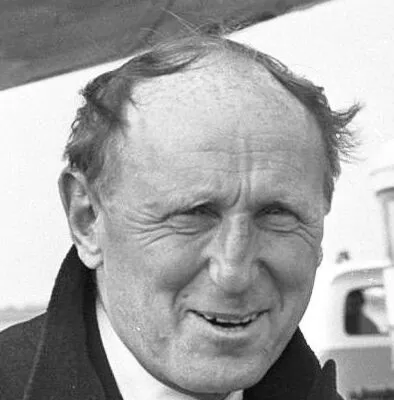
Photo: Wikimedia Commons
Carl Sternheim
Human Design Chart
Biography
Sternheim studied philosophy, psychology, and law at the Universities of Munich, Göttingen, Leipzig, and Berlin and performed his military service in a cavalry regiment. His family’s money and that of his first two wives left him free to write, and he traveled most of his life.
He began writing plays at the age of 15, but his early plays were derivative. His best plays were produced from 1911 through 1916, being collectively titled Aus dem bürgerlichen Heldenleben(“From the Lives of Bourgeois Heroes”). The first play, Die Hose (The Underpants), was published and performed in 1911 under the title Der Riese (“The Giant”) because the Berlin police had forbidden the original title on the grounds of gross immorality. It has as its main character Theobald Maske. He and others of the Maske family also appear in Der Snob (published and performed 1914), 1913 (published 1915 and performed 1919), and Das Fossil (published 1925 and performed 1923), the four plays forming the Maske Tetralogy. The plays portray the family as self-indulgent social climbers masked by bourgeois propriety. Sternheim’s later plays were less successful. The telegram-like language used by Sternheim in the early plays is a kind of bridge between Frank Wedekind (whose daughter Pamela was his third wife) and Bertolt Brecht. Sternheim is frequently named among the Expressionist dramatists, but he straightfacedly maintained he was a realist. The petite bourgeoisie he attacked were, of course, represented by his own family. Sternheim’s short and long fiction was in an avant-garde style that precluded success.
Sternheim was married three times and had three children.
Carl Sternheim — Projector with Profile 3/5
Projector 3/5 — Design at a Glance
Carl Sternheim revealed himself as a person with an intense, focused aura that often directly addressed his surroundings. As a Projector, he did not have a constant internal energy source but worked in phases of high concentration followed by necessary rest periods for recovery. His design gave him the ability to immediately recognize systemic errors and weaknesses in others – similar to a bright flashlight shining into darkness.
This direct perception could be misunderstood if used without invitation. Instead of openly expressing his observations, which often met resistance, Carl Sternheim was most effective through his own harmonious example. When he lived a successful life himself, people were naturally drawn to him; they then actively sought his advice and invited him to illuminate their problems.
His strategy involved waiting for such honest invitations rather than forcing himself upon others. Living by this principle rewarded him with success. Ignoring the necessity of an invitation or neglecting his recovery phases led sooner or later to his typical non-self experience: deep bitterness. His influence therefore rested less on constant action and more on the radiant quality of his own presence and patient waiting for the right moment to lead others.
Emotional Authority
Carl Sternheim showed an internal structure that did not make decisions based on first impulses but subjected them to a necessary maturation period. His inner authority lay in the defined Emotional Center – a mechanism that always took precedence over all other centers independently. This meant he followed emotional waves that temporarily clouded his judgment: What appeared highly convincing at one moment could seem completely inappropriate the next. Therefore, his design required patience; spontaneous reactions to these fleeting moods often led to poor decisions since the first impression did not yet reveal the deeper truth.
Instead, Carl Sternheim used time as a filter. By letting decisions mature overnight and asking himself multiple times, intense feelings subsided. Only when this emotional distance set in did the necessary clarity and calmness emerge. This process was crucial for long-term life decisions: only by waiting out the emotional wave could he discern what truly mattered. Thus, his initial restlessness transformed into a grounded, serene certainty – not through quick intuitive access but through conscious endurance, giving his feelings time to reveal their true significance.
The 3/5 Profile — Martyr / Heretic
Carl Sternheims design inclined him towards being an adventurous hero who learned by personal experimentation and later passed on this authority based on experience. As a 3/5 profile (Explorer/Hero), he initially believed little in preordained truths; instead, he had to learn everything himself to gain knowledge. This line of the experimenter drove him to solve problems through his own practice, making him attractive to others who wanted to learn from his mistakes and successes.
At the same time, the five-line (Alienation) marked an inner distance. It prompted him to isolate himself in crisis times to find solutions within his own context. This self-separation was not a lack of community spirit but a strategic retreat that allowed him to develop mutations – new perspectives – as a lone fighter. Confronting superior forces or futile resistance often led to experiences of powerlessness when he could not avoid dependencies. His path was thus marked by a tension field: the urge to experiment before others and thereby fail or shine versus the necessity to withdraw to hear his own voice and solution clearly. This mechanism created a figure who, through practical life experience, appeared authoritative but internally always sought independence from external determinants.
Triple Split Definition — Defined & Open Centers
Carl Sternheims Human Design profile suggests a tendency towards constant mental pressure to question and form concepts. The definition between the Head Center and Ajna Center creates a continuous stream of inspiration that pushes him to understand connections. However, this mental process is not directly linked to energy for implementation; while his Throat Center translates thoughts into communication, without its own motoric function, they remain pure inspiration. The challenge lies in enduring this pressure rather than releasing it through hasty actions, which often led to frustration when the world did not react.
Simultaneously, his defined Solar Plexus Center shapes his emotional authority. Carl Sternheim is destined to make decisions after experiencing an emotional wave. Patience is essential here to gain clarity and prevent impulsive reactions. However, his open G Center means no fixed identity or direction. He tends to blend with his environment and seeks the right place where he can flourish rather than following a set life path. This makes him vulnerable to questioning who he truly is when not in correct relationships.
His open Heart Center lacks consistent willpower. Carl Sternheim was not designed to make promises or push through resistance. Instead, he risks wanting to prove his worth through overcompensation, leading into cycles of self-doubt if expectations are not met. His open Sacral Center amplifies the energy of others but leads to exhaustion as it does not provide its own generative power. He must learn to set boundaries and rest rather than running on borrowed energy. However, his defined Root and Spleen Centers offer existential security and intuition in the present moment, protecting him from unhealthy stress reactions when he follows his inner authority.
Channels for intuitive experiments, doubt, drive and emotions.
Carl Sternheims Human Design profile suggests a tendency towards healthy skepticism. His Channel of Logic 63-4 connects Head Center to Ajna Center, creating a doubting mind that constantly filters patterns. Only verifiable, consistent connections are accepted; unfounded belief finds no place here. This analytical sharpness contrasts with his emotional depth. The Channel of Recognition 30-41 links Root and Solar Plexus Centers, generating a strong drive for new experiences driven by restlessness and intense feelings. Sternheim seeks not just the new but wants to feel it deeply, needing time for emotional clarity.
Parallel to this is a need for perfectionism. The Channel of Wavelength 48-16 connects Spleen and Throat Centers. Here an intuitive depth (Gate 48) transforms through repeated experimentation and technical skill (Gate 16) into concrete talent. This design requires engagement to achieve mastery; recognition and resources are needed to maintain this process of refinement.
Additionally, the Channel of Emotion Release 39-55 shapes his aura. It links Root with Solar Plexus Centers, setting a pulsating wave of moods in motion – between ecstatic joy and melancholic uncertainty. This provocation (Gate 39) serves to strengthen or challenge others' minds depending on his own mood. Sternheim relies on living this emotional spectrum authentically for his transformative power to be effective. Individual Gates like the Gate of Resistance (38) and the Gate of Control (21) further emphasize the need to set boundaries to preserve individual integrity and overcome material obstacles in service of a larger community or structure.
Collective Circuitry — Circuit Signature
Carl Sternheims Human Design profile sets up three separate, parallel operating energetic streams that do not merge. The Knowledge Circuit connects his Solar Plexus Center with Root Center, generating an emotional wave urging the acoustic and creative expression of new insights. Parallel to this, the Understanding Circuit operates in two isolated parts: Head and Ajna Centers generate focused visual logic for the future while Throat and Spleen Centers share these rational insights strategically – free from emotional coloring. The third stream, the Meaning Finding Circuit, also links Solar Plexus and Root Centers. Here it is about cyclically reflecting on past experiences to recognize their deeper meaning and sharing these felt insights with the collective. This triple definition means no unified action capability but three coexisting fields of tasks: emotional transformation through new expression, cool rational strategy for the future, and sense-making processing of the past. Carl Sternheim does not experience these various energies as a continuous flow but as separate impulses each possessing its own dynamics.
Right Angle Cross of Tension 1
Carl Sternheims design points to a tendency towards inner conflict that served as a driving force. He was someone whose energy flowed through a specific tension: the right cross of Channel 1. This configuration linked the impulse for self-assertion with the necessity to adapt in relationships. Instead of harmonious unity, there was a constant friction between the desire for independent action and the pressure to respond to others.
This mechanical tension shaped his way of experiencing the world. It was not merely a weakness but a source of intense inner dynamics. Carl Sternheim had to learn to accept these opposing forces not as flaws but as his unique engine. His energy flowed efficiently only when he harnessed the resistance between self-will and adaptation pressure, rather than avoiding it. This created a characteristic intensity in his actions and thoughts, rooted in this fundamental disharmony. His design challenged him to integrate this tension into a unique yet often arduous life force.
Saturn Return · Uranus Opposition · Chiron Return · 2nd Saturn Return — Life Cycles
Carl Sternheim's Human Design showed a tendency towards deep structural breaks that acted as catalysts for new life phases. This was particularly evident in his first Saturn return: in 1906, at the age of 28, he divorced Eugenie Hauth. This crisis marked the end of a developmental phase and created space for necessary reorientation.
The Uranus opposition around age 40 brought sudden, often disruptive energy into play that dissolved old bonds to enable innovation. In 1918, Sternheim published "Chronik von des zwanzigsten Jahrhunderts Beginn" (Chronicle of the Twentieth Century's Beginning). This work was characterized by this Uranian dynamism: a career-defining act driven by pressure for change and breaking with convention.
The Chiron return around age 49 in Human Design is not a healing process in a medical sense, but rather a fulfillment cycle where one's incarnation task deepens and becomes experientially meaningful – provided that one follows strategy and authority. For Sternheim, this period of flowering coincided with his divorce from Thea in 1927. This separation was not merely a crisis but a step towards the unfolding of his true purpose, free from no longer sustainable structures.
In his second Saturn return at age 57, this new order stabilized further. In 1935, he lived in exile in Belgium with Henriette Carbonara. This phase showed the condensation of previous experiences into a viable yet displaced life reality. The external circumstances of exile underscored the inner necessity to focus on essentials and find a new stable foundation.
Projector · Emotional Authority — Synthesis
Carl Sternheim was a Projector whose life was marked by a deep inner tension between the urge to recognize and correct patterns (Logic Channel 63/4) and his emotional wave. He acted as an Observer who quickly identified weaknesses in systems but needed time for his insights to mature and be communicated appropriately. This interplay of sharp intellect and emotional depth formed a red thread running through his work—a constant questioning of existing structures and the highlighting of alternative paths.
Central to Sternheim was a paradox between the desire for recognition as an expert (Profile 3/5) and an inner skepticism that compelled him to test everything himself and verify it. The Knowledge Circuit drove him to generate new insights and express them, while the right cross of tension 1 pointed towards internal conflict. Crisis phases (documented events during Saturn Return and Chiron Return) corresponded with breaking old patterns and searching for authentic expression, which was reflected in changes to his life circumstances.
4 Defined Channels
Incarnation Cross - Right Angle Cross of Tension 1
Solar Return
The Solar Return shows the moment when the sun returns to its exact birth position - your personal solar year.
Life Cycles
Discover the life cycles with a detailed triple view (birth chart, cycle chart, composite).
Human Design Profile
- Type
- Projector
- Strategy
- Wait for the respectful invitation
- Authority
- Emotional Authority
- Profile
- 3/5 - Martyr / Heretic
- Definition
- Triple Split
- Incarnation Cross
- Right Angle Cross of Tension 1
- Date of Birth
- 01.04.1878 07:15
- Place of Birth
- Leipzig, GER
Frequently Asked Questions
What is Carl Sternheim's Human Design type?
What Profile did Carl Sternheim have in Human Design?
Which authority governed Carl Sternheim's decisions?
What incarnation cross determined Carl Sternheims life purpose?
When was Carl Sternheim born?
Discover your own Human Design
Are you also a Projector? Find out in a personal reading how to unfold your leadership qualities and recognize the right invitations.
More Personalities
Back to overviewSissy Spacek
Alain-Fournier
Anémone

Angeli
Ann-Margret

Bourvil