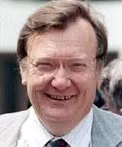
Carlo Rubbia
Human Design Chart
Biography
Rubbia’s interest in science developed in the years during and after World War II. The Allied armies discarded a great deal of communications equipment that he collected and used for his experiments. He received his education at the Scuola Normale in Pisa where he did his thesis on cosmic ray experiments. He earned his doctorate from the University of Pisa in 1957 and taught there for two years. He eventually moved to the United States and became a research fellow at Columbia University in an effort to gain experience with particle accelerators.
In 1960, he joined the faculty of the University of Rome, and in 1962, he became the senior physicist at the European Centre of Nuclear Research (CERN, now the European Organization for Nuclear Research) in Geneva. After he was appointed professor of physics at Harvard in 1970, the aggressive and outgoing Rubbia continued his work at CERN.
What does Projector 1/3 mean for Carlo Rubbia?
Projector 1/3 — Design at a Glance
Carlo Rubbia's design tends towards focused perception, allowing him to instantly identify weaknesses in complex systems. As a projector, his aura shone like a bright flashlight, illuminating areas that were still in the dark around him. However, this ability to pinpoint flaws was only effective when not communicated directly and aggressively. Immediate addressing of deficiencies often provoked resistance in others, similar to shining a bright light directly into their eyes.
Instead, his approach was more elegant: By radiating his own harmony and competence, he attracted others who actively sought his insights. His strategy involved waiting for a respectful and sincere invitation before sharing his knowledge. Since projectors do not have a constant, intrinsic energy source, phases of intense work were limited by necessary rest periods to avoid burnout. Living by this logic rewarded him with success; ignoring it led to bitterness. His influence thus did not rely on constant presence but on precise, invited guidance.
Emotional Authority
Carlo Rubbia's design tends towards emotional depth and wave-like decision-making. As a person with defined emotional authority, he was subject to an internal dynamic of constant emotional ups and downs. The world appeared to him colored by his current mood: total enthusiasm in one moment, negative evaluation in the next. His immediate feeling was merely a snapshot, a first impression that did not necessarily represent the truth. Quick, spontaneous decisions based on such emotions could therefore have negative consequences.
The mechanics of his inner authority, carried by the defined Emotional Center, required patience. The more time he took to let a decision mature, the deeper and more comprehensive his understanding became. This meant that he should hesitate, be asked multiple times, and sleep on decisions. Over time, the intense feelings subsided, he gained emotional distance, and clarity and calmness set in. Only then had he gone through the process. This rule applies regardless of other defined centers: Whenever the Emotional Center is active, it is also the inner authority. This process was crucial for long-term decisions that could have a significant impact on his life path.
The 1/3 Profile — Investigator / Martyr
Carlo Rubbia's design tends towards understanding knowledge not just theoretically but through active experimentation and direct action. As a 1/3 Profile, the Researcher and Experimenter, he was geared towards gaining insights through trial and error. This configuration describes a learning path where Line 1 represents the drive for deep, self-acquired knowledge, while Line 3 drives the urge for practical testing and learning from mistakes.
For Carlo Rubbia, this meant that his judgment on a matter or method was only trustworthy once he had tested it both theoretically and practically. The energy of Line 1 could cause him to initially hold back, feeling he did not know enough to proceed with implementation. Yet, Line 3 challenged him to leave this state and experiment.
Additionally, Gate 21 (Line 1) dealt with themes like control, guidance, and the necessity of respect. This underscores that for him, the ability for self-determination and guiding processes was crucial, with violence only considered as a last resort. Gate 38 (Line 3) complemented this by emphasizing vitality and alliances, which often only lasted for the duration of a conflict or battle. His path was marked by the necessity of reaching a stable, tested position through personal experience and overcoming resistance.
Triple Split Definition — Defined & Open Centers
Carlo Rubbia's design points to a tendency towards constant mental pressure to question and develop concepts. This energy flows through his defined Head and Ajna Centers, placing him in a perpetual process of inspiration and conceptual processing. He had a firm way of thinking and could influence others to think along with him through his aura. However, since these centers do not have their own energy to implement ideas, it was crucial not to fight against resistance but to wait for the right moment to pass on ideas.
His defined Throat allowed him to reliably communicate these mental processes and bring them into the world. At the same time, he had a stable identity and direction through his defined G Center, which helped him show a clear path to himself and others without being dependent on others. His defined Solar Plexus Center acted as an inner authority; he had to wait for the emotional wave to gain clarity before acting. This gave his decisions depth and sensitivity, rather than impulsive reactions.
In contrast, Carlo Rubbia showed in areas that were not set. His open Heart Center made him vulnerable to the pressure to prove his worth through willpower and promises. Without this constant energy, he tended to overburden himself to gain recognition rather than trust his inner authority. His open Sacral Center also meant he did not have a constant generative energy. He was sensitive to the energy of his environment, could absorb and amplify it, but risked overworking himself if he did not listen to his limits. The challenge was not to identify this 'borrowed' energy as his own and instead respect rest periods to avoid exhaustion.
Channels for logical leadership, intuitive form and emotional recognition.
Carlo Rubbia's design points to a tendency towards healthy skepticism that transforms into verifiable patterns in answers. The Logic Channel 63-4 connects Head and Ajna Centers: Doubt (Gate 63) filters constantly until a consistent, practical pattern emerges that is logically sound. Unfounded belief found little room here; an answer was only valid if it worked.
Parallel to this, there was a capacity for collective leadership based on trust and verified patterns. The Alpha Channel 7-31 connects G and Throat Centers. This is not about absolute authority but the influence that arises when one understands trends and is invited to lead by the majority. The Voice (Gate 31) works when it takes logical roles (Gate 7) that give society security.
A deep, intuitive level shaped his behavior in the here and now. The Perfect Form Channel 57-10 connects Spleen and G Centers. Through acoustic sensitivity (Gate 57) and self-referential, intuitive action (Gate 10), a spontaneous clarity emerged that resolved unfounded future anxieties. It was about survival through self-love and creating beauty in the moment without needing external recognition.
Emotionally and energetically, a strong drive for new experiences propelled him forward. The Recognition Channel 30-41 connects Solar Plexus and Root. The pressure for change (Gate 41) heats up the imagination while the emotional wave (Gate 30) provides the necessary patience for clear decisions. This channel demands enjoying desires without succumbing to the pressure of immediate fulfillment.
Additionally, Gates like 21 (control of material things), 48 (deep pattern recognition), and 38 (setting boundaries to preserve integrity) were at work. Gate 39 brought selective analysis and provocation, while 32 sought continuity and 64 mental clarity from past experiences. Gate 62 provided patient detail work to logically grasp facts.
Collective Circuitry — Circuit Signature
Carlo Rubbia's design points to a tendency towards analytical clarity, paired with the ability to withstand emotional wave movements. As a Triple Defined, his chart consisted of three separate, parallel functioning energy groups that did not flow directly into each other.
The Understanding Circuit connected two isolated segments for him: The Head and Ajna Centers (intellectual inspiration) and the Throat and Identity Centers (self-expression). This promoted the sharing of logical, rational insights, free from emotional conditioning, with a focus on future-oriented structures.
Parallel to this, the Meaning Circuit worked, connecting the Solar Plexus and Root Centers. Here, it was about cyclical emotional waves from the past. This energy served to reflect on past experiences and find meaning before insights were shared.
The third group, the Integration Circuit, connected the Identity and Spleen Centers. This strengthened his individual survival strategy through intuitive security and leading power in the here and now.
This configuration shaped Carlo Rubbia as someone who separated cool logic and future-oriented strategies (Understanding) from the processing of emotional past waves (Meaning) while simultaneously possessing a strong, intuitive basis for his individual survival (Integration). The separate groups meant these forces existed alongside each other without a single, continuous flow.
Right Angle Cross of Tension 1
Carlo Rubbia's design inclines towards a clear and often direct way of perception, which relies less on diplomatic balance and more on the immediate recognition of tensions and conflict potential. This attitude is described by the configuration 'The right cross of tension 1'. In Human Design mechanics, this structure represents a specific kind of energy that does not seek harmony but rather the resolution of friction points through clear, sometimes even provocative intervention.
It is a dynamic that allows the individual to take a quick and unambiguous stance in situations where others hesitate or try to soften conflicts. The energy of this configuration acts like a catalyst, bringing hidden tensions to the surface so they do not fester beneath the surface. For Carlo Rubbia, this meant an inner inclination not to let social conventions or the expectation of always being 'nice' restrict him when a situation required clarity.
This mechanism supports a form of leadership or influence that is based on authenticity and the ability to address the truth of a situation – even if it is unpleasant – directly. It is not an energy of subtle manipulation but of open confrontation with what is. As a result, an atmosphere is created in which facades are stripped away and real, though sometimes rough, interactions can take place. Carlo Rubbia's chart shows this capacity to not fear tensions but to use them as a necessary part of the clarification process.
Saturn Return · Uranus Opposition · Chiron Return · 2nd Saturn Return — Life Cycles
Carlo Rubbia's design sets a trend for deep structural breaks and necessary renewals that condense into clear career phases. This dynamic is shown in the Uranus Return, a cycle often associated with a desire for freedom and breaking old boundaries. In 1971, at the age of 37, Rubbia became a physics professor at Harvard University. This step marked the beginning of a new, independent phase in which he broke away from earlier structures to solidify his own scientific identity.
Later, the energy of the Chiron Return came into play, a fulfillment cycle that lies between the 49th and 51st years of life. During this time, the individual's incarnation cross unfolds more and more in life, provided the person has lived according to their strategy and authority, making sense and purpose tangible. It is not a healing of old wounds but a blossoming of the life task. In 1984, at the age of 50, Rubbia received the Nobel Prize in Physics. This recognition was no coincidence but a visible confirmation of a long-term, consistently lived orientation. The Nobel Prize confirmed that his work touched the core of his existence and could fully unfold its effect in the life center.
Projector · Emotional Authority — Synthesis
A central red thread runs through the design: the intense engagement with patterns and their validation. The combination of a defined Head and Ajna Center (Logic Channel) generates a constant mental pressure to question and understand the world. This is reinforced by the profile of the Researcher/Experimentor, who not only grasps knowledge theoretically but also tests it practically on the heart and gut. Emotional authority also requires time to let these insights mature, intensifying the validation process – a continuous search for stability and reliability in the flood of information.
The design reveals a central paradox between the need to recognize and communicate patterns (Logic Channel, Projector) and the accompanying inner doubt. The ability to find errors in the system carries the risk of annoying others through direct confrontation. At the same time, there is a tension between the desire for deep understanding (defined Head) and the necessity to make decisions based on emotional waves (emotional authority). The documented events – a career as a professor and the Nobel Prize – seem to result from this interplay of critical thinking and deep understanding.
4 Defined Channels
Incarnation Cross - Right Angle Cross of Tension 1
Solar Return
The Solar Return shows the moment when the sun returns to its exact birth position - your personal solar year.
Life Cycles
Discover the life cycles with a detailed triple view (birth chart, cycle chart, composite).
Human Design Profile
- Type
- Projector
- Strategy
- Wait for the respectful invitation
- Authority
- Emotional Authority
- Profile
- 1/3 - Investigator / Martyr
- Definition
- Triple Split
- Incarnation Cross
- Right Angle Cross of Tension 1
- Date of Birth
- 31.03.1934 06:20
- Place of Birth
- Gorizia, Italy
Frequently Asked Questions
What is Carlo Rubbia's Human Design type?
What Profile does Carlo Rubbia have in Human Design?
What Authority determines Carlo Rubbia's decision-making?
Which incarnation cross is active for Carlo Rubbia?
When was Carlo Rubbia born?
Discover your own Human Design
Are you also a Projector? Find out in a personal reading how to unfold your leadership qualities and recognize the right invitations.
More Personalities
Back to overviewSissy Spacek

Alain-Fournier

Anémone

Ann-Margret

Bourvil
Christian-Jaque