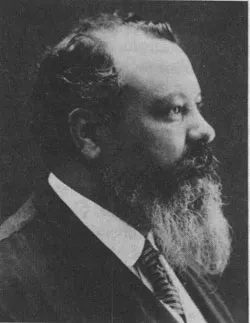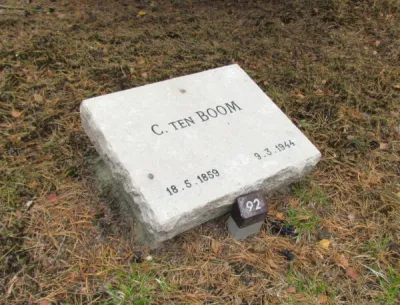
Casper ten Boom
Human Design Chart
Biography
What does Manifestor 3/5 mean for Casper ten Boom?
Manifestor 3/5 — Design at a Glance
Casper ten Boom carried the design of a Manifestor. This configuration marked him as a pioneer and visionary with an imperative energy aimed at steering the world towards a new future. His inner drive resembled that of an emperor in ancient Rome: He possessed the grand vision of an empire but did not lead the necessary wars himself. Instead, he sent others to conquer foreign lands for him and implement his plans.
This foresight inevitably led to misunderstandings and social polarization. As Casper ten Boom often thought further ahead than his surroundings, some people loved and followed him while others rejected or even hated him precisely because of his enormous visions. This conflict between the leading idea and the resulting rejection formed a central pain point in his life.
To resolve this tension and find the right following, it was crucial for Casper ten Boom to inform others about his intentions early and accurately. This strategy of informing served to minimize friction and ensure that those who wanted to follow him clearly understood what was happening. If he followed this strategy, he was rewarded with a sense of inner peace. Living against his design by failing to inform led instead to a persistent, deep-seated anger within him. His path thus revolved around the pursuit of creating peace through clear communication rather than resistance.
Emotional Authority
Casper ten Boom demonstrated decision-making that consciously turned away from spontaneous impulses and instead utilized time as a necessary filter. His inner authority lay in his defined Emotional Center, meaning he was subject to a natural wave movement of feelings. This emotional wave colored his perception always by the current mood: A moment could be marked by enthusiasm, the next by skepticism or rejection. Since this feeling was only a snapshot and did not necessarily represent the deeper truth, quick decisions based on emotion were often misleading and potentially harmful for Casper ten Boom.
The mechanics of his emotional authority thus required patience. He had to take time to let decisions mature, which concretely meant “overnight” important questions. Through this delay, the initial intense feelings subsided, and an essential emotional distance emerged. Only then did clarity and calmness set in, allowing for a well-founded decision. This process was particularly crucial for long-term, life-defining decisions. Casper ten Boom learned to give himself this time and repeatedly ask himself rather than follow the first emotional urge. In this way, he reliably distinguished between transient mood and the more enduring inner truth of his design.
The 3/5 Profile — Martyr / Heretic
Casper ten Boom was someone who learned through personal experimentation and later provided these practical experiences to others. His Human Design profile 3/5, the Experimenter/Hero profile, established a dynamic: Everything must be experienced firsthand before it can be made useful for the community. The line 3 of the Adventurer means that he did not accept anything at face value but found his own truth through trial and error. This process was often marked by mistakes, yet these very mistakes formed the treasure of his knowledge.
The line 5, the Hero Line, transformed this personal learning into a resource for others. Casper ten Boom became attractive to his environment because they were interested in his practical solutions and life experience. Yet, this role also contained vulnerability: Failure did not happen in secret but before the eyes of the community. This could be painful as expectations for the “Hero” were high.
Especially relevant here was Gate 8 on line 3. It dealt with the tension between style and content, along with the risk of hypocrisy — hiding one's true nature to fit in. Casper ten Boom had to learn not to hide his authenticity even if initial success or acceptance seemed superficial. In line 5 (Gate 30), an ironic distance from his own expectations and awareness of impermanence was also evident. He offered practical solutions to move forward despite setbacks, rather than getting stuck in frustration over the limits of life cycles. His design challenged him to trust the process of progress even if it did not follow a linear path.
Single Definition — Defined & Open Centers
Casper ten Boom had a consistent, reliable voice and manifestation power through his defined Throat Center. This center acted as an energy anchor that translated messages from the body into clear communication and action. However, his inner authority lay in his defined Solar Plexus Center: emotional decisions required waiting out the emotional wave until clarity emerged, often overnight. This configuration created a deep emotional intelligence that could only unfold with time.
In contrast, Head, Ajna, G-, Heart, Sacral, Spleen and Root Centers were open. Casper ten Boom tended to absorb mental pressure or confusion from his environment rather than possessing consistent concepts of his own. His open G Center led to situational identity; he did not actively seek a fixed direction but was initiated by the right place and fitting people. The open Heart Center made him vulnerable to trying to prove his worth through promises or willpower, often ending in cycles of self-doubt.
His open Sacral Center absorbed generative energy from others, which could lead to overexertion as he lacked a consistent personal vitality. The open Spleen Center conveyed survival fears and spontaneous impulses that did not stem from his own intuition but were conditioned reactions to external uncertainty. Finally, his open Root Center absorbed external stress, making him vulnerable to adrenalized pressure he did not generate himself. Casper ten Boom thus showed himself as someone who used his emotional depth and clear expression form while learning to observe the conditioning influences of his open centers without identifying with them.
Channels for emotional transformation against logical constraints.
Casper ten Boom was characterized by a restless search for new experiences that stemmed from Channel 36-35, connecting Solar Plexus Center with Throat Center. This channel resists logical caution and restrictive patterns; instead, it urges setting things in motion to experience something new. Gate 36 perceived unfamiliarity as inadequacy and often triggered emotional waves demanding change. Gate 35 manifested this need with the attitude: “I’ve been there already, what’s new?”
For Casper ten Boom, wisdom was gained not through pure thinking but only by riding emotional waves. His decisions were unstable until the emotional wave subsided; clarity emerged once he accepted and waited for these vibrations to settle. Only then could he fully experience correct moments. This emotional depth became the foundation of his personal truth and later advice for others to seize the moment.
Alongside this central channel, other energies played a role. Gate 14 handled power with grace and self-control while providing direction. Gate 30 acknowledged feelings and learned that freedom is often an illusion; here limitation was accepted as fate. Gate 29 stood for saying yes to challenges and persistence in life. Gate 8 promoted group contribution through individual identity. In the personality realm, Gate 49 brought about tribal transformation and sacrifice filtered by emotional waves. Gate 12 enabled creative mutation and poetic expression influenced by mood. Gate 20 anchored him in the present moment to act authentically. Finally, Gate 31 represented the transmission of power for leading others. Together these elements defined a life shaped by emotional experience and courage to embrace newness.
Collective Circuitry — Circuit Signature
Casper ten Boom was marked by a deep, emotional confrontation with the past through his design connecting Throat and Solar Plexus Centers directly via Channel 35-36 “Transience”. This connection created a closed energetic loop within the Meaning circuit.
While other circuits often look to the future, this configuration in Casper ten Boom focused on reflecting past events. Energy flowed wave-like – with beginning, middle, and end – making his emotional reactions cyclic and sometimes illogical. It was not about cold reason but felt experiences.
The specific channel “Transience” emphasized life’s fleeting nature. Casper ten Boom used this energy to find meaning behind past suffering or joy. These inner insights were not private; they served to be shared with the collective. By sharing his visual and emotional perceptions, he enabled others to learn together from the past. His experience was a closed process: emotions were felt in Solar Plexus, processed, then articulated through Throat Center to convey a collective lesson on transience.
Right Angle Cross of Contagion 2
Casper ten Boom possessed the ability not only to observe the essence of other people but also to physically absorb and embody it. His design was marked by the Right Cross of Infection, which meant a profound resonance with his environment. This was not superficial mimicry or mere imitation of behavior. Instead, he acted as a channel that absorbed foreign energies and truths until they became an integral part of his own being.
This mechanism of 'being infected' served as a central path to authenticity for him. Once Casper ten Boom perceived a certain quality or truth in others, he integrated it so completely that he himself became the living embodiment of this essence. The emanation coming from him was thus not a static trait but the direct result of the energies he had just absorbed and processed. This quality depended directly on the nature of the impulses encountered in his environment. Through this deep integration, an unique, often unpredictable presence emerged. He functioned as a vessel for what surrounded him, transformed it internally, and returned it changed. This process allowed him to define himself not through rigid prescriptions but through the authentic absorption and transmission of the living truth he found around him. His identity was thus always in flux, shaped by the quality of resonance he entered into with his world.
Saturn Return · Uranus Opposition · Chiron Return · 2nd Saturn Return — Life Cycles
The provided data includes exclusively astrological transits such as Saturn Return, Uranus Opposition, and Chiron Return. There are no Human-Design-specific mechanisms like defined Gates, Channels or Centers that are necessary for characterization according to this system. Without these structural details, it is impossible to provide a person-specific interpretation of Casper ten Boom's design. The mentioned events describe general astrological cycles but not the energetic patterns, strategies, or authorities used in Human-Design analysis of individual life paths. Therefore, it is impossible to write a chapter that relies on actual HD configuration and translates this into comprehensible human language. Any assumption about specific character traits or mechanisms would be pure invention and would violate the rule of using only provided facts. The absence of raw HD data makes a justified description of the design impossible.
Manifestor · Emotional Authority — Synthesis
Casper ten Boom lived a life marked by profound emotional sensitivity and a drive to collect and share experiences. The combination of emotional authority with an Experimenter/Hero Profile points to someone who perceived the world through an intense emotional landscape, drawing conclusions from it that they shared with others. This process was not linear but wave-like – experiences were intensely lived, reflected upon, and ultimately transformed into stories or actions that inspired others. The openness of various Centers amplified this ability to absorb and reflect energies, making him a catalyst for change who was also influenced by external factors.
A central paradox in Casper ten Boom's design lies in the interplay between the need for authentic emotional experience and vulnerability to conditioning from others. While he was destined to explore the depths of feelings and gain wisdom from them, open Centers were susceptible to external influences that could distort his own perception. This tension between inner truth and outer pressure likely led to a constant process of self-discovery and boundary-setting to maintain a coherent identity within an ever-changing emotional landscape.
1 Defined Channel
Incarnation Cross - Right Angle Cross of Contagion 2
Solar Return
The Solar Return shows the moment when the sun returns to its exact birth position - your personal solar year.
Life Cycles
Discover the life cycles with a detailed triple view (birth chart, cycle chart, composite).
Human Design Profile
- Type
- Manifestor
- Strategy
- To inform others before acting
- Authority
- Emotional Authority
- Profile
- 3/5 - Martyr / Heretic
- Definition
- Single Definition
- Incarnation Cross
- Right Angle Cross of Contagion 2
- Date of Birth
- 18.05.1859 03:00
- Place of Birth
- Haarlem, Netherlands
Frequently Asked Questions
What was Casper ten Boom's Human Design type?
What profile did Casper ten Boom have?
What authority guided Casper ten Boom?
What incarnation cross did Casper ten Boom have?
When was Casper ten Boom born?
Discover your own Human Design
Are you also a Manifestor? Find out in a personal reading how to use your initiation power peacefully and dissolve resistance.
More Personalities
Back to overviewChristian-Jaque
Kesha

Lucebert
Marilyn

Masaccio

Papus