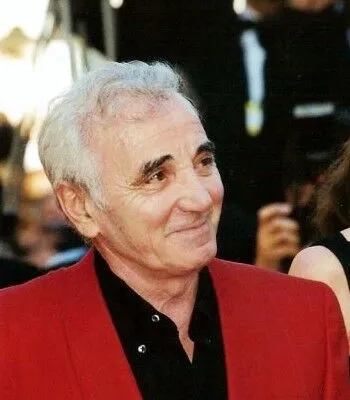
Charles Aznavour
Human Design Chart
Biography
His family was forced by the Turkish massacre of 1915 to flee to France. He was deeply French, his language, his sensibilities and his music, even though he sang easily in Spanish, English and Italian. He always had a following in the U.S., though less than in European countries.
He was one of France's most popular and enduring singers. He sold 180 million records and was dubbed France's Frank Sinatra. He was also arguably the most famous Armenian of his time.
Aznavour was married three times and had six children. He died in his sleep in the early hours of 1 October 2018 at his home in the village of Mouriès in the south of France at the age of 94.
What does Manifesting Generator 1/3 mean for Charles Aznavour?
Manifesting Generator 1/3 — Design at a Glance
Charles Aznavour proved to be someone who possessed a unique combination of constant energy and lightning-fast implementation power. His design as an expressing generator combined the powerful endurance of a Generator with the direct action capability of a Manifestor. He had a steady sacral energy source, meaning that his deepest satisfaction did not arise from pure initiative but rather by responding to inner impulses and waiting for his body to signal a clear "yes."
At the same time, this configuration allowed him to skip steps and achieve results faster than the conventional path would dictate. However, this speed came with a specific danger: if he acted too quickly or pursued multiple projects simultaneously without waiting for internal approval, frustration threatened. Skipping important stages often forced him to backtrack and fill in gaps.
The path to his true creative power therefore lay in "play mode." By pursuing his projects with enjoyment and regularly checking whether his inner authority was still aligned, he could leverage the multitasking ability of his design without exhausting himself. His energy worked most effectively when he did not isolate himself on a single task but remained in a state of playful variety that harmonized his natural speed with the necessary response to life.
Emotional Authority
Charles Aznavour showed an internal decision-making structure that did not rely on immediate clarity but rather on the rhythm of his feelings. His defined Solar Plexus Center carried his inner authority, meaning he was subject to a constant emotional wave. This wave led to a continuous up and down in moods: at one moment he could be totally enthusiastic about something, only to see it negatively colored in the next. His immediate feeling was always just a snapshot, not yet the truth.
For Charles Aznavour, it was crucial not to immediately follow this emotional coloring. Spontaneous decisions made directly from such a mood often had negative consequences. Instead, his design required patience and time. He needed to let decisions mature, ideally by sleeping on them multiple times. This process allowed him to gain emotional distance. Only when the intense feelings subsided did clarity and calmness set in for him. Then the internal process was complete and the decision reached his true core. This strategy of waiting was particularly important for long-term life-changing decisions that significantly influenced his life course. By filtering out the noise of current moods through this process, he arrived at a deeper, more comprehensive understanding.
The 1/3 Profile — Investigator / Martyr
Charles Aznavour revealed himself as someone who inseparably combined theoretical knowledge and practical experience. His Human Design Profile 1/3, that of the researcher and experimenter, shaped this dual nature: he was both a scientist and an adventurer, much like the Indiana Jones archetype. Life revolved around a cyclical process of learning through study (Line 1) and testing through trial and error (Line 3).
Sometimes the energy of Line 1 took control; then he hesitated because the feeling of "not knowing" prevailed. The fear of not being adequately prepared could hinder the step towards implementation. Yet, Line 3 always urged him to try things out. Here, failure was not a personal flaw but an integral part of the learning process. Through this practical testing, self-discovered insights emerged.
When Charles Aznavour made a judgment, it was based on this double validation: theoretically grounded and practically tested. Therefore, his judgment was absolutely trustworthy. Line 1 promoted a superficial perception as a survival strategy that enabled quick action in the here and now. At the same time, Line 3 helped him to act from mood through adaptability and authenticity. Thus, he processed experiences not only intellectually but lived them directly afterwards, making his insights robust and personally tested.
Single Definition — Defined & Open Centers
Charles Aznavour was defined by a design with five defined centers: Sacral, Throat, Solar Plexus, Spleen, and Root. This created a constant but limited expression style as well as a specific way of dealing with stress and vitality. His energy source was reliable; he had the power for fertility and sexuality, which were only correctly activated in response to external impulses. At the same time, he possessed a consistent form of communication that transmuted messages from various body parts into the world.
His emotional process was profound; his inner authority was the Solar Plexus Center, meaning he did not find truth in the „now“ but waited for an emotional wave to clarify it. This patience allowed him to make decisions when emotional clarity emerged rather than reacting impulsively to highs or lows of his mood. Additionally, his intuitive Spleen Center was defined, allowing spontaneous judgments in the moment and protecting him from health risks. The constant pressure of the Root Center drove him to remain existentially present and deal with stress in the material world.
In contrast, Head, Ajna, G-, and Heart Centers were open. This meant no consistent inner source in these areas but situational absorption and reflection of the environment. Without his own mental inspiration, he tended to be distracted by doubts or questions from others when not trusting his authority. His open G Center lacked a fixed identity; he adapted to those around him and gathered directions through external initiation rather than asserting them himself. The open Heart Center showed vulnerability to pressure to prove his worth or make promises he could not keep due to the lack of consistent energy for it. This mechanism required trust in strategy and authority instead of willpower or mental clarity in the now, to avoid frustration.
Channels for powerful action, finding meaning and intense connection.
Charles Aznavour was characterized by a strong urge for immediate self-affirmation stemming from his personality. The Charisma Channel 34-20 connected his sacral energy with the Throat Center, creating constant pressure to act and remain active in „now“. However, this dynamic stood in tension with his design: here, the Pairing Channel 59-6 demanded intimacy and emotional maturity. While his personality pushed for impulsive manifestation, his design required patience to wait through the emotional wave between pleasure and pain, allowing true connections to form. The challenge was integrating this polarity – aligning the quick energy of charisma with the necessary time for emotional depth rather than pitting them against each other as complementary forces. Additionally, further aspects shaped his inner self: the Life Struggle Channel 38-28 endowed him with a stubborn determination to find personal meaning in adversity and fight for integrity. Parallel to this, the Feelings Release Channel 39-55 made him vulnerable to melancholic waves but also gave him the ability to express deep emotional truths through authentic experience of these moods. His personality included gates like Gate 29 (Yes-Saying) and Gate 30 (Feeling Recognition), indicating an oscillation between consistent affirmation and confrontation with inner emotional realities. In his design, Gate 19 supported his search for security and resources within a community or partnership. Overall, his Human Design was marked by a complex interplay of impulsive action joy and the deep, time-intensive need for emotional clarity, where the art of life lay in harmonizing both aspects rather than pitting them against each other.
Individual Circuitry — Circuit Signature
Charles Aznavour expressed his unique identity through pulsating, acoustic energy. This tendency towards individual transformation stemmed from the Knowledge Circuit. In him, this circuit directly connected Spleen, Root, and Solar Plexus Centers. The Life Struggle Channel (Gates 28-38) promoted mutations and deviations from the norm, while the Feelings Release Channel (Gates 55-39) allowed new knowledge to be transported through emotional waves from the Solar Plexus. This created a creative force that initiated change.
Parallel to this, the Archer Circuit activated primal protective instincts. Here, Charles Aznavour connected his Sacral with his Solar Plexus Center via the Pairing Channel (Gates 59-6). This connection emphasized genetic preservation and care for family as a central survival need. The energies of protection and defense stood alongside individual creativity without directly flowing into each other since they belonged to different circuits.
The integration of these forces occurred through the Integration Channel „Charisma“ (Gates 20-34), which connected Throat with Sacral Center. This channel enabled him to make acoustic use of power from reacting to life in the now-moment (Gate 34) and the present moment (Gate 20). Through this configuration, Charles Aznavour could utilize his highest individuality and creativity to both forge new paths and ensure the safety of his genetic line through instinctive action. The mechanism thus described a tension between personal expression and familial protection, integrated through charismatic presence in the now.
Right Angle Cross of the Sleeping Phoenix 2
Charles Aznavour's Human Design profile featured the right cross of the sleeping Phoenix. This configuration established a fundamental disposition: the readiness to go through internal cycles of ending and new beginnings without actively steering or forcing them. The energy for this transformation did not come from conscious will but rather from the depths of the unconscious. It acted like an inner foundation, showing calmness outwardly while profound changes occurred in the background.
In Human Design, this cross describes a cyclic renewal. The term 'sleeping' indicates that the power for change is latent and does not need to be activated through external effort. Instead, it requires trust in one's own rhythm of death and rebirth. Charles Aznavour lived with this dynamic: he did not constantly have to recreate himself or push against resistance to grow. The transformation happened from within, driven by an unconscious logic that shaped his identity.
This structure meant that true change for him was not an act of will but a process of surrendering to inner currents. Even though he appeared calm on the outside, there was constant, deep metamorphosis occurring. The right cross anchored this ability for cyclic renewal as the core of his existence, independent of external circumstances or conscious decisions. It was a quiet yet powerful force that carried him through life.
Saturn Return · Uranus Opposition · Chiron Return · 2nd Saturn Return — Life Cycles
Charles Aznavour's Human Design showed a tendency to translate inner experiences and biographical breaks into structured wisdom. This process of integration became evident during his Chiron Return, a cycle of fulfillment and blooming in which one's incarnation cross unfolds. In 1971, at the age of 47, he published his memoirs 'Aznavour par Aznavour'. This marked the moment when past life phases were no longer seen as wounds but as coherent narratives and lived experiences – the meaning of his path became tangible.
The second phase involved establishing a lasting structure through the second Saturn Return. This cycle often demands clarification of one's identity in social contexts and taking on final responsibility for one's self-image. In 1982, at age 58, Charles Aznavour officially changed his family name from Aznavourian to Aznavour. This act was not merely administrative but the concrete consolidation of his public identity. The name became a stable structure anchoring his role and presence in life. Both cycles together showed the path from the inner condensation of life history to external confirmation of one's form.
Manifesting Generator · Emotional Authority — Synthesis
Charles Aznavour's life was marked by a deep, internal dynamic between creative energy and the need for authentic expression. His defined Sacral Center provided a constant source of vital energy, yet his Manifestor characteristics did not channel this in conventional ways. He responded to impulses but also initiated himself, leading to a rapid succession of projects and experiences – a pattern that could be both inspiring and frustrating. Emotional authority demanded he not rush into decisions but wait for the wave of feelings to gain clarity. This ability to acknowledge inner processes and integrate them into expression allowed him a deep connection with his internal compass and the world around him.
A central paradox lay in the tension between the drive for individuality and the need for recognition. His open G Center let him adopt other identities and adapt, while his defined Root Center provided strong inner direction. This constellation led to a search for validation in the external world, yet also an unshakable will to follow his own path – a dynamic that fueled his creative power and continually redefined him.
4 Defined Channels
Incarnation Cross - Right Angle Cross of the Sleeping Phoenix 2
Solar Return
The Solar Return shows the moment when the sun returns to its exact birth position - your personal solar year.
Life Cycles
Discover the life cycles with a detailed triple view (birth chart, cycle chart, composite).
Human Design Profile
- Strategy
- To respond - wait for something to respond to
- Authority
- Emotional Authority
- Profile
- 1/3 - Investigator / Martyr
- Definition
- Single Definition
- Incarnation Cross
- Right Angle Cross of the Sleeping Phoenix 2
- Date of Birth
- 22.05.1924 00:15
- Place of Birth
- Paris, France
Frequently Asked Questions
What was Charles Aznavour's Human Design type?
What Profile did Charles Aznavour have in Human Design?
Which Authority guided Charles Aznavour?
What incarnation cross did Charles Aznavour carry?
When was Charles Aznavour born?
Discover your own Human Design
Are you also a Manifesting Generator? Find out in a personal reading how to unfold your multi-talents and direct your energy wisely.
More Personalities
Back to overviewSissy Spacek
Aldair

Alizée

Anémone
Angeli
Ann-Margret