
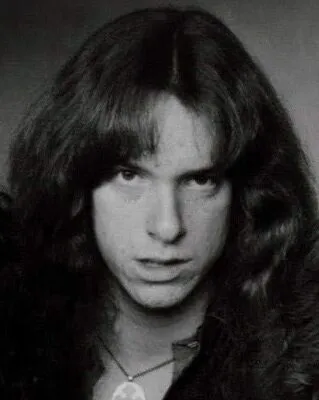
Cliff Burton
Human Design Chart
Biography
Cliff Burton as a Projector 4/6 in Human Design
Projector 4/6 — Design at a Glance
Cliff Burton revealed himself as a Projector whose design was characterized by an intense, focused aura. This energy acted like a bright light beam, targeting weaknesses in his surroundings. He had the ability to immediately recognize systemic flaws and inefficient processes. However, the challenge lay in the nature of communication: Directly addressing these deficiencies could quickly provoke resistance or rejection from his environment, as the 'light' was too bright and confrontational.
The optimal strategy for his design was to wait for an honest invitation before offering his advice. Instead of actively intervening, he attracted others by radiating harmony and clarity himself. People then sought him out voluntarily to benefit from his perspective. Since Projectors do not have a defined Sacral Center, Cliff Burton lacked a constant, intrinsic energy source. This led to phases of high productivity, which inevitably had to be followed by necessary rest periods to prevent burnout. Ignoring this need for recovery led to the Non-Self theme of Bitterness. However, if he lived according to the strategy of waiting for the invitation, he was rewarded with success and could effectively bring his unique viewpoint to the fore without fighting against the resistance of his environment.
Emotional Authority
Cliff Burton's inner compass was marked by an emotional wave that showed in constant ups and downs of his feelings. His design determined that the defined Emotions Center carried his inner authority. In Human Design mechanics, this rule is strict: If the Emotions Center is defined, it always takes over the function of inner authority, regardless of which other centers are also defined. This priority is a central mechanism that steers decision-making.
For Cliff Burton, this meant that he always perceived the world through the lens of his current mood. The same situation could deeply inspire him at one moment and appear negative at another. However, these immediate feelings were only snapshots, first impressions that did not yet represent his deeper truth. Quick, spontaneous decisions made directly from such an emotional peak carried the risk of proving false.
Therefore, his design mechanics required patience. By taking time to let decisions mature – often through multiple nights of reflection – he could let the intense feelings subside. With this distance, he gained emotional detachment. Only then did clarity and calmness set in. This process of waiting was essential for long-term, life-defining decisions, as it allowed him to recognize the deeper, all-encompassing truth of his emotions, rather than being led by superficial moods.
The 4/6 Profile — Opportunist / Role Model
Cliff Burton showed himself to be someone who strongly experimented in the first three decades of his life, particularly in interpersonal relationships. His design as a 4/6 Profile, the 'Networker/Role Model', shaped this phase: The Line 6 initially acted like a Line 3, which pushed him to orient himself through diverse social contacts and friendships. He actively sought connection to solidify his identity, without yet bearing the deeper, later wisdom demands of Line 6.
This early behavior contrasted with his later development. As soon as Line 6 matured, an inner conflict emerged: the desire for belonging (Line 4) clashed with the urge to withdraw and contemplate the meaning of existence (Line 6). Cliff Burton lived this contradiction between heart and head. He had to learn that he was not only the social network node but also a role model that emerged through cooperation and wisdom. His fourth line carried revolutionary principles outward, while the sixth line aimed at breakthrough and new order. This required a careful selection of his allies, as he only engaged with those who supported his transformation to maintain ground contact.
Split Definition — Defined & Open Centers
Cliff Burton was characterized by a design that translated mental concepts directly into communicative action. His defined Ajna Center provided a constant, trustworthy mental function; he thought constantly and processed data and creativity in a specific way. These thoughts flowed seamlessly into his defined Throat Center, allowing him to articulate what his mind conceptualized. His voice was thus not an impulsive outburst, but a structured manifestation of his inner theory-building.
At the same time, he possessed a defined Heart Center, which gave him willpower and the ability to keep promises. He controlled his resources and his value, helping him to act as his own boss and to use his ego strength purposefully. This determination was reinforced by his defined Root Center, which provided a fixed, adrenalized pressure to move forward in the world and master existential challenges.
Emotionally, Cliff Burton was more complex. His defined Solar Plexus served as an inner authority: He had to wait out the emotional wave to gain clarity. Impulsive decisions at the peaks or troughs of this wave would have caused chaos; patience was essential for him to use the deep sensitivity and spiritual richness of this center.
In contrast, his open Head Center revealed a vulnerability to mental pressure and confusion when he did not trust his authority. He tended to get entangled in questions that were not his own, or sought inspiration to quiet his inner monologue. His open G Center meant that he did not carry a fixed identity, but was defined through his environment and relationships; he was dependent on finding the 'right place' to feel secure. Additionally, his open Sacral Center was vulnerable to exhaustion from 'borrowed' energy, and his open Spleen Center made him sensitive to survival fears and the well-being of others, making spontaneous, intuitive decisions risky.
Channels for clarity, synthesis, insight and community.
Cliff Burton was someone deeply integrated into the cohesion of his social group, yet he took a unique, often forward-thinking perspective. His design connected the emotional search for belonging with the ability to structure and express innovative concepts.
The Synthesis Channel 19-49 connected his Root Center with the Solar Plexus. This connection created a fine sensitivity for the needs of the 'tribe'. Cliff Burton sought principles that held the community together and emotionally responded to what was felt as loyal or rejecting. He was concerned with the protection of resources and territory, as well as a clear belief system that strengthened the connection to others.
Parallel to this, the Structuring Channel 23-43, connecting the Ajna Center with the Throat Center, allowed him to receive spontaneous insights (Gate 43) and process them through assimilation (Gate 23) to communicate them clearly. This enabled him to formulate innovative thinking and new perspectives that could change collective understanding. The challenge was to explain these complex ideas in a way that was accepted by the environment without disturbing his own inner rhythm.
The Recognition Channel 30-41 also drove him to constantly seek new experiences. The pressure from the Root (Gate 41) created restlessness, which was intensified by the emotional wave of the Solar Plexus (Gate 30). This led to a deep desire to feel life intensely and to cross boundaries, learning to develop patience to wait out the emotional waves.
Additionally, the Community Channel 37-40 connected the Solar Plexus with the Heart Center, emphasizing the importance of fair agreements and mutual support. Cliff Burton sought his place in the group based on direct contact and mutual respect, not superficially.
The prioritized Gates added further nuances: Gate 4 (Formulating) helped him develop logical formulas for future security, while Gate 60 (Accepting) taught him to accept limitations as a prerequisite for transformation and to overcome melancholy through creativity.
Tribal Circuitry — Circuit Signature
Cliff Burton's design inclined towards structured expression, coupled with deep, cyclical emotional processing. As a Shared Definition, his chart consisted of two separate, not directly connected energetic blocks. The first block connected the Heart, Solar Plexus, and Root Centers; the second the Throat and Ajna Centers.
In the Knowledge Circuit, the Channel 43-23 (Structuring) connected the Ajna with the Throat Center. This allowed Cliff Burton to articulate mental concepts in clear, structured words. The energy of this circuit served the transformation of new knowledge through the expression of his own identity.
The Meaning Circuit worked through the Channel 30-41 (Recognition) between Solar Plexus and Root Center. Here, it was about perceiving emotions and experiences from the past. This energy flowed in waves to find meaning behind events to share later with others.
In the Ego Circuit, which belongs to the Stamm-Group, two channels connected the Heart, Solar Plexus, and Root Centers. The Channel 40-37 (Community) promoted a balanced relationship of giving and taking as well as mutual support. The Channel 49-19 (Synthesis) supported the integration of different perspectives. Since this circuit did not connect to the Sacral Center, the creation of resources for the community required regular rest periods to regenerate energy. The Awareness Stream of the Solar Plexus underscored the sensitivity to emotional waves.
Right Angle Cross of Explanation 1
Cliff Burton's design carried the signature of the right cross of Manifestation 1. This configuration shaped a fundamental attitude oriented towards clarity and the unveiling of connections. It was an energetic alignment that tended to penetrate complex issues and distill their essence into clear, understandable forms.
This cross connects specific energetic centers and channels that work together to reduce confusion. The energy of this design promoted a direct, unadorned style of communication and thinking. Through this structure, Cliff Burton was someone who did not work with half-truths or vague hints but aimed to reduce things to their core. The mechanics of this cross support the ability to recognize deeper truths and then articulate them in a way that others can understand. It was an energy that sought transparency. In his interactions and creations, this tendency to distill and clearly name the essential was evident. The right cross of Manifestation 1 suggested that Cliff Burton played a role in bringing light to dark corners and resolving misunderstandings through precise expression. His way of viewing the world was marked by a need for intellectual and emotional clarity.
Projector · Emotional Authority — Synthesis
Cliff Burton was a Projector who, through his ability to recognize patterns (defined Ajna Center) and understand the needs of others (Synthesis Channel), formed a deep connection to the world. He lived his emotional authority by not rushing decisions but allowing time to integrate shifting feelings. This approach enabled him to understand and address the underlying dynamics in relationships and systems, making him a natural problem solver. His profile as a Networker/Role Model indicates a desire for belonging while simultaneously feeling a need to contemplate the meaning of life – an inner conflict between heart and head.
A central paradox in his design lay in the tension between the need to connect (Line 4 in the profile, Synthesis Channel) and the desire for independent reflection (Line 6 in the profile). He was capable of gaining deep insights and conveying them to others, yet he also needed space to develop and live his own principles. This field of tension between giving and receiving, between the role of observer and participant, shaped his path.
4 Defined Channels
Incarnation Cross - Right Angle Cross of Explanation 1
Solar Return
The Solar Return shows the moment when the sun returns to its exact birth position - your personal solar year.
Life Cycles
Discover the life cycles with a detailed triple view (birth chart, cycle chart, composite).
Human Design Profile
- Type
- Projector
- Strategy
- Wait for the respectful invitation
- Authority
- Emotional Authority
- Profile
- 4/6 - Opportunist / Role Model
- Definition
- Split Definition
- Incarnation Cross
- Right Angle Cross of Explanation 1
- Date of Birth
- 10.02.1962 21:38
- Place of Birth
- Castro Valley, CA, United States
Frequently Asked Questions
Which Human Design Type was Cliff Burton?
Which profile did Cliff Burton have in Human Design?
What authority did Cliff Burton have?
Which incarnation cross did Cliff Burton have?
When was Cliff Burton born?
Discover your own Human Design
Are you also a Projector? Find out in a personal reading how to unfold your leadership qualities and recognize the right invitations.
More Personalities
Back to overviewSissy Spacek

Aaliyah

Alain-Fournier

Alexia

Alizée

Anémone
