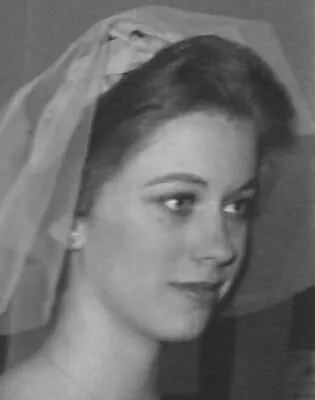
Connie Booth
Human Design Chart
Biography
Her father Elmer Edward Bollinger was a Wall Street stockbroker and her mother Virginia Caylor Bollinger was an actress. The family, which included Connie's elder brother Conrad Booth Bollinger, later moved to New York State. Booth entered acting and worked as a Broadway understudy and waitress. She met John Cleese while he was working in New York City; they married on 20 February 1968.
In England, Booth secured parts in episodes of Monty Python's Flying Circus (1969–1974) and in the Python films And Now for Something Completely Different (1971) and Monty Python and the Holy Grail (1975, as a woman accused of being a witch). She also appeared in How to Irritate People (1968), a pre-Monty Python film starring Cleese and other future Monty Python members.
Booth played various roles on British television, including Sophie in Dickens of London (1976), Mrs. Errol in a BBC adaptation of Little Lord Fauntleroy (1980) and Miss March in a dramatisation of Edith Wharton's The Buccaneers (1995). She also starred in the lead role of a drama called The Story of Ruth (1981), in which she played the role of the schizophrenic daughter of an abusive father. In 1994, she played a supporting role in "The Culex Experiment", an episode of the children's science fiction TV series The Tomorrow People.
Booth also had a stage career, primarily in the London theatre, appearing in 10 productions from the mid-1970s through the mid-1990s, notably starring with John Mills in the 1983–1984 West End production of Little Lies at Wyndham's Theatre.
In 1971, Booth and Cleese had a daughter, Cynthia, who appeared alongside her father in the films A Fish Called Wanda and Fierce Creatures.
Human Design Analysis: Connie Booth as Projector 5/1
Projector 5/1 — Design at a Glance
Connie Booth's design shows a tendency towards focused perception: She is someone who immediately recognizes system inefficiencies. Her aura acts like a bright flashlight that sheds light into the dark and reveals weaknesses in her surroundings. However, this direct confrontation with flaws could trigger resistance when she openly addressed problems – comparable to shining directly into someone's face. Instead, Connie Booth found success through a subtler dynamic: By setting an example of harmonious behavior herself, she radiated an attractive quality that drew others towards her rather than making them feel attacked. The strategy involved waiting for an honest invitation before giving advice, which protected against unnecessary conflicts and leveraged her natural appeal.
Additionally, cyclical energy phases shaped her life. Due to an undefined Sacral Center, Connie Booth did not have a constant intrinsic life force. She experienced periods of high activity where she could work quickly, followed by necessary rest phases for regeneration. These shifts were essential to avoid burnout – a need often ignored by rigid societal structures. Living according to this rhythm and her invitation strategy rewarded her with success. Ignoring these mechanisms and pushing against the flow or correcting without consent led to bitterness as a central non-self theme. Thus, Connie Booth's design demanded patience and self-protection through respect for her own energy balance and the autonomy of others.
Splenic Authority
Connie Booth's design shows a tendency towards immediate intuitive orientation. Her inner authority lies in the defined Spleen – the body’s health and alarm system. This configuration grants an enhanced survival intelligence that manifests as spontaneous inner knowledge: Whether a situation or person is right is recognized not through thinking but through immediate physical well-being.
For Connie Booth, the first impulse was always accurate. Decisions had to be made in the moment since this fine signal only appears once and quickly fades. This required high vigilance; the instinct could easily be drowned out by external influences or distorted by overthinking. To maintain clarity, it was essential to rigorously distance herself from harmful environments and create space for flexibility.
Long-term commitments stood in opposition to this nature since what is right only reveals itself in the moment. Instead of rigid plans, there was a need for spontaneous agreements. The Spleen authority thus served not only decision-making but primarily the protection of her health and resources. Connie Booth's path involved trusting this subtle signal before it was overridden by other voices and adapting her environment to clearly hear this intuitive guidance.
The 5/1 Profile — Heretic / Investigator
Connie Booth's design shows a tendency between the magnetic call to offer solutions as a Hero for others and the necessity to withdraw to nurture her own foundation through research and detail work. As a 5/1 ("Hero/Researcher"), she possessed the quality that made others instinctively seek her knowledge. This, however, created a risk: Without clear boundaries, this attraction led to exhaustion as other's need for answers hindered her own growth.
The mechanics of her profile explain this through the tension between Line 5 and Line 1. Line 5 brings faith in recurring patterns (Gate 9) along with loyalty to details. Connie Booth was someone who found rewarding concentration on details, provided she trusted the process. Simultaneously, the first line from Gate 64 served as a foundation for abstract mental processes. Her goal was to find clarity amidst confusion and share this insight with others.
Without support through Gate 47, however, true progress was difficult. The pressure often leading to rash actions intensified her inner uncertainty. When Connie Booth learned to say no, she could maintain the balance between service (Line 5) and personal growth (Line 1). This ensured that she optimally utilized her gifts without being drained by others' expectations. The ability to set boundaries was thus crucial for her stability and the quality of her contributions.
Single Definition — Defined & Open Centers
Connie Booth's design points to a tendency towards constant mental activity and spontaneous intuition, flanked by situational dependency in the areas of identity and energy. Her defined Head and Ajna centers created a persistent internal pressure to question and form concepts; this was her constant mental reality. The also defined Spleen center gave her a reliable existential perception in the present moment that could not be rationalized. This inner constancy of thought and intuition formed a clear anchor.
At the same time, her centers for identity (G), willpower (Heart), generative energy (Sacral), emotional stability (Solar Plexus) and stress resistance (Root) were open. This meant that Connie Booth did not have her own constant source for these energies but rather absorbed and reflected them from the environment. She tended to question whether she was in the right place or who she actually was when the external environment didn't match – a typical pattern of an open G center seeking borrowed identity. Her energy level also fluctuated depending on context, as the open Sacral center could amplify foreign vitality without generating it itself. Emotional waves from the environment were absorbed by the open Solar Plexus, leading to her mistaking others' moods for her own.
The challenge lay in dealing with the constant mental pressure: Since Head and Ajna are not connected to the motors, there was no energy to directly turn thoughts into action. Hasty actions out of confusion or doubt led to frustration. Instead, it was necessary to wait for the right moment to express the clear concepts of the Ajna center through the defined Throat center. The tension between inner clarity in thinking and intuition and outer fluidity in identity and emotion required trust in her own strategy to avoid getting entangled in the fluctuations of open centers.
Channels for clear structure, deep intuition and logical order.
Connie Booth's design points towards intuitive perfectionism and logical organization. She developed deep knowledge, structured it, and communicated it precisely. The channel of wavelength 48-16 connects the inner intelligence of the Spleen center with expression through the Throat. Gate 48 seeks vital information while Gate 16 perfects skills through repetition, transforming dexterity into talent but requiring recognition and resources to continue the process.
Additionally, the Acceptance channel 17-62 links the Ajna center with the Throat. Here, Gate 17 organizes visual patterns mentally, while Gate 62 translates details into language. Connie Booth tended to logically structure information and explain opinions in detail, forming a strong foundation for teaching or presenting theories.
Innovative thinking was shaped by the channel of Structuring 43-23. Gate 43 received spontaneous insights in the Ajna center that were assimilated and expressed through Gate 23. This promoted efficiency improvements through new perspectives but required patience until the transformative knowledge was accepted. The Awareness channel 61-24 connected Head with Ajna. Gate 61 brought inspiration from the unknown, which Gate 24 rationalized as sudden insight or Satori. This process created an individual thinker who set not on discovery but mutation through new thoughts.
Energy flowed from Spleen, Ajna and Head over Ajna to Throat. Connie Booth was designed to develop unique insights, logically organize them, and clearly communicate them. Success depended on timing, patience, and recognition of her contributions to fully unleash her potential.
Individual Circuitry — Circuit Signature
Connie Booth showed a duality in knowledge processing: on one hand pulsating emotional transformation, on the other focused rational structure. In her design, all active centers (Head, Ajna, Throat, Spleen) form a single continuous energetic flow without internal division.
The Knowledge Circuit connected Connie Booth's Head, Ajna and Throat centers directly, creating an acoustic, pulsating energy. The Awareness channel (24-61) promoted innovative flashes of insight while the Structuring channel (23-43) helped shape these ideas. The goal was to express a unique identity through new knowledge transformed and spoken over emotions.
Parallelly, the Understanding Circuit connected Ajna, Throat and Spleen centers. Here, visual focused energy dominated. The Acceptance channel (17-62) allowed sharing logical insights free from conditioning. The Wavelength channel (16-48) steered a strategic focus on future societal improvements. Unlike the emotional Knowledge Circuit, this was 'emotionless ratio'.
Both circuits utilized Ajna as a common interface but connected different aspects: individual emotional creativity on one side and objective strategic logic on the other. This configuration shaped a life task to uncover hidden connections and pass them on to others both through intuitive inspiration and rational structure.
Left Angle Cross of Identification 2
Connie Booth's design suggests a tendency not to perceive one's identity as an isolated self, but rather as continuously defined through interaction with the environment. She is someone whose life experience has been marked by a series of identifications: stepping into others' shoes or defining oneself through their perception of her.
This dynamic stems from the influence of the left cross of Identifying 2. In Human Design mechanics, this configuration describes a specific kind of perception where an individual does not primarily define themselves through internal, unchanging core values but rather through reflections in other people and situations. Life is thus experienced as a continuous process of recognition, often perceiving oneself only within the context of others' reactions.
This is not about a lack of substance but a fundamental relationship dynamic with one's own person. Identity forms through projection and reflection. Connie Booth's chart indicates that her self-discovery is closely linked to this ability to adopt or reflect various roles and perspectives, creating a flexible yet complex relationship with the 'self' that constantly seeks external reference points to better understand and place herself.
Saturn Return · Uranus Opposition · Chiron Return · 2nd Saturn Return — Life Cycles
Connie Booth's design shows a tendency towards structural consolidation that solidified at age 28. This marked her first Saturn Return cycle, signaling the end of youth and entry into serious adult responsibility. It is a phase of consolidation, identity formation, and building lasting structures.
In this context, Connie Booth married John Cleese in 1968. This union exemplifies the mechanics of this cycle: inner maturity manifests in external connections that create stability and reliability. The Saturn Return forces confrontation with one's identity beyond youthful experimentation. Connie Booth demonstrated readiness to anchor this new seriousness through a stable partnership. Marriage was not mere chance but an expression of her need for support and clear definition in life. Through this step, she solidified her position in the world and created a framework within which further developments could unfold. The cycle demands responsibility that Connie Booth embraced through this commitment. It was about building something enduring to serve as a foundation for coming years. Her connection to John Cleese represented precisely such structural consolidation typical of the first Saturn Return.
Projector · Splenic Authority — Synthesis
Connie Booth's design reveals a central thread of profound perception and transformative potential, fueled by a combination of mental clarity (defined Head and Ajna Centers) and open emotional capacity. This configuration allows her to recognize patterns, gain deep insights, and express these through her defined Throat Center – yet always with awareness of others' conditioning (open Solar Plexus, Root, and G Centers). Her Profile as Explorer/Researcher (5/1) amplifies this impulse to accumulate knowledge and make it accessible to others, while her Spleen Authority offers an instinctive compass for authenticity and healthy boundaries.
A central paradox in Connie Booth's design lies in the tension between her capacity for deep analysis and her need for external validation. Defined mental centers generate a constant drive for understanding, while open centers leave her vulnerable to outside influences. This leads to an internal dynamic where recognizing patterns and formulating insights is coupled with a desire to make these understandings effective externally – a process further intensified by the necessity of clear invitation and recognition (Projector Type).
4 Defined Channels
Incarnation Cross - Left Angle Cross of Identification 2
Solar Return
The Solar Return shows the moment when the sun returns to its exact birth position - your personal solar year.
Life Cycles
Discover the life cycles with a detailed triple view (birth chart, cycle chart, composite).
Human Design Profile
- Type
- Projector
- Strategy
- Wait for the respectful invitation
- Authority
- Splenic Authority
- Profile
- 5/1 - Heretic / Investigator
- Definition
- Single Definition
- Incarnation Cross
- Left Angle Cross of Identification 2
- Date of Birth
- 02.12.1940 05:42
- Place of Birth
- Indianapolis, IN, United States
Frequently Asked Questions
What is Connie Booth's Human Design type?
Which profile does Connie Booth have?
What authority governs Connie Booth?
What incarnation cross does Connie Booth have?
When was Connie Booth born?
Discover your own Human Design
Are you also a Projector? Find out in a personal reading how to unfold your leadership qualities and recognize the right invitations.
More Personalities
Back to overviewSissy Spacek

Alain-Fournier

Anémone

Angeli

Ann-Margret

Bourvil