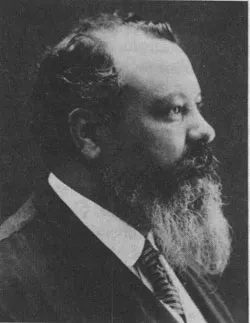
Daniel Berrigan
Human Design Chart
Biography
He died on 30 April 2016 shortly before his 95th birthday.
What does Manifestor 6/3 mean for Daniel Berrigan?
Manifestor 6/3 — Design at a Glance
Daniel Berrigan lived as a pioneer and visionary whose design was destined to lead the world into a new future. His character bore the traits of an emperor in ancient Rome: He possessed the vision of a great whole, but did not wage the necessary wars or battles himself. Instead, he sent others to establish his realm and conquer foreign lands for him. This role brought with it a central conflict. Not everyone liked his plans; they polarized strongly. Some loved him because of his big dreams and found followers, while others hated or misunderstood him precisely because of these visions. This pain point of being misunderstood was an integral part of his path. To find the right following, it was crucial that he informed others about his intentions in a timely and precise manner. This strategy of informing served as a bridge between his isolating vision and community. If he followed this strategy, his design rewarded him with a sense of inner peace. Living against this nature, however, brought an enduring, deep-seated anger within him. Thus, his life demonstrated the dialectic between the polarizing effect of great ideas and the saving function of clear communication to win those who wanted to follow.
Emotional Authority
Daniel Berrigan's design tended towards profound, time-intensive decision-making. He showed himself as someone who did not react on the first emotional impulse but exercised patience to gain clarity. This attitude stemmed from his Emotional Authority, carried by the defined Emotions Center.
In Human Design mechanics, this means: As long as the Emotions Center is activated, it functions as an internal inference for guidance, independent of other defined centers in the chart. Daniel Berrigan was subject to a natural emotional wave, a permanent up and down of feelings. The world appeared colored by his current mood; a moment of enthusiasm could quickly turn into a negative outlook. His immediate feeling, however, was only a snapshot, not a final judgment. Quick, spontaneous reactions from this emotional heat were risky and often misleading.
His strategy consisted in letting decisions rest. The more time he took, the deeper he could see into the situation. This required consciously 'sleeping on' questions and a certain delicacy to ask himself repeatedly. Over time, intense feelings subsided, an emotional distance was created. Only then did true calmness and clarity set in. This process was particularly crucial for long-term, life-defining decisions as it allowed him to see through the emotional fog to the truth.
The 6/3 Profile — Role Model / Martyr
Daniel Berrigan's design tended towards intensive experimentation paired with a deep unease toward ordinary perfection. He sought not conformist security but an extraordinary life far from standards. This aligned with Profile 6/3, the role model and experimenter. In the first three decades of his life, the line of the adventurer dominated: numerous self-experiments, testing limits, and often chaotic search for authenticity.
This phase was marked by dissatisfaction and confrontation with outdated structures. The energy of this line promoted revolution and destruction of old orders, sometimes through a lack of sensitivity or breaking bonds as the feeling of belonging faded. After Saturn's return, around age thirty, Daniel Berrigan integrated these experiences into wisdom and responsibility. Line 6 attempted to keep an overview and accept mutations or reject them. Although experimentation never fully ended due to line 3 being permanently anchored in the profile, it was complemented by a far-sighted approach. He used his unusual experiences to act as a humorous role model that preserved individuality while seeking security without falling into rigidity.
Split Definition — Defined & Open Centers
Daniel Berrigan's Human Design profile indicated a tendency towards constant mental pressure and intense internal work. The definition between the Head Center and Ajna Center created an ongoing impulse to question and understand connections. However, this mental process was not directly linked to energy for implementation; struggling against this limitation often led to frustration or concern when inspiration wasn't immediately understood. Instead, this pressure served to inspire others to think.
His defined Heart Center endowed him with a stable willpower and ego strength. He had a clear sense of his own worth and could reliably keep promises, which strengthened his self-esteem. Crucial was the discipline to only promise what he could actually achieve, thus building trust and avoiding unnecessary resistance in his environment.
As an emotional authority through his defined Solar Plexus Center, Daniel Berrigan needed patience for decisions. The truth did not reveal itself at moments of excitement or pain but rather after going through the emotional wave. Hasty reactions to the peaks of these waves led to chaos; true clarity emerged only by waiting until the emotional charge had subsided.
His open G Center meant he lacked a fixed identity or direction. He tended to find his place in the environment and adjusted his orientation to appropriate places and people. Seeking a fixed identity would have been a trap; instead, he learned through initiation by others who he was in different contexts.
His open Sacral Center made him vulnerable to overexertion from borrowed energy from the environment. He had no constant reservoir of life force and needed to learn to set boundaries and rest rather than react to the pressure of others. Similarly, his open Root Center absorbed external stress. Attempting to rid himself of this non-native adrenaline rush through hyperactivity only led into a cycle of exhaustion. His task was to recognize the difference between his own and foreign pressure and withdraw when overloaded.
Channels for doubt, emotional impulses, community and abstraction.
Daniel Berrigan's Human Design profile presented an internal tension between a skeptical, pattern-filtering mind and emotional restlessness seeking new experiences. His Channel of Logic 63-4 kept his mind active, using doubt as an essential tool to test whether patterns were consistent. This channel connected the Gate of Doubt with the Gate of Formulation; he sought logical proof and tolerated little unfounded belief. Simultaneously, his Channel of Transience 36-35 drove him emotionally. As an emotional channel, it linked the Gate of Crisis with the Gate of Change. He resisted restrictive patterns and relentlessly searched for intensity, often by creating crises to generate movement. This combination led to his mind striving for security while his emotions sought to break through the status quo.
His interpersonal dynamics were strongly influenced by the Channel of Community 37-40. This channel connected the Gate of Friendship with the Gate of Solitude and emphasized the necessity of correct, time-intensive agreements. For Daniel Berrigan, this meant that true connection did not happen spontaneously but had to be carefully negotiated for mutual benefit. He sought his place in a larger unit where willpower and emotional clarity formed the basis for every community project.
Additionally, Gates like Gate 17 (Succession, Logical Teaching) and Gate 49 (Revolution, Principles) underscored his ability to organize and his finely tuned response to tribal principles. His mind, influenced by the Channel of Abstraction 64-47, constantly tried to frame experiences into a meaningful narrative, even if this caused mental confusion. Overall, his life was a continuous process of logical scrutiny paired with an emotional need for transformational experiences and arduous work on sustainable community structures.
Collective Circuitry — Circuit Signature
Daniel Berrigan's Human Design profile indicated a tendency towards navigation between cool logic and emotional reflection. With Split Definition, there existed two separate energetic poles: the Head Center and Ajna Center formed one block, while Throat, Solar Plexus, and Heart Centers formed another; these groups were not directly connected to each other.
The Understanding Circuit operated through the Channel of Logic (63-4) between the Head Center and Ajna Center. This promoted sharing rational, future-oriented insights free from emotional conditioning – an 'emotionless ratio'. Parallel to this, in the Meaning-Finding Circuit, the Channels of Abstraction (64-47) as well as Transience (35-36) shaped two separate segments: Head-Ajna and Throat-Solar Plexus. Here it was about wave-like emotional processing of past experiences to find their meaning and share them with the collective.
The Ego Circuit connected through the Channel of Community (40-37) Heart Center and Solar Plexus Center. This established a conservative give-and-take ('today I give, tomorrow you give') without connection to the constant life force of the Sacral Center. From this resulted the need for rest periods for resource-oriented cooperation in tribal context.
Daniel Berrigan thus moved between the strategic clarity of understanding, the cyclical emotional waves of meaning-finding, and the mutual support of the Ego Circuit – always as separate, parallel existing forces within his Split Definition.
Left Angle Cross of Defiance 1
Daniel Berrigan's Human Design profile is characterized by the left-hand cross of Challenge 1. This configuration establishes a foundational stance where inner development and consciousness growth are not seen as linear progress but rather as archetypal paths through resistance and testing. The mechanics of this cross emphasize the role of challenges as essential signposts for self-understanding.
In this design, external circumstances or internal conflicts did not merely serve as obstacles but acted as catalytic factors. Daniel Berrigan found himself in a dynamic where navigating difficult phases was necessary to uncover deeper truths. Challenges were at the center of his experience; they defined the space where growth occurred.
It was not a passive tale of suffering, but an active process of engaging with the unknown and challenging aspects. The left-hand cross of Challenge 1 conveyed a tendency to expand consciousness through experiencing tension. Daniel Berrigan's chart indicated that his development was closely tied to how he approached these archetypal structures. Challenges were thus integral to his inner landscape, a structuring element that shaped the form and direction of his conscious growth.
Saturn Return · Uranus Opposition · Chiron Return · 2nd Saturn Return — Life Cycles
Daniel Berrigan's Human Design profile suggests a tendency towards radical breaks with established structures, coupled with the ability to process deep internal conflicts through intellectual expression. This configuration describes life phases of intense transformation where old bonds are dissolved and new directions found.
In 1963, at age 42, he experienced upheavals within the French Catholic Church during a sabbatical year. This marked his Uranus opposition cycle, often initiating liberation from outdated patterns and laying groundwork for new perspectives. Rather than clinging to existing norms, he used this period to break free from rigid dogmatic constraints.
Later, in 1971 at age 50, he published the 'Foreword to Words of Chairman Jesus'. This fell during his Chiron return cycle between ages 49 and 51. Here it was evident how his incarnation purpose increasingly unfolded in life. It was not a healing in medical terms but rather the blossoming of his true calling: articulating his truth through creative and intellectual means. This process allowed him to translate inner tensions into concrete works, making his life's meaning tangible. Both cycles shaped his development as phases of necessary change and clear alignment with his individual path.
Manifestor · Emotional Authority — Synthesis
Daniel Berrigan was a pioneer whose life was marked by an internal drive towards transformation and the desire for authentic expression. His profile as a Manifestor with emotional authority points to someone destined to forge new paths and inspire others – but only if she takes time to fully experience her own emotions and gain clarity. The combination of defined Head and Ajna Centers with open centers for Identity and Sacral energy suggests a person who is constantly inspired yet vulnerable to external influences and conditioning. He was a thinker whose logic was filtered through emotional depth, giving him the ability to grasp complex issues and communicate his visions persuasively.
A central paradox in Berrigan's chart lies in the tension between his need for independent initiation as a Manifestor and the open nature of his centers for Identity and Life Force. He was destined to initiate things yet simultaneously received constant influences from outside. This led to an internal dynamic where he both sought his own direction and learned to listen to feedback from his environment – a process reinforced by his emotionally defined authority and the necessity to let decisions mature.
4 Defined Channels
Incarnation Cross - Left Angle Cross of Defiance 1
Solar Return
The Solar Return shows the moment when the sun returns to its exact birth position - your personal solar year.
Life Cycles
Discover the life cycles with a detailed triple view (birth chart, cycle chart, composite).
Human Design Profile
- Type
- Manifestor
- Strategy
- To inform others before acting
- Authority
- Emotional Authority
- Profile
- 6/3 - Role Model / Martyr
- Definition
- Split Definition
- Incarnation Cross
- Left Angle Cross of Defiance 1
- Date of Birth
- 09.05.1921 18:30
- Place of Birth
- Virginia, MN, United States
Frequently Asked Questions
What was Daniel Berrigan's Human Design type?
What profile did Daniel Berrigan have?
What authority did Daniel Berrigan possess?
What incarnation cross did Daniel Berrigan have?
When was Daniel Berrigan born?
Discover your own Human Design
Are you also a Manifestor? Find out in a personal reading how to use your initiation power peacefully and dissolve resistance.
More Personalities
Back to overviewChristian-Jaque
Kesha

Laurent-Eynac
Lucebert
Masaccio

Papus