
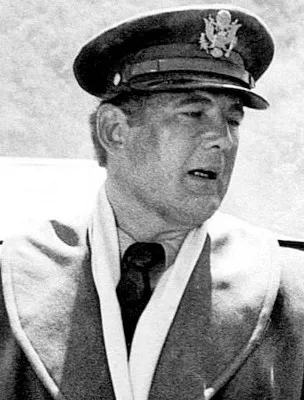
David Ogden Stiers
Human Design Chart
Biography
He appeared prominently in the 1980s in the role of District Attorney Michael Reston in several Perry Mason TV films, and voiced a number of Disney characters, including Cogsworth in Beauty and the Beast (1991), Governor Ratcliffe and Wiggins in Pocahontas (1995), and Dr. Jumba Jookiba in the Lilo & Stitch franchise. He also voiced Kamaji in the English-language version of Spirited Away (2001). He appeared in TV again on the supernatural drama series The Dead Zone as Reverend Gene Purdy, a role he portrayed from 2002 to 2007. He joined the cast of Stargate: Atlantis in its third season (2006-2007) as Oberoth, leader of the human-form replicators.
Stiers continued to contribute voice work for films and television productions in his later years, narrating M. Night Shyamalan's Lady in the Water (2006) and having a recurring role on the animated series Regular Show. Stiers spent his later years as a conductor of the Newport Symphony Orchestra.
Stiers came out as gay in 2009, telling Oklahoma City blog Gossip Boy that he feared coming out would hurt his career and that "a lot of my income has been derived from voicing Disney and family programming. What they might allow in a more known actor, they prefer not having to deal with in minor players." He said his main reason for coming out was for the sake of a future potential partner: "I could claim noble reasons as coming out in order to move gay rights forward, but I must admit it is for far more selfish reasons. Now is the time I wish to find someone, and I do not desire to force any potential partner to live a life of extreme discretion with me.
Human Design Analysis: David Ogden Stiers as Manifesting Generator 6/3
Manifesting Generator 6/3 — Design at a Glance
David Ogden Stiers revealed himself as someone carrying hybrid energy: the constant power of a Generator paired with the lightning-fast alignment of a Manifestor. His design allowed him to skip steps and quickly pull things into his life. This speed, however, was a double-edged sword. Often he was too quick and skipped necessary intermediate steps, leading him to have to go back later and fill in the gaps. This could quickly lead to frustration, the classic non-self theme of his type. Additionally, he tended to pursue multiple projects simultaneously, driven by various impulses. When his inner authority did not agree, the joy of creation quickly turned to exhaustion.
The solution lay in his strategy: he needed to react to life rather than initiate it himself. Only when his Sacral Center responded with a clear "yes" should he proceed. Only then could he find his deep satisfaction. With the correct application of this strategy, he benefited from the variety. The pressure to focus on one thing until completion did not suit him. Instead, he found his true creative power in "play mode," where he could work on various tasks simultaneously, as long as he sought and received constant confirmation from his inner self. Thus, he transformed potential frustration into a lively, versatile productivity.
Emotional Authority
David Ogden Stiers showed himself as someone who never made decisions in the heat of the moment. His design featured emotional authority, meaning his defined Emotional Center took over inner guidance – regardless of which other centers were also defined. This configuration subjected him to a natural emotional wave, a permanent up and down of feelings. The world always appeared colored by his current mood: in one moment he could be totally enthused about something, in the next he could see the same matter negatively.
For his system, however, the immediate feeling was only a snapshot, a first impression that did not necessarily represent the truth. Quick, spontaneous decisions that arose directly from this emotional heat often had negative consequences. Instead, his mechanics required patience. He needed time to let a decision mature, to gain deeper and more comprehensive insight. This meant allowing himself to be properly deliberated and questioned multiple times. Often, he would sleep on important matters. Over time, the intense feelings subsided, he gained emotional distance, and clarity and calmness set in. Only then had he gone through the process. This mechanism was especially important for long-term decisions that could have a significant impact on his life course.
The 6/3 Profile — Role Model / Martyr
David Ogden Stiers showed himself to be someone who sought an extraordinary life far from standards, driven by an inner restlessness that sought the perfect. His design as a 6/3 Profile type ("Role Model / Experimenter") dictated that he lived like a 3/3 in the first thirty years of his life: through countless self-experiments and adventures. This phase of intensive experimentation slowed down after the first Saturn return, but it never fully ended, as the experimental line 3 was present throughout his entire life.
His willingness to take extreme risks came from the sixth line of Gate 28. Here it was about glory and the will to win at any cost, rather than succumbing to decline. At the same time, the third line of Gate 33 called for withdrawal and adaptation. David Ogden Stiers had to learn to emerge from this withdrawal to take responsibility and let others share in his insights. Only through this synthesis of risky advance and reflective retreat could he use his unusual experiences to become a wise, far-sighted, and humorous role model. The tension between the drive for extreme gain and the necessity of responsible relationship tasks shaped his developmental trajectory.
Single Definition — Defined & Open Centers
David Ogden Stiers was characterized by a constant, vital energy source that shaped his actions and communication. His defined Sacral Center provided him with an enormous reserve of energy that he used by reacting to life rather than initiating. This energy flowed directly into his defined Throat Center, making his voice and actions reliable and clear; he spoke from a source that was always available when he was properly addressed.
This physical presence contrasted with his inner process. His defined Solar Plexus Center required patience: truths revealed themselves to him only at the end of emotional waves, not in the moment of impulse. He tended to postpone decisions until emotional clarity emerged, which gave him a deep, though time-consuming, sensitivity. This was supported by his defined Spleen Center, which gave him spontaneous, intuitive warning signals in the present, and his defined Root Center, which provided the necessary pressure for material survival and correction.
At the same time, he was vulnerable to external influences in areas without his own definition. His open Head Center made him prone to mental confusion or the questions of others, as he lacked a constant source of inspiration. The open Ajna Center made his mind flexible but also prone to adopting foreign concepts as his own truth. Particularly defining was his open G Center: he had no fixed identity or direction within himself but took them from his environment. This led to him losing himself in relationships or places when they were not correct, and he tended to seek a lost identity rather than waiting for external initiation. His open Heart Center lacked consistent willpower; he often tried to prove himself through promises, which led to frustration when he could not keep them.
Channels for care, intimacy, intuition and emotional clarity.
David Ogden Stiers was characterized by a deep ability for emotional intimacy and intuitive self-awareness. His design connected sacral energy with the emotional wave, making relationships personal and profound. The Channel of Union 59-6 rooted him in a powerful quantum energy described as intimacy. Here, the sexuality of Gate 59 merged with the emotional wave of pleasure and pain from Gate 6. This configuration required patience; true depth emerged only when he waited for emotional clarity to arrive, rather than reacting spontaneously. This created an electromagnetic connection that allowed others to quickly trust him, but it required him to carefully dose his availability for intimacy to avoid misunderstandings.
In addition to this relational depth, David Ogden Stiers had the gift of speaking intuitive truths in the present moment. The Channel of Brainwave 57-20 connected the intuitive insight of the Spleen (Gate 57) with the expression in the Throat Center (Gate 20). This allowed him to communicate penetrating self-awareness directly, often faster than others could process it. His spontaneous verbal outbursts came from ancient survival instincts and served to reinforce others in their own survival intelligence.
Additionally, the Channel of Preservation 27-50 shaped his role as a provider. Through the Gate of Care (27) and the Gate of Values (50), he developed a strong tribal consciousness. He automatically attracted trust and took responsibility for the well-being of others, whether through defending values or nurturing communities. This energy helped balance empirical life with existential awareness.
The Channel of Emotional Release 39-55 added a layer of emotional volatility. Through the Gate of Provocation (39) and the Gate of Mind (55), he explored the alchemy between joy and sorrow. He learned to provoke and perceive the minds of others through his own mood, which helped him identify the right people and situations.
Individual Gates like 28 (Risks in the Now), 33 (Reflection), and 19 (Resources) underscored his ability to make decisions in the here and now, reflect on experiences, and create secure environments.
Tribal Circuitry — Circuit Signature
David Ogden Stiers was characterized by a design that carried two clearly distinct but powerful energy streams that did not directly merge with each other. As a simply defined person, he had a continuous flow that connected the Throat Center with the Spleen, the Solar Plexus with the Root Center, and additionally the Sacral Center with the Solar Plexus and the Spleen. This configuration created a deeply rooted ability to translate instinctive perception and emotional waves directly into expression and life force.
The Knowledge Circuit shaped him through the Channel of Insight between the Throat and Spleen Centers. This gave him the capacity for innovative, sudden insights that he expressed acoustically and creatively. Parallel to this, the Channel of Emotional Release connected his Solar Plexus with the Root Center, transforming emotional impulses into immediate, pulsing action impulses. These two parts of the circuit remained energetically separate from each other.
A second, independent stream formed the Archer Circuit. Here, the Channels of Preservation and Union connected the Sacral Center, the Solar Plexus, and the Spleen into a single, timeless network. This connection underscored a primal urge for protection, nurturing, and preserving one's own genetics and family. The energies of sustenance, defense, and care flowed seamlessly into each other here. While the Knowledge Circuit stood for individual transformation and new expression, the Archer Circuit ensured the instinctive safeguarding of the existing. Both systems worked parallel without directly touching, giving David Ogden Stiers a complex, multi-layered internal structure where creative innovation and traditional protection coexisted.
Left Angle Cross of Alignment 2
David Ogden Stiers carried the left cross of alignment 2. This configuration shaped a fundamental disposition that was less characterized by external dominance or the imposition of solutions, but rather by a quiet, inner confidence and a deeply rooted ability to find stability in difficult times. His design suggested that he demonstrated strength not through loud assertion, but through patient endurance and trust in the natural flow of events.
The left cross of alignment 2 connects specific energies aimed at creating order from chaos by not swimming against the current, but by accepting the given circumstances and adapting to them. It is a strategy of inner alignment, where true power lies in waiting and in the right timing. David Ogden Stiers lived this mechanism by focusing on the development of his own inner resilience. Instead of attacking problems head-on, he used his energy to create stable structures in his environment and served as a calm anchor for others. This alignment challenged him to establish his authority not through control, but through the example of a calm yet determined presence. He intuitively understood that true leadership often happens in the background and that trust in the process itself is the key to overcoming challenges. His path was marked by this subtle yet effective way of exerting influence without compromising the independence of others.
Saturn Return · Uranus Opposition · Chiron Return · 2nd Saturn Return — Life Cycles
David Ogden Stiers' life followed the prominent rhythms of planetary cycles that structured his inner development. His first Saturn return ushered in a phase where early experiments condensed into solid life structures; this cycle demanded the consolidation of identity and the building of sturdy foundations. Later, the Uranus opposition acted as a catalyst for necessary changes. It often brought tensions between the established self-image and the urgent need for freedom and renewal, leading to profound shifts in lifestyle or professional orientation.
The Chiron return then marked a time of bloom and fulfillment. At this age, his essence increasingly unfolded towards his incarnation purpose, provided he had followed his strategy and authority up to that point. It was not a phase of repair, but of full unfolding of personal meaning, in which life's mission became clear and tangible. Finally, the second Saturn return brought another stage of mastery and reflection. This cycle served to review the accomplishments achieved and to integrate the accumulated wisdom into a coherent whole. David Ogden Stiers moved through these stages not as a victim of circumstances, but as someone who translated the archetypal energies of these transits into concrete life decisions and attitudes. Each cycle imprinted a new quality to his presence, from early structuring through disruptive liberation to mature integration and meaning-giving bloom.
Manifesting Generator · Emotional Authority — Synthesis
David Ogden Stiers lived a life marked by a deep inner dynamism. As a Manifesting Generator with emotional authority and the profile Role Model/Innovator, he seemed constantly caught between the urge to set things in motion and the necessity to navigate sacred impulses (Sakra Center defined, Channel of Union). This combination led to a lifestyle characterized by quick, impulsive steps, which were repeatedly forced into reflection and clarification by the emotional wave (emotional center). The drive towards extraordinary experiences (6/3 Profile) seemed to propel him to constantly tread new paths, while the inner wisdom and responsibility that came with age grounded him.
Central to his essence was a paradox between the desire for individuality and the need for connection. The defined Knowledge Circuit points to a strong creative energy and the urge to create and express new things, while the defined Throat Center emphasizes the ability to communicate and transform. At the same time, emotional authority suggests that he needed deep, personal experiences to reach clarity, which may have led him into an internal conflict between the desire for rapid progress and the necessity of emotional maturity.
4 Defined Channels
Incarnation Cross - Left Angle Cross of Alignment 2
Solar Return
The Solar Return shows the moment when the sun returns to its exact birth position - your personal solar year.
Life Cycles
Discover the life cycles with a detailed triple view (birth chart, cycle chart, composite).
Human Design Profile
- Strategy
- To respond - wait for something to respond to
- Authority
- Emotional Authority
- Profile
- 6/3 - Role Model / Martyr
- Definition
- Single Definition
- Incarnation Cross
- Left Angle Cross of Alignment 2
- Date of Birth
- 31.10.1942 09:03
- Place of Birth
- Peoria, IL, United States
Frequently Asked Questions
What was David Ogden Stiers' Human Design type?
What Profile did David Ogden Stiers have in Human Design?
What Authority did David Ogden Stiers have?
What incarnation cross did David Ogden Stiers have?
When was David Ogden Stiers born?
Discover your own Human Design
Are you also a Manifesting Generator? Find out in a personal reading how to unfold your multi-talents and direct your energy wisely.
More Personalities
Back to overviewSissy Spacek

Aldair

Alizée

Anémone

Angeli

Ann-Margret
