
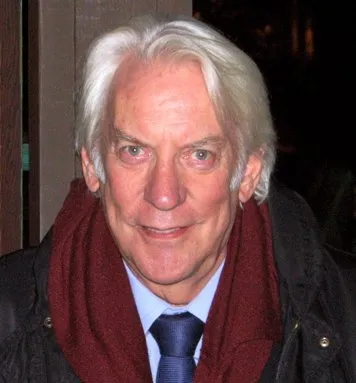
Donald Sutherland
Human Design Chart
Biography
Sutherland grew up in the Canadian Maritimes, the son of a gifted salesman father and a mathematician mother. One of five kids, he worked as a DJ in Nova Scotia at age 14 and after graduating from high school, attended The University of Toronto to study engineering, supporting himself by odd jobs and performing with local theater companies. Informing his father that he wanted to be an actor, (Dad did not discourage him), Sutherland was accepted to The Royal Academy of Dramatic Arts in London in 1950. Following lengthy tours of the provinces, he moved back to London to do TV work and then straight into his first film, The Castle of the Living Dead in 1965. After B movies in the late '60s such as Die! Die! My Darling, it was his performance of Hawkeye Pierce in the classic M*A*S*H in 1970 that served as the final launching pad for his career. Since then the 1.93 m (6'4"), actor worked steadily.
An anti-Vietnam War activist, he formed "Free Theatre Associates" with Jane Fonda as an alternative to Bob Hope's USO tours. He and Fonda had become friends when they co-starred in the award-winning film, Klute.
He appeared in over 84 films including Klute (1971), JFK (1991), Six Degrees of Separation (1993), Instinct (1999), Space Cowboys (2000), The Italian Job (2003), Cold Mountain (2003), Pride & Prejudice (2005), Aurora Borealis (2006) and The Hunger Games franchise (2012–2015).
He was the winner of an Emmy Award for Citizen X (1995).
Sutherland suffered from ill health, as he had pneumatic fever, polio, hepatitis, an appendectomy, scarlet fever and pneumonia.
The Human Design of Donald Sutherland: Generator 3/6
Generator 3/6 — Design at a Glance
Donald Sutherland emerges as someone with immense endurance and almost inexhaustible reserves of energy. His design identifies him as a Generator type, characterized by abundant sacral energy – comparable to a workhorse that is strong and durable as long as it has the right task. However, this energy was not released through self-initiative but exclusively in response to impulses from his environment. His motto: don't start, just respond.
His success depended on waiting for signals from life and only acting when he received a clear "yes" internally. If he lived by this principle, his system rewarded him with a deep sense of fulfillment. When the internal signal did not appear or he was prevented from pursuing his heart's project despite having the energy available, frustration and energy depletion were likely to follow. Another risk was engaging in activities that he actually had no interest in; then he wasted his strength and tended towards burnout. Therefore, Donald Sutherland relied on reacting from his gut to effectively utilize his enormous capacity. Only in alignment with this strategy could nothing stop him.
Emotional Authority
Donald Sutherland displays an inner decision-making structure characterized by emotional wave movements. His design carries Emotional Authority, meaning the Emotional Center is defined and thus automatically forms his internal guiding authority – independent of other configurations in his chart. This mechanism shaped him as someone whose perception of the world was always colored by the current mood. At one moment he could be totally enthusiastic about something, only to find it negative the next. His immediate feeling was often just a provisional snapshot, not yet the final truth. Quick, spontaneous decisions directly from this emotional heat were therefore risky and could have negative consequences.
The strategy of his design required patience: He needed time for decisions to mature. Only after multiple "sleeping on" an issue did the intense feelings subside. With this emotional distance, clarity and calmness then set in. This process was essential for all long-term direction-setting in his life, as only through it could he access deeper, more comprehensive understanding. Donald Sutherland thus had to consciously resist the pressure of immediate reaction to find his true path.
The 3/6 Profile — Martyr / Role Model
Donald Sutherland showed a life marked by a fundamental rift between playful experimentation and the need for reflective wisdom. Until around age 30, he primarily acted from Line 3 of his Profile: He tried things out, took everything on board, and accepted mistakes as an essential part of the learning process. This phase was characterized by trial and error, unusual discoveries, and a willingness to form and dissolve connections in order to experience new things.
Only after his first Saturn return, around age 30, did Line 6 activate. It prompted him to withdraw to reflect on accumulated experiences and gain an overall perspective of his life processes. Now the playful "inner child" met with the wise outlook of the elder within him. This configuration often led to inner uncertainty; although he seemed to exert control outwardly, he felt internally torn between a desire for play and the necessity for deep contemplation.
In his later years, around age 50, this dynamic transformed. By learning from both perspectives, he developed a special charm and profound wisdom. He became an example for others by showing how one can experience growth not only personally but also share its benefits with others – a process that otherwise leads to self-alienation if it is not shared.
Split Definition — Defined & Open Centers
Donald Sutherland revealed himself as someone with a tremendous inner source of power that he released not through his own initiative but rather in reaction to life. His design was characterized by defined centers for willpower (Heart), vital energy (Sacral Center), and emotional depth (Solar Plexus). This combination endowed him with natural authority: He had the endurance to keep promises and determine his resources, as well as a powerful life force that manifested as restlessness or a need for active expression. Crucial was his defined Solar Plexus as an inner authority. He was programmed to make decisions not in moments of excitement or disappointment but patiently waiting out the emotional wave until clarity emerged. This created a captivating depth in his presence; others sensed his emotional charge and were drawn to him, while he strategically benefited from waiting.
At the same time, his chart revealed vulnerabilities in mental and identity-forming areas. His open Head and Ajna Centers meant that he did not have consistent access to his own inspiration or conceptual truth. He tended to identify with foreign questions or doubts, making him susceptible to mental overload. Instead of seeking answers, he was dependent on reflecting the ideas of others. Similarly, his open G Center: He lacked a fixed identity or direction. This allowed for an actor's flexibility as he could fit into roles and environments without being bound by a rigid self-image. He relied on external initiation to find the right place and correct direction. His open Spleen Center also made him sensitive to health and survival fears in his environment, leading him to orient himself towards people with stable intuition rather than making spontaneous decisions.
Channels for evolutionary change and communal liberation.
Donald Sutherland's design set a tendency for unexpected, profound transformation processes. The Mutation Channel 60-3 connected the Root Center with the Sacral Center and generated a pulsating on/off energy. This mechanism demanded acceptance of limitation (Gate 60) and navigating through inner confusion during rebirth (Gate 3). The resulting melancholy was not a deficit but rather the pressure under which new evolutionary possibilities developed in the background. Donald Sutherland showed himself as someone who endured this internal tension without needing to rationalize it, patiently waiting for his transformation to become visible through his sacral reaction.
Parallel to this, the Community Channel 37-40 between Solar Plexus and Heart Center was at work. It connected the Gate of Friendship (37), which seeks recognition, with the Gate of Solitude (40), valuing fair reciprocity. This configuration emphasized the need for carefully tuned agreements and emotional clarity for stable bonds. Donald Sutherland lived in a dynamic that oscillated between the desire for belonging and maintaining individual boundaries; he sought connections based on mutual respect and practical support, not spontaneous impulses.
Additionally, further Gates shaped his profile: Gate 61 propelled the struggle towards inner truth and silence forward, while Gate 42 required closing processes to take on new commitments. Gate 62 promoted logical pattern recognition and patience in clarifying facts. On the personality side, Gate 32 with its focus on continuity and material success as well as Gate 41, which used evolutionary crises as a source of feeling, complemented this picture. Gate 27 brought caring warmth while Gate 6 regulated emotional waves and Gate 21 aimed for material control in service to the community.
Individual Circuitry — Circuit Signature
Donald Sutherland's design set a tendency towards distinct, parallel existing energy focal points. As someone with Split Definition, he had two non-interconnected power centers: an impulse for individual change and another for social cooperation. These areas never merged but acted as independent poles in his life.
The Knowledge Circuit connected his Sacral Center to the Root Center. Through the Mutation Channel (Gates 3–60), a pulsating energy was evident, aimed at establishing deviations from the known and finding new expression. This was not creative inspiration in an intellectual sense but rather deeply rooted power for transformation through personal identity.
Parallel to this existed the Ego Circuit connecting Heart and Solar Plexus Centers. The Community Channel (Gates 37–40) here promoted a give-and-take relationship. This connection supported mutual aid within a group or tribe. Since the Sacral Center was missing in this area, this social dynamic required necessary rest periods for resource regeneration.
Both circuits remained energetically isolated from each other. Donald Sutherland lived with the tension between the drive for individual novelty and the necessity of traditional communal support without these forces merging into a single cohesive flow.
Right Angle Cross of Maya 2
Donald Sutherland demonstrated a fundamental disposition rooted in deep inner transformation and breaking through old patterns. His design was marked by the right cross of the Maya, a configuration often associated with a fateful change or a necessary shattering of the past. This structure suggested that he did not simply fit into pre-fabricated roles but found his true expression through internal processes and external upheavals.
The right cross of the Maya describes a path where traditional bonds or expectations must be dissolved to make way for a novel, often unexpected development. It is not about mere progress but a fundamental shift in identity. For Donald Sutherland, this meant that his strength lay in freeing himself from rigid structures and embarking on new paths that could initially appear radical or unconventional.
This mechanism influenced how he dealt with challenges: not through direct confrontation but through deep inner work that eventually became visible externally. His life was characterized by the ability to overcome old forms while creating something new and authentic – a process often accompanied by personal pain or uncertainty, yet ultimately leading to a unique presence.
Saturn Return · Uranus Opposition · Chiron Return · 2nd Saturn Return — Life Cycles
Donald Sutherland demonstrated profound confirmation of his professional excellence during this phase of his life. In 1995 at age 60, he received the Emmy Award for “Citizen X”. This success marked his second Saturn return, a cycle in Human Design mechanics associated with intensified structuring and maturation of long-term commitments. While the first return often lays the groundwork, the second passage further solidifies the foundation; earlier efforts gain durability and become pillars of life’s work. For Donald Sutherland, this meant that his years-long dedication to acting now came into recognized, stable form. The Saturn return demands taking responsibility for one's fate and creating structures that endure. The award was no coincidence but a visible expression of this inner maturity: A process where what might have previously been in flux or experimental solidified as an established masterwork. It was about bringing his identity and competence into a form that holds up under pressure and is recognized by the outside world as enduring.
Generator · Emotional Authority — Synthesis
Donald Sutherland was a Generator whose life was marked by deep sacral energy. This power fueled his endurance and ability to materialize things, yet it always required a task that truly fulfilled him. His emotional center led to not making decisions in the moment but needing time for feelings to mature – a process allowing him to recognize deeper truths. The profile as an experimenter and later role model suggests he initially gathered experiences and tested himself before developing wisdom and guidance for others in later life phases. The Channel of Mutation (3-60) amplified this tendency towards change and breaking conventional paths, coupled with fundamental melancholy.
A central paradox in his design lay in the interplay between sacral energy and emotional wave. While sacral energy propelled him to act and shape things, his emotional authority required pauses and reflection to ensure he focused on what was right. This may have led to an internal tension field between the urge for action and the necessity of not rushing decisions. The success that came to him at age 60 with the Emmy Award for his work could be an expression of this integrated power – the result of years of experimentation and emotional maturation.
2 Defined Channels
Incarnation Cross - Right Angle Cross of Maya 2
Solar Return
The Solar Return shows the moment when the sun returns to its exact birth position - your personal solar year.
Life Cycles
Discover the life cycles with a detailed triple view (birth chart, cycle chart, composite).
Human Design Profile
- Type
- Generator
- Strategy
- To respond - wait for something to respond to
- Authority
- Emotional Authority
- Profile
- 3/6 - Martyr / Role Model
- Definition
- Split Definition
- Incarnation Cross
- Right Angle Cross of Maya 2
- Date of Birth
- 17.07.1935 11:30
- Place of Birth
- St.John, CAN
Frequently Asked Questions
What was Donald Sutherland's Human Design type?
What Profile did Donald Sutherland have?
What Authority did Donald Sutherland possess?
What incarnation cross did Donald Sutherland have?
When was Donald Sutherland born?
Discover your own Human Design
Are you also a Generator? Find out in a personal reading how to use your sacral energy correctly and discover deep satisfaction.
More Personalities
Back to overviewSissy Spacek

Aaliyah

Alexia

Anémone

Angèle

Ann-Margret
