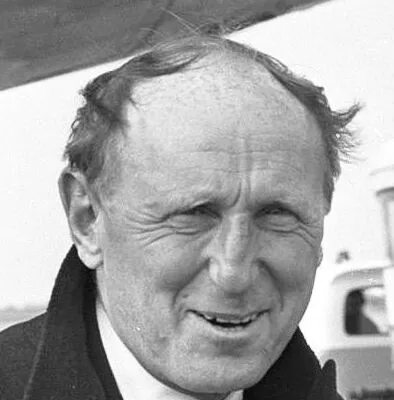
Doug Polk
Human Design Chart
Biography
In 2015, Polk was selected to play heads-up No Limit Hold 'em against A.I. poker bot Claudico along with professional poker players Dong Kim, Jason Les and Bjorn Li. Each player was set to play 20,000 hands against Claudico for a team total of 80,000 hands. The human players ended up defeating Claudico for 732,713 chips with Polk beating the bot for 213,000.
On 16 March 2020, Polk uploaded a video saying he doesn't like the game anymore and is formally quitting the poker industry after retiring from play in late 2018.
In July 2020, Polk challenged Daniel Negreanu to a high-stakes heads-up no-limit hold'em match, and Negreanu accepted. Polk subsequently came out of retirement to practice for the match. The duel ended on 4 February 2021, with Polk winning approximately $1,200,000 over 25,000 hands.
In 2021, Polk moved to Austin, Texas and has been playing live poker locally.
What does Projector 3/6 mean for Doug Polk?
Projector 3/6 — Design at a Glance
Doug Polk's design reveals a tendency towards precise system analysis: He was someone who immediately recognized where errors lay in complex structures. This ability stems from his nature as a Projector. Projectors do not have a constant life energy source like other types; instead, they operate with a dense, focused aura that is comparable to a bright flashlight. This light casts shadows on weaknesses in the environment or in others and thus brings 'light into darkness'.
The challenge of this configuration lies in the way of communication. If Doug Polk addressed these deficiencies directly, he risked resistance, similar to how a glaring light would blind someone if shone directly into their eyes. The more effective strategy was to attract through his own harmony and competence, so that others would ask for his insights on their own accord. His design therefore requires him to wait for an honest, appreciative invitation before he exercises his leadership role.
Without this recognition, the Projector tends to feel overwhelmed or fall into bitterness – his Non-Self theme. Since Projectors must alternate between phases of high intensity and necessary rest periods to avoid burning out, modern work models are often counterproductive for them. However, if Doug Polk lived according to this strategy and waited for the invitation, he was rewarded accordingly with success in line with his design. His strength thus lay not in constant action but in targeted, invited leadership.
Emotional Authority
Doug Polk's inner compass was marked by a strong emotional wave that significantly shaped his perception and decision-making. His design shows an emotional authority carried by the defined Solar Plexus Center. A central mechanism of this design is the absolute priority of this authority: Once the Emotional Center is activated, it takes charge in all decisions regardless of which other centers are also defined in the chart.
This configuration means that Doug Polk was always under a dynamic mood swing that showed itself in constant ups and downs. The world appeared to him colored either enthusiastically positive or strongly negative depending on his current emotional state. Since these immediate emotions only represent momentary snapshots and first impressions – not the ultimate truth – spontaneous decisions based on the current emotional state often had negative consequences.
The strategy of his design therefore lay in conscious delay. Doug Polk needed to take time to let decisions mature. This required patience and repeatedly 'sleeping over' important questions, especially regarding long-term life decisions. Only when the initial strong emotions subsided and an emotional distance was gained did true clarity and calmness set in. For him, this process of waiting was not a barrier but rather the necessary path to deep insight and correct action.
The 3/6 Profile — Martyr / Role Model
Doug Polk's design is characterized by a fundamental split between the urge to experiment and the need for wise reflection. In his first half of life, until the Saturn Return at around 29 years old, he primarily acts as an experimenter. This phase is marked by trial and error: He tests ideas, adapts, and experiences the impermanence of his concepts. It's less about final truths than arriving at correct insights through failure and starting anew. There can be a tendency towards self-deception if beautiful but useless ideas are favored.
With the transition into the third life phase, around age 30, the focus shifts. The experimental energy now leads with a wiser perspective. Doug Polk tends to withdraw to reflect on his previous experiences and gain an overview of the whole picture. This often creates inner uncertainty: While things may appear controlled externally, internally he feels the conflict between the desire for playful experimentation and the necessity of creating rational, binding structures.
His goal is not only to bring peace or justice but to ensure that the world remains livable for future generations. He enters into commitments only if they guarantee this long-term stability. If he learns to integrate both perspectives – the playful Line 3 and the broad Line 6 – he develops into a role model in later years. His charm and wisdom gained through experience make him an orientation guide for others, showing how one can shape life as sacred and rational at the same time.
Split Definition — Defined & Open Centers
Doug Polk's Human Design profile suggests a tendency towards clear, willful expression rooted in a firm inner direction. His defined Throat Center served as a reliable pivot point for communication, transmuting messages from the body into action or speech outwardly. This voice did not speak randomly but from specific sources: The also defined G Center gave it a sense of personal identity and love, while the defined Heart Center brought willpower and ego strength. Thus, Doug Polk articulated his truth with a consistent yet limited manner – he said what he wanted and did what he intended, backed by self-esteem.
At the same time, his defined Solar Plexus Center shaped his emotional landscape. It functioned as an internal authority that did not offer immediate truth in the 'now', but achieved clarity only through waiting out the emotional wave. His feelings were powerful and seductive, yet required patience to avoid impulsive action.
In contrast, his open Head Center revealed a vulnerability to mental pressure and confusion. Doug Polk tended to get entangled in questions that weren't his own or sought inspiration to silence an internal monologue rather than trusting his emotional authority. His open Ajna Center amplified this through a flexible yet unstable mind that absorbed other people's concepts without identifying them as personal truth. Additionally, his open Sacral Center was susceptible to 'borrowed' energy, leading him to overextend himself due to the lack of consistent generative power. His open Root Center also absorbed external stress from the environment rather than generating it.
Channels for inspired presence and genuine community.
Doug Polk's design is characterized by a strong orientation towards individual creativity and life in communities. He is designed to inspire others through his authentic example, with an impact that relies less on words and more on lived uniqueness. This is enabled by Channel of Inspiration 1-8, connecting the G Center with the Throat Center. Gate 1 expresses the mutative perspective while Gate 8 represents contribution to a group; together they create a public outlet for creative potential and leadership. Doug Polk draws attention by showcasing his individual direction, encouraging others to develop their own creativity.
Parallel to this, his design shows a deep connection with social structures. Channel of Community 37-40 connects the Solar Plexus Center with the Heart Center, emphasizing the importance of contracts and loyalty within a group. Gate 37 seeks recognition in the whole while Gate 40 is ready to work to provide for loved ones but needs breaks. This configuration requires carefully negotiated agreements that are not spontaneous but closed with emotional clarity and willpower. Doug Polk acts as a bridge builder between individuals, ensuring everyone has a respected place within the community.
Additional nuances arise from further gates: Gate 12 in the Authority Center emphasizes restraint and the influence of emotional moods on communication. Gate 6 brings friction as a driver for further development while Gate 36 uses crises as cyclical movements for experience gain. Gate 11 promotes harmonious assessment of situations through visual memories before acting. In the personality realm, Gate 21 supports control over material things in service to the community under acknowledgment of respect needs. Gate 10 in the G Center integrates complex behavioral rules and beliefs for survival through proper timing. On a design level, Gate 7 projects future patterns for leadership while Gate 16 promotes experimental mastery in the collective. This combination shapes Doug Polk as someone who inspires individually and stabilizes communally.
Individual Circuitry — Circuit Signature
Doug Polk's Human Design profile suggests a tendency towards impulsive, inspired communication. The Knowledge Circuit connected his Throat Center with the Identity Center via Channel of Inspiration (Gate 1–8). This created pulsating energy that wanted to immediately translate new ideas into words – often as sudden inspiration marking one's unique path.
Parallel to this was a separate mechanism: The Ego Circuit connected Heart and Solar Plexus Centers through Channel of Community (Gate 37–40). Here, it wasn't about individual creativity but pragmatic give-and-take within a group. This connection fostered mutual support and building shared resources, yet required pauses as there was no direct life force from the Sacral Center.
As someone with split definition, these two systems existed side by side without directly flowing into each other. Thus, Doug Polk expressed his individuality through spontaneous auditory impulses on one hand and worked through emotional waves and strategic give-and-take in social structures on the other. The power lay in timing the use of these separate energies: inspiration for personal voice, community sense for material cohesion.
Right Angle Cross of Eden 4
Doug Polks Human-Design profile indicates a tendency towards a deep, often unconscious search for meaning behind one's existence. This configuration, the right cross of Eden 4, primarily describes not intellectual analysis but a strong inner drive to understand the hidden patterns of life and engage with the big questions of humanity. It is an energy that seeks wholeness and often leads Doug Polk to address topics beyond the everyday, incorporating spiritual or philosophical dimensions.
The mechanics of this cross show a path defined by internal reflection and the pursuit of higher understanding. Doug Polk has shown himself to be someone whose motivation is less driven by external goals than by the need to understand his role in the larger scheme. This does not necessarily mean public teaching, but rather personal integration of these insights into daily actions. The energy of the right cross of Eden 4 works subtly yet persistently; it shapes how Doug Polk interprets challenges – not as obstacles but as steps on a path of self-discovery. This attitude allows him to find inner stability in moments of uncertainty based on trust in a larger plan that he has co-created without needing full control.
Saturn Return — Life Cycles
Doug Polks Human-Design profile points towards a tendency for structured knowledge dissemination and strategic planning. This configuration is evident in the ability to penetrate complex systems and make them accessible to others. In Human Design, this often describes a process where inner clarity is carried outward to create order or understanding.
In 2016, at age 28, Doug Polk founded Upswing Poker, a platform for poker training. For his design, this was a typical moment: the first Saturn return marks the transition from an experimental phase to defined structure and responsibility. In this cycle, years of groundwork often coalesce into a stable, public result. The founding of a knowledge dissemination platform reflects exactly this mechanism – inner knowledge is transformed into a stable form that serves others. This is not about spontaneous inspiration but about proving competence through concrete implementation. This step solidified his role as a disseminator of strategic content and demonstrated how his design is geared towards pouring expertise into sustainable structures.
Projector · Emotional Authority — Synthesis
A central red thread in this design is the dynamic connection between inner perception and external expression. Emotional authority requires a maturing wave, while the defined Throat Center channels the drive to communicate – particularly through the Channel of Inspiration, which promotes creative contribution and public visibility. The profile as an experimenter/role model emphasizes exploration initially and later integration of wisdom. This combination points towards a lifestyle where experiences are deeply processed before being authentically and effectively carried outward – a continuous cycle of intake, reflection, and expression.
The central paradox lies in the interplay between projection power and emotional depth. As a projector, this person perceives patterns and potentials in others and projects them, bringing a natural talent for recognizing improvement potential. Simultaneously, emotional authority requires time and space for inner preservation to make decisions from deep, felt clarity. This creates a tension field between the need to be effective externally and attending to the rhythm of the emotional wave – balancing 'bringing light into darkness' without losing oneself in it.
2 Defined Channels
Incarnation Cross - Right Angle Cross of Eden 4
Solar Return
The Solar Return shows the moment when the sun returns to its exact birth position - your personal solar year.
Life Cycles
Discover the life cycles with a detailed triple view (birth chart, cycle chart, composite).
Human Design Profile
- Type
- Projector
- Strategy
- Wait for the respectful invitation
- Authority
- Emotional Authority
- Profile
- 3/6 - Martyr / Role Model
- Definition
- Split Definition
- Incarnation Cross
- Right Angle Cross of Eden 4
- Date of Birth
- 16.12.1988 19:09
- Place of Birth
- Pasadena, CA, United States
Frequently Asked Questions
What is Doug Polk's Human Design type?
What Profile does Doug Polk have in Human Design?
What authority does Doug Polk possess?
Which incarnation cross is Doug Polk associated with?
When was Doug Polk born?
Discover your own Human Design
Are you also a Projector? Find out in a personal reading how to unfold your leadership qualities and recognize the right invitations.
More Personalities
Back to overviewSissy Spacek

Alain-Fournier

Aldair

Anémone

Ann-Margret

Bourvil