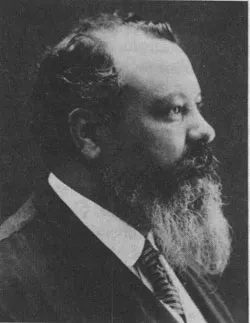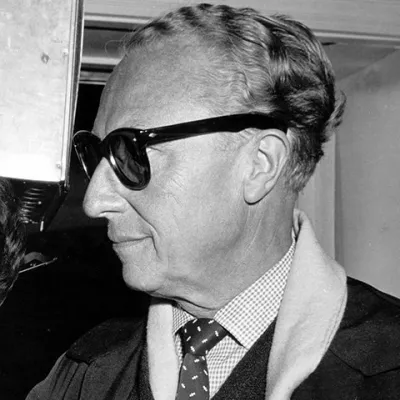
Douglas Sirk
Human Design Chart
Biography
Despite the enormous success of Imitation of Life in 1959 (partially fuelled by the scandal surrounding the murder of Lana Turner's boyfriend by her daughter), Sirk left the United States and retired from filmmaking. He died in Lugano, Switzerland, on 14 January 1987, aged 89.
What does Manifestor 6/2 mean for Douglas Sirk?
Manifestor 6/2 — Design at a Glance
Douglas Sirk revealed himself as a pioneer and visionary whose design predisposed him to lead the world into a new future. His character embodied that of an emperor in ancient Rome: He possessed the vision of a grand whole, but rather than leading wars himself, he sent others out to conquer foreign lands for him. This stance often led to misunderstandings and polarization; his great dreams were loved and followed by some, yet rejected or even hated by others due to their magnitude. To find the right followers, it was crucial for him to inform others timely and accurately about his visions. This formed the ideal strategy of his design: When he adhered to this strategy and trusted in his authority, he was rewarded with a sense of inner peace. Living against his design, however, led to an enduring, deep-seated anger within him. His essence was thus characterized by this tension between visionary leadership and the necessity for clear communication to avoid misunderstandings and find the right path.
Emotional Authority
Douglas Sirk revealed himself as someone whose inner truth did not lie in first impulses but emerged after emotional waves subsided. Emotional authority defined his decision-making fundamentally: The defined Emotional Center carried this responsibility and always took precedence over all other defined centers in his design. This meant he was subject to a constant wave of ups and downs in emotions; the world appeared colored by his current mood, what inspired him one moment could be perceived negatively the next. Such an initial impression was merely a snapshot, not necessarily the deeper truth. Quick, spontaneous decisions based on such emotion often had negative consequences for him. Instead, his design required patience and conscious hesitation. By taking time to let decisions mature – perhaps by sleeping on them multiple times – he gained emotional distance. Over time, intense feelings subsided, clarity and calmness set in. Only then was the process complete and a well-founded choice possible. This mechanism served to protect long-term decisions that could have a significant impact on his life course, safeguarding against impulsive reactions and enabling deeper, more comprehensive understanding.
The 6/2 Profile — Role Model / Hermit
Douglas Sirk's design inclined towards a two-phase development: initially marked by experimental action, later by detached wisdom. As a 6/2 profile, the energy of Line 3 dominated in his youth, fostering a process of trial and error; mistakes served as learning opportunities followed by necessary withdrawals for processing. Only after turning thirty did Line 6 activate. Then he metaphorically retreated into a 'cave' to reflect with great distance on his earlier experiments. This phase was characterized by intense reflection, healing, and profound self-awareness.
The specific configuration of his lines further shaped this attitude. Line 6 at Gate 27 developed into care and altruism but also protected against the misuse of generosity through the establishment of fairness standards. Simultaneously, Line 2 at Gate 19 emphasized service and selectivity in handling personal resources. Here an exchange between giving and receiving emerged; service – whether worldly or spiritual – was only sustainable if based on a clear identity and a need for appropriate recognition. Douglas Sirk thus revealed himself as someone who learned through the experience of mistakes to selectively and fairly apply his care before emerging later as a wise counselor from his reflective phase.
Split Definition — Defined & Open Centers
Douglas Sirk revealed himself as someone who was constantly under mental pressure to ask questions and understand connections. His defined Head and Ajna centers created a specific kind of conceptual thinking; he was always in the process of inspiration, but this did not provide direct energy for implementation. This mental flow continued through his defined Throat Center, which served as a pivot point to transform these concepts into communication and action. His expressive power was reliable yet limited to what emerged from his mental processing.
At the same time, he had a firm sense of self-identity through his defined G Center. This gave him a clear sense of direction and the ability to show others new perspectives without being dependent on them. However, this inner security contrasted with his emotional state: His defined Solar Plexus made him an internal authority on feelings. He was forced to wait for the emotional wave to pass before gaining clarity; impulsive action at the peaks or troughs of these waves often led to regret and chaos in his environment.
The open centers strongly shaped his vulnerabilities. His open Heart Center drove him to want to prove his worth through promises and performance – a cycle of self-doubt, as he did not possess consistent willpower for this. He tended to question whether he was doing enough to be recognized. The open Sacral Center allowed him to absorb and amplify foreign energies; he often operated on 'borrowed' energy, leading to exhaustion because he didn't know when it was enough. Additionally, his open Root Center absorbed external stress, making him vulnerable to hyperactivity and burnout as he tried to escape this pressure rather than recognizing it as foreign.
Channels for reflection, mental clarity and emotional transformation.
Douglas Sirk revealed himself as someone who not only collected experiences but transformed them into deeper truths with patience. This attitude resulted from the Lost Son channel 13-33: He listened (Gate 13), stored secrets and withdrew (Gate 33) to reflect on what he had learned before sharing it. Parallel to this, the Impermanence channel 35-36 drove him. Here, he sought emotionally charged new experiences (Gate 36) and manifested change (Gate 35), often through a restless longing for the new, which gave him emotional depth.
His mind worked mutatively. The Awareness channel 61-24 connected spontaneous inspiration from the Head Center (Gate 61) with rational processing in the Ajna Center (Gate 24). Knowledge did not enter through logical planning but as sudden insight when mental pressure subsided.
Additionally, specific gates influenced him. Gate 27 brought genetic care and self-preservation into play, while Gate 28 shaped decision-making in the present moment and taking risks. Gate 19 connected him with resources, territory, and spiritual communities. In the mental realm, Gate 63 promoted doubt as a motor for security and improvement. Gate 8 urged individual contribution and identity expression, while Gate 7 showed leadership personality and projecting future patterns. Finally, Gate 45 gathered energy at the tribal level and expressed willpower. Douglas Sirk lived this constellation: He collected, reflected, sought emotional depth, and shared insights when they were ripe.
Collective Circuitry — Circuit Signature
Douglas Sirk revealed himself through his design as someone who carried two separate, non-intersecting energetic streams within him. As a person with Split Definition, he lived these forces side by side in parallel without them forming a common flow. On one hand, the Knowledge Circuit over Channel 24-61 (Awareness) shaped him. This connected his Head Center directly to his Ajna Center for him. This configuration promoted innovative flashes of insight and pulsating creativity aimed at going new ways and initiating change. It was about expressing a unique identity through acoustic and present energy impulses.
Completely independently, the Meaning Circuit worked. Here, Douglas Sirk linked his Throat Center with his Solar Plexus and Identity Centers. This flow revolved around emotions, experiences from the past, and the desire to share insights with others. The energy flowed in wave-like and cyclical patterns, reflecting on past events to draw shared meaning from them. Since these two circuits were not connected in Douglas Sirk, the creative impulsivity of the Knowledge Circuit and the emotional, past-oriented reflection of the Meaning Circuit existed as independent, side-by-side experience fields. They influenced his life parallelly without directly mixing or forming a single coherent action line. Thus, Douglas Sirk navigated between these two different energetic realities.
Left Angle Cross of Alignment 1
Douglas Sirk's Human Design profile indicated a tendency towards a deep, often unspoken search for inner order and moral clarity. This attitude was not expressed as loud declarations but rather as quiet internal discipline guiding his actions. The left cross of Alignment 1 describes this dynamic precisely: it is a configuration where the drive for ethical integrity and structural stability takes precedence. Those who carry this cross tend to align their lives with a strict inner compass that distinguishes between right and wrong, order and chaos. For Douglas Sirk, this was not an intellectual game but an existential necessity that shaped his life. His energy flowed towards places where structure could be created or preserved, often in the shadows away from public spotlight. The mechanics of this cross demand endurance and patience; it is a path of slow, persistent consolidation of values rather than quick victories. Douglas Sirk lived up to these demands by focusing on what was essential and rejecting distractions that contradicted his inner line. This alignment created an individual who appeared reserved but exerted a strong yet subtle influence through their unwavering commitment to principles. It was a life of quiet affirmation of what was deemed right without seeking external validation.
Saturn Return · Uranus Opposition · Chiron Return · 2nd Saturn Return — Life Cycles
Douglas Sirk's life path was marked by clear structuring phases. His first Saturn return around the age of 29 signified the transition into stable relationships; in 1926, he married Lydia Brincken. This cycle often condensed years of development into sustainable bonds.
The Uranus opposition at about 40 years old brought a radical upheaval. In 1937, Sirk fled Germany driven by danger to his Jewish wife and political resistance against Nazism. This configuration forces adaptation to entirely new, often chaotic circumstances.
The Chiron return around the age of 47 signaled a bloom phase for his incarnation task. In 1944, he staged the melodrama 'Summer Storms'. During this period, personal meaning increasingly unfolds in everyday life if one follows their own strategy; it is not a healing process of old wounds but an achievement phase.
The second Saturn return around the age of 57 solidified his attained position. In 1954, 'Magnificent Obsession' was a box office success. This cycle confirms and stabilizes previously established structures in professional life, which for Sirk translated into measurable commercial success. His chart dynamics show a sequence of binding, flight, artistic bloom, and professional stabilization.
Manifestor · Emotional Authority — Synthesis
Douglas Sirk's life path was marked by a profound inner drive towards inspiration and understanding (defined Head Center). This impetus, combined with the ability to accumulate experiences and reflectively share them (Channel 13-33), shaped him into an exemplar whose wisdom attracted others. Early years were characterized by experimental enthusiasm followed by a phase of intense self-reflection from which eventually mature perspectives emerged that he shared through his work. His authority lay in the emotional wave giving him time to ripen decisions – a process deeply imprinting him and enabling him to grasp complex issues.
A central paradox in his design was the tension between being a trailblazer (Manifestor) and the necessity of emotional clarification. He possessed vision and drive to initiate new things but his decisions required longer maturation through emotional processes. This led to an interplay of impulsive inspiration and restrained reflection manifesting in verifiable events – from early relationships to professional successes and crises each initiating a phase of transformation.
3 Defined Channels
Incarnation Cross - Left Angle Cross of Alignment 1
Solar Return
The Solar Return shows the moment when the sun returns to its exact birth position - your personal solar year.
Life Cycles
Discover the life cycles with a detailed triple view (birth chart, cycle chart, composite).
Human Design Profile
- Type
- Manifestor
- Strategy
- To inform others before acting
- Authority
- Emotional Authority
- Profile
- 6/2 - Role Model / Hermit
- Definition
- Split Definition
- Incarnation Cross
- Left Angle Cross of Alignment 1
- Date of Birth
- 26.04.1897 14:30
- Place of Birth
- Hamburg, GER
Frequently Asked Questions
What was Douglas Sirk's Human Design type?
What Profile did Douglas Sirk have in Human Design?
What Authority did Douglas Sirk have?
What incarnation cross did Douglas Sirk have?
When was Douglas Sirk born?
Discover your own Human Design
Are you also a Manifestor? Find out in a personal reading how to use your initiation power peacefully and dissolve resistance.
More Personalities
Back to overviewChristian-Jaque
Kesha

Lucebert
Marilyn

Masaccio
Papus