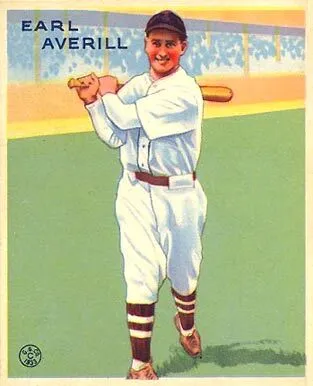
Earl Averill
Human Design Chart
Biography
Earl Averill as a Manifestor 5/1 in Human Design
Manifestor 5/1 — Design at a Glance
Earl Averill revealed himself as a pioneer and visionary whose nature was geared towards leading the world into a new direction through his own initiative and influence. His design matched the Manifestor type, often compared to the role of an emperor in ancient Rome: He possessed the vision for the greater whole but did not wage necessary wars himself; instead, he appointed others to execute his plans. This superior or unusual perspective led him to be loved and followed by some people while others misunderstood or rejected him due to his immense dreams. This conflict between vision and polarization was his central pain point. To find the right followership and reduce resistance, it was crucial for him to inform others about his intentions early and precisely. This strategy of informing served to reduce polarization. If he adhered to this strategy, his design rewarded him with a sense of inner peace. Neglecting this necessity and living against his design instead resulted in persistent, deep anger. His path was thus not only marked by leadership but significantly dependent on how well he prepared his environment for his arrival and intentions to maintain inner peace.
Splenic Authority
Earl Averill demonstrated decision-making based on the first, spontaneous impulse. His internal authority lay in the defined Spleen Center, his health and alarm system. This center endowed him with a pronounced survival intelligence: His instinct and physical well-being immediately signaled whether a situation or environment was right for him. With the Emotional and Sacral Centers open, this Spleen Authority could be effective – a mechanism reserved only for Projectors or Manifestors.
The impulse of the Spleen Center is fine and comes but once in the moment. Earl Averill therefore had to maintain high vigilance so that this subtle signal was not drowned out by other influences. Often, this required withdrawal to hear his own voice clearly. Since his knowledge was situational – he only knew what was right at the moment – his needs changed short-term. Long-term commitments suited little of his nature; instead, he needed maximum freedom and flexibility. Through this spontaneous reaction to the first impulse, he effectively ensured his well-being and rigorously distanced himself from harmful influences. His strategy consisted in deciding in the present, not through planning.
The 5/1 Profile — Heretic / Investigator
Earl Averill's design laid a specific tension between private knowledge acquisition and public service. As someone with the Profile Hero/Researcher (5/1), he showed the magnetic attraction of Line 5, drawing others to him for solutions to their problems. This trait acted like a magnet: people actively sought out the wisdom that Averill had to offer.
The mechanics of his profile explain this dynamic as a synthesis of two phases. Line 1 represented deep private research work – gathering knowledge and learning new challenges in a protected space. Only on this basis could Line 5 operate: conveying expert knowledge for problem-solving for others. Averill lived the tendency to convey hope and practical solutions especially during crisis times, supported by the energy of Gate 64 (Line 5). This promoted harmonious interactions as he fulfilled promises of clarity.
Simultaneously, Gate 45 (Line 1) generated natural attraction through 'voice voting' and instruction. It was about bringing people together and educating them, which benefited the entire community and often brought financial success. However, Averill's central challenge lay in protecting these resources. Without clear boundaries, there was a risk of exhaustion as unbridled demand from his environment could overshadow his private research phase. His success depended on maintaining this balance: taking enough time for himself to regenerate and deepen knowledge before optimally sharing his gifts with the community.
Split Definition — Defined & Open Centers
Earl Averill had a massive internal structure and autonomy. His design featured six defined centers, creating a robust "island of self-determination": consistent mental conceptualization (Ajna), reliable expression ability (Throat), firm identity and direction (G Center), controlled willpower (Heart), intuitive moment-to-moment perception (Spleen) as well as a specific way to handle existential pressure (Root). In these areas, he was less susceptible to external conditioning since he generated his processes independently.
This stability contrasted with the openness of three additional centers: Head, Sacral and Solar Plexus. The open Head Center meant that inspiration was situational and environment-dependent; he tended to question whether he needed to find an answer rather than recognizing mental pressure as non-self. The open Sacral Center led to a fluctuating energy flow easily amplified by the surroundings, which could cause exhaustion if borrowed energies were not released. Additionally, his Solar Plexus was open, causing him to absorb and amplify emotions from his environment instead of experiencing them as stable personal waves. These opennesses required distinguishing between inner stability and external influences to avoid personalizing borrowed energies or interpreting them as deficiency states.
Channels for ambition, logic, power and pioneering spirit.
Earl Averill exhibited a fundamental disposition characterized by the continuous mental pressure of sorting past experiences to gain clarity for future decisions. This process, driven by his Personality-Sun in Gate 64 (Abstract Mind), required time for digestion and formed the absolute focus of his design. This abstract processing was immediately translated into concrete language, creating a strong urge to solidify the "big picture" through precise argumentation.
This dynamic was supported by defined channels in his design. The Accepting Channel 17-62 ensured permanent logical organization of details and exerted pressure to articulate opinions. It connected Ajna Center with Throat Center, translating visual patterns into language for understanding. Everything that could not be integrated into this mental system was rejected as incomprehensible. Simultaneously, the Money Line Channel 21-45 drove the will towards material control and independence. This channel linked Heart Center with Throat Center, emphasizing responsibility for resources and the necessity to lead oneself to avoid ego stress.
In contrast, channels like the Initiation Channel 25-51 and Transformation Channel 32-54 were situated in his Personality. This meant that competitiveness, shock experiences, and ambitious advancement were only situational or activated by external triggers, not as constant internal drives. The mechanics thus revealed a conflict between the inner need for mental order, guided by the Sun and Accepting Channel 17-62, and the external expectation of performance and material security embedded in the Money Line Channel 21-45. Earl Averill lived within this tension between seeking inner clarity and the pressure to be materially independent.
Tribal Circuitry — Circuit Signature
Earl Averill was someone with a solid, individual identity. This internal firmness arose through the Centering Circuit, which connected his Identity and Heart Centers (Channel 25-51). This created pulsating energy of self-worth – "I am who I am" – but it was not much outwardly directed. Since this circuit did not connect to Throat Center, these deep convictions often remained unspoken; they acted as a silent authority rather than a loud declaration.
Parallel to this, there existed a separate direct connection between Ajna and Throat Centers (Understanding Circuit, Channel 17-62). Here logical insights were shared free of emotional coloring, focused on rational structures. This energy did not directly exchange with the inner identity but formed its own field of communicative understanding.
A third aspect consisted of two independent parts in the Ego Circuit. One connected Throat and Heart Centers (Channel 45-21), emphasizing the ability to accumulate resources through communication. The other linked Spleen and Root Centers (Channel 32-54) and provided transformative impulses in the realm of security and intuition. Due to its Split Definition, these energies existed as parallel, not directly connected streams: introspective identity, rational communication, and resource-oriented dynamics coexisted without forming a single continuous flow.
Left Angle Cross of Dominion 2
Earl Averill's design indicated a tendency towards a clear, though often unspoken, definition of his position within power structures. His chart featured the left-hand authority cross at 2, a configuration that did not seek to dominate but rather aimed for precise navigation through existing hierarchies. This mechanism described an impulse to expand one’s influence not through open confrontation but by understanding and subtly exploiting power dynamics. Earl Averill demonstrated someone who derived his authority from the ability to recognize the invisible lines of control within a system and strategically position himself accordingly. It was less about exercising command in the traditional sense, and more about the art of defining maximum operational freedom within given boundaries. This configuration shaped an approach based on subtle influence and clear territorial demarcation without necessarily needing to be in the spotlight. The energy of this cross acted as an inner compass for dealing with authority: it encouraged a precise assessment of one’s role relative to other power players and acting accordingly. Earl Averill lived this dynamic by constantly reviewing his positioning within surrounding structures, enabling him to exert influence while avoiding unnecessary resistance. This strategic alignment was not a conscious tactical plan but a deeply rooted energetic reality of his design that significantly shaped his interactions with authority and hierarchy.
Manifestor · Splenic Authority — Synthesis
Earl Averill led a life guided by an inner logic and the drive for transformation. His Manifestor profile with defined authority in the Spleen suggests someone primarily focused on initiating actions and bringing about change, always in harmony with a subtle intuitive impulse for personal well-being. The connection between Heart and G Centers underscores a strong self-understanding and the ability to guide others in a specific direction, while the defined mind provides a consistent, focused thought process. This combination enabled him to grasp complex issues and communicate his visions precisely (Channel 17-62).
A central tension in Earl Averill's design lies between the need for control and the capacity for adaptation. The defined Heart Center indicates strong willpower, while the open Sacral Center makes him sensitive to others' energies. This constellation requires a constant balancing act between personal drive and the necessity of adapting to circumstances – a dynamic reinforced by channels like 51-25 (Initiation), which imply both transformation and recognizing limits.
4 Defined Channels
Incarnation Cross - Left Angle Cross of Dominion 2
Solar Return
The Solar Return shows the moment when the sun returns to its exact birth position - your personal solar year.
Life Cycles
Discover the life cycles with a detailed triple view (birth chart, cycle chart, composite).
Human Design Profile
- Type
- Manifestor
- Strategy
- To inform others before acting
- Authority
- Splenic Authority
- Profile
- 5/1 - Heretic / Investigator
- Definition
- Split Definition
- Incarnation Cross
- Left Angle Cross of Dominion 2
- Date of Birth
- 09.09.1931 06:40
- Place of Birth
- Cleveland, Ohio, United States
Frequently Asked Questions
Which Human Design Type was Earl Averill?
Which profile did Earl Averill have?
What authority did Earl Averill have?
Which incarnation cross was assigned to Earl Averill?
When was Earl Averill born?
Discover your own Human Design
Are you also a Manifestor? Find out in a personal reading how to use your initiation power peacefully and dissolve resistance.
More Personalities
Back to overviewAldair

Cafu
Christian-Jaque
Joelinton

Kaká

Kesha