Eddie Arcaro
Human Design Chart
Biography
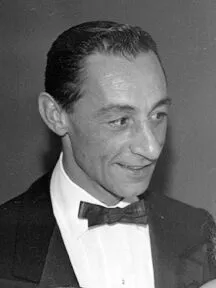
He left school after the ninth grade and took a job as a stable hand in 1929, riding his first race in 1931. His first win was on 14 January 1932. From 1940-1950, he led the field ten times. From 1950-1955, the 5' 3" and 112 lbs jockey led every year. He was continually suspended, as he pushed to lead with his fighting spirit.
Arcaro, Johnny Longdon and Sir Gordon Richards are the only three jockeys to ever ride over 4,000 winners; Arcaro entered the winner's circle precisely 4,779 times in 24,092 tries. He won stakes worth well over $23,000,000 during his career.
In 1961, Arcaro retired from 30 years of racing to become a sports announcer. Arcaro was the only son of Italian immigrants. He was married to his first wife, Ruth, for more than 50 years; she died in 1988. They had two kids.
His winnings, combined with shrewd investments in the stock market and oil speculation, made him a multi-millionaire. He also held a share in the saddle business. When Arcaro was not attending most of the major races around the country, he fit in some time for golf. He authored "I Ride To Win."
He was living with his second wife, Vera, in Miami Beach, FL when he was diagnosed with cancer. Arcaro died at home of liver cancer, on 14 November 1997, age 81.
Eddie Arcaro — Manifesting Generator with Profile 6/2
Manifesting Generator 6/2 — Design at a Glance
Eddie Arcaro's design showed a tendency towards lightning-fast result orientation paired with the ability to bypass conventional processes. As an Manifesting Generator, he had a hybrid of a Generator's constant energy and a Manifestor's direct action, allowing him to quickly draw things into his life but also carrying the risk of skipping important steps. Such rushes often led him to backtrack to fill in missing foundations – a process that could be frustrating as it aligned with his non-self theme.
Furthermore, there was a tendency towards the multitasking trap: Arcaro frequently reacted to multiple impulses simultaneously and started various projects in parallel. Without strict adherence to his strategy of waiting for life to react rather than initiating himself, this creative drive quickly turned into overextension. Success came only through regular validation of his Sacral Center. Only when it sent clear 'yes' signals could he productively use his speed. Under these conditions, a specific play mode emerged that gave him deep satisfaction and allowed him to enjoy variety without losing efficiency. His energy then did not act as chaotic distraction but as focused, playful power.
Emotional Authority
Eddie Arcaro showed a decision-making structure based on emotional maturity time. Spontaneous impulses often worked for him as deceptive snapshots; true clarity only arose after the emotional waves had subsided through patience and multiple reflections. This resulted from his emotional authority carried by the defined Emotional Center. In this center, he was subject to constant waves of ups and downs in his emotions: the world appeared colored by the current mood – one moment totally enthusiastic, the next negative about the same thing. The immediate feeling counted only as a first impression, not necessarily as truth. Decisions made quickly out of emotional heat could therefore have negative consequences. The more time Eddie Arcaro took to let a choice mature, the deeper and more comprehensive he could understand the situation. This required patience and consciously 'sleeping on' decisions. He should take his time and ask himself multiple times. Over time, intense feelings subsided, emotional distance gained strength, and calmness as well as clarity set in. This process was particularly crucial for long-term life-defining decisions. Emotional authority always took precedence over other defined centers in his design, regardless of what else was active. It dictated the necessary rhythm of delay to gain calmness and protection from extreme emotional misjudgments.
The 6/2 Profile — Role Model / Hermit
Eddie Arcaro's development proceeded through two clearly separated phases. In his younger years, before the age of 30, his design showed a process of 'trial and error'. Line 6 worked here like a 3-line: he actively experimented, gathered diverse experiences, learned from mistakes, with retreats after failures part of the strategy. This was marked by discipline in right action and the desire to make pleasant experiences with valuable people while blunting negative emotions.
After his 30th birthday, the dynamics changed fundamentally. The full effect of Line 6 took place, leading Eddie Arcaro into a phase of deep introspection and isolation – metaphorically retreating into a 'cave on the mountain'. During this time, he reflected with great distance on his earlier experiments. This period served for healing and gaining profound self-knowledge. Parallel to this, the selective natural talent of Line 2 showed: his abilities were not constant display but became visible only when called upon or needed. He kept an overview but avoided potential isolation through impatience by using his inner momentum judiciously.
The result of this long journey was the role of a wise role model. Eddie Arcaro emerged from his reflective phase as someone who called others to deep introspection and helped them learn it. His wisdom did not come from theoretical knowledge but condensed experience of his life path, which he now made accessible to others.
Split Definition — Defined & Open Centers
Eddie Arcaro's Human Design profile established a tendency towards constant, reliable energy: defined Throat, G Center, Sacral, Solar Plexus, and Root Centers shaped his essence. The defined Throat enabled consistent communication; the G Center provided clear identity and direction. The Sacral Center supplied vital power through reaction rather than initiation. A defined Solar Plexus required waiting for emotional waves to gain clarity; the Root Center offered stable pressure to handle stress.
In contrast, Head, Ajna, Heart, and Spleen Centers were open. Eddie Arcaro tended towards mental confusion when seeking inspiration or answers – a typical pattern of open Head/Ajna Centers. The open Heart Center led him to compensate for willpower by making promises to prove value. An open Spleen Center made him vulnerable to spontaneous decisions out of fear of survival pressure or the need for security from others.
This configuration determined his fundamental 'How' of being: reliable self-presentation (Throat), clear direction (G) and reactive energy source (Sacral/Root). The open centers required discipline not to fall into conditioning of will replacement or mental confusion. Eddie Arcaro showed himself as someone who used his defined energy while learning not to interpret the reflections of his open centers – mental uncertainty, lack of willpower, health fears – as inner authority but rather as fields for learning activated by environmental impulses.
Channels for emotional clarity, leadership, reflection and charisma.
Eddie Arcaro stood between a drive towards collective leadership and a deep need for internal reflection. His design established a tendency towards logical authority that always rested on invitation. The Alpha Channel 7-31 connected the G Center to the Throat Center through the Role of Self Gate (7) and the Leading Gate (31). This created a profile for leadership based on tested patterns and foresight. Eddie Arcaro had to gain trust and could only effectively lead when recognized by the majority; absolute authority was foreign, instead he acted as an influencer within a pack seeking the path together.
At the same time, the necessity of withdrawal marked him. The Lost Son Channel 13-33 also connected G and Throat Centers this time through the Listener Gate (13) and the Withdrawal Gate (33). Here he gathered information and secrets to process in peace. This mechanism required patience: He withdrew to categorize experiences before sharing his insights. Timing was crucial; premature revelation or constant availability would undermine the depth of his reflection.
His vital energy was channeled through the Charisma Channel 20-34, linking the Sacral Center (Power Gate 34) with the Throat Center (Now Gate 20). This configuration required sacral reaction for authentic expression strength. Eddie Arcaro possessed the power of manifestation but this had to be triggered by inner confirmation not whimsy. Without this correct reaction he risked being driven by his own momentum.
Emotionally, the Channel of Recognition 30-41 propelled him, connecting the Root Center (Limitation Gate 41) with the Solar Plexus Center (Feeling Gate 30). This generated a drive for new experiences and restlessness. The challenge was not to blindly follow this desire but to wait out the emotional wave to gain clarity for decisions. Additional nuances were provided by Gates like 29 (Yes Saying) or 53 (Freedom), shaping his attitude towards life affirmation and pioneering spirit.
Collective Circuitry — Circuit Signature
Eddie Arcaro's design established a tendency towards cooler, strategic logic paired with the ability to reflect on emotional waves from the past. These separate forces existed in parallel: On one hand, the future-oriented ratio of the Understanding Circuit; on the other, the past-focused meaning-making. The Understanding Circuit connected Throat and Identity Centers via Alpha-Tier, fostering a need to share rational insights free from conditioning with the collective.
At the same time, the Meaning-Making Circuit worked in two separate segments. A connection between Throat and Identity Centers (through Lost Son and Feeling Gates) allowed communicating felt experiences from the past as collective lessons. The second segment connected Solar Plexus and Root Centers, allowing emotional cycles – with their ups and downs – to directly flow into physical energy conversion. This was independent of the rational side.
The individual survival strength secured the Integration Circuit. Here the Charisma Gate linked Throat and Sacral Centers. This configuration allowed drawing power from reacting to life and making it effective through intuitive knowledge in the present moment. Eddie Arcaro thus showed himself as someone who used individual intuition (Integration) to express both logical strategies and emotional meaning-making – two energetically separate but parallel existing streams in his split definition.
Left Angle Cross of Industry 1
Eddie Arcaro's Human Design profile revealed a tendency towards continuous effort and persistence. He was someone whose energetic background was characterized by endurance. This orientation stemmed from the mechanics of the left cross of Industry 1. This configuration represents a fundamental dedication to work that is not based on short-term impulses but rather on deeply rooted discipline. It described an internal rhythm that drove Eddie Arcaro to pursue tasks with perseverance and continue even when immediate results were lacking. The energy of this cross promoted a stance of reliability, where the process itself – constant action and waiting – was paramount. For him, Industry was not just a duty but a structural component of his way of being. This configuration conveyed the ability to remain stable over long periods without easily being thrown off course by external uncertainties. It was an energy of patience that involved sticking to one's path without seeking quick confirmations. Eddie Arcaro lived this quality as a form of inner anchoring, which helped him find footing in an often unpredictable world and achieve his goals through sheer persistence.
Saturn Return · Uranus Opposition · Chiron Return · 2nd Saturn Return — Life Cycles
Eddie Arcaro's life story was marked by two significant astrological breakthroughs that brought his internal development to the forefront. In 1941, at age 25, he won the American Triple Crown on Whirlaway. This triumph fell during his first Saturn Return. In Human Design mechanics, this cycle often marks the transition from an experimental phase to structured responsibility and long-term validation. What previously existed as potential here condensed into a solid, recognized result that substantiated his competence sustainably.
A second crucial event occurred in 1958 when Eddie Arcaro was inducted into the National Museum of Racing and Hall of Fame at age 42. This coincided with his Uranus Opposition. This aspect often brings sudden openings or status changes, challenging existing structures and forcing new perspectives. His induction here was less a mere title than an institutional anchoring of his influence. It confirmed not only his role as an actor but also as a shaping figure in his discipline. Both events illustrate how planetary cycles shaped concrete life milestones: the Saturn Return established a foundation through proven performance, while the Uranus Opposition placed this achievement in a historical context and solidified its significance for future generations. Eddie Arcaro used these energetic windows to translate his personal success into public recognition.
Manifesting Generator · Emotional Authority — Synthesis
Eddie Arcaro lived a life marked by the dynamics of a Manifesting Generator – an ongoing interplay between the urge to act and the necessity to listen to inner authority. His defined Throat and G Centers pointed towards a clear voice and a firm sense of identity, yet these were amplified by his Sacral Center, giving him immense energy waiting to respond to external impulses. This combination led to a lifestyle where success and recognition were achieved through quick action and the ability to manifest in the moment – a pattern evident in documented events.
A central paradox in Arcaro's design lay in the tension between his defined G Center, which provided clear direction, and his open Heart Center, making him vulnerable to external influences. While he possessed an inner compass, he was simultaneously constantly seeking validation and recognition from others. This led to a constant balancing act between personal will and expectations of others, reflected in a profound ability for adaptation and building strong relationships.
4 Defined Channels
Incarnation Cross - Left Angle Cross of Industry 1
Solar Return
The Solar Return shows the moment when the sun returns to its exact birth position - your personal solar year.
Life Cycles
Discover the life cycles with a detailed triple view (birth chart, cycle chart, composite).
Human Design Profile
- Strategy
- To respond - wait for something to respond to
- Authority
- Emotional Authority
- Profile
- 6/2 - Role Model / Hermit
- Definition
- Split Definition
- Incarnation Cross
- Left Angle Cross of Industry 1
- Date of Birth
- 19.02.1916 15:30
- Place of Birth
- Cincinnati, OH, United States
Frequently Asked Questions
What was Eddie Arcaro's Human Design type?
What Profile did Eddie Arcaro have in his Human Design?
Which Authority guided Eddie Arcaro's decisions?
What incarnation cross was assigned to Eddie Arcaro?
When was Eddie Arcaro born?
Discover your own Human Design
Are you also a Manifesting Generator? Find out in a personal reading how to unfold your multi-talents and direct your energy wisely.
More Personalities
Back to overviewAldair

Alizée

Angeli

Arletty

Artus
Balthus