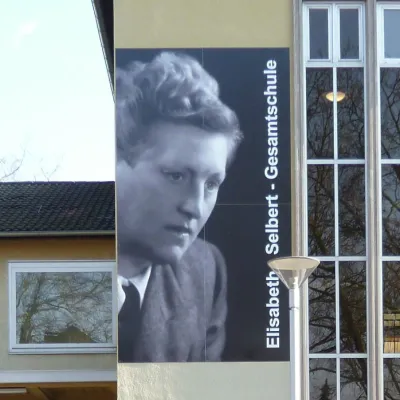
Elisabeth Selbert
Human Design Chart
Biography
After the Weimar Republic was founded, women received suffrage, and Selbert wrote many articles and spoke at numerous events about women's duty to inform themselves about, and engage in, politics.
In 1919 Selbert stood for parliament as the candidate for the Niederzwehren municipality, and worked in the Finance Committee. She was already interested in equality, and in October 1920 she went as a delegate to the first National Women's Conference in Kassel, where she said: "Now women have equal rights, but we are only equal on paper."
In 1920, she married Adam Selbert, and a year later her first child was born, followed shortly by a second.
Selbert received her doctorate in 1930. Her thesis was on Zerrüttung als Ehescheidungsgrund ("Dislocation as Grounds for Divorce"). She was critical of the "principle of guilt", that women often had no rights in divorce. Her proposed solutions were far ahead of their time, and were not implemented in Germany until 1977.
Selbert began to practise law in 1934. Since her Jewish husband was unemployed (due to the Nazis) until 1945, she had to feed her family.
After the Nazi defeat, in 1946 Selbert was elected to the State Consultative Assembly representing the Social Democratic Party for Groß-Hessen. In 1948 she was tasked with helping to draw up the constitution of the Federal Republic of Germany. The original wording of Article 3 was from the Weimar Constitution, reading: "Men and women have the same civil rights and duties." Selbert prefaced this with: "As an imperative mandate to the legislature...". As a result of this constitutional principle, many of the old family law provisions (that dated back to 1896) had to be revised to bring them into conformity.
Selbert left politics and almost sank into oblivion.
Human Design Analysis: Elisabeth Selbert as Generator 2/4
Generator 2/4 — Design at a Glance
Elisabeth Selbert's design establishes a foundation of endurance that is strictly dependent on her inner resonance. As a Generator, she possesses a high level of sacral energy, which gives her the strength to pursue long-term goals with remarkable consistency – comparable to a workhorse that only fully unleashes its power when it is passionate about the task at hand. Her path was marked by a central dynamic: She did not act through self-initiated impulses but responded to stimuli from her environment. Only when her inner voice gave a clear "yes" could she effectively deploy her energy and advance projects.
This strategy of responding rather than initiating was crucial for her well-being. When she acted against this internal signal or forced herself to do tasks without genuine enthusiasm, frustration and rapid energy depletion were the result. Conversely, following her sacral response led to a deep sense of fulfillment. Therefore, her design does not show spontaneous, impulse-driven leadership but rather a powerful yet conditional endurance: She was most effective when she responded to life circumstances while pursuing matters of the heart, rather than being distracted by external expectations or false priorities.
Sacral Authority
Elisabeth Selbert's decision-making was characterized by a direct physical resonance. As a Generator, she possessed Sacral Authority, meaning her strategy and her inner guidance were identical. This simplified her process: She didn't need complex analysis but waited for the signal from her body in response to external stimuli.
Her open Emotional Center ensured the necessary distance for this perception. Her Sacral Authority did not manifest as mental deliberation but rather as an immediate gut feeling or a noticeable surge of energy. This could be expressed verbally through affirmations like "Mhm" or dismissive grunts. When her sacral motor engaged with something, she felt vital and energized. She then tackled her tasks with great enthusiasm and immersed herself in the activity without being driven by compulsive purpose.
Furthermore, an activated Spleen Center acted as a supportive instance. This gave her quick, spontaneous reaction capability and reliable instinctual access to her physical well-being. Therefore, she could rely on both the deep, enduring energy of the Sacral Center and the swift intuition of the Spleen to make decisions that guaranteed her contentment and joy in life.
The 2/4 Profile — Hermit / Opportunist
Elisabeth Selbert's design creates an internal tension between the deep desire for withdrawal and the longing for community. As a 2/4 Profile, she constantly oscillates between two poles: Line 2, which represents the hermit, and Line 4, which pushes towards social connection. This configuration required her to communicate clearly about her boundaries; she had to make it clear when she sought company and when she wanted to be left alone. During her withdrawal phases, Elisabeth Selbert immersed herself in internal processes to gain clarity. Only once this need for solitude was satisfied did she return from her "cave" to spend time with her favorite people.
This shift was influenced by specific line influences. The Diva Line endowed her with a natural talent and determination but also drew attention to her, potentially stirring unrealistic expectations about her success. Simultaneously, the fourth line acted as a wallflower, using humility as protection against perceived inadequacies. This combination created a dynamic in which she developed power when her success was affirmed, yet could also feel like an outsider. However, her Profile allowed her to reflect on the knowledge of her network in silence and develop brilliant ideas by evaluating collected impressions before stepping back out into the world again.
Single Definition — Defined & Open Centers
Elisabeth Selbert's design revealed a tendency towards inner stability and intuitive clarity, coupled with high vulnerability to external mental and emotional pressure. Her defined G Center provided her with a reliable sense of self-identity and a clear direction; she knew who she was and where she stood without imposing it on others. This internal security was fueled by the also defined Sacral Center, which acted as a motor: She had a constant vital energy source that only became effective when responding to external requests rather than initiating action herself. Her third defined center, the Spleen, ensured spontaneous body awareness; she acted according to the 'now' instinct, protecting her from danger and promoting well-being if she trusted this subtle signal.
In contrast, her design revealed several sensitive areas. The open Head and Ajna Centers meant that she did not have a constant mental inspiration; instead, she tended to absorb others' mental pressure, leading to doubts or the search for answers that were not hers. She was inclined to reflect various perspectives rather than hold firm theories of her own. The open Heart Center showed an absence of consistent willpower; she was vulnerable to trying to prove her worth through promises or competition, a mechanism that led to frustration when her inner authority was ignored. Additionally, the open Solar Plexus and Root Centers acted as receptors: She absorbed emotions and adrenalized stress from her environment. This could lead to experiencing others' fears or chaos as her own, disturbing her internal peace until she recognized these states were not hers. Her strength lay in maintaining her defined core identity and energy despite these open windows to the world.
Channels for intuitive fulfillment and persistent discovery.
Elisabeth Selbert was someone who acted through spontaneous intuition and persistent experience. Her design combined the art of survival with the depth of discovery. The Channel of Perfect Form 57-10 guided her behavior from intuitive impulses, not future anxieties. Gate 57 in the Spleen perceived acoustic qualities and inner rhythms; Gate 10 in the G Center translated this into behavior that secured her physical well-being. She lived fully in the moment, creating a rare clarity. This self-referential yet healthy survival training shaped her presence: she left her environment healthier and more beautiful without pursuing it as an objective. Recognition was not a motive; love for herself was the core of her ability to act.
Parallel to this, the Channel of Discovery 29-46 operated. It connected the Sacral Center with the G Center. Gate 29, 'Saying Yes', provided access to the endurance of the Sacral through positive reactions to offers. Gate 46 secured direction and timing. Elisabeth Selbert had to let go of expectations to remain in the depth of her experience. Her life force was correctly applied, enabling persistence over years. She learned from the past, not theoretical logic. Only at the end of an experience did her sense become clear; then she shared this insight with the collective.
Additionally, Gates like 25 (Innocence and mystical individuation) and 15 (collective rhythm) contributed to her stance. Gate 32 ensured continuity and tested stability, while Gate 1 promoted individual creativity in the here and now. In her design, Gates 14 (skillful power preservation), 42 (process completion through experience), and 44 (watchful transformation) were active. This configuration described a person who perfected their unique form through intuitive survival and patient discovery.
Individual Circuitry — Circuit Signature
Elisabeth Selbert was marked by a clear, integrated structure. Her simple definition formed a single, continuous energetic flow connecting the G Center with the Sacral and Spleen Centers. This created a direct line from identity over life force to intuition without separate or contradictory energy islands.
In the Meaning-Finding Circuit, her Channel 'Discovery' (Gates 46 and 29) operated. It connected the Identity with the Sacral Center. The energy flowed here cyclically and emotionally, driven by experiences from the past. Instead of cool logic, intuitive exploration was at the forefront: feelings and insights were processed to be shared later and learned from collectively. This process followed wave-like patterns – with beginning, peak, and end – shaping her way of understanding.
Parallel to this, she activated the Circuit 'Integration' through the Channel 'Perfect Form' (Gates 10 and 57). Here, the Identity Center was directly connected to the Spleen Center. This connection served to secure personal survival in the present moment. It channeled power from reactions to life through intuitive knowledge and correct behavior to make it effective in the current situation. It was about highest individuality and the ability to articulate inner truths acoustically or through direct presence. Both circuits relied on her defined Identity Center, allowing emotional depth (Sacral) and intuitive clarity (Spleen) to culminate in her personal radiance (G Center).
Right Angle Cross of the Vessel of Love 3
Elisabeth Selbert's design featured a specific configuration known as the 'right cross of the vessel of love'. This structure shaped her inner orientation towards profound and often painful dedication in interpersonal relationships. In Human Design, this cross marks an intense emotional penetration where one's identity merges strongly with that of another person. It is not about superficial affection but rather defines love as a transformative, sometimes painful experience.
For Elisabeth Selbert, this meant experiencing relationships not just as social interactions but as central life tasks. The energy of this cross demanded complete dedication, often leading to the loss of her own self. She demonstrated willingness to transcend boundaries and open emotionally fully, which resulted in deep connection as well as great vulnerability. This configuration suggested that her strength lay in moving through intense emotional experiences and forging a new form of understanding or connection from them. It was a path of love that was not easy but marked by the intensity of feelings she invested in relationships.
Saturn Return · Uranus Opposition · Chiron Return · 2nd Saturn Return — Life Cycles
Elisabeth Selbert's design showed a robust structure that proved effective during phases of consolidation and breakthroughs. In 1925, at age 29, she completed her Abitur at the Luisenschule in Kassel – a classic first Saturn return moment where years of groundwork condensed into a solid conclusion. This phase marked the transition from preparation to professional anchoring.
Ten years later, in 1934 at age 38, the Uranus opposition became active: Despite Nazi restrictions, she was admitted to practice law. This cycle often demands radical adaptation to new realities and enables breakthroughs against resistance by breaking through old structures.
At age 50 in 1946, she reached her Chiron return. In this fulfillment cycle, the incarnation cross increasingly unfolds in life; meaning and purpose become experiential. Elisabeth Selbert was elected to the Landesversammlung of Greater Hesse for the Social Democratic Party – a sign that her inner orientation now publicly manifested and took visible form as her life task.
The second Saturn return in 1956 (age 60) crowned this development with the Grand Federal Cross of Merit. This cycle confirms long-term integrity on the path and firmly anchors the achieved position. The design thus supported a clear path from academic foundation through legal breakthrough to political responsibility and recognition, where each phase built upon the previous one and structurally stabilized.
Generator · Sacral Authority — Synthesis
Elisabeth Selbert lived as a Generator deeply influenced by sacral energy. Her ability to immerse herself in activities that truly fulfilled her formed the core of her existence – so long as these activities came with an inner affirmation (sacral authority). The profile as a natural talent and networker indicates she oscillated between the need for withdrawal and the search for connection. However, this shift ultimately served to gain clarity and then share it with others, reinforced by defined G-Center energy: a deep understanding of connectedness and sharing directional insights.
A central paradox in her design lay in the interplay between the desire for autonomy (Line 2) and the longing for community (Line 4). On one hand, she withdrew to deepen internal processes; on the other, she sought exchange and validation from others. This tension was evident at key moments of her career (documented events during Saturn return and Uranus opposition), where balancing personal integrity with social engagement played a role – always guided by the intuitive insight of Channel 57/10, which linked self-worth with action.
2 Defined Channels
Incarnation Cross - Right Angle Cross of the Vessel of Love 3
Solar Return
The Solar Return shows the moment when the sun returns to its exact birth position - your personal solar year.
Life Cycles
Discover the life cycles with a detailed triple view (birth chart, cycle chart, composite).
Human Design Profile
- Type
- Generator
- Strategy
- To respond - wait for something to respond to
- Authority
- Sacral Authority
- Profile
- 2/4 - Hermit / Opportunist
- Definition
- Single Definition
- Incarnation Cross
- Right Angle Cross of the Vessel of Love 3
- Date of Birth
- 22.09.1896 08:00
- Place of Birth
- Kassel, GER
Frequently Asked Questions
What was Elisabeth Selbert's Human Design type?
What profile did Elisabeth Selbert have in Human Design?
Which authority guided Elisabeth Selbert?
What incarnation cross did Elisabeth Selbert have?
When was Elisabeth Selbert born?
Discover your own Human Design
Are you also a Generator? Find out in a personal reading how to use your sacral energy correctly and discover deep satisfaction.
More Personalities
Back to overviewAaliyah

Alexia

Angèle

Anne-Marie

Arcángel

Arno