
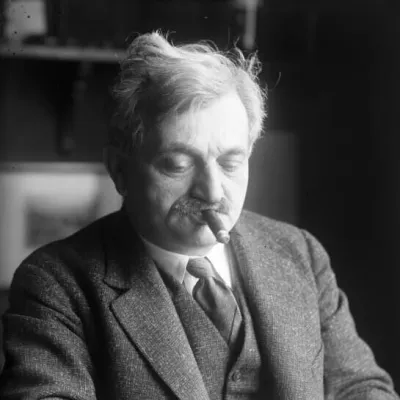
Emmanuel Lasker
Human Design Chart
Biography
His contemporaries used to say that Lasker used a "psychological" approach to the game, and even that he sometimes deliberately played inferior moves to confuse opponents. Recent analysis, however, indicates that he was ahead of his time and used a more flexible approach than his contemporaries, which mystified many of them. Lasker knew contemporary analyses of openings well but disagreed with many of them. He published chess magazines and five chess books, but later players and commentators found it difficult to draw lessons from his methods.
Lasker made contributions to the development of other games. He was a first-class contract bridge player and wrote about bridge, Go, and his own invention, Lasca. His books about games presented a problem that is still considered notable in the mathematical analysis of card games. Lasker was a research mathematician who was known for his contributions to commutative algebra, which included proving the primary decomposition of the ideals of polynomial rings.
The Human Design of Emmanuel Lasker: Generator 6/2
Generator 6/2 — Design at a Glance
Emmanuel Lasker revealed himself as someone who possessed immense and enduring strength – comparable to a workhorse – whenever he felt inner motivation for his tasks. As a Generator, he had much sacral energy, which was released not through self-initiative but by reacting to life impulses. His strength lay in waiting until his inner self signaled a clear "yes," after which he acted with full power.
This mechanism created a clear dynamic: When Lasker reacted to signals from his environment and followed his gut feeling, no one could stop him. He was rewarded with a deep sense of fulfillment because he used his energy efficiently. Conversely, ignoring this inner resonance led to two specific pitfalls. Either he wasted energy on things without inner desire, leading to exhaustion, or he was prevented from continuing his heart project even though he wanted to keep going.
Living against this design – for example, through constant and unreflective initiating – brought him persistent frustration and energy loss. Lasker's success thus depended on not forcing the world to conform to his plans but waiting for what truly spoke to him before responding with decisive action. This ability to react from the gut defined his endurance and potential for materializing his goals.
Sacral Authority
Emmanuel Lasker demonstrated a decision-making process that relied on direct physical resonance. As a Generator, his strategy was also his inner authority: the sacral authority. This mechanism simplified his process because he did not switch between external action and internal feeling. His reactions appeared as an immediate gut feeling or bursts of energy triggered by external stimuli. He learned to pay attention to bodily signals like grunting, humming, or groaning sounds. These acoustic cues marked the moment when his sacral motor kicked in.
In these phases, he felt vital and alive. An almost inexhaustible reservoir of energy was available to him, which filled his work with great enthusiasm. His design predisposed him to go through life with joy and satisfaction, fully immersed in his activities without any sense of purposefulness. The activity itself was the reward.
Moreover, his activated Spleen Center acted as a supportive authority for the Sacral Center. This connection allowed him particularly quick and spontaneous reactions. He had immediate access to his physical well-being and instinctive perception. On this, he could rely reliably, which further strengthened his ability to make decisions in real-time. This combination of sacral confirmation and spleen-supported intuition formed his characteristic pace and reliability in handling life impulses.
The 6/2 Profile — Role Model / Hermit
Emmanuel Lasker showed a characteristic development in two clearly separated phases. In his youth, before the age of thirty, he exhibited an impulsive experimentation with many personal experiences. His design as a role model (Line 6/2) initially appeared like a three-line configuration: trial and error characterized his approach, followed by necessary retreats after failures.
After about thirty years, this dynamic fundamentally changed. The sixth line became active, leading him into an intensive phase of distancing himself from the world. He metaphorically withdrew into a "cave" to calmly reflect on his earlier experiments and mistakes with great composure. This period was not merely a pause but a process of healing and deep self-awareness. Only from this introspective position could he later emerge as a wise figure, sought out by others for life wisdom and the ability to engage in profound self-reflection.
This transformation also related to his understanding of perfection. During the earlier "roof phase," perfect behavior might have been seen as hypocrisy or conformity. Around age fifty, however, Lasker recognized that such behavior was an individual survival mechanism. His former tendency towards correction gave way to acceptance of what could no longer be changed – a spiritual renewal through the realization of the irreversibility of certain situations.
Split Definition — Defined & Open Centers
Emmanuel Lasker's Human Design profile set a tendency towards consequent, conceptual clarity. His defined Ajna Center ensured constant mental function; he processed data and creativity in a trustworthy manner without being easily influenced by others. This mental stability flowed directly into his communication: The also defined Throat Center transmuted the thoughts of the mind into clear expressions. He reliably spoke what he conceptualized, making his words appear as external authority and conditioning the mental field of his environment.
This cognitive firmness contrasted with his open centers, which made him vulnerable to external conditioning. His open Head Center lacked a constant way to process inspiration; he tended to be overwhelmed by doubts or questions from others when he did not trust his inner authority. The open Heart Center lacked consistent willpower; he was not designed to give promises or prove his worth through competition, which could lead him into spirals of self-disapproval if he tried to meet expectations.
Despite this emotional and willed openness, he possessed immense vital force: The defined Sacral Center generated daily energy. As a Generator, his strategy was not to initiate but to wait for questions or stimuli before responding from the gut with a “Yes” or “No.” Only through this reaction did full energy become available for persistence and satisfaction. Parallel to this, the defined G Center gave him a firm self-identity and sense of direction; he knew where he belonged without needing to direct others.
His open centers – Solar Plexus (emotions), Spleen (health/intuition) and Root (stress) – acted like open windows. He absorbed the emotions, fears, and stress of his environment. Without recognizing these as foreign, he could identify with them, leading to emotional instability or a feeling of not being able to survive. His wisdom lay in observing these taken-in vibrations without personalizing them and instead trusting in his sacral response and mental clarity.
Channels for self-acceptance and insatiable intellectual curiosity.
Emmanuel Lasker revealed himself as someone who combined deeply rooted convictions with an insatiable search for new perspectives. His design indicated a tendency to cultivate self-love and independence through authentic reaction, while he simultaneously used stories to make complex ideas accessible.
Channel 34-10 connected his Sacral Center with the G Center. Gate 10 initiated behavior from within that led to self-acceptance, while Gate 34 provided the strength to hold onto these personal convictions. This configuration allowed him to honor himself and show others through his example how to remain independent without being aggressive. He did not live for other people's judgment but reacted from his own centering, which brought a strong individual note into his interactions.
Parallel to this, Channel 11-56 between Ajna and Throat Center drove him to always seek new perspectives – not to find definitive truths, but to celebrate discovery itself. Gate 11 generated ideas that were communicated through Gate 56 as stories or inspirations. This channel pushed him to constantly look for new viewpoints, linking abstract concepts with narrative elements so he could encourage others to question their own assumptions and explore new territories of thought.
Additionally, Gates like 15 (collective behavior), 18 (correction), and 17 (succession) shaped his attitude towards societal structures. Gate 15 helped him fit into natural rhythms, while Gate 18 encouraged him to distinguish between necessary corrections in the collective without taking it personally. Gate 17 promoted logical teaching for the future and emphasized that true understanding is a prerequisite for organization.
Gates like 7 (leadership), 13 (continuity), and 3 (mutation) supported his ability to project patterns into the future and create new orders from confusion. Gate 9 enabled him to do detailed work through repeated experiments, while Gate 29 understood saying yes to life as persistence. Finally, Gates 4 (formulation) and 2 (receptivity) helped develop formulas for future security and respond openly to mutations.
Individual Circuitry — Circuit Signature
Emmanuel Lasker revealed himself as someone who closely linked his inner identity and will. His Centering Circuit connected the Sacral with the Identity Center through Channel of Inquiry (10-34). This created a pulsating energy that drove him to explore and strengthen his own individuality. He possessed an inner constancy that helped him experience himself as an independent entity, free from external validation. Since the Throat Center was missing in this circuit, these deep convictions often remained private; they were not necessarily articulated aloud but rather acted as a quiet, internal source of power.
Parallel to this, he had a separate energy flow: the Purpose Circuit. Here Channel of Curiosity (11-56) connected the Ajna with the Throat Center. This connection allowed him to express visual ideas and mental patterns in words. In contrast to his inner centering, this area served communication. He could share insights from his perception to learn with others.
As Emmanuel Lasker had a Split Definition, these two systems – inner self-determination and outer expression ability – existed as separate, not directly connected forces alongside each other. The energy of will did not automatically flow into speech; he had to consciously switch between delving into himself and sharing thoughts. This separation shaped his experience: sometimes he was rooted in his individual essence, at other times he sought exchange through formulating his visual intuitions.
Left Angle Cross of Prevention 2
Emmanuel Laskers Human-Design profile featured the left cross of prevention. This configuration established a foundational stance characterized by foresight and efforts toward stability. In Human Design, this pattern represents the impulse to recognize problems before they become acute and to develop structural solutions that ensure long-term security. It was not about reactive crisis management but rather a proactive strategy for maintaining order and continuity.
For Emmanuel Lasker, this meant that his inner self often sought ways to neutralize potential conflicts or instabilities in advance. The energy of this cross promoted a deep understanding of how systems work and where vulnerabilities might lie that could lead to greater disruptions later on. Therefore, his approach was to intercept negative developments through careful planning and preparatory measures. This created an internal discipline aimed at avoiding chaos and establishing a reliable framework for both his own life and the environment around him. Prevention thus became the central leitmotif guiding his actions and helping him maintain orientation in a changing world.
Saturn Return · Uranus Opposition · Chiron Return · 2nd Saturn Return — Life Cycles
Emmanuel Laskers design indicated a tendency towards strategic endurance that condensed into long-term cycles. The first Saturn return often marked the point where years of groundwork matured into a solid result. This was evident in 1896, at age 28, when Lasker won a rematch against Steinitz in Moscow—a clear demonstration of this consolidating power.
The Uranus opposition around the age of 40 often brought a phase of detachment and reorientation. In 1908, Lasker returned to Germany and settled in Berlin, reflecting this change in his relational and life context.
The Chiron return, a fulfillment cycle between ages 49 and 51, promoted the unfolding of his incarnational purpose. During this peak period, Lasker published his magnum opus “Philosophy of Imperfection” in 1919, marking an increasing realization of his deeper life mission.
The second Saturn return around age 57 reinforced his established position once more. In 1925, Lasker overtook Capablanca in Moscow and finished second behind Efim Bogoljubow, demonstrating the sustained effectiveness of his structural stability. These events illustrate how his astrological cycles shaped concrete life milestones.
Generator · Sacral Authority — Synthesis
Emmanuel Lasker was a Generator whose life was marked by deeply rooted sacral energy (sacral authority, Channel 34-10). This driving force manifested in an unrelenting engagement with his inner convictions and the pursuit of self-validation through action (Gate 10, Investigative Channel). The documented events—championships, publications, return to Germany—illustrate a lifestyle where energy responded to external stimuli and discharged itself into concrete activities. His profile as a role model suggests that he learned from experiences and later imparted this wisdom after periods of intensive self-reflection (6/2 Line).
A central paradox lay in the combination of this powerful sacral reaction and his defined Ajna Center. While the energy propelled him to active engagement, his mental center allowed for concept development and strategy pursuit—a constant interplay between instinctive action and conceptual thinking. The cycles showed that he needed moments of reflection after phases of intense activity (Cross of Prevention) to process acquired insights and find new paths.
2 Defined Channels
Incarnation Cross - Left Angle Cross of Prevention 2
Solar Return
The Solar Return shows the moment when the sun returns to its exact birth position - your personal solar year.
Life Cycles
Discover the life cycles with a detailed triple view (birth chart, cycle chart, composite).
Human Design Profile
- Type
- Generator
- Strategy
- To respond - wait for something to respond to
- Authority
- Sacral Authority
- Profile
- 6/2 - Role Model / Hermit
- Definition
- Split Definition
- Incarnation Cross
- Left Angle Cross of Prevention 2
- Date of Birth
- 24.12.1868 15:00
- Place of Birth
- Berlin, Germany
Frequently Asked Questions
What was Emmanuel Lasker's Human Design type?
What Profiles did Emmanuel Lasker have?
What Authority did Emmanuel Lasker have?
What incarnation cross did Emmanuel Lasker have?
When was Emmanuel Lasker born?
Discover your own Human Design
Are you also a Generator? Find out in a personal reading how to use your sacral energy correctly and discover deep satisfaction.
More Personalities
Back to overviewAaliyah

Alexia

Angèle

Anne-Marie

Arcángel

Arno
