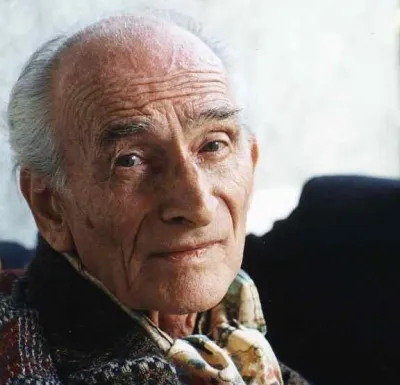
Eric Cantona
Human Design Chart
Biography
He became established in the French national team, and won the French Championship with Olympique Marseille and the French Cup with Montpellier. In the beginning of 1992 he left for England, arriving in Leeds in February. By May, Leeds FC had become champion for the first time in eighteen years. Cantona, of course, had to be different and, in November of that year, he switched to Manchester United. There, he acquired a nickname that suited him down to the ground: "Eric the Red" and... the Premier League title in May 1993. It was the first time in 26 years that Manchester United had been League Champions.
In December 1993, he was nominated Player of the Year by his peers and, in 1994, Manchester United won the double: the F.A. Cup and the Championship. In the summer of 1995 he played a part in Etienne Chatilliez’s film "Le Bonheur est dans le pré," and in May 1997 he played the last soccer match of his career with Manchester United.
Cantona wished from now on to focus on his interests in poetry, painting and the movie business. On 26 August 1995 he produced Jean-Louis Bourdon’s play "Derrière les Collines."
Cantona was married 1987 to Isabelle Ferrer, they have two children; Raphael (born 1988) and Josephine (born 1995). He is now married to actor Rachida Brakni.
Human Design Analysis: Eric Cantona as Manifesting Generator 3/5
Manifesting Generator 3/5 — Design at a Glance
Eric Cantona showed himself to be someone who could quickly draw things into his life. His design as a Manifesting Generator combined the constant sacral energy of a Generator with the ability to skip steps when initiating. This hybrid configuration allowed him to act swiftly through an active connection between motor centers and Throat Center.
However, this speed carried risks: Often, his movements were too quick, essential steps were overlooked and had to be addressed later. This led easily to frustration, which is a non-self theme of this type. Additionally, he tended to take on multiple projects simultaneously as he responded to many different impulses. Without the approval of his inner authority, this creative enthusiasm quickly turned into dissatisfaction.
The strategy was not to initiate things himself but rather to react to life. Only when his sacral center gave a clear "yes" did he begin to act. Regular checks to see if the projects were still enjoyable were crucial. When these conditions were met, Eric Cantona drew deep satisfaction from his work. The pressure to finish one thing before starting another did not suit him; instead, he thrived in a play mode with variety and parallel activities.
Sacral Authority
Eric Cantona's Human Design profile indicates a tendency towards spontaneous and physical reactions. As a Generator, his strategy aligned perfectly with his inner authority: the sacral authority. This fundamentally simplified his decision-making process because he did not have to oscillate between external advice and his internal compass. The prerequisite for this was an open Emotional Center, meaning that he relied on immediate physical responses from his body rather than short-term emotional waves.
This sacral authority manifested as a "gut feeling" or surge of energy triggered by external stimuli. Eric Cantona learned to pay attention to these bodily signals – often audible as grunts, hums, or simple "mmms". When his sacral motor engaged, he felt vital and alive. Then, an almost inexhaustible supply of energy was available to him, enabling him to tackle his tasks with great enthusiasm. He was born to move through life with joy and immerse himself in his duties without being rigidly goal-oriented.
Additionally, his activated Spleen Center served as a supportive authority. Likely directly connected to the Sacral Center, Eric Cantona could react particularly quickly and spontaneously. He had immediate access to his physical well-being and instinctive perception. This combination allowed him to reliably guide himself from these deep, physical impulses, making his actions appear direct and authentic.
The 3/5 Profile — Martyr / Heretic
Eric Cantona revealed himself as someone who acquired his knowledge not from books but through direct experimentation. His design indicated a tendency towards practical experiments: he initially believed little and had to test everything himself in order to learn from it. This attitude of the 3/5 Profile – combining the Line of the Adventurer with the Hero's Line – shaped him as a humorous rebel and storyteller. His numerous experiences, including failures, became a treasure that he presented to others. Others were attracted by this appeal and wanted to learn from his teachings. However, this role had a downside: failing in public could be painful, since the 3/5 often acted under the spotlight.
Additionally, Gate 20 influenced his development, promoting constant self-analysis and strong self-confidence. This sometimes led him to not fully perceive the present moment, which could result in surprises. Excessive self-absorption threatened to hinder his growth. On the other hand, Gate 55 on Line 5 showed a capacity to take advice and implement it, especially when he was considered powerful within society. His mental approach only worked effectively if this recognition existed. However, this configuration carries the risk that emotional openness can influence the mind. Practical solutions were often tied to specific timing; they did not always work immediately but required the right moment.
Split Definition — Defined & Open Centers
Eric Cantona revealed himself as someone who constantly faced mental pressure to ask questions and find answers. His defined Head and Ajna centers created a continuous stream of inspiration but did not provide direct energy for implementation; he had to wait until others picked up on his concepts. At the same time, he possessed a defined Sacral center that provided him with an enormous source of vitality. This energy was only available when responding correctly to initiatives from others, not through his own planning. His defined Root pressure propelled him forward physically, while his open Throat directed communication.
However, this strong foundation was challenged by open centers. His open G center meant he did not have a fixed identity or direction; he tended to orient himself externally and often sought after who he was rather than simply being it. The open Heart center left him vulnerable to the need to prove his worth through promises, which led to spirals of failure when he could not keep them. Additionally, his open Solar Plexus absorbed emotions from the environment, leading him to experience foreign moods as his own and feel emotionally unstable. Furthermore, his open Spleen brought a deep survival anxiety that made him prone to spontaneous, impulsive decisions in an attempt to enforce a sense of security rather than trusting the wisdom of waiting. This combination of mental intensity and energetic power, paired with vulnerability due to missing internal anchor points in identity and emotion, shaped his complex inner landscape.
Channels for powerful action, maturation and mental comprehension.
Eric Cantona displayed a basic attitude that relied on the ability to immediately translate raw physiological energy into visible actions. This tendency resulted from Channel Charisma 34-20, which connects the Sacral center with the Throat center. Here, the generative power of Gate 34 meets Gate 20, creating immense speed in action. Eric Cantona could hardly sit still; his design urged him to express himself in the moment rather than plan for long periods. This energy served self-empowerment and was not meant to be tapped by others. When he relied on his inner guidance, he inspired; without this connection, however, the energy threatened to burst uncontrollably.
At the same time, Eric Cantona went through a process of Maturity 42-53, which links the Root center with the Sacral center. This channel emphasized the necessity of fully experiencing cycles before reflecting on them to gain wisdom. For him, it was essential not to prematurely break cycles but to carry them out until their end to generate deeper insights for himself and others.
Mentally, he faced the pressure of Channel Abstraction 64-47, which connects the Head center with the Ajna center. His mind constantly searched through mental images and possibilities to uncover hidden connections or stories behind the facades of experience. This intellectual restlessness sought clarity in a kaleidoscope of impressions, driving him to share his insights and emerging narratives with the outside world to overcome internal pressure.
Collective Circuitry — Circuit Signature
Eric Cantona was marked by separate, parallel functioning energy blocks. His design connected Throat and Sacral centers through Channel Charisma (Gates 20 and 34). This created an acoustic power for self-empowerment in the present moment based on intuitive reaction.
At the same time, there existed two independent segments of the Meaning-Making Circuit. The first linked Head and Ajna centers via Abstraction (Gates 64 and 47). Here it was about visual concepts from the past. The second segment connected Sacral and Root centers through Maturity (Gates 42 and 53). This reflected emotional waves that cycle: with a beginning, middle, and end. These feelings served to reflect on past experiences and find meaning in them.
Important is the separation of these systems. Logical abstraction in the Head-Ajna area did not flow directly into emotional maturity or charismatic expression. Thus, Eric Cantona carried isolated forces: on one hand, the ability to recognize visually abstract patterns from the past; on the other hand, physical power to assert himself in the moment through proper behavior and intuitive reaction. The emotional wave of Solar Plexus (here represented by Root) required time to subside before clear decisions could be made. This structure promoted learning from the past that did not automatically translate into current action power but existed as a separate reflective layer.
Right Angle Cross of the Sleeping Phoenix 2
Eric Cantona was marked by the right cross of the sleeping Phoenix 2. This configuration points to a profound, often unconscious power that manifests during periods of rest or inactivity. It is not defined by constant action but rather by the potential that lies dormant within stillness.
The mechanics of this cross describe an energy that does not immediately express itself but becomes active only when it is called forth from a phase of waiting or inner gathering. Eric Cantona embodied this disposition: a sleeping Phoenix whose awakening is not a daily occurrence, but a specific moment of activation. This does not mean passivity in the negative sense, but rather a strategic restraint where true power is collected beneath the surface.
For his design, it was characteristic that his greatest impulses did not come from continuous effort, but from these moments of growth out of stillness. The energy of the sleeping Phoenix 2 requires a trigger to unfold its transformative quality. Eric Cantona lived this dynamic: His presence often resulted from a previous phase of inactivity during which necessary inner resources were formed. Only when this internal state was reached could the specific energy of this cross find expression – powerful, but not constantly present, but punctual and intense.
Saturn Return · Uranus Opposition · Chiron Return · 2nd Saturn Return — Life Cycles
Eric Cantona showed a fundamental disposition marked by intense inner tensions and a drive for radical liberation. His design suggested that he did not shy away from crises but reacted with explosive energy to break old structures. This was evident in 1995: At the age of 29, during his first Saturn return – a phase often leading to confrontation with one's limits and the need for structural changes – an incident occurred against Crystal Palace when he struck a spectator. This act marked a deep crisis where inner unrest erupted outwardly. Later, in 2007 at the age of 41, his Uranus opposition became active. This cycle represents the need for freedom and breaking conventions in interpersonal relationships. During this time, he married Rachida Brakni. The connection shows how his desire for autonomy and change manifested even in partnership: not as a static bond but as a dynamic process questioning existing patterns and redefining them. His path was thus marked by phases where external events – whether confrontational or connecting – reflected the inner architectural guidelines of his design, forcing him to either rise against resistance or open new spaces.
Manifesting Generator · Sacral Authority — Synthesis
A central red thread runs through the design: the dynamic connection between initiation and reaction. As a Manifesting Generator, he possesses both the ability to act swiftly and initiate things (sacral center, charisma channel) as well as the necessity to wait for external stimuli and immerse himself in the flow of sacral energy. The profile as an experimenter/hero reinforces this aspect, as trying out new paths and learning from experience is fundamental to his process – a constant testing of impulses followed by sharing knowledge.
The design reveals a central paradox between the drive for rapid manifestation and the cyclical nature of emotional processes (perception-switch). The ability to act swiftly contrasts with the wave-like character of his feelings and the need to reflect on past experiences to find meaning. This leads to a tension between the desire for immediate implementation and the inner wisdom that arises from processing emotions – an interplay evident in the documented cycles where crises (1995) and relationships (2007) appear as turning points in life.
3 Defined Channels
Incarnation Cross - Right Angle Cross of the Sleeping Phoenix 2
Solar Return
The Solar Return shows the moment when the sun returns to its exact birth position - your personal solar year.
Life Cycles
Discover the life cycles with a detailed triple view (birth chart, cycle chart, composite).
Human Design Profile
- Strategy
- To respond - wait for something to respond to
- Authority
- Sacral Authority
- Profile
- 3/5 - Martyr / Heretic
- Definition
- Split Definition
- Incarnation Cross
- Right Angle Cross of the Sleeping Phoenix 2
- Date of Birth
- 24.05.1966 00:30
- Place of Birth
- Marseille, France
Frequently Asked Questions
What is Eric Cantona's Human Design type?
What profile does Eric Cantona have in Human Design?
What authority guides Eric Cantona?
What is Eric Cantona's incarnation cross?
When was Eric Cantona born?
Discover your own Human Design
Are you also a Manifesting Generator? Find out in a personal reading how to unfold your multi-talents and direct your energy wisely.
More Personalities
Back to overviewAldair

Alizée

Angeli

Arletty

Artus
Balthus