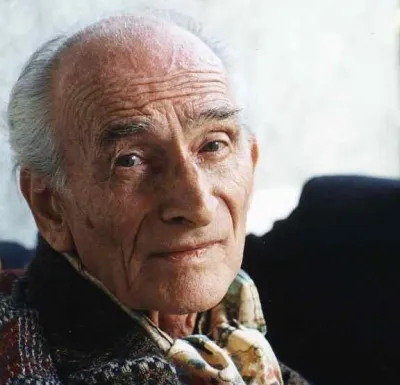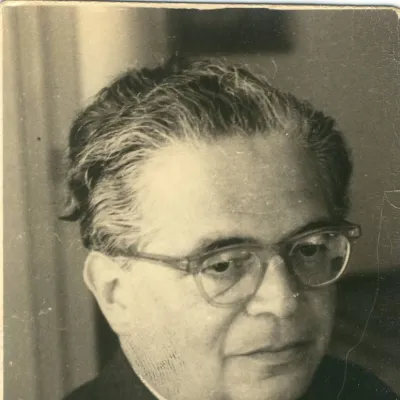
Erich Neumann
Human Design Chart
Biography
However, he is best known for his theory of feminine development, a theory formulated in numerous publications, most notably The Great Mother (1955). Neumann further developed his studies in feminine archetypes in his Art and the Creative Unconscious, The Fear of the Feminine, and Amor and Psyche (1952).
His works also elucidate the way mythology throughout history reveals aspects of the development of consciousness that are parallel in both the individual and society as a whole.
He received his PhD in Philosophy from the University of Erlangen-Nuremberg in 1927 and then continued to study medicine at the University of Berlin, where he acquired his first degree in medicine in 1933. In 1934 the Jewish Neumann and his wife Julia, who had been Zionists since they were teenagers, moved to Tel Aviv. For many years, he regularly returned to Zürich, Switzerland to give lectures at the C. G. Jung Institute. He also lectured frequently in England, France and the Netherlands, and was a member of the International Association for Analytical Psychology and president of the Israel Association of Analytical Psychologists. He practised analytical psychology in Tel Aviv from 1934 until his death from kidney cancer on 5 November 1960 at age 55.
Erich Neumann — Manifesting Generator with Profile 2/4
Manifesting Generator 2/4 — Design at a Glance
Erich Neumann's design featured a tendency towards hybrid activity: as an Manifesting Generator, he combined the constant energy source of Generators with the direct action power of Manifestors. This configuration allowed him to skip steps and quickly pull things into his life at lightning speed. Yet this pace carried risks; often he was too quick and skipped important stages, forcing him to backtrack and fill in gaps—a process that caused frustration since non-self for this type is rooted precisely there. Additionally, he tended to pursue multiple projects simultaneously by reacting to various impulses. Without clear inner consent, his creative enthusiasm could quickly turn into overwhelm.
His strategy did not lie in initiating but rather in responding to life. He needed to wait until his Sacral Center gave a clear "yes" before acting or continuing projects. Only when he sought this inner resonance and regularly checked whether the work was still enjoyable could he experience deep satisfaction. In this state, parallel working was no longer an obstacle but a source of his strength. He entered into a play mode where variety fueled his energy rather than splitting it. Thus, potential frustration transformed into lasting fulfillment through his creations.
Emotional Authority
Erich Neumann's design includes a tendency towards emotional wave: His inner authority was Emotional Authority. The defined Solar Plexus Center carried this function, meaning that it always took precedence in decisions regardless of other defined centers in his chart. He experienced constant ups and downs of emotions; the world appeared to him colored by his current mood. In one moment he could be totally enthusiastic, in the next view the same thing negatively. However, his immediate feeling was only a snapshot, a first impression, not necessarily his truth yet. Quick, spontaneous decisions based on emotion could therefore have negative consequences. The more time he took to let a decision mature, the deeper and more comprehensive he could perceive something. This required patience and repeatedly sleeping over questions. He should take his time and ask himself multiple times. Over time, intense feelings subsided, he gained emotional distance, clarity set in, and calmness followed. Then he was through with the process. This mechanism primarily concerned long-term decisions with a significant impact on his life course.
The 2/4 Profile — Hermit / Opportunist
Erich Neumann revealed himself through a Profile 2/4, carrying an inner tension between the need for withdrawal and the longing for community. This design suggested that he sought isolation at times to find rest in his "cave" and clarify internal processes – a characteristic of Line 2, the Hermit. At the same time, it drew him back into social structures once this inner clarity was achieved, to spend time with familiar people, reflecting the aspect of Line 4, the Community.
For his development, it was crucial to create a safe environment in which he could clearly communicate these shifts: when did he need company and when did contact disturb him? This ability for transparent communication allowed him to reflect on the knowledge of his network during solitary times and develop new insights from it. Line 2 brought with it a certain caution and contradiction, while Line 4 fostered persistence and the ability to forge unexpected connections. He used this dynamic to navigate between the protection of personal security (Saturn influence) and the desire for recognition as well as sharing knowledge in the interest of a higher good. His design required an awareness that both poles – holding onto relationships and letting go for solitude – were necessary for his brilliant ideas to fully mature.
Triple Split Definition — Defined & Open Centers
Erich Neumann's design shows a tendency towards constant mental pressure to question and form concepts. This energy flows through his defined Head and Ajna centers into the defined Throat, allowing him to express his thoughts directly. His identity and direction are clearly set by the defined G Center, while the defined Heart Center provides willpower. As a Generator with a defined Sacral center, he possesses vital energy that waits for reaction. The defined Solar Plexus Center demands emotional clarity before acting.
In contrast, his open Spleen is vulnerable to conditioned survival fears and the urge for false security through spontaneity. His open Root Center absorbs external stress from the environment, which could lead to a cycle of pressure buildup if he does not recognize that this stress does not belong to him. This configuration describes a person whose strength lies in conceptual thinking and the ability to make his inner direction and willpower communicatively effective while the challenge is to endure mental pressure without acting impulsively or internalizing foreign stress. The mechanics show that true inspiration works for him when he waits for the correct response from his Sacral Center and lets his emotional wave subside before taking action.
Channels for community, self-expression, emotional openness and mental abstraction.
Erich Neumann's design shows a tendency towards deep self-acceptance, which does not appear as egoism but rather as a powerful demonstration of individual integrity. This attitude stems from Channel 34-10, connecting the Sacral Center with the G Center. Gate 34 provides inner strength to hold onto personal convictions while Gate 10 initiates this behavior as an authentic role. He demonstrated this by living through his reaction from Sakral Authority, showing how one loves and honors oneself without imposing this attitude on others.
Simultaneously, he was marked by an emotional wave that steered social interactions. Channel of Openness 22-12 connects the Solar Plexus Center with the Throat Center. Here Gate 22 determines passion and romance while Gate 12 ensures that this openness only expresses itself when it meets mutative potential. He patiently waited for his mood to be right before touching or transforming others through voice and words; forced socialization would have made him appear harsh and isolated.
In interpersonal bonds, he sought fair agreements. Channel of Community 37-40 links the Solar Plexus Center with the Heart Center. Gate 37 strives for recognition as a whole while Gate 40 is ready to work and provide but needs breaks and rewards. He built bridges between individuals by waiting to be personally invited to take a respected place in a community based on mutual benefit.
Mentally, he went through a process of finding meaning. Channel of Abstraction 64-47 connects the Head Center with the Ajna Center. Gate 64 brings mental confusion and the search for patterns while Gate 47 tries to understand the past. He filtered experiences through a kaleidoscope of images until over time a clear, inspiring story or perspective emerged that he could then communicate. Additional gates such as Care (27) and Risk-readiness (28) underscore his role as someone who both cares for others and acts courageously in the here and now.
Individual Circuitry — Circuit Signature
Erich Neumann's design shows a tendency towards inner strength, manifesting in separate energetic blocks. As a Triple-Defined he possesses three independent energy fields that do not flow directly into each other. One group connects Identity with the Sacral Center (Centering Circuit), generating deep internal confirmation and vital endurance but without direct outward expression. Parallel to this is an isolated block of Head and Ajna Centers (Sensing Circuit). Here he sought meaning behind past experiences; however, this reflection remained cognitively and emotionally separate from his action power or self-worth. A third, also separate stream connects Heart with Solar Plexus Center (Ego Circuit) as well as Throat and Solar Plexus Center (Knowledge Circuit). These two circuits share the Solar Plexus Center figuratively but are energetically not connected to each other or the other groups in a continuous flow. The connection of Heart and Solar Plexus promotes emotional wave movements in social contexts, while the Knowledge Circuit through the Throat Center allows an open form of expression. Since these centers lie in different groups, Erich Neumann experienced these aspects - inner identity, cognitive meaning-finding, and emotional-social interaction - as coexisting but not automatically integrated experiences. His energy thus worked in these specific isolated patterns without a continuous flow uniting all areas of his design.
Right Angle Cross of the Unexpected 4
Erich Neumann's design was characterized by the configuration of the right cross of the Unexpected. This structure shaped an attitude in which the unforeseen was not seen as a disturbance, but rather as an essential part of life's flow. The right cross is a rare geometric arrangement in Human Design, connecting four specific Gates and creating a strong inner dynamic. In Erich Neumann's case, this configuration enabled him to prepare for spontaneous turning points instead of attempting to strictly control or predict every step.
The mechanics of this cross support the ability to handle surprises and use them as opportunities for further development. It fostered a kind of resilience that consisted in not being thrown off balance by sudden changes. Instead, his chart showed a natural tendency to integrate the unexpected and gain new perspectives from it. This did not mean that his life was free from challenges, but rather that his energetic structure was designed to dance with the unknown instead of fighting against it. The energy of this cross helped him find an inner anchor in moments of uncertainty and determine a new direction without losing his own integrity. Thus, the principle of the unexpected became a constant companion in his existence.
Saturn Return · Uranus Opposition · Chiron Return — Life Cycles
Erich Neumann's design showed a tendency towards structural anchoring that was particularly evident during phases of maturation. His first Saturn return marked a turning point where inner discipline and outer responsibility came together. In 1933, at the age of 28, he completed his medical studies in Berlin – a step typical for his configuration: The first Saturn return often condenses years of groundwork into a solid result and sets the foundation for long-term stances. This phase shaped him as someone who defined himself through consistency and clear boundaries rather than spontaneous impulses. The mechanics behind this transition lie in the Saturn energy, which creates structure and anchors commitments. For Neumann, this meant that he increasingly aligned his identity with concrete achievements rather than keeping it merely in his mind. His design promoted a stance of reliability that proved to be an asset in his professional life. He learned that true freedom lies in adhering to self-imposed rules, not their absence. This insight accompanied him through further phases of life and helped him remain stable even under pressure. The completion of his studies was thus more than just an event; it expressed his inner development towards independence and responsibility.
Manifesting Generator · Emotional Authority — Synthesis
Erich Neumann lived a life marked by profound inner dynamics. His design as a Manifesting Generator (MG) with defined sacral energy and emotional authority points to a person who, while possessing the ability to quickly initiate and realize things, always tied this initiation to an internal reaction and mature emotional reflection. This combination of apparent spontaneity and deep inner scrutiny created a thread of purposeful activity that was never reckless – but always based on emotional clarity. The defined mental pressure (Head-Ajna) further strengthened this process by keeping him in constant search for understanding and inspiration, as shown in the Channel of Exploration (34/10): self-confirmation through living out one's own behavior.
A central paradox lay in the interplay between his need for isolation and community. The profile as a natural talent and networker (2/4 line) revealed an inner conflict to withdraw to gain internal clarity while also feeling a yearning for connection and exchange with others. This rhythm of withdrawal and social engagement shaped his lifestyle, exemplified by his Saturn return at the age of 28 (completion of medical studies), which was a manifestation of these inner cycles.
4 Defined Channels
Incarnation Cross - Right Angle Cross of the Unexpected 4
Solar Return
The Solar Return shows the moment when the sun returns to its exact birth position - your personal solar year.
Life Cycles
Discover the life cycles with a detailed triple view (birth chart, cycle chart, composite).
Human Design Profile
- Strategy
- To respond - wait for something to respond to
- Authority
- Emotional Authority
- Profile
- 2/4 - Hermit / Opportunist
- Definition
- Triple Split
- Incarnation Cross
- Right Angle Cross of the Unexpected 4
- Date of Birth
- 23.01.1905 16:15
- Place of Birth
- Berlin-Charlottenb., GER
Frequently Asked Questions
What was Erich Neumann's Human Design type?
What Profile did Erich Neuman have in Human Design?
Which Authority guided Erich Neumann's decisions?
What incarnation cross did Erich Neumann have?
When was Erich Neumann born?
Discover your own Human Design
Are you also a Manifesting Generator? Find out in a personal reading how to unfold your multi-talents and direct your energy wisely.
More Personalities
Back to overviewAldair

Alizée

Angeli

Arletty
Artus

Balthus