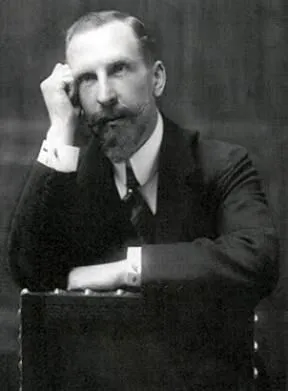
Franz Cumont
Human Design Chart
Biography
Cumont died on 25 August 1947, Brussels, Belgium.
Franz Cumont as a Generator 3/5 in Human Design
Generator 3/5 — Design at a Glance
Franz Cumont's design established a fundamental disposition of endurance and reactive action. As a Generator, he possessed a significant sacral energy, which made him an extremely strong and enduring 'workhorse' if he had energy for his task. His life strategy did not involve taking initiative but rather reacting to signals from life. Only when his sacral center gave a clear 'yes' did he respond with action.
This design contained two specific pitfalls. The first occurred when he persistently carried out tasks that did not interest him; here, he wasted his energy and was prone to burnout, despite his high potential for productivity. The second danger lay in being prevented from working on his heart project, even though he still wanted to continue working with full power.
If Franz Cumont lived in harmony with this mechanism by reacting to impulses and acting from the gut, nothing could stop him. He was rewarded with a deep sense of satisfaction and fulfillment. If he, on the other hand, constantly initiated independently without waiting for internal signals, he would eventually encounter persistent frustration and a lack of energy. His success therefore depended largely on whether he followed this reactive strategy or fought against his nature.
Emotional Authority
Franz Cumont's inner authority was the defined Solar Plexus Center, making him an Emotional Authority. This configuration fundamentally determined his decision-making: he was subject to an emotional wave that was reflected in a constant up and down of his feelings. The world always appeared colored by his current mood. In one moment, he could be totally enthusiastic about something, and in the next, he could see the same thing completely negatively. His feeling in the moment, however, was only a snapshot, a first impression, which did not necessarily represent his truth. Therefore, quick, spontaneous decisions based on emotion often had negative effects. The more time he took to let a decision mature, the deeper and more comprehensive he could understand something. This required patience and repeatedly reconsidering a decision. He should take his time and ask himself multiple times. Over time, the intense feelings subsided, he gained emotional distance, and clarity and calmness set in. Then he was through the process. This was especially true for long-term decisions that could have a significant impact on his life course. Important here was the rule of priority: whenever the Emotional Center was activated, it was also the inner authority, regardless of what else was defined in his graphic. This priority applied to every type except the Reflector and formed the central mechanism of his inner guidance.
The 3/5 Profile — Martyr / Heretic
Franz Cumont's design set a tendency towards practical experimentation, coupled with the need to present the insights gained from this to others as solutions. As a person with Profile 3/5, the Experimenter and Hero, he primarily learned through personal experimentation and working through failures. This Line 3 emphasized the process of trial and error; he believed nothing on faith but had to experience it himself. The accumulated practical experiences formed a rich treasure that he made accessible to others. This corresponded to the Hero Line 5, which solved other people's problems with self-learned knowledge. This role was attractive to his environment, which wanted to learn from his experiences, and flattered his ego. At the same time, it carried the risk of failing in public, which was felt as painful. His energy was directed towards implementing collective solutions in times of crisis and mobilizing necessary resources. In doing so, he activated deep processes with energy and brought them to the outside. Uncertainty about his own depth or fear of inadequacy could, however, hinder action and limit experiments. Alliances that served to support conflicts often did not last long, as they were dissolved after the end of the fight. His focus was on maintaining vitality through collaboration with compatible forces, while egoistic alliances weakened the life force of the partners.
Split Definition — Defined & Open Centers
Franz Cumont had a reliable, stable self-identity and a clear sense of direction in life. His defined G Center gave him the ability to love himself and appreciate others without dependency, while his defined Heart Center provided him with the willpower to shape his life and resources autonomously. He was someone who enjoyed being his own boss and keeping promises, which strengthened his self-esteem. This inner stability was fueled by his defined Sacral Center, which provided him with a vast source of vital energy. His strategy was not to initiate but to wait for requests, responding with a clear yes or no from the gut. This ensured him the necessary strength for persistence and satisfaction in his activities.
Additionally, Franz Cumont had a defined Solar Plexus Center, making him an emotional authority. He learned to wait for the emotional wave before making decisions to gain emotional clarity. His defined Spleen Center ensured intuitive, spontaneous judgments in the present, protecting his survival and well-being, while the defined Root Center provided a constant push to move forward in the world and manage stress.
In contrast, his Head and Ajna Centers were open. Franz Cumont had no consistent way of processing mental information and tended to get caught up in the doubts and questions of others when he did not trust his inner authority. His open Throat Center meant that he could not communicate consistently; he drew attention to himself by waiting for invitations to speak rather than actively seeking it. This openness allowed him to react flexibly to inspirations without being bound to mental concepts.
Channels for intuitive power, emotional depth and community.
Franz Cumont's design leaned towards profound self-determination and intuitive adaptability. He lived his uniqueness through a strong inner conviction and a fine perception of his environment.
The Channel of Research 34-10 connected his Sacral Center with the G Center. Gate 34 provided the power to hold onto his own convictions, while Gate 10 initiated behavior from the deepest inner self. This allowed him to accept and honor himself without imposing this attitude on others. His reaction from the Sacral Center served as confirmation for the benefits of authentic self-love.
Simultaneously, the Channel of Perfect Form 57-10, connecting the Spleen Center with the G Center, supported Gate 57's intuitive insight and acoustic sensitivity in guiding the behavior led by Gate 10. This combination allowed Franz Cumont to respond spontaneously and appropriately to his environment, securing his physical well-being and survival in the present, free from unfounded future anxieties.
The Channel of Power 34-57 further strengthened this individual presence. By linking the Sacral Center (Gate 34) with the intuitive survival intelligence of the Spleen (Gate 57), it created an archetype of vigilance. This helped him recognize dangers and protect his life through quick, intuitive reactions, distinguishing him as a vital, differentiated being.
In interpersonal interactions, the Channel of Community 37-40 shaped his interactions. It connected the Solar Plexus Center with the Heart Center, promoting understanding of fair agreements and mutual respect within a group. Franz Cumont sought his place in the whole and understood the necessity of building bridges between individuals to create a harmonious community where everyone had an honorable place.
Additionally, Gates like Gate 38 set boundaries to preserve individual integrity, Gate 48 enabled pattern recognition and understanding of deeper connections, Gate 21 contributed to the control of material things, and Gate 50 as a protective reflex preserved traditions and values. Gate 44 promoted awareness and transformation through interaction, and Gate 2 stood for receptivity as the foundation for new evolutionary directions.
Individual Circuitry — Circuit Signature
Franz Cumont's design leaned towards inner stability and emotional depth. As a Split Definition, his system consisted of two non-directly connected energetic groups. The first group connected Identity, Sacral, and Spleen Centers; the second Heart, Solar Plexus, and Root Centers. This separation created parallel, independent energy fields.
The Centering Circuit connected Identity and Sacral Centers in him. This promoted a fortified, courageous personality with strong convictions, but often hard to put into words, as the Throat Center was missing. The Integration Circuit also connected Identity, Sacral, and Spleen Centers. Here, intuitive power and right action in the present worked together, fostering highest individuality and self-empowerment.
The second group included the Knowledge Circuit, connecting Solar Plexus and Root Centers. This allowed the release of emotions and the expression of a unique identity through new insights. The Meaning Circuit also connected Solar Plexus and Root Centers. It directed energy towards reflecting on the past to draw emotional insights and share them with the collective. The Ego Circuit connected Heart and Solar Plexus Centers. This supported cooperation and mutual aid within the tribe, but required pauses for resource regeneration, as the Sacral Center was not involved here. Overall, Franz Cumont was someone who connected inner convictions with emotional reflection, with these areas energetically separated side by side.
Right Angle Cross of Tension 4
Franz Cumont's design set a tendency towards a specific kind of inner tension that arose from the configuration of the right tension cross. This configuration did not describe a calm equilibrium but rather a dynamic state where opposing forces met. It was an energy that could not simply flow away but instead discharged itself in a constant process of confrontation with itself.
The mechanics of this cross acted like an internal motor that urged Franz Cumont not only to think but to translate these thoughts into an active stance. It was a tension that arose from the necessity to mediate between different poles or to unite them. This energy shaped his way of experiencing the world: not as a static image but as a living conflict that had to be renegotiated constantly.
The effect of this design showed itself in a kind of drive that hindered him from merely watching. Instead, he was driven by this inner dynamism to take positions and defend them. It was no light burden but a defining force that significantly influenced his decisions and reactions. Through this configuration, he learned to deal with the restlessness that lived in him and to use it as a source for his actions.
Saturn Return · Uranus Opposition · Chiron Return · 2nd Saturn Return — Life Cycles
Franz Cumont's design set a tendency towards deep structural shifts in his work, often accompanied by external crises or necessary realignments. This dynamic was evident in 1906, at the age of 38, when he published his research results from Pontos and Armenia. This event fell into the phase of the Uranus opposition, a period often seen in Human Design as a catalyst for sudden, unavoidable changes where old structures break to make way for new, often revolutionary insights. Cumont used this pressure to consolidate and make public his knowledge.
Later, in 1922 at the age of 54, he led excavations on the Euphrates. This marked his second Saturn return. Unlike the first Saturn phase, often associated with establishing one's role, the second return demands a revision of long-term life structure. It is a time of maturation, in which one assesses whether the previous life path is still sustainable. Cumont's decision to return to archaeological fieldwork underscores the need to re-anchor and strengthen one's foundations in this life phase before entering the next phase. His design thus demanded a constant adaptation and deepening of his professional identity.
Generator · Emotional Authority — Synthesis
Franz Cumont was a Generator, whose life was marked by deep sacral energy and the drive to translate this into concrete results. The connection between Sacral Center and G Center through the Channel of Research (34/10) points to a natural ability to achieve inner strength and self-acceptance through personal action and experimentation. This correlated with the Profile of the Explorer and Helper (3/5), through which he gathered experiences to make them accessible to others later on. Emotional authority, however, required time for decisions to mature, implying a careful balance between spontaneous action and deep feeling in conjunction with the sacral energy.
A central paradox in his design lay in the tension between the Knowledge Circuit and the right tension cross 4. While the Knowledge Circuit urged him to gain and transform new insights, the cross pointed to an inner disintegration and the necessity to bring these insights into a coherent form. The documented events, such as the publication of research results and the conduct of excavations, showed how he generated knowledge and found his direction (defined G Center) through the pursuit of his interests and the evaluation of experiences (3/5) while simultaneously dealing with the challenges of integrating and expressing this knowledge.
6 Defined Channels
Incarnation Cross - Right Angle Cross of Tension 4
Solar Return
The Solar Return shows the moment when the sun returns to its exact birth position - your personal solar year.
Life Cycles
Discover the life cycles with a detailed triple view (birth chart, cycle chart, composite).
Human Design Profile
- Type
- Generator
- Strategy
- To respond - wait for something to respond to
- Authority
- Emotional Authority
- Profile
- 3/5 - Martyr / Heretic
- Definition
- Split Definition
- Incarnation Cross
- Right Angle Cross of Tension 4
- Date of Birth
- 03.01.1868 01:00
- Place of Birth
- Aalst, Belgium
Frequently Asked Questions
What was Franz Cumont's Human Design type?
What Profile did Franz Cumont have in Human Design?
Which Authority guided Franz Cumont?
What incarnation cross did Franz Cumont have?
When was Franz Cumont born?
Discover your own Human Design
Are you also a Generator? Find out in a personal reading how to use your sacral energy correctly and discover deep satisfaction.
More Personalities
Back to overviewAaliyah

Alexia

Angèle

Anne-Marie

Arcángel

Arno