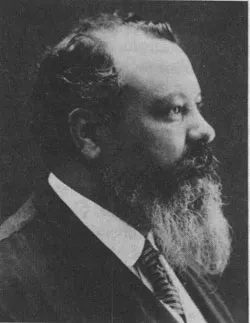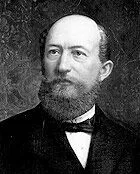
Friedrich Bayer
Human Design Chart
Biography
Friedrich Bayer changed the spelling of his surname from Beyer in his early twenties, due to the publicity gained by a fraudulent merchant from Leipzig bearing the same name. Friedrich Beyer from Barmen feared that the bad reputation of his namesake could damage his business and consequently changed his surname to Bayer.
Human Design Analysis: Friedrich Bayer as Manifestor 5/1
Manifestor 5/1 — Design at a Glance
Friedrich Bayer acted as a pioneer and visionary whose nature was geared towards steering the world into a new future. His design corresponds to that of an Manifestor type, who acts similarly to a Roman emperor: He possesses the overarching vision of a great whole but does not wage wars or battles himself; instead, he sends others out to conquer foreign territories for him. This superior mindset inevitably led to misunderstandings and polarization in his environment. While some people admired his grand dreams and followed him, others rejected or even hated him precisely because of the orientation of his visions.
To bridge this split between admiration and distance and find the right following, it was essential for him to inform others about his intentions early and accurately. This strategy of informing served as a key to inner peace. If he adhered to this way of life and held onto his inner authority, he was rewarded with a sense of calmness. Conversely, if he lived against his design, he felt instead a persistent deep anger within him. His path therefore consisted in creating resonance through clear communication that made his role as a pioneer sustainable rather than remaining stuck in conflict with others' misunderstanding.
Emotional Authority
Friedrich Bayer showed a fundamental attitude of emotional patience: He did not rely on spontaneous impulses but let decisions mature. His design carried Emotional Authority, meaning his defined Emotional Center was the source of his inner guidance – independent of other defined areas in his chart. This configuration followed a natural wave dynamics of feelings that generated constant ups and downs. At one moment Friedrich Bayer could be enthusiastic about something, at the next he would negatively evaluate the same situation. His immediate feeling was always just a snapshot, not an ultimate truth. Quick reactions from this emotional heat often would have misled him.
The mechanics of his authority therefore required time and distance. Friedrich Bayer had to sleep on decisions to break free from the current mood swing. The longer he waited, the more intense feelings subsided, and clear, calm insight set in. This process of pondering and letting multiple questions arise was not a sign of weakness but the essential mechanism for recognizing his true inner truth. Especially with long-term, life-defining steps, this patience was crucial as it allowed him to look beyond the emotional wave and not be swallowed by it. Only after the emotional dust had settled did he become clear about which path was right.
The 5/1 Profile — Heretic / Investigator
Friedrich Bayer revealed himself as someone who had to balance a strong inner tension between an altruistic drive towards crisis resolution and the necessity of deep, private research. His design as a 5/1 profile gave him almost magnetic attraction: Others constantly sought solutions from him while his inner need was based on quiet knowledge acquisition. This configuration described the dynamics of a 'Hero' who used their deeply rooted expertise (Line 1) to help others in crisis moments (Line 5).
Gate 35, which steered the selflessness and altruism aspect, pushed him to practically apply experiences. Simultaneously, Gate 22 demanded attention and self-awareness often connected with transferring new ideas into society – even without direct reward. The risk lay in this magnetic pull leading to constant requests for advice. Without clear boundaries, exhaustion was imminent, similar to an expert drained after long consultations and still faced with inquiries. Friedrich Bayer had to learn to say 'No' to maintain the balance between sharing his knowledge for others and the necessary withdrawal phase for personal research. Only then could he optimally utilize his gifts without burning himself out.
Split Definition — Defined & Open Centers
Friedrich Bayers Human-Design profile indicated a tendency towards constant but limited expression of energy, fueled by willpower and emotional depth. His defined Throat Center served as the pivot point, transforming the energy from his defined Motor Centers: The Heart Center provided the strength to keep promises and assert personal value, while the Solar Plexus Center allowed for emotional clarity only after waiting out the waves. The Spleen Center's intuition acted spontaneously in the moment. This created a reliable voice that was, however, dependent on patience when making decisions to avoid impulsiveness.
At the same time, he lacked a fixed identity and constant endurance. His open G Center meant his direction was situation-dependent; he found himself through the right place and fitting relationships rather than internal determination. He tended to orient outwardly for support instead of maintaining a rigid identity. The open Sacral Center led to energy being available in bursts. Rather than persistently working, he reacted to external impulses, making him vulnerable to overexertion if he did not pause. Environmental stress was absorbed by the open Root Center, leading to feelings of pressure that were not self-generated but amplified.
This configuration shaped a life where external circumstances—the place and people—were crucial in determining whether his energy showed as powerful or exhausting. His strength lay in keeping given promises and making intuitive momentary decisions, while identity and endurance always depended on the context.
Channels for emotional depth and instinctive devotion.
Friedrich Bayers expression was marked by two dominant forces: a moody but profound emotional authenticity and an instinctive sense of what the tribe truly needed. His communication was not constantly available but followed the rhythm of his inner wave movements. Only when this resonance was right did his voice become an effective tool to touch or change others, reflecting Channel of Openness 22-12 connecting Solar Plexus Center with Throat Center. Here Gate 22 determined emotional ebbs and flows while Gate 12 brought necessary caution. This combination ensured that Friedrich Bayer used his words only when he felt secure, to avoid misunderstandings and effectively convey his unique perspective.
At the same time, he had the gift of recognizing needs before they became conscious and strategically using this insight. This was the work of Channel of Devotion 44-26 linking instinctive Spleen perception with Heart Center's willpower. Gate 44 gave him a sharp sense for opportunities and threats—an inner 'sniffing' out what would pay off or needed to be avoided. Gate 26 helped him package this intuition with conviction, guiding the tribe to his own benefit and community welfare. He was not just a seller but a strategic mediator who knew how to appeal to egos to generate resources and strengthen his environment. His success depended on waiting for emotional rhythms and following instinctive trust rather than acting impulsively or against gut feelings.
Individual Circuitry — Circuit Signature
Friedrich Bayers design set up two separate, parallel energy fields. The Knowledge Circuit connected his Throat with Solar Plexus Center via Channel of Openness (Gates 12 and 22). This configuration generated a pulsating, creative expression based on unique identity. The energy worked acoustically and in the moment, driven by emotional waves initiating new transformations. It was about the primal path and developing an individual voice.
Independently, the Ego Circuit consisted of a connection between Heart and Spleen Center via Channel of Devotion (Gates 26 and 44). Here a conservative, traditional stance dominated. With no direct link to Sacral Center, this energy required quiet pauses for resource maintenance. The focus was on cooperation, balance in giving and taking, and material security within a community.
In Friedrich Bayer's case, these fields did not clash but existed side by side. On one hand, there was the individual, impulsive urge towards innovative self-expression and new knowledge. On the other, there was the quiet necessity of communal resource care. This tension between the pulsating drive for change and timeless, cautious care for what exists shaped his energetic landscape as a split definition.
Left Angle Cross of Separation 1
Friedrich Bayers Human-Design profile indicated a tendency towards clear demarcation. He was someone who resolved conflicts not through direct confrontation but by creating distance and setting boundaries to preserve his integrity. This approach stemmed from the archetypal pattern of the left separation cross 1.
This design cross describes a specific dynamic in dealing with relationships and self-assertion. It is not about aggression or rejection in a negative sense, but rather the ability to consistently separate when necessary if a situation or person threatens one's essence. Friedrich Bayer used this mechanism to bring clarity into his environment. By setting boundaries, he created the necessary space for authentic action. The separation served as a tool for self-discovery and protection of inner stability. It was a process of letting go of what no longer fit in order to make room for new opportunities. This kind of demarcation allowed him to focus his energy on what truly mattered rather than getting entangled in unnecessary commitments or conflicts. Thus, the left separation cross 1 shaped his strategy in social interactions: clear, decisive, and self-determined.
Saturn Return · Uranus Opposition · Chiron Return — Life Cycles
Friedrich Bayers Human-Design profile indicated a tendency towards radical breaks when existing structures no longer fit with his growing inner identity. This dynamic was triggered by the Uranus opposition cycle, a period of deep re-evaluation and letting go of old habits to establish a new, more authentic order.
In 1863, at age 38, this energy became concrete for Friedrich Bayer: He founded the Farbenfabrik Friedrich Bayer together with Johann Friedrich Weskott in Elberfeld. This was not just a professional step but an expression of a necessary structural renewal. The Uranus opposition forces one to leave behind the old when it stands in the way of a new self-image. For Friedrich Bayer, this meant breaking consciously with previous conditions to create an independent and innovative foundation. The founding of the factory marked the moment when his inner need for change and independence was anchored in tangible reality. This cycle promoted the ability to break free from past commitments and boldly venture onto new paths rather than remaining stuck in familiar but limiting patterns. The energy of this phase served to establish an identity based on independence and innovation, not on continuing old traditions.
Manifestor · Emotional Authority — Synthesis
Friedrich Bayer lived a life deeply influenced by inner dynamics: the drive for innovation and simultaneous need for emotional clarity. His definition as a Manifestor with emotional authority points to a pioneer who developed visions and wanted to bring them into the world – yet always mindful of waiting for the emotional wave to ensure his decisions stemmed from inner certainty. This process, fueled by the defined Heart Center and Throat Center, enabled him to apply his willpower purposefully and communicate authentically. The connection between creativity (Knowledge Circuit) and building material foundations (Ego Circuit) manifested in his entrepreneurial actions aimed at long-term goals.
A central paradox in Friedrich Bayers design lies in the interplay between his Manifestor energy and emotional authority. On one hand, his type urged him to initiate and move forward, while on the other hand, he felt the need not to rush decisions but rather clarify them through the depth of his feelings. This tension between quick impulse and slow maturation shaped his path by pursuing his visions yet always ensuring a solid emotional foundation. The left separation cross underscores the necessity of separating from external influences to act authentically.
2 Defined Channels
Incarnation Cross - Left Angle Cross of Separation 1
Solar Return
The Solar Return shows the moment when the sun returns to its exact birth position - your personal solar year.
Life Cycles
Discover the life cycles with a detailed triple view (birth chart, cycle chart, composite).
Human Design Profile
- Type
- Manifestor
- Strategy
- To inform others before acting
- Authority
- Emotional Authority
- Profile
- 5/1 - Heretic / Investigator
- Definition
- Split Definition
- Incarnation Cross
- Left Angle Cross of Separation 1
- Date of Birth
- 06.06.1825 23:30
- Place of Birth
- Wuppertal, Germany
Frequently Asked Questions
What was Friedrich Bayer's Human Design type?
What Profile did Friedrich Bayer have in Human Design?
What Authority did Friedrich Bayer have?
What incarnation cross was assigned to Friedrich Bayer?
When was Friedrich Bayer born?
Discover your own Human Design
Are you also a Manifestor? Find out in a personal reading how to use your initiation power peacefully and dissolve resistance.
More Personalities
Back to overviewChristian-Jaque
Kesha

Lucebert
Marilyn

Masaccio

Papus