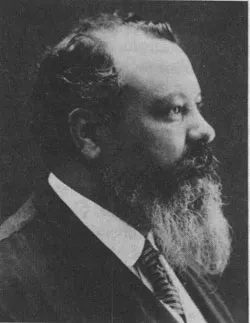
Gerd Bucerius
Human Design Chart
Biography
The Human Design of Gerd Bucerius: Manifestor 4/6
Manifestor 4/6 — Design at a Glance
Gerd Bucerius revealed himself as someone who actively steered the world in a new direction. His Human-Design type was Manifestor – a pioneer and visionary whose task it was to initiate changes through his own initiative rather than just reacting. Like an emperor in ancient Rome, he had great plans and put them into action without having to execute every step himself; he delegated implementation to others while setting the strategic direction.
This style of leadership inevitably polarized him. Because his visions often reached further than the understanding of those around him, not everyone understood him. Some followed him enthusiastically, others rejected or even hated him for his grand goals. This conflict was a key pain point in his design: the misunderstanding caused by his trailblazing role.
To minimize this resistance and find the right followership, it was crucial for his design to inform others about his intentions early and precisely. This strategy of informing served to avoid friction. If he followed this strategy, his system rewarded him with a feeling of inner peace. Living against this nature led to persistent deep anger. His path was thus marked by the tension between visionary impulse and the need to communicate it clearly to experience peace rather than frustration.
Ego Authority
Gerd Bucerius revealed himself as someone whose inner truth was anchored in will, which he expressed through spontaneous speech. His design carried rare authority in the ego, a configuration that only Projectors or Manifestors with open Emotional, Sacral, and Spleen centers and a defined Ego center exhibit. This structure created great openness but also susceptibility to influence; distractions were easy. His truth lay in listening to himself while speaking: The spontaneous, uncensored matched his essence, while the mind often served others' interests. What truly mattered to him gave him the willpower to achieve goals and keep promises. This could appear selfish outwardly, yet for him it was essential that his actions also paid off personally – whether through material success or the will to surpass limits and be first. After achieving a goal, he needed mandatory breaks; continuous work without interruption did not lead to the desired result but to exhaustion. The authority in the ego challenged him to consistently follow his own will rather than being led by the logic of the mind that served the open centers.
The 4/6 Profile — Opportunist / Role Model
Gerd Bucerius revealed himself as someone who acted experimentally during his early life phase. His Profile 4/6 worked similarly to a Line 3 in the first thirty years: he actively sought ways to shape relationships and friendships to find his role in social structures. This time was characterized by trying and learning through direct experience.
With the activation of the sixth line, this attitude changed fundamentally. Gerd Bucerius now faced an internal conflict between a deep need for belonging (Line 4) and the urge to reflect distantly on the meaning of things (Line 6). This tug-of-war between heart and head shaped his further life. He learned that respect in the network and recognition of individual contributions were crucial for real change.
In later years, he developed into a role model. The sixth line demanded discipline and assertiveness not through aggression but by making a clear contribution. He understood how to cultivate positive experiences with valuable people and support weaker individuals. His task was to wait for the right moment to bring in his insights. In doing so, his heart remained cautious; he only opened up to those who seemed trustworthy to avoid being hurt by false generosity. Thus, he became a networker who promoted individuality and strengthened the collective spirit through cooperation.
Split Definition — Defined & Open Centers
Gerd Bucerius revealed a design that combined constant mental activity with clear willpower. His defined Head and Ajna Centers generated a continuous pressure to question, understand, and form concepts; he thought constantly and could neither stop nor control this process. However, this inspiration remained purely mental – without direct energy for implementation. Instead, his defined Heart Center came into play: He had consistent willpower to keep promises and use resources self-determinedly. His defined Throat allowed him to reliably communicate these mental concepts and intentional purposes in the world.
At the same time, he was heavily dependent on his environment due to open centers. His open G Center meant a lack of fixed identity; he tended to merge with others or adopt “borrowed” directions rather than having an inner compass. He often sought confirmation from the place and people around him to feel who he was. His open Solar Plexus absorbed foreign emotions, making him vulnerable to emotional waves from others; he could have difficulty distinguishing his own feelings from absorbed moods. The open Sacral Center meant that he did not have a constant vital energy source but instead amplified the life force of others, which could lead to overload if boundaries were not set. His open Spleen Center made him sensitive to health and well-being signals in the environment, while the open Root Center took on external stress. Bucerius’ mechanism lay in using his mental clarity and willpower without losing himself in the emotional or energetic fields of others.
Channels for critical mind and self-determined success.
Gerd Bucerius was someone whose mind was marked by a penetrating skepticism. This attitude resulted from the Logic Channel 63-4, which embodies the doubting mind. Here, his Head Center constantly filtered patterns to test their consistency. Doubt did not form a weakness but rather the essential basis for his judgment; only through logical experimentation and proving consistent, verifiable connections could he arrive at answers. Unfounded belief found no place in this mechanism. His mind always sought the truth behind the surface to provide useful, well-founded predictions or assessments for the collective.
Parallel to this, a strong material orientation was present through the Money Line 21-45. This channel connected his Heart Center with his Throat Center and drove him to take responsibility for resources. It mattered to him to exercise control over his own will while simultaneously ensuring survival and prosperity for his “tribe” – his organization or community. The tension between the need for independence (Gate 21) and the authoritative voice of possession (Gate 45) shaped his leadership style: He worked best when he maintained control over his work methods and acted as a boss to avoid stress.
Additionally, individual gates contributed to orientation. Gate 14 promoted skillful handling of power with grace and self-control, while Gate 30 brought an awareness of inner feelings and the acceptance of limitations as fate. Gate 29 emphasized the necessity of persistent affirmation to challenges in order to receive the inevitable reward for correct action. Gate 8 directed his energy towards individual contribution and promotion within group goals. In his personality, Gate 51 with strong willpower and adaptability and Gate 35, which sought change through interaction and new experiences to find long-term satisfaction, also played a role.
Collective Circuitry — Circuit Signature
Gerd Bucerius was someone who combined logical clarity with strategic resource building. His design tended towards structured analysis, separate from impulsive emotions. The Understanding Circuit connected his Head and Ajna Centers via the Logic Channel (63-4). This meant focused, visual future perspectives and sharing rational insights free of conditioning – an “emotionless ratio” that improved things. Parallel to this, the Ego Circuit was present but not energetically linked with the Understanding Circuit; both formed separate force fields in his Split Definition. Within the Ego Circuit, he connected Throat and Heart Centers through the Money Line (45-21). Here it was about material well-being, creating resources together for the tribe and mutual support (“Today I give to you, tomorrow you give to me”). Since there was no connection to the Sacral Center, this energy required pauses to regenerate strength for the tribe. The separation of groups meant that his logical future orientation did not directly flow into his material success; they existed as adjacent, independent potentials. His attitude was conservative and tradition-oriented, with a focus on tangible results and emotional waves that only became effective after maturation time.
Right Angle Cross of Contagion 2
Gerd Bucerius exhibited a fundamental disposition marked by the 'Right Infection Cross'. This configuration described an intense inner dynamics where he was prepared to deeply absorb impulses or ideas from outside and integrate them into his own system. It wasn't about passive acceptance, but rather a process of assimilation through which external influences became part of his own expression.
This mechanism acted as a constant stimulus for further development: new things were taken in, digested, and eventually infused with a personal touch so that they could appear authentic. For Gerd Bucerius, this meant often finding himself in environments or roles where the exchange of concepts was central. He served as a bridge between different ways of thinking by not only tolerating but actively weaving foreign ideas into his own structure.
The energy of this cross promoted an intellectual or emotional 'infectiousness', enabling him to convey moods and visions without them being perceived as alien. Instead, they seemed to emanate from within himself. This ability to integrate and transform external influences significantly shaped his way of interacting with the world.
Saturn Return · Uranus Opposition · Chiron Return · 2nd Saturn Return — Life Cycles
Gerd Bucerius was someone who took structural responsibility in specific life phases and stabilized existing orders. This tendency corresponds to the first Saturn Return around age 30, a cycle where internal values condense into firm external commitments. In 1937, he defended Jewish shipowner Arnold Bernstein against charges – an act documenting this early crystallization of principles and professional integrity.
Later came the Uranus Opposition around age 40, a period of breaking with the old and establishing new, often revolutionary structures. Here his design showed in the ability to replace outdated systems with innovative concepts. In 1946, he received the license for publishing the weekly newspaper 'Die Zeit', marking this impulse towards founding anew and breakthrough in a new form.
The second Saturn Return around age 60 confirmed and institutionalized these achievements sustainably. It is a phase of maturity where previously gained insights become enduring institutional frameworks. In 1965, he founded Gruner + Jahr GmbH, thereby transferring his individual impulses into a stable, long-term corporate structure. This sequence illustrated how his design worked through cyclic crystallization and structural re-founding.
Manifestor · Ego Authority — Synthesis
Gerd Bucerius' life was characterized by an ongoing interplay between internal pressure and the desire for connection. As a Manifestor (Design View) with defined logic (Channels/Gates), he experienced a constant need to question and formulate patterns – a mental drive (Centers) that led him to analyze the world around him and point out new paths. This urge for understanding combined with the profile of a Networker/Role Model (Profile Role), who had a natural tendency towards cooperation and exchange, although seeking some distance to develop his own insights. The recurring professional successes in defining life stages (Cycles) attest to this ability to think independently while also winning others over for his visions.
A central paradox lay in the way Bucerius lived his authority (Authority). His ego-authority required spontaneous, uncensored speech to recognize one's truth. This stood in tension with the defined Head Center (Centers), which constantly urged him to question and logically analyze things – an internal struggle between the impulsive expression of will and the necessity to test everything for its constancy. This tension shaped his character and led to a unique style of leadership that was both visionary and pragmatic.
2 Defined Channels
Incarnation Cross - Right Angle Cross of Contagion 2
Solar Return
The Solar Return shows the moment when the sun returns to its exact birth position - your personal solar year.
Life Cycles
Discover the life cycles with a detailed triple view (birth chart, cycle chart, composite).
Human Design Profile
- Type
- Manifestor
- Strategy
- To inform others before acting
- Authority
- Ego Authority
- Profile
- 4/6 - Opportunist / Role Model
- Definition
- Split Definition
- Incarnation Cross
- Right Angle Cross of Contagion 2
- Date of Birth
- 19.05.1906 20:00
- Place of Birth
- Hamm, Germany
Frequently Asked Questions
What was Gerd Bucerius' Human Design type?
What Profile did Gerd Bucerius have in Human Design?
What Authority did Gerd Bucerius have?
What incarnation cross was assigned to Gerd Bucerius?
When was Gerd Bucerius born?
Discover your own Human Design
Are you also a Manifestor? Find out in a personal reading how to use your initiation power peacefully and dissolve resistance.
More Personalities
Back to overviewChristian-Jaque
Kesha

Lucebert
Marilyn

Masaccio

Papus