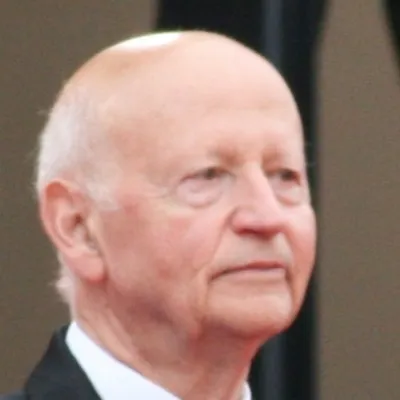
Gilles Jacob
Human Design Chart
Biography
What does Generator 3/5 mean for Gilles Jacob?
Generator 3/5 — Design at a Glance
Gilles Jacob revealed himself as someone with immense endurance and the ability to generate energy over long periods. His design suggested a foundational structure that made him appear like a strong workhorse – powerful and consistent, provided he found internal motivation for his tasks. However, this energy was not released through self-initiative but only became effective when he responded to signals from his environment. The central dynamic of his design lay in waiting until life posed a question or impulse, then responding instinctively.
When Gilles Jacob followed this strategy and acted only where his sacral center clearly signaled a 'yes', he was rewarded with a deep sense of fulfillment. Conversely, ignoring this inner compass or constantly pushing projects forward without internal resonance led to frustration and energy loss. Particularly dangerous for him was being hindered from working on his heart project while still having power left; this often resulted in blocking his natural strength. Similarly risky was doing things he had no interest in, which could lead to burnout over time. His greatest strength thus lay not in pushing forward but in the powerful and contented response to what came his way.
Sacral Authority
Gilles Jacob exhibited a fundamental stance of spontaneous responsiveness: His inner authority resided in his defined Sacral Center. As a Generator, his strategy – to react – was identical with this authority, simplifying his decision-making process. He did not need complex analysis but waited for an external impulse to feel a physical response. This manifested as gut feelings, grunts or sudden bursts of energy. When his sacral motor kicked in, he felt vital and energized, ready to perform tasks with great enthusiasm without the need for them to serve an external purpose.
Additionally, the Spleen Center acted as supporting authority. Being activated and possibly directly connected to the Sacral Center allowed Gilles Jacob quick, instinctive judgments about his physical well-being. He could respond immediately to stimuli guided by a deep intuitive perception. This combination of sacral energy and spleen-based intuition enabled him to reliably orient himself with his inner compass. The Emotional Center was open, a prerequisite for the clear functioning of the Sacral Authority. Gilles Jacob thus lived not through planned pushing forward but through trust in these immediate physical signals showing where his true energy lay and where it wanted to take him.
The 3/5 Profile — Martyr / Heretic
Gilles Jacob revealed himself as someone who gained knowledge not theoretically but through direct, often risky experimentation. His design suggested a tendency to question everything initially and test it himself – a characteristic of Line 3 of the Explorer. This process of 'trial and error' served to build practical life experience that later functioned as a foundation for his role as Hero or Rescuer (Line 5).
The mechanics of his Profile 3/5 describe a dynamic between the need for control through personal strategies and the projection of healing authority by others. As he learned through extreme strategies effective with others, an image was assigned to him as someone who could offer solutions or healing. This attractiveness flattered his ego but could be painful when public experiments failed. Line 5 functioned as a recovery phase in which he had to learn to free himself from conditioning and allow healing from within rather than expecting it externally. Gilles Jacob's path involved preparing these practical experiences so that others could learn from them, while he internalized the lesson of humility through recognition or failure.
Single Definition — Defined & Open Centers
Gilles Jacobs Design revealed a tendency towards deep, physical grounding. He was someone who drew his strength not from mental planning but from the direct response and reaction process. His defined Sacral Center generated a constant reserve of vitality – a real life force that felt like a hum and kept him moving. However, this energy was only reliably available when he responded to questions or offers; initiating actions without prior invitation often led to frustration or exhaustion as his sacral power would then be lacking.
Additionally, his defined Spleen Center marked an intuitive, momentary perception. He had a natural instinct for health and well-being that allowed him to make spontaneous judgments in the 'now'. This protective mechanism worked only in the current moment; missed warning signals did not repeat themselves, requiring constant attention. His defined Root Center provided the necessary pressure and stress to advance in the material world and master existential challenges.
In contrast, several open centers revealed his vulnerabilities to conditioning. His open Head Center tended to absorb mental questions and doubts that were not his own, which could easily pull him into a whirlpool of confusion when he tried to solve everything intellectually. The open Ajna Center meant that his conceptual thinking was flexible but did not provide a consistent source for his own theories; he risked identifying with foreign opinions or pretending to be more certain than he felt.
His open G Center lacked a firm identity or direction. He tended to reflect in relationships or environments and often sought a place where he felt belonging rather than possessing it internally. The open Heart Center made him vulnerable to the pressure of having to prove his worth, even though he was not designed to keep promises with willpower. Finally, his open Solar Plexus absorbed the emotions of his environment, leading him to experience foreign moods as his own instability and avoid confrontation out of fear of rejection.
Channels for caring values and meaningful life struggle.
Gilles Jacob showed a fundamental disposition towards care: He automatically attracted the trust of others and took responsibility for providing for his community. This inclination rooted in Channel 27-50, which connected Gate 27's selfless interest in others with Gate 50's traditional values and laws to preserve the tribe. His aura acted as a natural provider, yet he intuitively knew that true support only begins when one properly cares for oneself – a form of 'enlightened selfishness' validated only through his own sacral reaction to others' requests.
Parallel to this, an unyielding will drove him to forge his path and find meaning in life's battles. Channel 38-28 linked the pressure from Gate 38 to defend individual integrity against external distractions with the intuitive assessment of Gate 28 on whether a battle was appropriate and valuable. This configuration endowed him with a transformative power that pushed him to defy expectations and fight for his uniqueness, serving as an example to others.
Additionally, his design featured a deep connection to collective rhythms and mystical innocence. Gate 15 ensured logical adaptation to natural cycles while Gate 25 promoted the spiritual stance of innocence centered on unconditional love for the tribe. Gate 46 conveyed devotion in the here and now and the care of the body as a temple, where success arose through full engagement. In the background, other energies worked: Gate 3 sought order from confusion, Gate 58 experimented with patterns towards perfection, Gate 54 aimed at worldly success as a basis for spiritual insight, and Gate 59 followed a genetic strategy of bonding. Gate 53 enabled him to begin new cycles as a pioneer and leave old structures behind.
Individual Circuitry — Circuit Signature
Gilles Jacob was marked by a design that featured two separate yet simultaneously active energetic focal points: once the ability for precise instinctive and survival strategies, and other the power to overcome resistance and push through. These two areas were not directly connected in his chart but existed as parallel forces side by side.
The Archer Circuit linked his Sacral Center with his Spleen Center via Channel of Preservation (Gates 27-50). This created a timeless, instinctive energy for preservation and care. It was about the primal task to protect and nourish what is essential – an energy that responded less to short-term impulses but rather to deep genetic necessities of survival and care.
Parallel to this, the Knowledge Circuit worked in Gilles Jacob by linking his Spleen Center with his Root Center (Channel Life Struggle, Gates 28-38). Here lay the pulsating energy of the present moment, connected with the ability to recognize resistance and push through it. This was not creative inspiration in terms of innovation but an immediate, acoustic power to handle conflicts and challenges in real-time.
Though he shared his Spleen Center between both circuits, as these belonged to different groups, the energies did not merge. Instead, Gilles Jacob had to learn to distinguish his instinctive care (Archer) from his combative push-through force (Knowledge) and use the right impulse at the right time. His simple definition provided a clear, albeit bifurcated structure that guaranteed stability through these specific connections.
Right Angle Cross of the Vessel of Love 2
Gilles Jacob was characterized by a deep, often silent dedication to the essence of connection itself. His Human Design emphasized less on actively shaping relationships and more on holding and nurturing space for love. This approach stemmed from the influence of the right cross of the Love Vessel 2, a configuration that describes an inner resonance with the essence of loving.
This aspect of his Human Design points to a passive yet powerful quality: carrying and preserving emotions and bonds. Gilles Jacob did not act through loud actions or obvious strategies but rather by how he could absorb, condense, and carry feelings within himself. It was an internal work of understanding and feeling, where love was experienced as something sacred and protected.
This mechanism does not mean that he was passive; his strength lay in the depth of his emotional experience. He served as a vessel capable of absorbing the intensity of relationships without immediately projecting them outward. This inner condensation created stability and warmth that attracted others unconsciously and secured their presence. His contribution lay in preserving love in its pure form and making it visible through his presence, showing how genuine emotional resonance can be connecting and sustaining.
Saturn Return · Uranus Opposition · Chiron Return · 2nd Saturn Return — Life Cycles
Gilles Jacob showed a development where the internal orientation and life purpose increasingly moved outward. This corresponds to the Chiron Return, a cycle between the ages of 49 and 51, in which one's Incarnation Cross – provided strategy and authority are observed – blooms. Meaning and purpose become tangible without focusing on healing old wounds.
An early indication of this dynamic appeared in 1977 when Jacob, at age 47, became the Artistic Director of the International Film Festival in Cannes. This career development marked a point where his inner potential crystallized into a leading role. The Chiron Return deepens this unfolding: what was previously planted now fully unfolds in life. Gilles Jacob found himself in a state of fulfillment during this phase, where the strategy he had lived bore fruit and his specific contribution to the world became clearly recognizable. This mechanism describes not a sudden change but the visibility of what had been prepared through consistent action according to his design.
Generator · Sacral Authority — Synthesis
Gilles Jacob's life seems marked by a deeply rooted drive to generate energy and transform it into concrete results. The sacral authority and defined Sacral Center (with Channel 27) suggests a constant source of vitality that discharges in engagement with tasks he pays attention to. This pattern is reinforced by the Profile of the Explorer/Hero: gathering experiences, experimenting, and making this knowledge accessible to others – a cycle of energy absorption, transformation, and transmission that propels him and gives meaning to his life. The ability to find joy in work itself, without external purpose binding, seems central to his well-being.
At the same time, the design harbors an internal tension between the need for continuous activity and the necessity to protect against energy depletion. Experimenting (Line 3) can indeed lead to valuable insights, yet the Hero role (Line 5) also implies a pressure to offer solutions – a paradox since the Sacral Center primarily relies on inner reaction rather than external expectations. This shift between trying new paths in the knowledge circuit and responsibility for preserving existing values (Channel 27-50) points towards a dynamic balance between innovation and tradition.
2 Defined Channels
Incarnation Cross - Right Angle Cross of the Vessel of Love 2
Solar Return
The Solar Return shows the moment when the sun returns to its exact birth position - your personal solar year.
Life Cycles
Discover the life cycles with a detailed triple view (birth chart, cycle chart, composite).
Human Design Profile
- Type
- Generator
- Strategy
- To respond - wait for something to respond to
- Authority
- Sacral Authority
- Profile
- 3/5 - Martyr / Heretic
- Definition
- Single Definition
- Incarnation Cross
- Right Angle Cross of the Vessel of Love 2
- Date of Birth
- 22.06.1930 11:00
- Place of Birth
- Paris Arrondissement 17, France
Frequently Asked Questions
What is the Human Design type of Gilles Jacob?
Which Profile does Gilles Jacob have in Human Design?
What authority determines Gilles Jacob's decisions?
What incarnation cross does Gilles Jacob have?
When was Gilles Jacob born?
Discover your own Human Design
Are you also a Generator? Find out in a personal reading how to use your sacral energy correctly and discover deep satisfaction.
More Personalities
Back to overviewAaliyah

Alexia

Angèle

Anne-Marie

Arcángel

Arno