
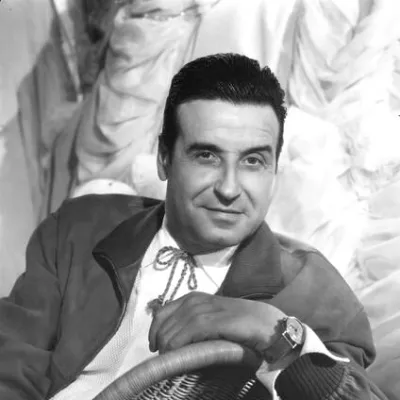
Giovanni Trapattoni
Human Design Chart
Biography
Trapattoni is married to Paola and they have two kids.
Human Design Analysis: Giovanni Trapattoni as Manifestor 4/6
Manifestor 4/6 — Design at a Glance
Giovanni Trapattoni's design shows a tendency towards prioritizing action and leadership. He is someone who takes the initiative and moves others, similar to an emperor in ancient Rome who implements his vision through others. This configuration describes a type that does not fight every battle himself but gives instructions and expects them to be followed.
Since his thinking often outpaces those around him, he faced the challenge of being misunderstood. His grand plans polarized: some followed him enthusiastically, while others rejected or even developed resistance against his visions. This point of non-acceptance was a central aspect of his design.
To minimize these frictions and find the right followership, it was crucial for him to inform others about his intentions in a timely and precise manner. This strategy of informing served to preempt resistance and create clarity. If he followed this path, he was rewarded with an inner sense of peace. However, if he lived against this principle, he felt instead a persistent, deep-seated anger within himself. His design therefore demanded clear communication as a prerequisite for harmonious functioning and the realization of his visions.
Emotional Authority
Giovanni Trapattoni showed a decision-making stance that did not rely on immediate clarity but rather on navigating emotional waves. His design carries Emotional Authority, meaning the Solar Plexus Center is defined, taking over inner leadership – independent of other defined centers in the chart. This configuration is subject to constant ups and downs; the world is always colored by the current mood. What appears inspiring at one moment can turn negative the next. Since a feeling is only a snapshot, not an absolute truth, spontaneous decisions from this state can be problematic.
The mechanics here require patience: decisions need time to mature, often over several days. Only when intense feelings subside and emotional distance is gained does true clarity emerge. Giovanni Trapattoni therefore had to take his time, hesitate, and ask questions to go through this process. This was especially important for long-term decisions with significant influence on life's course. Inner authority dictated not quick action but waiting for calm after the emotional wave subsides. Only then was the decision authentic and sustainable, free from distortion by a temporary mood.
The 4/6 Profile — Opportunist / Role Model
In his first three decades of life, Giovanni Trapattoni appeared as someone who intensely experimented – particularly in the realm of relationships and friendships. His design showed a tendency to build networks through friendliness and always stay informed about what was happening behind the scenes. This phase felt like constant testing, driven by the need to gather secret information and seize the right opportunities for experiences.
Over time, as his second third of life opened up, this attitude fundamentally changed. The internal conflict between the desire for community belonging and the urge to withdraw to think deeply about the meaning of it all became central. Giovanni Trapattoni had to learn to endure this contradiction: the cautious heart, wary of opening up to the wrong people, stood in tension with the wise head that wanted to remain detached.
Later in his life, he was seen as a role model whose strength lay in cooperation. His ability to accept transitions and cycles allowed him a broad overview. He understood the impermanence of ideas and adapted to the collective flow rather than fighting against it. This adaptability was not a sign of weakness but strategic wisdom: he used his network not only for personal gain but as an example, guiding others through crises and changes by offering the right services at the right time.
Single Definition — Defined & Open Centers
Giovanni Trapattoni's Human Design shows a tendency towards continuous mental activity paired with the ability to directly translate thoughts into words and actions. His defined Ajna Center provided constant conceptual clarity; he thought constantly and was hard to influence from outside. This mental energy flowed through his defined Throat Center, giving him reliable but limited communication: He spoke what his mind had conceived.
At the same time, his defined Solar Plexus acted as an inner authority. Here lay the necessity to wait for emotional waves before making decisions. His feelings were not immediate truths but indicators that needed time to clarify. In relationships or negotiations, he could use this emotional depth by patiently waiting until others became impatient – a benefit resulting from the mechanics of his emotional definition.
In contrast, his open Head Center showed vulnerability to mental pressure and doubt. He tended to engage with questions that were not his own or sought external inspiration to resolve inner confusion. His open G Center meant he did not carry a fixed, unchangeable identity. Instead, he adapted to people and places; his self-image crystallized only in correct environments. The mantra “If you are at the wrong place, you meet the wrong people” applied to him: His well-being strongly depended on being in the right place.
Furthermore, his undefined Heart, Sacral, and Spleen Centers revealed specific challenges. Without defined willpower in the Heart Center, he was not set up to make promises or prove himself through will; this would have only led to frustration. The open Sacral Center made him vulnerable to others' energy, which could lead to overload if he ignored boundaries. Finally, his open Spleen Center required caution with spontaneous decisions out of fear. He relied on not being guided by the search for safety from others but instead using his emotional clarity and mental structure as an anchor.
Channels for insatiable curiosity and emotional openness.
Giovanni Trapattoni showed a fundamental disposition towards constant seeking and storytelling: he gathered experiences to pass them on not as dry facts, but as instructive stories. This stemmed from Channel of Curiosity 11-56, connecting the Ajna Center with the Throat Center. This configuration drove him to always ask for new stimuli and formulate ideas in a way that sparked others' imagination. His communication served less to merely convey information than to weave parables that prompted listeners to reflect and helped them evaluate new beliefs.
Alongside this intellectual curiosity, an emotional openness guided by mood was at work. Channel of Openness 22-12 connected his Solar Plexus with the Throat Center. Here, the emotional wave determined his timing: He only spoke or acted socially effectively when he felt in the right mood to do so. This connection allowed him to exert a transformative effect on others through the quality of his voice and words, provided he respected his inner rhythm and did not act impulsively against his feelings.
Behind these mechanisms, further energetic currents were at play. Gate 36 brought the experience of crises as necessary movement for development, while Gate 6 supplied the emotional motor for growth and friction. On a personality level, he sought inner peace and mental renewal through Gate 24, while Gate 47 helped him distill collective sense from past confusions. In his design itself, Gates 43 promoted breakthroughs of individual insights and Gate 30 facilitated feeling recognition as well as the acceptance of limitations as fate. Together, these elements formed a person who touched and taught others through storytelling and mood-appropriate action.
Individual Circuitry — Circuit Signature
Giovanni Trapattoni's Human Design points towards emotional authenticity and reflective communication. He showed himself to be someone who carried inner emotional states directly outward without prior intellectual filtering or planning. This immediate connection between his Solar Plexus Center (emotions) and the Throat Center (expression) through Channel 12-22 (
Right Angle Cross of Eden 1
Giovanni Trapattoni's character was marked by a deeply rooted fundamental disposition based on a specific energetic configuration. His design carried the so-called right cross of Eden 1 within it. This structure is not just an arrangement of points but a connected pattern that supports certain life impulses and reaction modes.
In Human Design, this cross describes a dynamic often associated with the ability to penetrate complex situations while operating on a very personal, intuitive level. It's about inner architecture rather than external attitudes or learned strategies; it activates specific perception filters. People with this configuration tend to address issues of deep personal significance and seek ways to make them effective in their environment.
The term 'Eden' refers to a state of innocence or originality, while the numbering connects specific channels and centers defined in Giovanni Trapattoni's chart. Without further details about involved gates, it can be said that this cross configuration acts as an inner compass, directing attention to certain areas of life where the individual is particularly sensitive and reactive. For Giovanni Trapattoni, this meant his decisions and actions were often influenced by this underlying structure, even if he was not always aware of it. It's a passive imprinting that works in the background and influences how he takes in and processes information.
Saturn Return · Uranus Opposition · Chiron Return · 2nd Saturn Return — Life Cycles
Giovanni Trapattoni's design featured a cyclical structure with alternating phases of intense condensation and structural consolidation interspersed with periods of sudden shifts. This dynamic became visible in 1968 at age 29: The first Saturn return marked the peak of years of groundwork, as he won the Italian championship and the European Cup Winners' Cup. This cycle condensed early efforts into a solid success outcome.
The tension between stability and change was evident in 1977 at age 38 during the Uranus opposition. Here, an abrupt, often unexpected shift occurred but was positively resolved: Winning the Italian championship with Juventus Turin demonstrated his ability to establish new structures and lead successfully despite or through disruptive energies.
At age 50 in 1989, his design reached the Chiron return. This fulfillment cycle made his life purpose increasingly tangible; winning the championship and Supercup with Inter confirmed his inner alignment and sense of purpose as a peak of long-term development.
The second Saturn return in 1996 at age 57 brought another phase of testing and structural review. His dismissal from Cagliari Calcio was not just a failure but a necessary moment of redefinition, typical for this cycle that sheds old burdens to make way for the next life stage.
Manifestor · Emotional Authority — Synthesis
A central red thread runs through his design: the ability to act as a pioneer and chart new paths (Manifestor type), coupled with a deep-rooted need for authenticity and the desire to generate and share knowledge (Knowledge Circuit). Emotional authority requires a maturing phase where decisions must not be rushed, while the profile as networker/role model emphasizes the drive to connect with others. This constellation points to a life path driven by an inner vision and distinguished by the ability to inspire others—yet always in consideration of one's emotional compass.
The design reveals a central paradox between the need for independent action and the desire for belonging (4/6 profile). The defined mental function (Ajna Center) generates concepts and opinions that want to be shared through the channel of curiosity (Gate 11 & 56). Simultaneously, the right cross of Eden suggests this expression is often linked with inner melancholy. Successes in defining cycles (Saturn return, Uranus opposition, Chiron return) contrast with experiences of letting go and crisis (second Saturn return), highlighting the tension between striving for recognition and accepting change.
2 Defined Channels
Incarnation Cross - Right Angle Cross of Eden 1
Solar Return
The Solar Return shows the moment when the sun returns to its exact birth position - your personal solar year.
Life Cycles
Discover the life cycles with a detailed triple view (birth chart, cycle chart, composite).
Human Design Profile
- Type
- Manifestor
- Strategy
- To inform others before acting
- Authority
- Emotional Authority
- Profile
- 4/6 - Opportunist / Role Model
- Definition
- Single Definition
- Incarnation Cross
- Right Angle Cross of Eden 1
- Date of Birth
- 17.03.1939 00:45
- Place of Birth
- Cusano Milanino, Italy
Frequently Asked Questions
What is Giovanni Trapattoni's Human Design type?
What Profile does Giovanni Trapattoni have?
What Authority governs Giovanni Trapattoni?
What is Giovanni Trapattoni's incarnation cross?
When was Giovanni Trapattoni born?
Discover your own Human Design
Are you also a Manifestor? Find out in a personal reading how to use your initiation power peacefully and dissolve resistance.
More Personalities
Back to overviewAldair

Cafu

Christian-Jaque
Joelinton

Kaká

Kesha