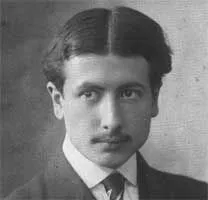
Photo: Wikimedia Commons
Giuseppe Verdi
Human Design Chart
Biography
Verdi's dad was keeper of a tavern and grocery, illiterate and too poor to give his son an education. However the boy showed his musical gift at an early age and attracted the attention of Antonio Barezzi, a merchant who loved music. Barezzi helped Giuseppe with his education. At 18, he went to Milan to study for three years.
Verdi took the post of musical director of Busseto, near his birth village, and in 1836, he married the daughter of his patron, Margherita Barezzi. He had an opera produced in 1839 that was so successful that he was commissioned to compose three more for the Milanese theater.
His work came to a tragic stop, however, when he lost his family. He and his first wife Margherita (who died 18 June 1840) had two children, Virginia (26 March 1837 - 12 August 1838) and Icilio Romano (11 November 1838 - 22 October 1839). His opera "un giorno di regno" was a total flop that was soundly jeered by the audience on 5 September 1840, leaving a lasting psychological imprint on his attitude toward critics and the press. Overcome with despair, he vowed he would never compose again.
Two years later, he reluctantly accepted a commission. The result established his reputation in Italy with the release of "Nabucco," in 1842, taking him to Paris where he lived from 1847-1849.
He returned to Busseto with his mistress, Giuseppina Strepponi. Now a man of some wealth, he purchased Sant'Agata, which was his home for the rest of his life. After a scandal-ridden interlude in which both Verdi and Strepponi seemed reluctant to marry, they finally legalized their union in 1859.
From 1855, Verdi reigned as an international figure and outstanding success.
Human Design Analysis: Giuseppe Verdi as Projector 3/5
Projector 3/5 — Design at a Glance
Giuseppe Verdi appeared through his aura like a focused flashlight identifying system errors in his environment. His Human Design as a projector described this ability to bring light into the darkness for others and illuminate their path. However, lacking a constant intrinsic energy source - his Sacral Center was undefined - he required mandatory rest phases to prevent burnout. His design showed that life structured according to this would be rewarded with success, while ignoring the need for recovery led to an unfulfilled self-experience of bitterness.
Giuseppe Verdi's elegant strategy did not involve addressing identified errors directly, which would have caused resistance in his environment. Instead, he attracted others through his own harmony; people came automatically to him and sought his advice. His best approach was to wait for genuinely inviting offers from others. He used this passive attraction to exert influence without going against the natural flow of his limited energy. His chart indicated that his success depended on respecting an invitation culture and only using his intense perception when explicitly requested.
Splenic Authority
Giuseppe Verdi's design inclined towards spontaneous, instinctive decision-making. His inner authority lay in the defined Spleen Center while the Emotions and Sacral Centers remained open - a configuration unique to Projectors or Manifestors. This imparted him with fine survival intelligence: an impulsive signal indicated what was right for his physical well-being and health at any given moment. This first impulse served as an immediate measure; it was the only valid reference point, since the Spleen voice came once and could easily be drowned out by external influences.
This mechanism required Giuseppe Verdi to remain vigilant against distractions and possess the ability for rigorous boundary setting with harmful environments or societies. Since his knowledge of what was right always arose in the present moment, long-term planning was difficult for him and often counterproductive. His design promoted flexibility and spontaneous actions over rigid commitments instead. He needed a lot of space to follow these subtle impulses. Overstimulation or decision pressure could benefit from withdrawal to regain clarity on the signal given by his Spleen Center. Thus, he effectively cared for himself through trust in this immediate instinct and adapted to changing environmental demands without prematurely binding himself.
The 3/5 Profile — Martyr / Heretic
Giuseppe Verdi was someone who gained knowledge not through theory but through personal, often painful experimentation. His design inclined towards initially remaining skeptical and experiencing everything firsthand before judging. This process of trial and error, marked by Gate 57 on Line 3, served to adapt to life and refine his intuition through direct experience.
However, this individual learning curve was only the prerequisite for his later role. Through Gate 53 on Line 5, his accumulated experiential knowledge transformed into heroic wisdom that could solve others' problems. This configuration created a strong attraction: people sought him out because they wanted to partake in his practical treasure.
The internal conflict lay in the need for personal experimentation (Line 3) repeatedly clashing with high expectations of performing as a hero (Line 5). Public failures were not only possible but necessary for his development. Each failure was part of an evolutionary process of assertion and served to question norms. Thus, each mistake became a building block for the authority he later radiated. His life dynamics were based on earning credibility through personal failure and survival in order to serve as a role model for others.
Single Definition — Defined & Open Centers
Giuseppe Verdi revealed himself as someone who rested on a deep inner anchoring. His defined G Center gave him a firm sense of self-identity and a clear direction in life. He knew who he was and where he belonged, without having to draw this certainty from the outside world. This internal stability allowed him to support others in their development by helping them understand the nature of human evolution rather than trying to direct their paths himself.
Parallel to this, Verdi had a defined Spleen Center, which stood for intuitive security and health. This gave him a reliable instinct in the present moment. He could make spontaneous judgments and perceive what was correct for his well-being without having to rationalize it. His design allowed him to be present in the moment and trust the subtle warning signals of his body, granting him a strong immune system and a sense of vital health.
In contrast, Head, Ajna, Throat, Heart, Sacral, Solar Plexus, and Root were open. These open centers made him vulnerable to absorbing external energies. Through the open Head and Ajna Centers, he tended to take on mental pressure and confusion from his environment rather than generating consistent thoughts of his own. He could easily get caught up in questions that did not belong to him. The open Heart Center led him to often feel compelled to prove his worth or make promises to gain recognition, despite lacking a constant willpower for it.
The open Sacral Center meant he had no constant vital energy source but amplified the energies of others. This could lead to exhaustion if he did not listen to his inner authority and rest. Similarly, his open Solar Plexus absorbed emotions from the environment, making him emotionally vulnerable and causing him to avoid confrontation to avoid stirring up waves. The open Root Center made him absorb stress and hecticness from others, often leaving him feeling overwhelmed or trying to escape this pressure through hyperactivity. Verdi learned not to interpret these open fields as his own truth but rather use them as mirrors of the environment while trusting in his defined identity and intuition.
Channels for intuitive elegance and authentic self.
Giuseppe Verdi showed a rare intuitive clarity in dealing with his surroundings. His design inclined him to spontaneously react to inner impulses to perfect his well-being in the present, driven by deep self-love instead of future fears or desires for external recognition.
This attitude was rooted in the mechanics of the Channel of Perfect Form 57-10. This channel connected the Spleen Center with the G Center and integrated acute acoustical sensitivity to tone quality (Gate 57) with an authentic manner of behavior (Gate 10). The result was a behavior guided by innate wisdom beyond thoughts. Giuseppe Verdi acted appropriately on everything perceived as out of order in his environment, letting go of unfounded worries. Through this existence in the moment, he created something healthy and beautiful; his unique example invited others to live their lives authentically without it being his conscious intention.
Additionally, other gates shaped his character: Gate 51 gave him a strong willpower and the ability to respond with knowledge to shocks, containing a strong adaptation drive or competitive potential. Gate 53 allowed him to pioneer new paths and leave old ones behind, where starting new development cycles without proper closure could lead to depression. Gate 54 connected worldly success with mystical insight; here external success was a prerequisite for spiritual development, often supported by a partner or buddy on this path.
Individual Circuitry — Circuit Signature
Giuseppe Verdi's design inclined him towards constant self-reinforcement. He showed himself as someone who secured his survival through the connection of individual intuition and correct action. This structure came from the Integration Circuit, which in him connected the Identity Center with the Spleen.
The active channel 'Perfect Form' (Gates 10 and 57) formed the bridge between these two centers. Gate 10 in the Identity Center stood for proper behavior – that is, doing what proved to be fitting and effective. The Spleen, represented by Gate 57, provided intuitive knowledge about what was life-necessary. Through this connection, Giuseppe Verdi learned to gain strength from reacting to life and direct it purposefully. It was a firm, defined energy, not a shared or fragmented experience.
As it was a simple definition, these forces existed as a continuous flow. The mechanics described not only theoretical possibilities but an actual inner logic: survival was achieved through the synchronization of identity and intuitive perception. Giuseppe Verdi used this system to stabilize himself in every situation. His design allowed him to act in the here and now by trusting his internal signals and acting accordingly. This created a foundation for stability and personal authority that did not depend on external validations but arose from his own intact connection between will and intuition.
Right Angle Cross of Penetration 3
Giuseppe Verdi's Human Design featured the signature of the right cross of the penetration 3. This configuration established a specific energetic alignment, whose precise mechanical effect on character and behavior is not defined in the available data. Since there was no specific description or channel assignment in the raw content, the concrete manifestation of this energy remained undefined. The design thus pointed to a structure without allowing for any inference about how Giuseppe Verdi experienced this penetration in everyday life or what behavioral patterns it shaped. It was an isolated factor within the mechanics that did not allow further deductions about his personality. Without additional information on gate combinations or centers, the interpretation of this cross formation remained open and without concrete reference to his actions or decisions. Giuseppe Verdi lived with this undefined potential, which could neither be identified as a driving force nor as an obstacle. The absence of detailed description meant that this component of his design stayed in the background, leaving no visible traces in his outward appearance. It was part of his inner architecture whose function remained undeciphered and therefore played no role in the analysis of his essence.
Saturn Return · Uranus Opposition · Chiron Return · 2nd Saturn Return — Life Cycles
Giuseppe Verdi's life was marked by four significant astrological cycles that acted as crisis or turning points in his career and private life. In 1840, at age 27, he experienced his first Saturn return: His wife Margherita died from encephalitis. This cycle often marks the transition from youth to serious responsibility for one's life, here accompanied by profound loss.
Ten years later in 1850 (age 37), the Uranus opposition occurred. It frequently brings sudden changes or the breaking of old structures. Verdi premiered 'Stiffelio', a work that thematized the adultery of an evangelical pastor's wife – a mirror of the inner and outer upheavals of this phase.
In 1861, at age 48, he reached his Chiron return, a fulfillment cycle in which one's life purpose increasingly unfolds. Verdi was persuaded to run for candidacy in the Chamber of Deputies but soon withdrew. This showed his preference for exerting influence on his own turf rather than taking up political offices.
The second Saturn return in 1871 (age 58) crowned this development. The premiere of 'Aida' in Cairo was a great success. This cycle condensed years of groundwork into a viable, public result and confirmed his artistic maturity.
Projector · Splenic Authority — Synthesis
He was a projector whose life was marked by a profound ability to recognize the potential and weaknesses of others (Projector Type, Channel Perfect Form). This intuitive perception, fueled from the defined G Center and its associated inner direction, allowed him to subtly influence and shed light on darkness. His profile as an experimenter/hero and rescuer (3/5) suggests that he learned through experience and used this knowledge to help others – a cycle of personal experimentation and sharing insights.
A central paradox lay in the tension between his need to recognize truth (Spleen Center as authority) and how he communicated these truths. The ability to identify errors in the system was pronounced, yet direct engagement with them would have provoked resistance. Instead, there was a tendency to give subtle hints through creative integration (Integration Circuit) and encourage others' self-discovery – behavior that both protected his own health and enabled evolutionary change. Certain cycles confirmed this dynamic by linking phases of personal crisis with moments of professional success.
1 Defined Channel
Incarnation Cross - Right Angle Cross of Penetration 3
Solar Return
The Solar Return shows the moment when the sun returns to its exact birth position - your personal solar year.
Life Cycles
Discover the life cycles with a detailed triple view (birth chart, cycle chart, composite).
Human Design Profile
- Type
- Projector
- Strategy
- Wait for the respectful invitation
- Authority
- Splenic Authority
- Profile
- 3/5 - Martyr / Heretic
- Definition
- Single Definition
- Incarnation Cross
- Right Angle Cross of Penetration 3
- Date of Birth
- 10.10.1813 20:00
- Place of Birth
- Le Roncole, Italy
Frequently Asked Questions
What was Giuseppe Verdi's Human Design type?
What Profile did Giuseppe Verdi have in Human Design?
What Authority did Giuseppe Verdi possess?
What incarnation cross did Giuseppe Verdi have?
When was Giuseppe Verdi born?
Discover your own Human Design
Are you also a Projector? Find out in a personal reading how to unfold your leadership qualities and recognize the right invitations.
More Personalities
Back to overviewSissy Spacek

Aaliyah

Alain-Fournier
Alexia

Alizée

Anémone