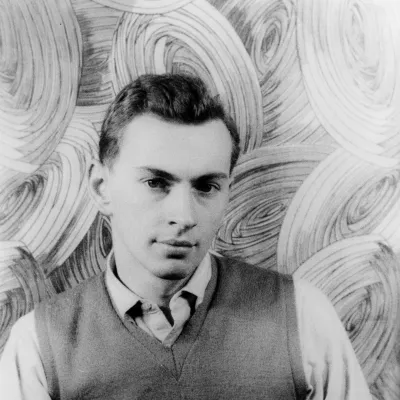
Gore Vidal
Human Design Chart
Biography
Gore Vidal was born at the military academy in West Point, New York, where his father was an instructor. He grew up near Washington, D.C., in his grandfather’s house. As a teenager, Vidal adopted the first name of Gore. Vidal learned about political and social life among notables. He also spent time on the Virginia estate of his stepfather, Hugh D. Auchincloss.
After graduating from Philips Exeter Academy in New Hampshire, he served in the Army. When he was discharged, he worked for six months for the publishing firm of E. P. Dutton. From 1947 to 1949 he lived in Antigua, Guatemala. A basically self-taught writer (he has no college degree), his first novel, "Williwaw," was based on his youthful wartime experiences.
In his autobiography, Vidal admitted to being a selfish lover because he likes to receive pleasure rather than give it. So he concluded long ago that sex is an urge, that love is an impossibility, and that you should never have sex with someone you might actually like, which led him to literally thousands of anonymous trysts throughout the years.
The Human Design of Gore Vidal: Reflector 1/3
Reflector 1/3 — Design at a Glance
Gore Vidal revealed himself as a person without firmly anchored, constant inner energies. His design was that of a Reflector: He did not have defined centers, meaning he didn't possess his own unchanging power sources that would determine his behavior or moods independently from the outside world. Instead, he acted as a mirror to his surroundings. He perceived the energies of those around him and larger rhythms of nature – such as seasons and astronomical constellations – with an unusual intensity.
This openness made him an observer of humanity, yet it required a specific lifestyle. His strategy involved waiting for at least one lunar cycle when making important decisions. This period was used to integrate changing external influences and clarify his own reaction to them. By adhering to this waiting time, he could remain free from attachment and view the world with clear distance.
If Gore Vidal lived in harmony with this rhythm, he was rewarded with a feeling of joyful surprise. The world then revealed itself to him in its full diversity without him needing to control it through his own rigid beliefs. If he deviated from this rhythm and acted impulsively or identified too closely, it often led to deep, lasting disappointment – both regarding his own life as well as the state of the world around him. His design thus demanded patience and waiting to fully tap into the depth of his reflective nature.
No Inner Authority
Gore Vidal did not have an inner authority, a rare condition that fundamentally shaped his decision-making process. As a mental projector, he lacked defined centers below the throat. This configuration meant he had no immediate bodily response to life questions. Instead, he found orientation through intense exchanges with many different people. In these dialogues, energetic interactions in his open centers activated latent potentials and provided him specific information. Thus, he could examine issues from numerous perspectives and express them diversely. His high resonance ability helped him identify the appropriate environment and right conversation partners.
Evaluating these impressions was complex and required time as well as withdrawal. Only alone could he discern the thread of truth, distinguish what made sense and belonged to him. This process enabled him to develop his specific intelligence: filtering out the essential from a mass of information, organizing it meaningfully and structuring it. This formed his capital for success as a projector. A key element for him was choosing an environment where he felt comfortable and could exchange freely. Over time, this deep exchange deepened his sense of what was right for him since he lacked an inner voice guiding the way.
The 1/3 Profile — Investigator / Martyr
Gore Vidal appeared as a researcher and experimenter whose design drove him to test knowledge both theoretically and practically on heart and gut level. His Profile 1/3 established a basic attitude: Learning through trial and error was his path to understanding. Often, the energy of Line 1 took control; then he hesitated before implementation because there was a feeling that not enough was known yet. This stood in tension with Line 3, which urged him to try things out and learn from mistakes. Self-earned insights were central here. When Vidal made a judgment, it was secured through this double test – deep analysis and spontaneous practice. Gate 48 in the first line gave him the ability to instinctively recognize practical matters and evaluate clichés or platitudes on their true worth. It was about recognizing that depth requires time to develop. At the same time, he carried the responsibility of the third line from Rektor 39: He recognized early his role in the mutation process and was ready to sacrifice himself for it. Without this self-sacrifice, change would not have been possible for him. His authority thus rested on the fact that he understood things but also validated them through personal experience. One could trust his judgment as it was based on a solid foundation of theory and lived practice.
No Definition — Defined & Open Centers
Gore Vidal's Human Design profile lacked any defined centers, making him a so-called 'Open Gate' or 'Mystic' type. Without an internal authority or consistent energy sources, he relied on external initiation and conditioning. His open Head Center made him extremely receptive to mental inspirations and doubts from others; he tended to get lost in the questions and confusion of his environment rather than generating his own answers. The open Ajna Center amplified this flexibility of thought but did not allow for constant conceptual clarity, so he often took ideas as reflections of other people's concepts.
His undefined G Center meant that Vidal lacked a fixed identity or life direction. He adapted to people and places in search of love and guidance, making him vulnerable to 'borrowed' identities. The lack of a defined Heart Center left him without consistent willpower; he often tried to prove his worth through promises he could not keep, leading into cycles of self-doubt.
His undefined Sacral Center lacked a reliable energy source. Vidal absorbed the vital energy of others and amplified it but easily became exhausted because he did not know when enough was enough. His open Solar Plexus center absorbed emotional waves from his environment, making him appear emotionally unstable even though these feelings were not his own. The undefined Spleen Center drove him to impulsive decisions to calm survival fears while the open Root Center took in external stress and adrenaline, leading to hyperactivity. His open Throat Center sought attention through speaking, often inappropriately or unexpectedly. Vidal lived as a sensitive receptor of the world around him, whose wisdom lay in not personalizing these influences but using them as mirrors for human nature.
Channels & Gates
Gore Vidal showed himself to be someone who recognized deep patterns and defended his boundaries with necessary aggression. His design tended towards provocation to sharpen his mind and seek material control in service of the community.
Gate 48 allowed him to recognize patterns through its depth, representing a logical process of correcting and perfecting, connected with understanding deeper connections. This gate was associated with black magic and led to frustration in the collective if not used to assert communal benefit. It served as knowledge or expert status but did not allow for direct application in experiments.
Gate 21 stood for control and direction over material things. It overcame intentional obstacles through power, requiring recognition and respect in service of the community. This gate regulated material life and helped overcome obstacles by bringing structure to the physical world.
Gate 38 represented pressure and tension without awareness in the struggle for meaning. It set boundaries and accepted only reinforcement, showing necessary aggression to defend identity. The I Ching described this gate as resistance against harmful forces to preserve individual integrity. It became active when used according to type strategy and defined what was worth fighting for.
Gate 39 provided fuel for mutations and activated the Solar Plexus center through adrenaline. This dealt with a selective process defined by analysis, assessment, and reevaluation. Provocation here served as a means to recognize spirit and bring about change. The resulting adrenaline played an important role in the upcoming mutation and propelled analytical reassessment forward.
These configurations shaped Gore Vidal's attitude: He used his ability to recognize patterns to understand deeper connections while simultaneously exercising material control and asserting integrity through provocation and resistance.
Circuit Signature
Gore Vidal's design showed remarkable openness: It had no defined centers, classified as 'No Definition.' This did not mean he lacked energy but that he was free from firmly anchored automatic reactions. Without his own internal energetic streams or connected circuits, his system remained permeable to external influences. He did not react out of a rigid, predetermined inner logic but absorbed the energy of his environment and adapted flexibly to each situation. This configuration allowed him to adopt various perspectives without being confined by a single dominant viewpoint. He was a mirror for others who reflected their energies rather than stepping forward from an unchanging personal source. The absence of defined groups or channels created a space of adaptability where he engaged with impulses from others without solidifying his own identity through fixed energetic patterns. This structure promoted high empathy and the ability to step into different roles, as no internal barriers existed that would block certain experiences or favor others over them. Gore Vidal thus lived in a state of constant interaction with his environment, characterized by clear, unburdened perception that enabled him to recognize dynamics around him and respond to them without being guided by internal constraints. His energy was flowing and reactive, always ready to adapt to the circumstances of the moment, which gave him unique flexibility in social and creative expressions.
Right Angle Cross of Tension 3
Gore Vidal's Human Design profile indicated a tendency towards a specific inner dynamics characterized by the 'right cross of tension 3'. This configuration did not describe an external action prescription but rather a profound psychological mechanism: the constant oscillation between the urge for absolute control and the need for complete surrender. In this pattern, a person was shown to want to take clear leadership in certain life phases to create security while relinquishing that burden at other moments and relying on external circumstances or others.
This interplay was not a sign of weakness or inconsistency but rather the natural function of this design. The tension between autonomy and dependence served to gather experiences that would have been impossible through sheer dominance or passive experience alone. Gore Vidal lived out this duality; he did not seek a static solution, but used the rhythm of these two poles to shape his own identity. Thus, the right cross of tension 3 marked an attitude understanding control and letting go as two sides of the same coin, thereby creating a unique perspective on power and submission.
Saturn Return · Uranus Opposition · Chiron Return · 2nd Saturn Return — Life Cycles
Gore Vidal was someone whose creative expression was characterized by a strong drive for public visibility and recognition. This impulse crystallized in 1964 at age 39 when he entered the bestseller lists alongside Julian – a clear moment of success. This corresponded to the dynamics of an Uranus opposition, a time when internal tensions and the desire for individual affirmation often lead to sudden breakthroughs or unexpected changes that break through the previous framework.
Later in 1973 at age 48, he published 'Burr'. This event fell into his Chiron return phase, a cycle of fulfillment and bloom. During this life period, one's incarnation cross increasingly unfolds in everyday life; if the person has followed their strategy and authority, her deeper meaning and purpose become experiential. For Gore Vidal, this phase did not mark the healing of old wounds but rather a time of maturity when his long-term work and life path became a coherent whole. The publication of 'Burr' thus stood as an expression of internal completion that now confirmed itself outwardly and solidified his place in the cultural context.
Reflector · No Inner Authority — Synthesis
Gore Vidal was an observer whose life was marked by a constant process of learning and experimentation. As a Reflector without defined centers, he intensely perceived the energy of his environment and reflected it back (Design perspective). This openness, combined with the profile of a researcher/experimenter, led to a deep need to recognize patterns and accumulate knowledge – always in search of new experiences to gain self-discovered insights. The lack of inner authority intensified this dependence on external influences by developing through interaction with other perspectives (Authority & Profile role). He lived in the rhythm of change and found reward in the surprise that resulted from letting go of identification.
A central paradox shaped his existence: the ability to understand deep connections (Gate 48) collided with an inherent frustration arising within the collective. This gate points towards a gift for recognizing patterns and generating knowledge, yet without the possibility to translate this into concrete solutions. The perception of injustices or lack of adequacy thus led to tensions that manifested in his engagement on societal issues. Events such as the success of a work (1964) and career peaks (1973) were expressions of this dynamic – an interplay between deep understanding and the desire for change.
Incarnation Cross - Right Angle Cross of Tension 3
Solar Return
The Solar Return shows the moment when the sun returns to its exact birth position - your personal solar year.
Life Cycles
Discover the life cycles with a detailed triple view (birth chart, cycle chart, composite).
Human Design Profile
- Type
- Reflector
- Strategy
- Wait a lunar cycle (approx. 28 days)
- Authority
- No inner authority - learn more
- Profile
- 1/3 - Investigator / Martyr
- Definition
- No Definition
- Incarnation Cross
- Right Angle Cross of Tension 3
- Date of Birth
- 03.10.1925 10:00
- Place of Birth
- West Point, NY, United States
Frequently Asked Questions
What is Gore Vidal's Human Design type?
What profile did Gore Vidal have?
What authority did Gore Vidal possess?
What incarnation cross did Gore Vidal have?
When was Gore Vidal born?
Discover your own Human Design
Are you also a Reflector? Find out in a personal reading how to find the right environment and understand your unique mirror effect.
More Personalities
Back to overviewBaekhyun

Jihyo

Laurent-Eynac
Starhawk
Jan Simon van der Aa
Rune Aanderaa