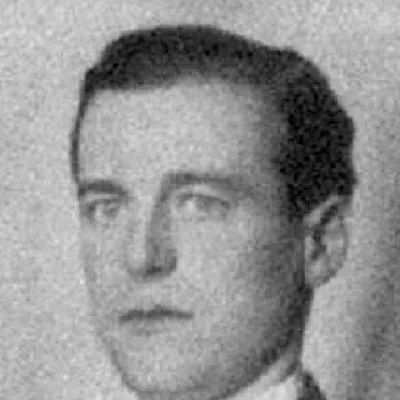
Gottfried von Bismarck-Schönhausen
Human Design Chart
Biography
From 1942, however, Bismarck had been opposed to the continuation of World War II, and had made contact with other members of the German aristocracy who were working against the Nazi regime – such as the Berlin police chief Wolf-Heinrich Graf von Helldorf, Colonel Claus Graf von Stauffenberg, and General Friedrich Olbricht – with the aim of starting negotiations with the western Allies. He was aware of preparations for the 20 July plot to assassinate Adolf Hitler, but was not directly involved in it.
After the failure of the plot, Bismarck's connections to the plotters were discovered. He was expelled from the SS and from the Reichstag. Because of his famous name and many powerful connections, however, he escaped the fate of most of the active plotters. He was not arrested until August and he was not tortured. In October he was acquitted of the charges against him by the People's Court, but was nevertheless sent to Sachsenhausen concentration camp, where he was relatively well treated. He was liberated by Soviet forces in April 1945.
On 14 September 1949 Bismarck and his wife were killed in a suspicious car accident in Verden an der Aller near Bremen, in the American Occupation Zone.
What does Manifesting Generator 5/1 mean for Gottfried von Bismarck-Schönhausen?
Manifesting Generator 5/1 — Design at a Glance
Gottfried von Bismarck-Schönhausen revealed himself as someone who possessed hybrid energy: the constant power of a Generator paired with the lightning-fast, step-skipping action capability of a Manifestor. His design suggested that he did not primarily initiate but rather responded to internal impulses. This reaction allowed him to quickly draw things into his life, yet it carried the risk of skipping important steps or overextending himself through parallel projects.
The mechanics of his manifesting Generator required a balance between speed and strategy. Without the clear 'yes' signal of his Sacral Center, this tendency led to frustration as missing steps had to be retraced. His design worked successfully when he regularly checked whether his inner authority still approved of current projects. In this state of alternation and 'play mode', Gottfried von Bismarck-Schönhausen could draw deep satisfaction from his work. The challenge was always not to use speed as a reason for chaotic multitasking but rather to channel it through conscious reactions to life. By learning to play with the diversity of his impulses instead of fighting against the pressure to finish everything at once, his energy became productive rather than frustrating.
Sacral Authority
Gottfried von Bismarck-Schönhausen did not base his decisions on cognitive analysis but on immediate physical resonance. His design called for him to wait for external stimuli and then check his body's response – a mechanism of Sacral Authority. This inner guidance was only possible for the Generator type, whose strategy of waiting directly merged with this authority, simplifying his decision-making process.
The validity of this reaction depended on his Emotional Center being open; emotional clarity did not take precedence in momentary decisions. Instead, truth manifested as a physical response: a grunt, hum or a felt surge of power. When his Sacral motor responded to an offer, he felt vital and energized. This enthusiasm was not a fleeting state but the sign that he could perform a task with joy and satisfaction without viewing it as duty-bound.
His design allowed him to fully immerse himself in his activities. The immediate, instinctive reaction of his body served as the sole reliable source for yes or no decisions. Through this connection with his inner motor, he could efficiently use his energy and move through life driven by a natural vitality that showed itself when he responded to what truly spoke to him.
The 5/1 Profile — Heretic / Investigator
Gottfried von Bismarck-Schönhausen revealed himself through a tension-filled interplay between profound internal research and magnetic outward projection. His Profile 5/1 combined the withdrawn tendency of the Researcher (Line 1) with the public role of the Hero (Line 5). This created a natural attraction: others actively sought him out for solutions, intuitively recognizing his reservoirs of knowledge. However, this dynamic carried a high risk of overextension. Without clear boundaries, exhaustion threatened to set in, similar to an expert who answers questions for hours and is left drained as new inquiries pour in.
Line 1 promoted his need for order, synthesis, and understanding of hierarchies and mutual dependence. Simultaneously, the energy of Gate 38 (Line 1) brought intuitive fighting and evaluation of life's worth into play, which fostered an aggressive reaction to influence when his autonomy was threatened. The challenge lay in energy management: he had to learn to say 'no' to protect his deep research work from exploitation by constant questioning from others. Only then could he maintain the balance between self-sufficiency and service to others without neglecting his own substance or falling into disorder and societal tensions.
Split Definition — Defined & Open Centers
Gottfried von Bismarck-Schönhausen was characterized by an extremely high, constant inner energy and structure. His design featured six defined centers: Ajna, Throat, Sacral, Spleen, and Root. This created a closed system of mental production (Ajna-Throat) and vital execution (Sacral-Root-Spleen). The defined centers provided consistent mental concepts, clear communication, vital energy, instinctive protection, and physical pressure to maintain the life impulse.
This stood in stark contrast to his four open centers: Head, G, Heart, and Solar Plexus. These were filled situationally by their environment. His open G-definition meant that identity and direction were not set but had to be initiated by correct environments. The open Heart Center led to a lack of willpower as an own resource, leading to the risk of promises that could not be kept. The open Solar Plexus Center absorbed emotional moods from the surroundings, while the open Head Center was vulnerable to mental pressure and confusion through external inspiration.
The mechanics of his design required him to “react” rather than “initiate.” His defined Sacral energy needed an external impulse to generate a Yes/No response. At the same time, his open centers made him dependent on initiation by others to find his identity and emotional clarity. The defined Spleen and Root provided a stable, instinctive protection mechanism against false initiations. The tension lay between the inner, constant power of his defined centers and the outer dependency on correct environments for his open areas. There was a risk of mental overload through his open Head Center despite clear mental production in Ajna.
Channels for clarity, curiosity, logic and powerful execution.
Gottfried von Bismarck-Schönhausen showed an internal dynamic swinging between the impulse to radical curiosity and a strict logical correction imperative. This tension shaped his essence: He was a storyteller who inspired through storytelling, yet he was driven by perfectionism that scrutinized every statement for its correctness.
This duality manifested concretely in two central channels. The Channel of Curiosity 11-56 connected his Thinking Center with his Expressiveness. This created a magical gift: Gottfried von Bismarck-Schönhausen could weave abstract ideas and philosophical contemplations into captivating stories. He was less interested in dry facts than in how these information stimulated the imagination of others. His narratives served to offer new perspectives – not as dogmatic truths, but as parables for reflection and further storytelling.
Simultaneously, the Channel of Judgment 58-18 connected his Root Center with his Spleen. This channel fueled an insatiable drive to question and correct patterns. It was a logical sentry that judged what was healthy or in balance. For Gottfried von Bismarck-Schönhausen, this meant that his creativity was channeled through a strong perfectionism. He sought out flaws in systems and aimed to fix them to create satisfaction for the collective. This process could also be experienced as inner dissatisfaction or critical questioning of all established structures.
This intellectual tension stood in contrast to his physical presence. The Channel of Charisma 34-20 endowed him with a powerful, manifesting energy. His sacral life force directly penetrated his Throat Center, driving him to act immediately and charismatically. This energy was only effective when guided by inner confirmation; otherwise, it threatened to break out chaotically.
Additionally, the Personality Channel of Structuring 43-23 contributed that his innovative thinking often appeared as an outsider. His insights were mutative and efficiency-enhancing but were only accepted by the environment if communicated at the right time with clear strategy. Often he had to wait until others were ready to understand his unique perspectives, which sometimes made him appear isolated.
Overall, Gottfried von Bismarck-Schönhausen lived in the tension between telling inspiring stories, correcting judgment, and powerful manifestation while gently bringing his individual genius into the world.
Individual Circuitry — Circuit Signature
Gottfried von Bismarck-Schönhausen showed two separate, autonomous functional blocks. The first block connected Ajna with Throat Center via the Channel “Structuring.” This generated a pulsating, acoustic creativity based on individual mutation and structuring ability. Here it was about one’s own path and new knowledge acquisition.
The second block included Spleen, Root, as well as Sacral Centers. Through the Channels of Judgment (Spleen-Root) and Charisma (Sacral-Throat), this unit worked focused, visually, and logically-strategically. It was based on intuition and the ability to self-affirm in the here and now.
As there was no direct connection between these two groups, they stood as separate tools at his disposal. Gottfried von Bismarck-Schönhausen did not need to integrate these worlds; instead, he used the pulsating creativity of one block parallel to the focused strategy of the other. The Knowledge Circuit supported individual expression while the Understanding and Integration Circuit provided logical insights and survival strength. This separation allowed him to clearly distinguish emotional waves of creativity from the cool ratio of strategy and use them where they were effective.
Left Angle Cross of Upheaval 1
Gottfried von Bismarck-Schönhausen was marked by the imprint of the left cross of revolution 1 in his Human Design. This configuration indicates a profound inner dynamic aimed at transformation and new beginnings. It described not just external events but a fundamental attitude towards change: Gottfried von Bismarck-Schönhausen was predisposed to question old structures and forge new paths, even if this came with internal resistance or discomfort.
The left cross of revolution 1 acts as a catalyst for transformations that often come unexpectedly. It promoted a readiness to break away from the familiar to make way for something new. For Gottfried von Bismarck-Schönhausen, this meant he was always open to upheavals in his life, even if they were challenging. The energy of this cross supported him in seeing crises not as an end but as opportunities for renewal.
Without specific events mentioned, it can be noted: This configuration shaped Gottfried von Bismarck-Schönhausen's approach to change – always with an eye on the possible beyond what exists. His ability to embrace upheavals and transform them into personal growth was a central feature of his design.
Saturn Return · Uranus Opposition — Life Cycles
Gottfried von Bismarck-Schönhausen showed a development line marked by two sharp astrological turning points: the Saturn return cycle from age 29 to 31, and the Uranus opposition. The first Saturn return traditionally marks the phase of consolidation and identity formation in early adulthood, where years of groundwork solidify into a stable structure. This was concretely reflected: In 1932, at 31 years old, he joined the NSDAP – an act to consolidate his public role and political identity within this cycle.
Later, the Uranus opposition acted as an opposite pole. This aspect stands for sudden breaks, liberations or radical upheavals in life, often linked with a crisis of existing structures. For Gottfried von Bismarck-Schönhausen, this point became active around his 43rd year: In 1944, he was expelled from the NSDAP and the Reichstag. This event highlighted the disruptive power of the Uranus opposition, abruptly dissolving previously established positions and forcing a deep transformation. The contrasts between the stabilizing effect of the Saturn return and the destructive dynamics of the Uranus opposition formed the framework of his cyclical development in these decades.
Manifesting Generator · Sacral Authority — Synthesis
Gottfried von Bismarck-Schönhausen lived a life deeply influenced by an inner dynamic between logical structuring and spontaneous reaction. The combination of defined Root, Sacral, and Throat Centers with open Head and Heart Centers points to someone who had a strong internal power for manifestation (guided by sacral responses) but was also open to external influences and conditioning. This constellation led to the ability to recognize and correct patterns (Gate 18, Channel 58-18), while curiosity (Gate 11, Channel 19) drove him to gather and disseminate knowledge – a process of constant analysis and refinement. The connection between Ajna and Throat Center allowed him to express his insights, yet he always relied on the inner guidance of his body to act authentically.
A central paradox in his design lay in the tension between the need for control and inherent openness to external stimuli. While the defined Root Center created a drive for self-confirmation and asserting one's will, the open Heart Center prevented a lasting fixation on personal values or goals. This discrepancy led to an ongoing search for validation from outside while he simultaneously possessed the ability to recognize patterns in the world and initiate change – a dance between the need for inner stability and acceptance of life's fluid nature.
4 Defined Channels
Incarnation Cross - Left Angle Cross of Upheaval 1
Solar Return
The Solar Return shows the moment when the sun returns to its exact birth position - your personal solar year.
Life Cycles
Discover the life cycles with a detailed triple view (birth chart, cycle chart, composite).
Human Design Profile
- Strategy
- To respond - wait for something to respond to
- Authority
- Sacral Authority
- Profile
- 5/1 - Heretic / Investigator
- Definition
- Split Definition
- Incarnation Cross
- Left Angle Cross of Upheaval 1
- Date of Birth
- 29.03.1901 05:00
- Place of Birth
- Berlin, Germany
Frequently Asked Questions
What was the Human Design type of Gottfried von Bismarck-Schönhausen?
What Human Design Profile did Gottfried von Bismarck-Schönhausen have?
Which Authority guided Gottfried von Bismarck-Schönhausen?
What incarnation cross was decisive for Gottfried von Bismarck-Schönhausen?
When was Gottfried von Bismarck-Schönhausen born?
Discover your own Human Design
Are you also a Manifesting Generator? Find out in a personal reading how to unfold your multi-talents and direct your energy wisely.
More Personalities
Back to overviewAldair

Alizée

Angeli

Arletty
Artus

Balthus