
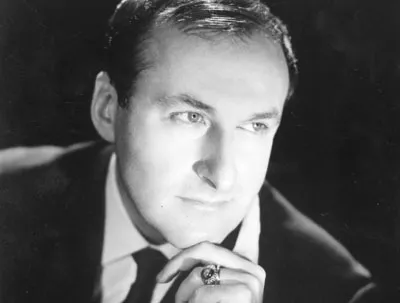
Hans Holzer
Human Design Chart
Biography
The son of a businessman, he married Countess Catherine Buxhoeveden 29 September 1962; two kids; divorced on 2 June 1986.
From 1920, he was a freelance writer, editor, playwright and composer. In 1949 he became a drama critic for The London Weekly, a job which lasted 11 years. As a parapsychologist, he has been a guest on hundreds of national and local TV and radio programs as an expert on ESP.
What does Generator 3/5 mean for Hans Holzer?
Generator 3/5 — Design at a Glance
Hans Holzer revealed himself as someone who unleashed his immense endurance and strength not through independent initiatives, but through reactive actions. His Generator design established a fundamental structure that relied on a specific energy source: the Sacral Center. This center acted as a motor that only ran reliably when he responded to external signals from the environment. His motto was therefore not 'initiate', but 'react'.
This mechanism created two clear pitfalls. When Hans Holzer did things that went against his inner inclinations, he burned his valuable energy and tended towards exhaustion. Conversely, he suffered when he was prevented from doing his actual work, even though his inner self was still full of drive. The key to his effectiveness lay in the ability to wait for a life signal and listen to whether his gut feeling gave a clear 'yes'. Only this reaction to impulses, rather than the independent start of projects, allowed him access to his full strength.
Living in harmony with this strategy, he reacted from the gut and acted consistently on the received signals. This rewarded his design with a deep feeling of fulfillment and satisfaction. Conversely, if he went against this nature and tried to force things or initiate without waiting for the inner impulse, this resulted in persistent frustration and a noticeable lack of energy sooner or later. His strength therefore lay in being the impulse giver who waited for the world to then respond with full force.
Emotional Authority
Hans Holzer showed a decision-making stance that did not rely on immediate clarity, but on overcoming emotional waves. His design determined Emotional Authority as an inner compass. Since the Emotional Center was defined, he was subject to a constant up and down of feelings that colored the perception of the world. What appeared inspiring in one moment could be felt as negative in the next. These fluctuations, however, were not an ultimate truth, but mere snapshots.
The mechanics of his authority required that he take time to let decisions mature. Quick, spontaneous judgments based on current mood risked negative consequences, as the first impression was often misleading. Instead, his path required patience and the conscious overnighting of important questions. Through this distancing, the intense feelings subsided, thereby establishing emotional distance and thus true clarity. This process was essential for long-term life decisions. Only after going through this emotional phase could he gain composure and make the deeper, more comprehensive insight that reflected his inner truth. His strength therefore did not lie in speed, but in the ability to ride out his own emotional wave until the clear answer emerged.
The 3/5 Profile — Martyr / Heretic
Hans Holzer's design sketched the figure of the heroic adventurer and humorous rebel. As a person of Profile 3/5, the experimenter and hero, he lived a fundamental attitude based on radical self-determination: he believed in nothing initially, but had to personally try everything. This Line 3, marked by Gate 41, defined learning as a pure process of experience through adaptation and trial and error. It was an individual path that often went hand in hand with material ambition and strict discipline to achieve efficiency.
From these numerous experiments – and the inevitable failures – Hans Holzer accumulated a rich fund of practical knowledge. This formed the basis for his role of Line 5, the hero. He used his self-earned insights to solve other people's problems. This competence from practice was attractive to his environment; people sought him out to learn from his experiences. This heroic role flattered his ego, but carried a painful flip side: if he failed in public experiments, it happened in front of everyone.
The fifth line, represented by Gate 28, also posed the question of the value of the life struggle. Here it was about whether the effort for the struggle was worthwhile. Hans Holzer navigated in a field that could be marked by manipulation and conflicts between groups. His intuitive ability lay in dissolving alliances that no longer served, and joining stronger alliances to prevail in the collective struggle.
Triple Split Definition — Defined & Open Centers
Hans Holzer revealed himself as someone whose inner engine generated a constant, vital energy that he had to channel through reactions to life. His defined Sacral Center secured this power source, provided he waited for the question rather than initiating. Simultaneously, a deep emotional wave shaped his decisions; his defined Solar Plexus required patience until clarity set in, rather than acting impulsively.
His mental system was highly active: The connection between Head and Ajna Centers created a constant pressure to ask and answer questions. This mental stream flowed directly into his defined Throat Center, enabling him to articulate his thoughts and concepts reliably. Furthermore, he had a firm identity and direction through his defined G Center, which helped him guide others without losing himself. His intuition, steered by his defined Spleen Center, as well as the constant life pressure of his defined Root Center, rounded off a design geared towards endurance and momentary perception.
In contrast, his open Heart Center lacked the constant energy for willpower and competition. This led to vulnerability in wanting to prove himself through promises, to demonstrate his worth. The typical non-self pattern tended to think: “I must have control to be valuable.” Hans Holzer was exposed to this conditioning by possibly overextending himself to meet expectations, rather than using his inner authority. The challenge lay in not promising what he could not keep and acknowledging that his value did not depend on external performance but on his authentic reaction and emotional clarity.
Channels for insight, leadership, care, impulse and abstraction.
Hans Holzer showed himself as someone seeking logical leadership with collective influence. The Alpha Animal Channel 7-31 connected his G Center with his Throat Center. This created a tendency towards rational guidance based on tested patterns. He did not act as a lone ruler but gained trust to guide others towards a secure future perspective. His voice carried weight, based on a role understanding and nurturing societal structures.
Simultaneously, Hans Holzer had the ability to structure innovative perspectives. The Channel of Structuring 23-43 connected his Ajna Center with his Throat Center. Through the Gate of Insight, he received spontaneous breakthroughs, which he processed and articulated through the Gate of Assimilation. This enabled him to formulate complex ideas so clearly that they changed others' thinking and promoted efficiency. His expression was unique and often forward-thinking, but it required patience until the collective was ready to accept these new viewpoints.
A deep need for preservation and care shaped his actions. The Channel of Preservation 27-50 connected his Sacral Center with his Spleen Center. This gave him a natural authority in the realm of protection and provision. He felt responsible for the well-being of his community and defended traditional values securing stability. His energy focused on maintaining infrastructure and relationships, always ensuring that his own resources were conserved to act sustainably.
The emotional intensity of his drive for experience was pronounced. The Channel of Recognition 30-41 connected his Solar Plexus Center with his Root Center. This generated a strong impulse to experience and feel new situations. His restlessness drove him to test boundaries while his emotional wave gave him the necessary time to understand and process the depth of these experiences.
Mentally, he constantly sought the underlying meaning. The Channel of Abstraction 47-64 connected his Head Center with his Ajna Center. This led to a continuous process of reflecting and interpreting. He filtered every experience through a kaleidoscope of mental images to find a coherent narrative. This drive to understand the mysterious could be confusing, but often led to inspiring insights he shared with others.
Collective Circuitry — Circuit Signature
Hans Holzer's design leaned towards analytical structuring and the protection of the existing, flanked by a separate, emotional reflection. This triple definition created three parallel, not directly connected energetic streams.
The Knowledge Circuit connected his Ajna and Throat Centers. This allowed him to translate inner thoughts into clear, structured language. The energy was pulsing and acoustic, driven by the desire to affirm his identity through new expression.
Parallel to this, the Understanding Circuit, connecting his Throat and Identity Centers, was active. Here, the sharing of logical, rational insights was paramount. It was an emotionless ratio aimed at guiding society towards a better future through focus and strategy.
A third, isolated stream formed the Sense-making Circuit. It consisted of two separate parts: Head and Ajna Centers on one side, Solar Plexus and Root Centers on the other. This configuration promoted abstraction and recognition of patterns, coupled with a wave-like, cyclical emotion aimed at deriving meaning from the past and sharing this experience with the collective.
Finally, the Protector Circuit connected his Sacral and Spleen Centers. This gave him a primal, instinctive power for preservation and maintenance. It was about protecting family and genetic heritage, providing sustenance and care, timeless and independent of external circumstances.
These four circuits shaped Hans Holzer as someone who shared logically structured insights, emotionally reflected, and instinctively protected, with these areas functioning as separate, coexisting forces.
Right Angle Cross of the Unexpected 4
Hans Holzers design was marked by the right cross of the Unexpected 4. This configuration described a lifespan characterized by unexpected turns and sudden insights. It was not a linear progression but a process driven by spontaneous events.
In Human Design, this cross represents a specific kind of experience: life did not offer predictable patterns but rather demanded constant adaptation to new, often surprising circumstances. Hans Holzer demonstrated the ability to use this unpredictability not as a disturbance but as a driving force. The energy of this design acted as a catalyst for moments of clarity that occurred precisely when they were least expected.
This structure meant that traditional planning often reached its limits. Instead, the strength lay in reacting to the unplanned. Each unexpected event contributed to developing a deeper understanding of his own nature. Hans Holzers path was thus marked by a continuous openness to the new that appeared without announcement. The mechanics of this cross suggested that true growth did not come through control but through the acceptance and integration of the unexpected. This characterized his entire existence as a continuous encounter with the unexpected.
Saturn Return · Uranus Opposition · Chiron Return · 2nd Saturn Return — Life Cycles
Hans Holzers design indicated a tendency towards sudden, often unexpected turning points that structurally changed his life. This dynamic was particularly evident in the second half of his life, when external circumstances forced his inner development. In Human Design, the Uranus Opposition marks a cycle of liberation and new beginnings, often occurring around the age of 42. During this phase, old bonds or structures dissolve to make way for a new, often radically different life direction. It is a moment of expansion, in which the individual steps out of familiar patterns to open up to a greater, previously inaccessible truth or freedom.
In 1962, at the age of 42, Holzer married Catherine Geneviève Buxhoeveden. This event was not a random step but a concrete expression of this mechanical configuration. The Uranus Opposition acted here as a catalyst for a deep, personal transformation that became visible through the new partnership. It was a moment of breaking free from the previous existence form to enter a new, shared reality. The mechanics described here not only a romantic connection but a structural realignment that profoundly shaped Holzers path and allowed him to unfold in a new way. This cycle underscored the necessity of facing sudden changes rather than resisting them, and showed how external events could accelerate inner growth processes.
Generator · Emotional Authority — Synthesis
He was a Generator, driven by his defined sacral energy and the Profile of an Explorer and Hero (3/5) to deeply feel the need to gather experiences himself and then pass them on. This combination pushed him to constantly explore new paths and make his learned knowledge accessible to others – a continuous cycle of exploration and dissemination, fueled by the endurance of his sacral center and the drive to learn through his own actions. The defined Head Center generated a constant mental pressure to ask questions and understand things, which prompted him to undertake deep investigations and gave him the ability to inspire others.
At the same time, he lived in a tension field between his emotional center and the Knowledge Circuit. The emotional authority required time to mature decisions and process feelings, while the Knowledge Circuit urged him to constantly discover and transform new things. This dynamic led to an internal interplay between the need for emotional clarity and the drive to expand the boundaries of the known – a tension that was evident in an event when a relationship entered a phase of intense change (Uranus Opposition).
5 Defined Channels
Incarnation Cross - Right Angle Cross of the Unexpected 4
Solar Return
The Solar Return shows the moment when the sun returns to its exact birth position - your personal solar year.
Life Cycles
Discover the life cycles with a detailed triple view (birth chart, cycle chart, composite).
Human Design Profile
- Type
- Generator
- Strategy
- To respond - wait for something to respond to
- Authority
- Emotional Authority
- Profile
- 3/5 - Martyr / Heretic
- Definition
- Triple Split
- Incarnation Cross
- Right Angle Cross of the Unexpected 4
- Date of Birth
- 26.01.1920 07:00
- Place of Birth
- Vienna, Australia
Frequently Asked Questions
What was Hans Holzer's Human Design type?
What profile did Hans Holzer have?
Which authority guided Hans Holzer?
What incarnation cross did Hans Holzer have?
When was Hans Holzer born?
Discover your own Human Design
Are you also a Generator? Find out in a personal reading how to use your sacral energy correctly and discover deep satisfaction.
More Personalities
Back to overviewAaliyah

Alexia

Angèle

Anne-Marie

Arcángel

Arno
