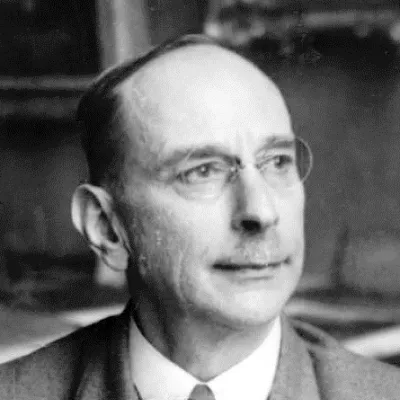
Hans Posse
Human Design Chart
Biography
Posse died on 7 December 1942 of oral cancer in a clinic in Berlin at age 63. His funeral was a high state event to which Hitler invited the directors of all art museums in the Reich; Propaganda Minister Joseph Goebbels delivered the eulogy.
Hans Posse as a Generator 4/1 in Human Design
Generator 4/1 — Design at a Glance
Hans Posse revealed himself as someone with remarkable inner endurance. His design indicated a tendency towards great work capacity, comparable to a strong working horse that generates energy for its tasks. However, this strength was not an inexhaustible reserve but depended on whether he expended it on things that truly interested him.
As a Generator, Hans Posse had plenty of sacral energy. The key mechanism in his life consisted of not initiating himself but reacting to signals from his environment. His strategy was to wait for an external offer or request and then wait until his inner self – the Sacral Center – gave a clear “yes”. Only when this internal impulse was present should he respond with action.
If Hans Posse lived by this principle, he was rewarded with a deep sense of fulfillment. His energy would then flow naturally and effectively. Conversely, ignoring this signal led to two typical pitfalls: either he wasted his strength on things that did not interest him, which exhausted him over the long term, or he was prevented from pursuing his heart project even though he still had plenty of power left. In such cases, frustration and a lack of energy would arise. His path to contentment therefore lay not in constant pushing forward but in the ability to react – intuitively, when the inner resonance matched.
Sacral Authority
Hans Posse lived as a Generator whose decision-making was shaped by Sacral Authority. This internal guidance did not operate in his head but in his body: In response to external stimuli, he felt an immediate reaction – often as a gut feeling, a quiet rumbling or sudden surge of energy. When this sacral resonance was positive, he felt vital and energized; then he could immerse himself in activities with great enthusiasm without needing external purpose. His design saw him reacting to life rather than initiating it, which kept his energy inexhaustible as long as he followed this rhythm.
Especially relevant was the connection to the Spleen: As his Spleen Center was activated and linked to the Sacral Center, Hans Posse had a supportive authority. This allowed for quick, spontaneous reactions and direct access to his instinctive perception. He could reliably rely on this physical well-being, which further stabilized his decisions. The condition for this was an open Emotional Center; since sacral authority only works in Generators with this constellation, it greatly simplified his process. Thus, Hans Posse acted through internal confirmation and experienced joy and contentment as natural companions to his work, driven by a deep, physical resonance with his environment.
The 4/1 Profile — Opportunist / Investigator
Hans Posse revealed himself through his 4/1-Profile as someone whose fundamental nature was firmly anchored. As the only fixed profile, his inner structure was barely changeable; he could not and would not leave his individual path. This often appeared externally like stubbornness or inability to criticize, as well-meaning advice for change was rejected to protect his own heart. Those who did not fully accept him cautiously excluded themselves from his emotional space.
This attitude resulted from the combination of Line 4 and Line 1. The fourth line attracted people who told stories to him. Hans Posse took on their emotional burden, leading to deep exhaustion. He had difficulty rejecting or stopping this influx when he listened too much. This emotional strain was intensified by Pluto in Gate 33: After phases of renewal followed exhaustion and a pressing need for silence to reflect. Venus in Fall underscored the depletion of feelings as well as withdrawal.
At the same time, Line 1 determined his inner attitude through patience and introspection. Here there was no development period; insights were either present or not. Without this depth, he risked being perceived as a spinner. The impatience to taste fruits before completion stood in contrast to necessary calmness. When Hans Posse recognized himself and his topic, he became stable like a rock in the storm. In this security, he could teach others, as his insights were deeply rooted and authentic.
Split Definition — Defined & Open Centers
Hans Posse appeared as a person with a consistent, trustworthy mental function and a clear sense of identity. His defined Ajna Center ensured that he established concepts in a uniform manner and was hard to influence from the outside; his mind served as an external authority conditioning his mental field aura. This cognitive stability was complemented by a defined G Center, which gave him a firm self-identity and a secure sense of direction in life. He could love others without becoming dependent and showed them natural new perspectives.
His energy source lay in the defined Sacral Center. As a Generator, Hans Posse had a constant vital force that he could only use correctly by reacting to external initiatives. His strategy was not to take the first step but to wait until life called him before deciding with a yes or no answer from his gut. This protected him from exhaustion and frustration that would have arisen if he had made mental decisions about his sacral response. Additionally, a defined Spleen Center supported his spontaneous body awareness; he trusted intuitive signals in the present moment to maintain health and well-being rather than conducting rational analyses.
In contrast, Hans Posse was vulnerable to conditioning through open centers. His open Head Center made him susceptible to external mental pressure and inspiration; he tended to identify with others' questions or seek answers that were not his own. The lack of consistent willpower in his open Heart Center could push him into a cycle of promises and disappointment if he tried to prove his worth through performance. His open Solar Plexus absorbed foreign emotions, causing him to fluctuate between happiness and depression without recognizing these feelings as his own. Finally, his open Root Center amplified external stress, driving him constantly to seek distraction or new experiences to escape the adrenalized pressure.
Channels for leadership, insight, values and awareness.
Hans Posse's design showed that he understood leadership not as sole rule but as a collective process. The Alpha Animal Channel 7-31 connected his G Center with the Throat Center and shaped a logical, trust-based leadership style. This configuration required Hans Posse to be invited before taking on a guiding role; his authority resulted from understanding existing patterns and safely steering society into the future rather than mere power assertion.
Parallel to this, the Awakening Channel 10-20 also linked his G Center with the Throat Center. This channel emphasized the importance of authentic presence in the here and now. For Hans Posse, this meant that his self-affirmation and survival depended on accepting and loving himself in every moment. His voice carried a clear alertness inspiring others to live their own identity without direct instruction.
In the realm of thought and expression, the Channel of Structuring 23-43 and the Channel of Preservation 27-50 shaped his work. The Channel of Structuring connected Ajna Center with Throat Center, allowing Hans Posse to formulate innovative insights and new perspectives in a way that promoted efficiency. His thinking often felt ahead of its time; he had to learn patience until his unique ideas were recognized by the collective to avoid rejection. Simultaneously, the Channel of Preservation fostered a deep connection to the tribe. Through linking Sacral Center with Spleen Center, Hans Posse showed a natural need for care and preserving traditional values. His aura attracted trust, yet he had to learn to give his energy only when invited to prevent overloading himself. This combination of innovative structuring and tribe-centered preservation formed his unique contribution to the community.
Individual Circuitry — Circuit Signature
Hans Posse's design revealed him as someone who translated inner visions into clear structure while seeking instinctive safety. His Knowledge Circuit connected Ajna with Throat Center (Channel 43-23). This shaped a capacity for organizing complex thoughts and expressing them acoustically precisely—a pulsating flow of creativity to linguistic manifestation. Parallel, his Understanding Circuit worked through Channel 31-7 between Throat and Identity Centers. Here, rational, emotionless logic found expression: Hans Posse shared strategic insights to shape the future free from conditioned patterns. These two circuits met in the Throat Center but did not energetically connect further.
A separate current flowed through his Warrior Circuit (Channel 27-50), linking Sacral and Spleen Centers, giving him a primal force for preserving and nurturing his genetics and environment guided by intuitive assessments of safety. Additionally, the Integration Channel 20-10 between Throat and Identity Centers helped draw strength from life reactions and stabilize it in the
Juxtaposition Cross of Listening
Hans Posse demonstrated a pronounced ability to take on different perspectives and voices without immediately evaluating or integrating them. His design laid the foundation for deep listening that was not just passive hearing but an active, almost reflective stance towards other people. This characteristic allowed him to act as a neutral space in social situations where others felt safe expressing their thoughts and feelings.
The Listening Juxtaposition Cross described this specific configuration in Human Design: It referred to the ability to hold different views side by side without immediately summarizing them into his own position. For Hans Posse, this meant that he often acted as a mediator or observer in conversations, perceiving nuances and differences between participants. This trait shaped his interactions with others and contributed to him taking roles based on understanding and empathy.
Without expressing personal judgments or evaluations, Hans Posse created through listening a space where others felt heard and understood. This ability was not active action in the traditional sense but a quiet presence that enabled others to more clearly recognize their own thoughts and feelings. His design thus promoted support through attention and openness rather than leadership or initiative.
Saturn Return · Uranus Opposition · Chiron Return · 2nd Saturn Return — Life Cycles
Hans Posse's life phases were marked by clear structuring and building long-term responsibility, aligning with his Saturn Returns rhythm which combined inner maturity with outer consolidation. In 1910 at age 31, the first Saturn Return occurred: Posse became director of the Picture Gallery in Dresden. This period marked a transition from preparation to established leadership role, typical of years of work culminating in a solid result.
Later around his 50th year, his design entered the Chiron Return phase, a cycle of fulfillment and bloom where inner destiny visibly unfolds in life. In 1931 at age 52, Posse opened the New State Picture Gallery with holdings up to German Impressionists. This was not merely a professional step but concrete formation of his life purpose: creating a space embodying his vision of art history and making it experiential for others.
However, the second Saturn Return around age 58 brought a harsh test. In 1937 more than 50 paintings from the Modern Gallery were confiscated as 'degenerate art'. This conflict between Posse's built-up structure and external political pressures highlighted the tension often arising in this phase: one's own achievement is attacked or questioned, necessitating deep inner confrontation with the meaning of what was created.
Generator · Sacral Authority — Synthesis
Hans Posse was a Generator whose life was deeply marked by sacral energy and an unstoppable drive to action. His authority lay in gut instinct, immediate reaction to external stimuli – an internal 'yes' or 'no', guiding him through decisions as long as it did not hinder work on his heart project. The profile as networker and researcher points to a deep-rooted individuality coupled with cautious approach to changes initiated from outside. He disliked influences that questioned his inner essence.
A central paradox lay in the combination of defined mental structure (Ajna Center) and knowledge circuit. On one hand, he possessed the ability to form concepts and influence others through thoughts – a logical leader (Channel 31/7). On the other hand, he was oriented towards a special kind of reception by Listening Juxtaposition Cross. This led to tension between developing his own visions and communicating them versus perceiving and adapting to the world from various perspectives – an interplay evident in professional peaks (1910, 1931) as well as crises (1937).
4 Defined Channels
Incarnation Cross - Juxtaposition Cross of Listening
Solar Return
The Solar Return shows the moment when the sun returns to its exact birth position - your personal solar year.
Life Cycles
Discover the life cycles with a detailed triple view (birth chart, cycle chart, composite).
Human Design Profile
- Type
- Generator
- Strategy
- To respond - wait for something to respond to
- Authority
- Sacral Authority
- Profile
- 4/1 - Opportunist / Investigator
- Definition
- Split Definition
- Incarnation Cross
- Juxtaposition Cross of Listening
- Date of Birth
- 06.02.1879 01:15
- Place of Birth
- Dresden, GER
Frequently Asked Questions
What was Hans Posse's Human Design type?
Which Profile did Hans Posse have?
What Authority did Hans Posse have?
What incarnation cross did Hans Posse have?
When was Hans Posse born?
Discover your own Human Design
Are you also a Generator? Find out in a personal reading how to use your sacral energy correctly and discover deep satisfaction.
More Personalities
Back to overviewAaliyah

Alexia

Angèle

Anne-Marie

Arcángel

Arno