
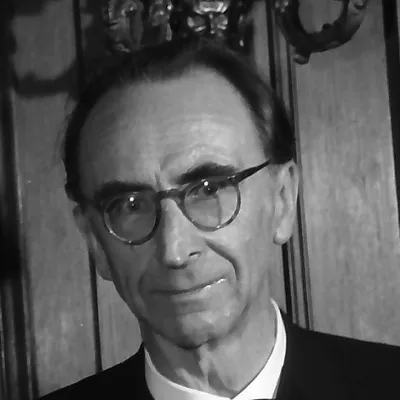
Hans Rosbaud
Human Design Chart
Biography
Rosbaud’s mother was an accomplished pianist who personally handled her son’s early musical training. He studied classical languages and culture and attended Music Society School in Graz. Eventually he enrolled at the Hochschen Conservatory in Frankfurt am Main where he distinguished himself as a pianist, composer and conductor. His professional career began in 1921 in Mainz. From a group of 80 candidates, he was chosen to become the director of the municipal school of music as well as to conduct their symphony concerts, which he did until 1930. He was senior director of music at Frankfurt Radio until 1937. In 1945, he became artistic director of the Munich Philharmonic Orchestra. He took the same position at South-West Germany Radio Orchestra in 1948 and was instrumental in making it one of the best contemporary music ensembles. He was active as its conductor until his death on 29 December 1962, Lugano.
Hans Rosbaud as a Generator 3/5 in Human Design
Generator 3/5 — Design at a Glance
Hans Rosbaud revealed himself as someone with immense endurance who best utilized his strength when reacting to impulses from his environment. As a Generator, he possessed abundant sacral energy that could drive him like a strong workhorse – provided the task aligned with his inner interest. His strategy did not lie in independent initiation but rather waiting for his gut feeling to signal a clear 'yes'. Upon receiving this internal response, he acted with full energy and found deep satisfaction.
However, danger lurked in two directions: either wasting his strength on things that didn't truly move him, leading to exhaustion, or being held back from his heart project despite still having plenty of drive. If Hans Rosbaud lived in harmony with this design and reacted instead of initiating, nothing could stop him. However, if he initiated against his inner compass, sooner or later he would encounter persistent frustration and a noticeable energy deficit. His path to fulfillment thus lay in recognizing the right impulse and responding with action rather than fighting against the current.
Sacral Authority
Hans Rosbaud was a Generator whose decision-making was shaped by Sacral Authority. As the only type, his strategy could simultaneously be his inner authority, simplifying his process. A prerequisite for this was an open Emotional Center. His truth did not manifest in the head but as a physical reaction to external stimuli: a 'gut feeling' or surge of energy. These signals often appeared as sounds like grunting, humming, or groaning 'Hmm'. When his sacral motor engaged, he felt vital and alive. He then had seemingly inexhaustible energy and tackled his work with great enthusiasm. Rosbaud was born to walk through life with joy and satisfaction. He immersed himself in his tasks without needing to adhere to a rigid purpose.
Additionally, the Spleen Center acted as an auxiliary authority. Since it was activated and possibly directly connected to the Sacral Center, this allowed particularly quick and spontaneous reactions. Rosbaud had immediate access to his physical well-being and instinctive perception. He relied on this instinct line reliably, strengthening his ability for instant decision-making. This configuration described a lifestyle that set its sights on spontaneous energy bursts and inner confirmation rather than intellectual planning or emotional waiting periods.
The 3/5 Profile — Martyr / Heretic
Hans Rosbaud's design inclined him towards experimental action paired with the need to make the insights gained accessible to others. As a person of Profile 3/5 – Experimenter and Hero – he primarily learned through personal experimentation. The third line demanded that he not rely on preconceived beliefs but test everything himself. This process of adaptation through trial and error was central to his development; he had to practically experience the world to understand it.
This accumulated experience formed the basis for the fifth line, the Hero Line. Hans Rosbaud emerged as someone who created order from personal confusion and resulting mistakes to offer solutions to others. His appeal rested on this treasure of practical life experience that he presented. Others projected onto him the role of savior or expert, which flattered but also put pressure on him. Failing in public could therefore be particularly painful, breaking these projected expectations. His path lay in developing clear, practical answers through his own mutation and timing from confusion, then passing them on – not as theoretical knowledge but as lived wisdom through mistakes.
Split Definition — Defined & Open Centers
Hans Rosbaud's design showed a tendency towards constant mental pressure and deep physical endurance. He was someone who asked questions and formed concepts without the immediate need to turn them into actions – a trait resulting from his definition between Head and Ajna Centers. This connection created a permanent inspirational drive that made him understand and grasp things. Since there was no direct energy available for implementing these thoughts, it would have been frustrating for him to fight against this mental resistance; instead, he acted as an inspiration source for others.
His defined Sacral Center gave him immense vital energy, felt like a constant hum within him. However, this energy was only available when he waited and responded to external stimuli rather than initiating himself. His defined Root Center provided a steady, adrenalized pressure to maintain the life impulse and move forward in the world, helping him tackle existential challenges with logical or cyclical structures.
In contrast, his undefined Throat Center revealed an openness to forcing attention through speaking. Without the right strategy, he tended to question whether he was noticed and could suffer under the compulsion to say something to avoid becoming invisible. His open G Center meant that he did not carry a fixed identity; he relied on being initiated by his environment to find direction and love. The open Heart Center made him vulnerable to trying to prove his worth through promises or competition, often ending in frustration. His undefined Solar Plexus absorbed the emotions of others, putting him at risk of personalizing foreign moods and feeling emotionally unstable. Finally, his open Spleen Center carried a fundamental survival fear that led him to cling to things not serving him just to simulate a sense of security rather than trusting spontaneous decisions.
Channels for evolutionary change and mental abstraction.
Hans Rosbaud's design showed a tendency towards deep, often unexpected change paired with a mind eager to translate experiences into coherent stories. This configuration marked him as someone who endured internal tensions until clarity set in.
Channel of Mutation 60-3 connected his Root Center with the Sacral Center. Through Gate of Limitation (60) and Gate of Order (3), a pulsating energy emerged that promoted evolutionary change. This mechanism generated periods of inner tension and melancholy when no new impulses arrived. Hans Rosbaud had to learn to accept this limitation and not fight against the silence, but patiently wait for the next impulse from the Sacral Center. This channel conditioned his environment and brought forth innovations as soon as the internal pressure could be released.
Parallel to that, Channel of Abstraction 64-47 shaped his mental landscape. It connected Head with Ajna Centers through Gate of Confusion (64) and Gate of Understanding (47). His mind filtered every experience through a kaleidoscope of mental images to recognize patterns. This process could lead to significant confusion as he constantly sought an underlying story. However, the reward for this patience was sudden clarity and the ability to share inspiring perspectives or stories with others, even if the path there seemed chaotic.
Additionally, Gates like 56 (Inspiration through vivid representation) and 50 (Protective reflex for values and traditions) contributed to complexity. Gate 63 (Doubt as drive towards understanding) and Gate 52 (Focused concentration on pattern correction) promoted deep thinking about security and improvement. Gate 29 (Persistence in the Sacral Center) conveyed the need to accept challenges, while Gate 53 represented a desire for freedom and new developmental cycles. Together, these elements created a profile that swung between chaotic inspiration and structured insight.
Individual Circuitry — Circuit Signature
Hans Rosbaud's design showed an inclination towards inner transformation manifesting in two separate but parallel power fields. As someone with Split Definition, he did not have a continuous energetic connection between these areas; they existed as independent systems alongside each other.
In the Knowledge Circuit, Channel of Mutation connected Sacral and Root Centers. This configuration promoted the ability to break established patterns and take new paths. The energy was pulsating and acoustically marked, with creativity and some melancholy accompanying individual identity expression. Here it was about gaining new knowledge and transforming it.
Simultaneously, in the Meaning Circuit, Channel of Abstraction between Head and Ajna Centers operated. This area focused on emotions and experiences from the past. The energy ran cyclically, with clear beginnings, middles, and ends. It served to reflect on past events, give them meaning, and share these insights visually and emotionally with the collective.
Both circuits shaped Hans Rosbaud differently: One drove towards innovation and individual expression, while the other called for processing of the past and communal learning. Since the groups were not connected, these impulses did not experience direct energetic mixing but remained as separate yet equally important life aspects.
Right Angle Cross of Laws 2
Hans Rosbaud's Human Design showed the signature of the right cross of laws. This configuration combined a deep, often silent inner authority with the drive to carry these truths outward and pour them into concrete structures or teachings. It was not just theoretical knowledge but rather the need to transform abstract principles into tangible forms that others could apply.
The term 'laws' points towards an order that transcends the individual. Hans Rosbaud demonstrated himself as someone who recognized universal patterns and made them useful for his environment. His energy focused on creating clarity and translating complex connections into understandable rules or systems, often through direct communication or by establishing frameworks within which others could act.
The right cross emphasized the active side of this task: not just possessing knowledge but sharing it and implementing it. Hans Rosbaud lived this dynamic by transforming his insights into practical applications. His presence had a stabilizing effect as he established a connection between inner truth and outer reality. This ability to embody laws and pass them on significantly shaped his influence on his surroundings.
Saturn Return · Uranus Opposition · Chiron Return · 2nd Saturn Return — Life Cycles
Hans Rosbaud's Human Design showed a structure where external recognition and internal affirmation were closely linked. In 1920, at the age of 25, he was appointed as director of the Municipal Music School in Mainz. This coincided with his first Saturn Return, a time when years of groundwork often condenses into a stable position and long-term responsibility is taken on.
His path continued: In 1937, at the age of 42, he followed the call to Münster where he worked as General Music Director for four years. This corresponded with his Uranus Opposition, a phase in the chart design that often brings unexpected turns or new roles breaking previous boundaries.
In 1944, Rosbaud was listed on the God-gifted list of the Reich Ministry for Public Enlightenment and Propaganda. This coincided with his Chiron Return, a fulfillment cycle at around age 49 to 51 years old. During this period, one's incarnation cross increasingly unfolds; it is a moment of bloom where meaning and purpose become tangible – here, however, against the backdrop of a deep crisis.
Finally, in 1952, at the age of 57, he received the Schönberg Medal. This marked his second Saturn Return, a phase when the design often reaches a peak of professional or artistic affirmation where earlier efforts fully come into their own.
Generator · Sacral Authority — Synthesis
Hans Rosbaud was a Generator whose life was characterized by a strong sacral drive. The ability to generate energy and immerse himself in activities that truly fulfilled him formed the red thread of his existence. This potential was strengthened by the Profile of the Explorer and Helper: he actively sought new experiences from which to gain knowledge and make it accessible to others. The defined mental pressure (Head Center) points towards a constant search for understanding and the ability to inspire others with his insights – a process further fueled by the Channel of Mutation (3-60), leading him repeatedly to new paths. The recurring professional turns (1920, 1937, 1952), coinciding with career successes and crises, reflect this experimental approach.
At the same time, there existed in Hans Rosbaud's design a tension between the need for constant renewal and the melancholy accompanying the Channel of Mutation. The pulsating energy of the Knowledge Circuit challenged him to tread new paths while Gate 60 required acceptance of limitations. This apparent discrepancy between the drive for change and the necessity to deal with its consequences shaped his path and revealed a deep emotional resonance with creative processes.
2 Defined Channels
Incarnation Cross - Right Angle Cross of Laws 2
Solar Return
The Solar Return shows the moment when the sun returns to its exact birth position - your personal solar year.
Life Cycles
Discover the life cycles with a detailed triple view (birth chart, cycle chart, composite).
Human Design Profile
- Type
- Generator
- Strategy
- To respond - wait for something to respond to
- Authority
- Sacral Authority
- Profile
- 3/5 - Martyr / Heretic
- Definition
- Split Definition
- Incarnation Cross
- Right Angle Cross of Laws 2
- Date of Birth
- 22.07.1895 05:00
- Place of Birth
- Graz, AUS
Frequently Asked Questions
What is the Human Design type of Hans Rosbaud?
Which Profile did Hans Rosbaud have in Human Design?
What Authority did Hans Rosbaud have in Human Design?
What incarnation cross was assigned to Hans Rosbaud?
When was Hans Rosbaud born?
Discover your own Human Design
Are you also a Generator? Find out in a personal reading how to use your sacral energy correctly and discover deep satisfaction.
More Personalities
Back to overviewAaliyah

Alexia

Alizée

Angèle

Anne-Marie

Arcángel
