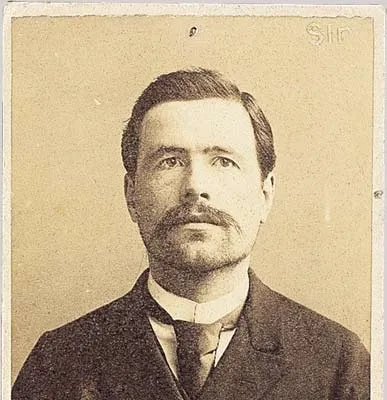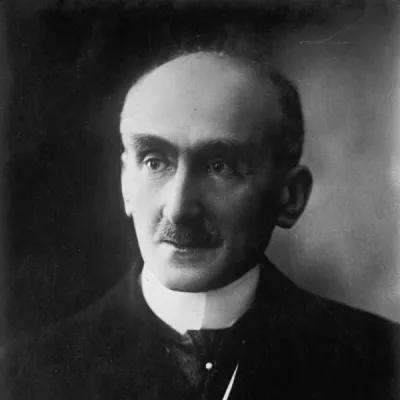
Henri Bergson
Human Design Chart
Biography
Bergson is known for his arguments that processes of immediate experience and intuition are more significant than abstract rationalism and science for understanding reality. Bergson was awarded the 1927 Nobel Prize in Literature "in recognition of his rich and vitalizing ideas and the brilliant skill with which they have been presented". In 1930, France awarded him its highest honour, the Grand-Croix de la Legion d'honneur. Bergson's great popularity created a controversy in France, where his views were seen as opposing the "secular and scientific" attitude adopted by the Republic's officials.
Henri Bergson as a Reflector 4/1 in Human Design
Reflector 4/1 — Design at a Glance
Henri Bergson's Human Design is characterized by a fundamental disposition: he acted as a mirror of his environment rather than relying on constant internal energies. Without defined centers, Henri lacked stable and unchanging inner forces. Instead, he absorbed the energy of others and that of nature—shaped by seasons and astronomical constellations—with particular intensity. This mechanism fundamentally determined his way of life.
For Henri Bergson, it was essential to live in harmony with these natural rhythms. When facing important decisions, he waited at least one lunar cycle before acting. This waiting strategy allowed him to perceive the full spectrum of surrounding energies before taking action. Through this alignment, he naturally found people and environments that suited him.
If Henri Bergson followed this pattern, he lived free from attachment and identification. He observed the world with an attitude of open attention. As a reward for living in flow, he experienced joyful surprise. Conversely, when he went against his design, it led to deep, lasting disappointment—both regarding himself and the state of the world. His path involved embracing this reflective nature and utilizing the wisdom of cycles rather than striving for a fixed, unchanging identity.
No Inner Authority
Henri Bergson lacked inner authority, a rare configuration that profoundly shaped his decision-making process. Rather than relying on bodily strategies, he oriented himself through external resonance and time. As a mental projector, he engaged in dialogue with various people to activate dormant potentials in his open centers. These energetic interactions provided him with information from multiple perspectives, enabling him to view and express issues diversely. His high resonant capacity helped him find the right environment and trustworthy individuals for this exchange.
However, evaluating these complex data required isolation and time. Henri Bergson withdrew to filter out the essential elements from the plethora of information gained through exchanges. Over time, he developed a specific intelligence to structure these external inputs. He learned to recognize the thread that mattered and distinguish what made sense and belonged to him. This ability to meaningfully organize information formed his capital for success. Central to this was always choosing an environment where he felt comfortable and could exchange trustingly with suitable partners. This deepened his sense of rightness and replaced his missing physical authority with wisdom based on relationships and reflection.
The 4/1 Profile — Opportunist / Investigator
Henri Bergson's Human Design established a profound rooting in his unique essence. As a 4/1 (Networker/Researcher), he exhibited a profile that barely allowed deviations from the individual path, marking the transition from 'I' to 'You'. This unchangeability was often misunderstood as stubbornness or lack of critical thinking. In fact, his cautious heart line of the 4 protected him from injury by quickly excluding people who challenged his acceptance with change impulses.
Only after recognizing himself and his life theme did he develop inner security. Then, he acted stable like a rock in the waves and possessed the ability to teach others magnificently. The 1-line emphasized quality and stimulation; feedback was essential for him to determine the value of his insights. His principles remained firm, but within this structure showed flexibility in change as long as inner security was maintained. He did not change through external pressure but by deepening into his own nature, which allowed him to authentically and sustainably convey knowledge.
No Definition — Defined & Open Centers
Henri Bergson's Human Design configuration indicated a tendency towards total openness: All nine centers were open, making him a pure mirror and resonance instrument for his environment. He lacked a constant internal source of mental inspiration (Head Center), willpower (Heart Center) or vital energy (Sacral Center). Instead, his 'self' only emerged in the context of interaction with the field around him.
This mechanism meant that he was situationally dependent on being conditioned by defined centers of others. Without a fixed identity (open G-Center), he adapted and reflected the energies of his environment. He tended to question who he was or where his direction lay, rather than drawing these from within himself. His open Solar Plexus absorbed emotions of others, making him vulnerable to foreign moods; he had to learn not to personalize every emotional wave as his own.
His open Root Center also took on stress and adrenaline from the environment, which could lead to pressure that he did not generate himself. Lacking constant energy, it was crucial for him not to try to dispel this pressure through overactivity. Instead, he worked best when serving as a barometer for the emotional and mental climate without getting entangled in it. His wisdom lay in exploring the mysteries of life (open Head and Ajna Centers) by remaining open to new insights from all directions rather than seeking one fixed truth. He was designed to be initiated through the right environment, not to impose it.
Channels & Gates
Henri Bergson's Human Design configuration indicated a tendency towards radical material continuity driven by deep concern for the preservation of the tribe. This attitude rooted in Gate 32, embodying continuity and durability. It reviewed past missteps against current situations to maintain stability but also led to drastic changes when necessary to ensure the material success of the community.
This dynamic tension between conservation and change required a specific processing method: Henri Bergson translated mental abstractions into illustrative narratives. Gate 56 enabled this stimulation and reflection by depicting complex processes from start to finish as collective stories. Through this narrative structure, abstract thoughts became tangible and understandable for others.
The integration of these experiences occurred through closure and sacral power (Gate 42). Only the completion of old processes created space for new commitments and personal growth; indecision here led to blockages. Simultaneously, Henri Bergson transformed genetic pressure and melancholy by accepting limitations. Gate 60 showed that this acceptance of limited reality was a prerequisite for transcendence. Creativity helped overcome the physical pain of melancholy and integrate mutations as part of the life process. Thus, his design combined material stability with deep inner work: The fear of losing continuity drove him forward while transforming mental images into narratives and experiencing limitations paved the way to emotional maturity.
Circuit Signature
Henri Bergson's Human Design configuration did not indicate any defined circuits, streams or groups in this area. This lack of structure did not mean an absence of energy itself but rather the absence of specific, collectively shared generational patterns that often serve as a connecting element between individual experiences and broader societal or historical currents for other people.
Instead of flowing through predetermined collective channels establishing direct connections to general humanity or specific historical epochs, this aspect of his design remained open and undefined. The absence of such defined energies implies that Henri Bergson was not shaped by the pressure or pull of common generational tasks. His experiences in this area were purely individual and not part of a larger, predictable flow affecting many people equally.
This configuration shows a clear separation from collective patterns. Henri Bergson did not have to play a role within a fixed generational framework as such a framework was simply absent for him. Energy did not flow through these specific collective pathways, leading to a unique, unshared perspective that differed from typical experiences of those who activated such circuits. It represented a neutral absence of structured collective bonds in this part of the design.
Juxtaposition Cross of Conservation
Henri Bergson's Human Design configuration established a tendency towards a specific tension: the simultaneous drive to preserve existing structures and traditions, while at the same time integrating new elements into these systems. This configuration, known as the Juxtaposition Cross of Preservation, shaped his inner dynamics through a dynamic interplay between preservation and adaptability. It was not about a static commitment to old or new, but rather about the ongoing necessity to make comparisons and consider juxtaposed elements in order to determine how innovations can be integrated into established orders. This mechanism required constant balancing: on one hand, the need for stability and continuity, on the other, openness to changes that enrich or modify the existing. The challenge was not to experience these two forces as contradictions but rather as complementary aspects of a developmental process. Henri Bergson thus found himself in a stance that was respectful towards what already existed while also being flexible enough to embrace new things and integrate them meaningfully. This balance between preservation and transformation formed the core of his mechanical alignment without falling into rigid patterns or oversimplifying the complexity of the situation.
Saturn Return · Uranus Opposition · Chiron Return · 2nd Saturn Return — Life Cycles
Henri Bergson's life path followed a clear cyclical structure, with astrological turning points correlating with concrete career leaps. In 1890, at age 31, he experienced his first Saturn Return. This cycle often marked the transition into a stable professional position; Bergson was appointed to the prestigious Lycée Henri IV at that time. Ten years later, in 1900 (age 41), the Uranus Opposition came into play. This phase often promoted new directions and public visibility: he published “Le Rire” and was called to a chair for Greek Philosophy at the Collège de France.
The Chiron Return around age 48 is a fulfillment cycle in which personal meaning unfolds. In 1907, Bergson published “L’Évolution créatrice,” his most famous and widely read work – the peak of his intellectual mission. The second Saturn Return around age 55 often solidified an established status within existing structures. In 1914, he was admitted to the Académie française, elected as president of the Académie des sciences morales et politiques, and appointed to various honorary memberships. These four phases structured his development from professional establishment through creative breakthrough to institutional recognition.
Reflector · No Inner Authority — Synthesis
Henri Bergson lived a life profoundly marked by openness towards the world. His design as a Reflector, combined with undefined centers and the Profile of Networker/Researcher, points to someone who constantly absorbed energy from their environment and reflected it back out. This ability to recognize patterns and accumulate experiences – reinforced by the Preservation Cross – led him not to bind himself to rigid systems or beliefs but rather to continuously seek and integrate new perspectives. The repeated evidence of professional success (1890, 1900, 1907, 1914) shows that he used this ability to establish himself in various intellectual fields and gain recognition.
Central to Bergson's essence was a paradox between his openness and the resulting lack of inner, consistent authority. While his open design made him a mirror of the world, he lacked an internal compass needle to filter and evaluate these information on his own. This led to a constant search for orientation in his environment, weighing different perspectives (Gate 56), and the need to constantly realign himself to find continuity (Gate 32). The ability to adapt and sensitivity towards changes were thus both his strength and challenge.
Incarnation Cross - Juxtaposition Cross of Conservation
Solar Return
The Solar Return shows the moment when the sun returns to its exact birth position - your personal solar year.
Life Cycles
Discover the life cycles with a detailed triple view (birth chart, cycle chart, composite).
Human Design Profile
- Type
- Reflector
- Strategy
- Wait a lunar cycle (approx. 28 days)
- Authority
- No inner authority - learn more
- Profile
- 4/1 - Opportunist / Investigator
- Definition
- No Definition
- Incarnation Cross
- Juxtaposition Cross of Conservation
- Date of Birth
- 18.10.1859 09:05
- Place of Birth
- Paris, France
Frequently Asked Questions
What was Henri Bergson's Human Design type?
What profile did Henri Bergson have in Human Design?
Which authority guided Henri Bergson's decisions?
Which incarnation cross determined Henri Bergson's life path?
When was Henri Bergson born?
Discover your own Human Design
Are you also a Reflector? Find out in a personal reading how to find the right environment and understand your unique mirror effect.
More Personalities
Back to overviewBaekhyun

Jihyo

Lucebert
Papus
Petrarch
Ravachol