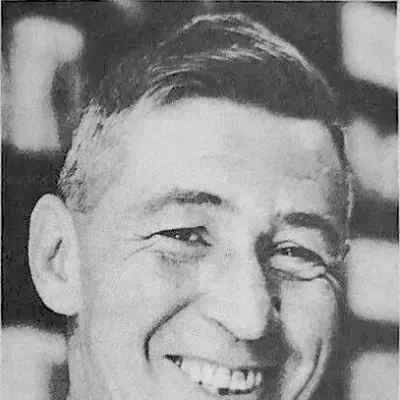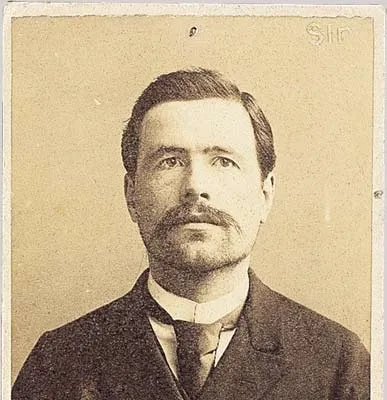
Ravachol
Human Design Chart
Biography
A melody,too, remembers him. 18 june 1891 he murdered the eremit Jacques Brunel. Ravachol - the name of his mother - died through the guillotine in Montbrison prison,11 july 1892, at 4:05 (a.m.)
What does Projector 6/2 mean for Ravachol?
Projector 6/2 — Design at a Glance
Ravachol's design shows a tendency towards focused observation. As a projector, he had a dense aura that acted like a bright flashlight, revealing system errors in his environment immediately. This ability to recognize the dark aspects in others or structures was his natural drive.
However, the mechanics of his type dictated a specific strategy: Direct criticism triggered resistance. Instead, Ravachol should have set an example through harmonious behavior. When he showed this balance, he attracted others who then sought his insights. His success depended on waiting for a respectful invitation rather than imposing himself.
Furthermore, he lacked a constant Sacral Center as a source of continuous life energy. Ravachol experienced phases of high activity and rapid workability that had to be balanced by rest periods to avoid burnout. Ignoring this rhythm led to bitterness, his non-self theme. Living according to this invitation and conserving energy rewarded him with success. His design therefore required patience in influencing others and discipline in energy management to effectively use his sharpest perception.
Self-Projected Authority
Ravachol's design shows a tendency towards extreme openness, making him vulnerable to distraction by external motoric energies. His inner truth lay in his identity, presenting a specific challenge: the risk of losing himself in this receptivity and constantly chasing after energy instead of following his own direction.
This configuration is known as 'Authority in Self', a characteristic unique to projectors. Decision-making did not occur through logical analysis but rather through spontaneous self-dialogues or listening during dialogues when invited. Crucial was the ability to distinguish whether his true nature spoke or if it was just his mind. What Ravachol spontaneously expressed without thinking represented his genuine essence and made him recognizable to others.
Alternatively, a physical attraction or repulsion acted as a compass. He could feel drawn towards or away from something geographically or thematically. When Ravachol recognized this inner direction and remained true to it, he became a guide for others. This was the source of his specific success potential: not in chasing external impulses but in holding onto his own line, which arose from his identity. Discipline was required as the constant threat of distraction was high. His design challenged him to use this spontaneous authenticity as a guide to avoid falling into the trap of energy-chasing.
The 6/2 Profile — Role Model / Hermit
Ravachol's design set up a two-phase development: initially an experimental natural talent, later a wise role model. In his youth, before Saturn's return, the sixth line functioned as the third. Ravachol was characterized by trial and error during this phase. He accumulated numerous personal life experiences but retreated after failures to learn. The second line of Gate 62 contributed: It bestows a natural talent that often only becomes visible under pressure. Ravachol might not have immediately recognized his full ability and suffered from the fear of being a 'paper tiger' if he ventured out too early. Detailed work could easily lead to restlessness here, while discipline acted as a positive limitation.
After turning 30, the sixth line of Gate 57 was activated. Ravachol retreated into a metaphorical 'cave on the mountain'. This phase served for intensive reflection upon earlier experiments. It was a time of healing and deep self-awareness, where he looked back at his past from a distance. Intuition had its limits here; Ravachol needed to learn that clarity alone is no guarantee of validity. In difficult situations, he focused on the best possible outcome even without a perfect solution. Eventually, Ravachol emerged from isolation as a wise person. Others could recognize his life wisdom and came to him to learn from his ability for deep introspection. He became an example who passed on knowledge gained through personal experience.
Split Definition — Defined & Open Centers
Ravachol's design established a constant internal architecture of inspiration, conceptual thinking, and communication. His defined Head, Ajna, and Throat centers created a steady mental pressure to generate questions and articulate them directly. This flow allowed him to form concepts and speak them without intermediate steps. However, lacking direct motor energy from these centers, attempts to immediately implement his ideas often led to frustration. Instead, his voice served to inspire others to think or confront them with inspiring questions. His defined G Center also conveyed a firm self-identity and clear sense of direction independent of external expectations.
In contrast, Ravachol's open centers revealed areas vulnerable to conditioning. His open Heart center meant an absence of consistent willpower; he was not designed to give promises or prove his worth through performance. The typical trap involved getting caught in competitive spirals and trying to do more than possible to gain recognition. Similarly, his open Sacral, Solar Plexus, and Root centers were situationally active, absorbing and amplifying environmental energies – whether vital force, emotions, or stress. Ravachol tended to identify these 'borrowed' states as his own reality, which could lead to exhaustion or emotional overload. The challenge was not to misinterpret external impulses as personal authority but to use them as information to live life appropriately without overloading himself or getting into false commitments.
Channels for inner reflection and rational clarity.
Ravachol oscillated between two contrasting internal rhythms: the slow, patient maturation of experiences and the sudden, uncontrollable flashes of new insights. His design tended not to build knowledge linearly but rather to digest it through withdrawal or receive it through spontaneous inspiration.
This dynamic was particularly marked by the Channel of the Lost Son 13-33. This mechanism connected his G Center with his Throat Center and fostered a stance of listening and collecting information. Ravachol tended to absorb information and secrets, reflecting on them later in silence. It wasn't about acting immediately or predicting the future but accompanying an experience until its end. Only after this withdrawal, when deeper connections were revealed, was he ready to share his gained truths. This mechanism required patience and created wisdom based on the complete digestion of experiences.
Simultaneously, the Channel of Awareness 61-24, connecting his Head Center with his Ajna Center, brought a different phenomenon: mutative knowledge. Instead of logically deducing or relying on past patterns, Ravachol experienced sudden moments of inner clarity – a Satori. These inspirations arose spontaneously, often amidst mental 'white noise.' He could not control or deliberately trigger this thinking; the knowledge simply appeared when it was ready. This created an internal tension: On one hand, he needed time and withdrawal to sort through experiences (Channel 13-33), on the other hand, unexpected insights broke through, shattering old thought patterns (Channel 61-24).
Additionally, Gates like Gate 57 contributed to intuitive clarity in the present moment, while Gate 51 provided strong willpower without social bonds. This configuration underscored his ability to process shocks through inner insight and focus on essentials rather than getting lost in collective expectations. Thus, Ravachol's life path was marked by a search for meaning through patient observation on one hand and trust in spontaneous, mutative truths on the other.
Individual Circuitry — Circuit Signature
Ravachol's design showed a tension between innovative, acoustic knowledge acquisition and cyclical emotional reflection of the past. In Ravachol's case, it was a Split Definition: two energetically separate groups existed parallel to each other without direct flow connecting them.
The first group connected his Head with his Ajna Center through Channel 24-61 (Awareness) in the Knowledge Circuit. This configuration promoted sudden, innovative flashes of insight and deviation from the known. The energy was pulsing and acoustic, driven by the need to express unique identity through new knowledge.
The second group connected his Throat with his Identity Center via Channel 33-13 (The Lost Son) in the Meaning Circuit. Here a cyclical visual energy dominated, focusing on emotions and experiences from the past. Ravachol reflected on past events to grasp their meaning. These emotional waves – often experienced as crashes or fluctuations – served to share insights with the collective.
While one side sought new transformation and individual expression, the other processed historical emotions for shared learning experience. Ravachol lived these dual forces not as a continuous stream but as two parallel independent energies: on one hand, the innovative impulse from Head and Ajna, on the other hand, emotional participation through Throat and Identity. Both systems worked simultaneously yet isolated from each other, creating a complex internal dynamics where rational innovation and felt past were processed separately.
Left Angle Cross of the Clarion 2
The raw content does not provide mechanical details for the left cross of Fanfare 2. The description is blank; there are no channel or gate compositions listed. Without these specific data, a concrete characterization cannot be derived. Ravachol's design shows no definable tendency in this area. There is no indication of dominant energy alignment. The emphasis remains undefined.
Human Design requires precise configurations. A cross without assigned mechanics offers no basis for interpretation. One cannot describe what has not been defined. Any assumption would be invention. The planner explicitly states: Without specific composition, there are no derived properties. Ravachol did not live under the influence of this indeterminate factor. No characteristic pattern emerged that could be traced back to this cross.
The analysis remains empty here. This is correct. Human Design demands a factual basis. Without gate or channel references, there is no interpretive power. One must not guess. Ravachol's chart contains a gap in available information at this point. This does not mean that nothing existed but rather that the present data do not allow for evaluation. The strategy is clear: Do not add anything. No clichés to use. No general mechanics explanations to weave in, as there is no concrete reference point. Ravachol appeared undefined in this aspect by the current raw content. This chapter ends here due to lack of further facts. Any additional statement would be uncontrolled invention and would violate the rules of precise analysis.
Saturn Return — Life Cycles
Ravachol's design showed a confrontation with the harsh realities of the material world when he faced his first Saturn Return at age 31. This cycle marked the transition to adult responsibility, forcing him to grapple with his own limits and structures. Illusions were shattered; the life task was to create tangible foundations in the physical world.
In 1890, this mechanical challenge became concrete: Ravachol was arrested for theft and fingerprinted. This event was not a coincidence but a typical expression of the first Saturn Return. During this phase, years of groundwork or its absence condenses into a palpable result in the material sphere. The arrest served as a brutal catalyst that confronted Ravachol with the consequences of his actions and the real laws of society. It was about maturing through the experience of limits – here legally and socially defined. Saturn Return demands structure; Ravachol's design reacted to it with a situation that allowed no evasion maneuvers. Fingerprinting symbolized the unavoidable manifestation of his position in the world order. This moment shaped his further path by confronting him forcefully with the substance of his existence and the conditions within which he had to act.
Projector · Self-Projected Authority — Synthesis
Ravachol's life was marked by a deep ability to recognize the unsaid (Gate 61/24) and draw lessons from experiences for others (Channel 33-13). This combination of mental sharpness and the need to disseminate knowledge formed a red thread through his existence. He perceived the mistakes of others not to judge but to recognize patterns and derive deeper understanding of the world – a function that was reinforced by his defined mental projection (Head Center and Ajna Center). The ability to empathize with the experiences of others allowed him to act as a mirror, thereby contributing to the development of collective consciousness.
Ravachol lived in a paradox between the urge to express his insights (defined Throat Center) and the necessity to wait for the right moment (Projector Type). His call for authenticity and exposure of injustices clashed with a world not always ready to accept the truth. This tension between the desire for immediate action and inner wisdom to wait shaped his actions and led him into situations where he forgot his own strategy, inevitably leading to bitterness.
2 Defined Channels
Incarnation Cross - Left Angle Cross of the Clarion 2
Solar Return
The Solar Return shows the moment when the sun returns to its exact birth position - your personal solar year.
Life Cycles
Discover the life cycles with a detailed triple view (birth chart, cycle chart, composite).
Human Design Profile
- Type
- Projector
- Strategy
- Wait for the respectful invitation
- Authority
- Self-Projected Authority
- Profile
- 6/2 - Role Model / Hermit
- Definition
- Split Definition
- Incarnation Cross
- Left Angle Cross of the Clarion 2
- Date of Birth
- 14.10.1859 08:00
- Place of Birth
- St.Chamond, France
Frequently Asked Questions
What was Ravachol's Human Design type?
Which Profile did Ravachol have?
What authority did Ravachol have?
What incarnation cross was Ravachol assigned?
When was Ravachol born?
Discover your own Human Design
Are you also a Projector? Find out in a personal reading how to unfold your leadership qualities and recognize the right invitations.
More Personalities
Back to overviewSissy Spacek

Alain-Fournier

Anémone

Ann-Margret

Bourvil

Hergé