

Photo: Wikimedia Commons
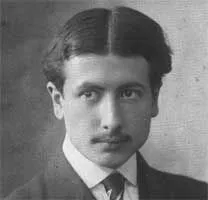
Henri Troyat
Human Design Chart
Biography
Troyat's family fled Russia during the Russian revolution of 1917 and,after stops in Istanbul and Italy, settled in 1920 in Paris. He initially studied law but won acclaim after his first novel was released. "Faux Jour" (False Light) was published just after he completed his military service. At age 27 he published his fifth novel "L'Araigne" (The Spider), and it won the Goncourt. Troyat never returned to his mother country though many of his novels are set in Russian and he wrote biographies of many famous Russian figures, including Catherine the Great, Tolstoy and Pushkin. He didn't ignore his adopted country, France, and wrote biographies of French writers like Zola and Balzac. Described as a natural born story-teller, he wrote every day, standing up at a pedestal, reportedly wearing a hole in his carpet.
He was inducted into the Academie Francaise in 1959; in addition to that honor and the Goncourt, he was also awarded the Grand-Croix of the French Legion of Honor. With over 100 works to his credit, he was still writing at age 94, when his last novel, "La Traque" (The Hunt was published. For him a day without writing was unthinkable.
Troyat died on March 2, 2007 in Paris at age 95.
Human Design Analysis: Henri Troyat as Generator 2/5
Generator 2/5 — Design at a Glance
Henri Troyat's design points to a tendency towards great endurance and a strong work ethic, comparable to a workhorse that generates power as long as it burns for the task. As a Generator, he had a lot of sacral energy, but it was released not through self-initiative but through reaction to impulses from the environment. His strategy was to wait for signals and only act when his inner self gave a clear 'yes'.
This mechanism protected him from two specific risks: On the one hand, from burnout, which occurs when energy is invested in things that do not resonate internally. On the other hand, from frustration when he is prevented from pursuing his heart project, even though the power is still there. If Henri Troyat lived in harmony with this principle of reaction, his system rewarded him with a sense of deep fulfillment and satisfaction. If he acted against this nature by initiating instead of reacting, this led to persistent frustration and a noticeable lack of energy sooner or later. His path to effectiveness was therefore not constant pushing forward, but waiting for the right moment to respond from the gut.
Emotional Authority
Henri Troyat's design points to a tendency towards emotional immediacy, which always required the damping effect of time. His inner authority was emotional, carried by the defined Emotional Center. This mechanism meant that he was subject to a constant wave of emotional ups and downs. The world appeared to him always colored by his current mood: The same thing could be totally exciting in one moment and negative in the next. His immediate feeling was only a snapshot, a first impression that did not necessarily represent his truth. Quick, spontaneous decisions made directly from such an emotion often showed negative effects for him.
The mechanics of his authority required patience. The more time he took to let a decision mature, the deeper and more comprehensive he could perceive the situation. This meant concretely that he should sleep on decisions multiple times. Through hesitation and multiple questioning, the intense feelings subsided. Only then did he gain emotional distance, which brought clarity and calm. This process was crucial for long-term decisions, as they had a significant impact on his life course. Henri Troyat thus showed himself to be someone who did not find his inner truth in the first impulse, but only after the emotional wave movement had subsided.
The 2/5 Profile — Hermit / Heretic
Henri Troyat's design points to a tension-filled alternation between deep withdrawal and the role of problem solver for others. As a person with Profile 2/5, he needed long phases of isolation to find himself and gain clarity about his true priorities. This hermit phase was essential to avoid falling into the expectations of others. At the same time, however, he attracted people through his presence who sought solutions and assigned him the role of helper. This dynamic required strict self-discipline: He had to carefully weigh where he wanted to actually invest his energy to avoid overexertion.
His inner process was shaped by Gate 43, which stands for deep insights and an extraordinary way of knowledge transmission. These mental habits could be perceived from the outside as unconventional or even crazy, but were necessary for real breakthroughs. Parallel to this, Gate 4 worked, which enabled him to lure others into energy expenditure through logical processes. Without this external support, he could not fully prove or be rewarded for his ideas. This configuration described a person who found his answers in silence but could only bring them into the world through interaction with others and their recognition.
Split Definition — Defined & Open Centers
Henri Troyat was characterized by a persistent, internal mental pressure resulting from the definition between Head and Ajna Centers. This channel generated a constant inspiration to question and form concepts, yet without the direct energy to implement them. His thoughts were always active, making meditation difficult, but providing a reliable source of intellectual impulses. This mental energy flowed into his defined Throat Center, allowing him to verbally manifest his concepts and theories. His voice served as a focal point to bring the information from his mind into the world, always in need of waiting for the right timing to avoid resistance.
As a Generator with a defined Sacral Center, Henri Troyat had an enormous vital energy source. His strategy was not to initiate but to wait for external stimuli to react with a yes or no answer. Only a positive sacral response made the full energy available for sustainable satisfaction; mental decisions ignoring this response led to frustration and exhaustion. Additionally, his defined Solar Plexus acted as an emotional authority. He had to wait for the waves of his emotions to clear before acting, leading to chaos in emotional highs or lows, while patience allowed for deep insights.
Simultaneously, Henri Troyat was vulnerable to conditioning through his open centers. His open G Center meant he lacked a fixed identity or direction, instead adopting these from his environment. He tended to question who he was and where to find love, aligning himself with others. His open Heart Center drove him to prove his worth through promises and willpower, though he lacked the energy to maintain these long-term. Failure led to self-doubt. Furthermore, his open Root Center absorbed external stress, leading to cycles of overactivity and attempts to release pressure that was never truly his. This combination of strong inner energy and external vulnerability shaped his essence.
Channels for intimacy, insight, inspiration and care.
Henri Troyat sought deeper intimacy while clearly articulating innovative perspectives. His design featured a tendency towards personal fusion, marked by the Channel of Union 59-6. This connection of sexuality and emotional wave required patience to sustain intimacy and avoid misunderstandings. Simultaneously, Channel of Structuring 23-43 shaped his way of processing insights. Here, spontaneous awareness combined with the ability to translate complex thoughts into understandable formulas, yet required the right timing to be accepted.
The foundation of this thinking was Channel of Awareness 24-61, which transformed sudden inspirations into clear knowledge through rational processing. Troyat had to learn to trust this mutative process rather than control his thinking. Alongside this intellectual depth, Channel of Preservation 27-50 conveyed a strong need for care and the protection of traditional values. This channel attracted trust and pushed him to take responsibility for others, always guided by the need to care for himself first.
Additional facets of his character came from prioritized gates. Gate 4 enabled him to develop logical formulas for future security, while Gate 49 tied him to principles and the emotional wave of family. In the personality aspect, Gates 3 and 34 promoted adaptability and individual power, yet required guidance to avoid aimless action. Gates 18 and 16 reflected a desire for correction in the collective and experimenting with skills. In his design, Gates 28, 47, and 62 supported the ability to take risks in the present, draw meaning from the past, and recognize patterns through patient detail work. This configuration created a person navigating between intense relationship, clear structure, and caring responsibility.
Individual Circuitry — Circuit Signature
Henri Troyat's design featured a pulsating, acoustic expression style, evident in two separate, non-directly connected energetic blocks. As a person with split definition, he lacked a continuous connection between these areas, instead having parallel existing forces.
The Knowledge Circuit connected his Head, Ajna, and Throat Centers. Through the Channel of Awareness (Gates 24-61) and Structuring (Gates 43-23), an energy emerged aimed at transforming new knowledge and expressing it through the Throat Center. This promoted a unique identity, supported by creative insights and the ability to structure connections. The energy was pulsating and acoustically marked, favoring the expression of individuality.
Parallel to this, the Archer Circuit connected his Sacral, Solar Plexus, and Spleen Centers. Here, the Channels of Preservation (Gates 27-50) and Union (Gates 59-6) flowed. This configuration carried primal energies of survival, family protection, and genetic preservation. It included themes like food, care, and defense, connected with instinctive reactions of the Spleen and emotional waves of the Solar Plexus.
These two circuits formed separate segments: on one side, mental and linguistic transformation, on the other, instinctive and emotional care. They were not directly merged, but existed as independent, side-by-side experience fields in Henri Troyat's design. The Awareness Stream in the Ajna Center underscored the individual orientation of the mental block without dissolving the energetic separation from the physical-emotional block.
Right Angle Cross of Explanation 4
Henri Troyat's Human-Design profile indicated a tendency towards clear, unambiguous communication. He was someone who could translate complex connections into understandable language without losing depth. This attitude stemmed from the configuration of the right cross of Explanation 4. In Human-Design mechanics, this cross represents the ability to structure information precisely and convey it to others in a way that they immediately grasp its core content. It's not about rhetorical brilliance but about the pure, unadulterated transmission of knowledge. Henri Troyat used this energy to present his observations and analyses directly and without unnecessary embellishment. His way of writing or speaking served to enlighten, not confuse. Through this specific expression in his chart, he became a voice that brought clarity where others might still be in the dark. The mechanics of this cross promoted a direct line between what he understood and what he expressed. This characterized his entire mode of expression: matter-of-fact, focused, and reduced to the essentials. He avoided obscuring or distorting information. Instead, he ensured that the message came across as intended. This direct way of explaining was not a coincidence but a firm characteristic of his energetic makeup. It helped him always keep the truth at the forefront in his interactions and publications without falling into dogmatism. His strength lay in the ability to make the complex simple without oversimplifying it.
Saturn Return · Uranus Opposition · Chiron Return · 2nd Saturn Return — Life Cycles
Henri Troyat was someone whose life's work was structured by clear milestones, where inner maturity transformed into external recognition. His design indicated a tendency towards cyclical condensation: in certain age phases, long-term efforts crystallized into substantial results that solidified his social status and professional identity.
This process became evident at the age of 27. In 1938, during his first Saturn return, he received the Prix Goncourt for *L’Araigne*. This success marked the transition from the preparation phase to established presence; years of groundwork condensed into a public victory that secured his position in the literary world.
A second peak occurred with the Chiron return, a cycle of fulfillment in which the personal life purpose increasingly unfolded. In 1959, at the age of 48, he was admitted to the Académie Française. This was not just a title but confirmation that he had followed his inner strategy and was now experiencing the full bloom of his incarnation.
The third Saturn return around the age of 60 brought further consolidation. In 1971, he published the biography *Gogol*. In this phase, it was less about breakthroughs and more about deepening and authorizing what had already been achieved. Troyat's design marked him as someone who gained significance through recurring, age-synchronized confirmations in the public sphere, with each cycle bringing a new level of recognition and stability.
Generator · Emotional Authority — Synthesis
Henri Troyat was a Generator whose life was marked by deep, sacral energy. This energy, combined with emotional authority, formed a character distinguished by sustained creative effort and an intense engagement with inner states. The profile as a natural talent and hero was evident in his ability to offer solutions for others, yet he required phases of withdrawal to find his own inner direction. The defined mental pressure (Head and Ajna Centers) reinforced this inner process by stimulating continuous reflection and the pursuit of understanding. The recurring successes (Prix Goncourt, admission to the Académie Française, publication of a biography) in specific life cycles pointed to a natural talent that worked in harmony with his energy and inner truth.
A central paradox in Henri Troyat's design lay in the tension between the need for deep emotional maturity and the expectation to quickly provide solutions for others. The emotional wave required time to gain clarity, while the profile as hero and rescuer called for immediate help. This conflict, amplified by the creative essence of the Pairing Channel, led to a dynamic interaction between the desire for inner reflection and the need to open up to the world and express his inspiration.
4 Defined Channels
Incarnation Cross - Right Angle Cross of Explanation 4
Solar Return
The Solar Return shows the moment when the sun returns to its exact birth position - your personal solar year.
Life Cycles
Discover the life cycles with a detailed triple view (birth chart, cycle chart, composite).
Human Design Profile
- Type
- Generator
- Strategy
- To respond - wait for something to respond to
- Authority
- Emotional Authority
- Profile
- 2/5 - Hermit / Heretic
- Definition
- Split Definition
- Incarnation Cross
- Right Angle Cross of Explanation 4
- Date of Birth
- 14.11.1911 07:40
- Place of Birth
- Moscow, Russia
Frequently Asked Questions
What was Henri Troyat's Human Design type?
What Profile did Henri Troyat have in Human Design?
What Authority guided Henri Troyat?
What incarnation cross did Henri Troyat have?
When was Henri Troyat born?
Discover your own Human Design
Are you also a Generator? Find out in a personal reading how to use your sacral energy correctly and discover deep satisfaction.
More Personalities
Back to overviewAaliyah

Alain-Fournier
Alexia

Angèle

Angeli
Anne-Marie
