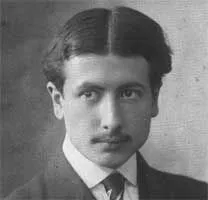
Photo: Wikimedia Commons
Hermann Sudermann
Human Design Chart
Biography
Sudermann was born at Matzicken, a village to the east of Heydekrug in the Province of Prussia (now Macikai and Šilutė, in southwestern Lithuania), close to the Russian frontier. He attended the high school in Tilsit, and studied philosophy and history at Königsberg University. In order to complete his studies Sudermann went to Berlin and became a journalist and was in 1881 and 1882 the co-editor of the Deutsches Reichsblatt.
He married the novelist Clara Lauckner (née Schulz, 1861–1924) on 20 October 1891 and lived with his family in Berlin-Wannsee.
He had a stroke in 1928, and died of a lung infection shortly afterwards, on 21 November that year in Berlin, aged 71. His stepson Rolf Lauckner set up the Hermann Sudermann Foundation to support young dramatists.
Hermann Sudermann as a Generator 4/1 in Human Design
Generator 4/1 — Design at a Glance
Hermann Sudermann possessed immense endurance and a high level of energy that made him well-suited to work like a draft horse for his tasks. As a Generator, his design was meant to function by reacting to external impulses rather than through self-initiated action. His strength only fully ignited when he responded from the gut to signals in his environment and his sacral center gave him a clear "yes."
This mechanism offered him the possibility of deep satisfaction and fulfillment if he followed this inner guidance. However, there were two specific pitfalls: On one hand, burnout threatened if he expended energy on things that did not resonate internally or did not align with his heart's desires. On the other hand, his life force suffered when he was prevented from working on his actual projects, even though he still had plenty of power to continue.
If Hermann Sudermann initiated independently without a prior impulse, it inevitably led to frustration and a noticeable lack of energy. His path to effectiveness therefore did not lie in pushing plans forward but rather in patiently waiting for the right trigger, which he could then follow with full force. Only this way did he avoid exhaustion and effectively utilize his enormous creative potential.
Emotional Authority
Hermann Sudermann showed an internal decision structure that did not solidify at the moment of first enthusiasm or rejection. His inner authority was emotional, carried by the defined Solar Plexus Center. In Human Design mechanics, this means: As long as this center is activated, it always takes charge in decisions regardless of which other centers are also defined. This priority rule ensured that his deeper emotional truth took precedence over intellectual or social impulses.
Sudermann was subject to a wave movement of feelings. The world appeared colored by the current mood; what seemed highly relevant at one moment could appear unimportant the next. However, these immediate impressions were only snapshots and not yet his final truth. Quick, spontaneous judgments based on this fleeting emotion would often have led him in false directions.
Instead, his design required patience and conscious hesitation. He had to let decisions mature, sleep on them overnight, and ask himself multiple times. Only when the intense feelings subsided and emotional distance was gained did clarity set in. This process of distancing was essential for long-term orientation in his life. Only through this waiting period could he distinguish between transient excitement and deeper, more comprehensive insight.
The 4/1 Profile — Opportunist / Investigator
Hermann Sudermann's design established a tendency towards unchangeable constancy. As a 4/1 Networker/Researcher, he had a nature that was deeply rooted and allowed for few deviations. This rare profile marks the transition from "I" to "You", where the inner structure is firmly fixed. Sudermann thus revealed himself as someone who neither could nor wanted to change his essential being.
This character trait resulted from the mechanics of his lines. The 4-line (Gate 18) brought a spiritual fixation on correction and the uncorrectable with it. Here, it was about suffering from perceived incompetence and the fear of failure when demands for correction arose. At the same time, the 1-line (Gate 39) required security through study and analysis. It served to overcome obstacles by provoking the mind to avoid negative reactions and enable positive mutations.
Sudermann's large Heart, typical of the 4-line, protected him from injuries. When others offered him "well-intentioned impulses for change", he interpreted this as a lack of acceptance of his nature. Consequently, he cautiously excluded such people from his trust. Externally, this often appeared like stubbornness or an inability to accept criticism. Internally, however, it was a protective mechanism to preserve the integrity of his established nature. Only when he fully accepted and rested in his own structure could he serve others as a reliable rock and effectively impart his knowledge.
Single Definition — Defined & Open Centers
Hermann Sudermann's design revealed a tendency towards vital endurance and emotional depth. As a Generator with a defined Sacral Center, he possessed an inner motor that continuously generated energy – experienced as restlessness or the need to be active. His truth did not lie in the Head Center but rather in immediate reaction: A spontaneous 'Yes' signaled availability for a task, while a 'No' protected against exhaustion. This sacral power was complemented by a defined Solar Plexus Center that allowed emotional clarity only after experiencing an emotional wave. Sudermann showed himself to be someone who did not make decisions impulsively but waited until the emotional tension subsided and calmness prevailed.
Additionally, defined Spleen and Root Centers were active. The Spleen provided intuitive, momentary warning signals for health and well-being, while the Root Center generated a constant adrenaline-driven pressure that pushed him forward – whether towards material security or emotional processing. This combination of instinct, stress management, and reactive energy shaped his life rhythm.
At the same time, several undefined centers revealed themselves as fields of conditioning. The open Head Center tended to experience mental confusion or the pressure to find answers to questions that were not his own. Sudermann was prone to getting stuck in endless pondering rather than trusting his inner authority. Similarly, the open Ajna Center could absorb concepts and opinions from the environment without holding them as personal truth, leading to uncertainty when he tried to intellectually solidify himself.
The open G Center indicated a flexible identity; Sudermann adapted to his surroundings and did not actively seek a fixed direction but waited to be initiated by others. The open Heart Center lacked consistent willpower in terms of competition or commitment. Instead, he was vulnerable to the pressure of proving his worth, often ending up in cycles of overextension and self-doubt when he took on obligations that did not align with his sacral response.
Channels for intimacy, life purpose and emotional release.
Hermann Sudermann was characterized by a deep, intuitive determination to forge his own path and find personal meaning in life's battles. This attitude stemmed from the Life Struggle Channel 38-28 in his design, which connected Root energy with the Spleen. Gate 38 urged him to preserve individual integrity against external distractions, while Gate 28 endowed him with the ability to recognize which struggles were worth fighting and engaging in. This channel drove him to stubbornly listen to his inner awareness and bring about mutations through directional changes for the status quo.
Additionally, the Channel of Union 59-6 from Personality created a powerful connection between Sacral Center and Solar Plexus. Here, the sexuality of Gate 59 merged with the emotional wave of pleasure and pain from Gate 6. This generated a strong desire for intimacy and merging in personal and penetrating relationships. Sudermann's design required patience: He had to wait until his emotional wave clarified whether a deep connection had formed or not. This mechanism allowed him to quickly establish confidentiality but also risked misunderstandings when others misinterpreted his intensity.
The juxtaposed Channel of Emotion Release 39-55 connected Root and Solar Plexus through provocation (Gate 39) and the mind (Gate 55). This set a pulsating wave of moods in motion, swinging between ecstatic joy and melancholic uncertainty. Sudermann could use this provocation to tease out others' spirits and discern who fit his mood. His authenticity was evident when he only acted if he was in the right emotional state, radiating a seductive warmth or passionate depth that often found expression artistically or on life's stage.
Individual Circuitry — Circuit Signature
Hermann Sudermann's design combined instinctive perception with emotional depth and vital life force. As a simply defined type, he exhibited a continuous energetic flow between Spleen, Root, Solar Plexus, and Sacral Centers. This connection shaped his essence as someone who could directly translate inner impulses into tangible existence security.
The Knowledge Circuit worked through two separate segments in him. The Life Struggle Channel connected the Spleen and Root Center with the Solar Plexus. This promoted a pulsating creativity based on instinctive insights expressed through emotional waves. Parallel to this, the Emotion Release Channel did not establish a direct connection to other centers of this circuit but functioned as an independent emotional resource. The energy of this circuit served in developing a unique identity by sharing new insights.
The Archer Circuit connected Sudermann's Sacral with his Solar Plexus Center through the Union Channel. This endowed him with a primal, protective power. It was about preserving one's own genetics and family through sustenance, care, and defense. The connection of life force and emotions in this circuit underscored his role as protector and provider. Both circuits together formed a personality that was intellectually innovative yet emotionally and instinctively deeply rooted, always ready to defend and further develop the home and identity.
Juxtaposition Cross of Correction
Hermann Sudermann's design indicated a tendency towards internal correction and balance. This configuration, the Correcting Juxtaposition Cross, described a dynamic process: when inner tensions or imbalances arose, his system automatically sought ways to restore harmony. It was not about passive experience but an active life task of recognizing errors and correcting them through targeted action. This mechanism acted as a constant impulse for self-adjustment, with Sudermann tending to seek the 'right' both within himself and in his environment. The energy of this cross promoted a sense of responsibility towards one's own mistakes and those of others, always aiming to restore balance. It was an ongoing process of learning through correction, where every deviation from the ideal was seen as an opportunity for improvement. Sudermann thus showed himself capable of learning from difficulties and turning these experiences into constructive measures. This trait significantly shaped his actions, driving him continuously to seek solutions for emerging problems while stabilizing both personal and interpersonal relationships.
Saturn Return · Uranus Opposition · Chiron Return · 2nd Saturn Return — Life Cycles
Hermann Sudermann's design indicated a tendency towards structured milestones that condensed into clear life phases. The first Saturn Return around the age of 29 often marks the transition from searching to established position. This was evident in 1886 with the publication of his naturalistic short stories *Im Zwielicht*, a moment when years of groundwork resulted in a solid professional outcome.
His design also contained impulses for collective responsibility and leadership within group structures. The Uranus Opposition around age 43 often brings about a sudden expansion of role or authority. In 1900, Sudermann became chairman of the Goethe-Bund, reflecting this shift towards representative leadership.
The Chiron Return around age 52 is a fulfillment cycle in which one's personal life purpose increasingly anchors into everyday life and material security becomes an expression of this unfolding. This was evident in 1909 when he acquired a representative villa in Berlin-Grunewald – a sign of stabilizing his existence after years of working on his path.
Finally, the second Saturn Return around age 55 brought external recognition for long-term efforts. The awarding of the Prussian Order of Merit, Third Class, in 1912 underscored this phase of official validation and completed the arc from early publication to societal acknowledgment.
Generator · Emotional Authority — Synthesis
Hermann Sudermann lived deeply within his own energy, fueled by a defined Sacral Center (Sacral). This power source shaped his essence and the drive to express himself through work and activity. Anchoring in the Knowledge Circuit amplified this impulse, driving him to create new things and live out his individuality – a process accompanied by creative flashes and emotional depth (Channel 20-57). The fixation in Profile as Networker/Researcher reinforced this calling: he was rooted on his own path and sought connections to share knowledge and spark transformation.
At the same time, a central paradox revealed itself in his nature. As an emotional authority type, he needed time to gain clarity about his feelings (emotional center), while the defined channel of pairing (Gate 59-6) signaled an immediate reaction to stimuli and intimacy. This tension between the need for mature decision-making and the impulsive energy of the Sacral Center likely led to internal complexity, manifesting in verifiable career phases – from initial publications to honors (Saturn Return, Uranus Opposition).
3 Defined Channels
Incarnation Cross - Juxtaposition Cross of Correction
Solar Return
The Solar Return shows the moment when the sun returns to its exact birth position - your personal solar year.
Life Cycles
Discover the life cycles with a detailed triple view (birth chart, cycle chart, composite).
Human Design Profile
- Type
- Generator
- Strategy
- To respond - wait for something to respond to
- Authority
- Emotional Authority
- Profile
- 4/1 - Opportunist / Investigator
- Definition
- Single Definition
- Incarnation Cross
- Juxtaposition Cross of Correction
- Date of Birth
- 30.09.1857 21:30
- Place of Birth
- Heydekrug, GER
Frequently Asked Questions
What was Hermann Sudermann's Human Design type?
Which Profile did Hermann Sudermann have?
What Authority guided Hermann Sudermann?
What incarnation cross did Hermann Sudermann have?
When was Hermann Sudermann born?
Discover your own Human Design
Are you also a Generator? Find out in a personal reading how to use your sacral energy correctly and discover deep satisfaction.
More Personalities
Back to overviewAaliyah

Alain-Fournier
Alexia

Angèle

Angeli
Anne-Marie