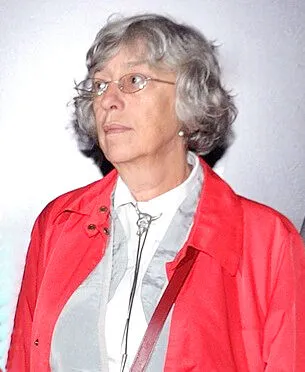
Photo: Wikimedia Commons
Hervé Vilard
Human Design Chart
Biography
His long national and international musical career as composer, singer and stage performer spans four decades. In 1992, in recognition of his contributions to French culture, he was awarded the Ordre national du Mérite in a ceremony at the Parisian Théâtre des Variétés hosted by Jean-Paul Belmondo.
What does Projector 5/1 mean for Hervé Vilard?
Projector 5/1 — Design at a Glance
Hervé Vilard's design tends towards focused perception, which could be perceived as intense or even unpleasant by his surroundings. As a projector, he had an aura that behaved like a bright flashlight: it directed itself precisely at weaknesses in others' systems and brought light to dark corners. Hervé Vilard was someone who immediately recognized errors and inefficiencies. However, directly addressing these flaws often provoked resistance, akin to a bright light beam in the face.
The mechanics of his design promoted a more elegant approach: by living harmoniously himself, he became attractive. Other people then came to him voluntarily to seek advice, rather than him imposing it on them. His strategy was to wait for an honest, appreciative invitation before taking on a leadership role.
Since his sacral center was undefined, Hervé Vilard did not have a constant, intrinsic energy source. Instead, he went through phases of high productivity, followed by necessary rest periods to prevent burnout. This rhythmic need often conflicted with societal expectations of continuous work performance. Living according to this pattern rewarded him with success. Ignoring the need for invitation and rest led to the theme of bitterness, a sign that he was acting against his own nature.
Splenic Authority
Hervé Vilard's design tends towards spontaneous, instinct-driven decision-making. His inner authority resides in the spleen center, a defined area that functions as a health and alarm system. This configuration requires both the emotional and sacral centers to be open; only projectors or manifestors can carry this specific authority.
The spleen center offers Hervé Vilard a pronounced survival intelligence. It manifests as spontaneous inner knowledge about whether a situation, environment, or society is right for him. Intuition and physical well-being serve as reliable indicators. Decisions must be made in the immediate moment, as the first, spontaneous impulse is the right one and directly serves his health. This allows him to effectively take care of himself and rigorously distance himself from harmful influences.
At the same time, this spleen impulse is very subtle and only comes once in the moment. It can easily be ignored or drowned out by external influences, requiring high vigilance. A short retreat can be helpful in decision-making. Since the right thing is only recognizable in the moment, plans can change at short notice. Long-term commitments are therefore difficult; Hervé Vilard benefits from a lot of free space and flexibility rather than rigidly binding himself.
The 5/1 Profile — Heretic / Investigator
Hervé Vilard's design was characterized by the configuration of the Hero and the Investigator (Profile 5/1). This structure tends towards accumulating deep, independent knowledge to offer it to others for problem-solving. Line 1 of the profile emphasized the fundamental necessity of self-care and building a stable foundation before resources flow outward. Simultaneously, Line 5 acted like a magnetic attraction point: others projected expectations onto Hervé Vilard, seeing him as a source of solutions and answers.
This dynamic was reinforced by Gate 56, which generated attention through storytelling and unusualness. The world expected him to be stimulating and innovative. Yet, this projection carried a risk: without clear boundaries, Hervé Vilard faced the danger of being exhausted by the abundance of inquiries and expectations, similar to an expert who is drained after answering many questions for a long time. The mechanics showed that learning to say
Split Definition — Defined & Open Centers
Hervé Vilard's Human Design shows a tendency towards constant mental pressure to question and form concepts, paired with a strong physical intuition. His defined Head and Ajna Centers created a trustworthy, specific form of conceptual thinking. This mental process was always active, which could make meditation difficult but also served as an inspiration for others. However, since the Head and Ajna Centers do not have their own energy to implement, fighting against this state often led to frustration. The challenge was to accept the pressure without balancing it with hasty actions, and instead wait for the right moment to inspire others.
In addition to this mental configuration, his defined Spleen Center served as a source for spontaneous, intuitive judgments in the present moment. This existential awareness allowed him to make trustworthy decisions based on a nonverbal recognition of what was healthy. His defined Root Center also provided the physical pressure to move forward and process stress in a set way, which nourished his survival consciousness.
In contrast, Hervé Vilard showed openness in several areas, making him vulnerable to conditioning. His open G Center meant he did not have a fixed identity but blended with his environment. He tended to question who he really was or which direction was correct, rather than waiting for external initiations. His open Heart Center lacked consistent willpower; he could easily fall into the cycle of making promises to prove his worth, leading to self-doubt when those promises were not fulfilled. Furthermore, his open Sacral Center was sensitive to the energy of others, which could lead him to use borrowed energy and overextend himself instead of listening to his own limits. His open Solar Plexus absorbed and amplified the emotions of the environment, making him emotionally vulnerable and causing him to avoid confrontation to avoid rejection. Finally, his open Throat Center was not designed to seek attention actively; attempting to do so often led to unpredictable speaking and stress.
Channels for mental clarity and ambitious transformation.
Hervé Vilard showed a fundamental attitude that was marked by a deep, instinctive ambition: the drive to improve his position through constant effort and the use of his talents, and to free himself from the challenge of his origins. This dynamic was driven by the Transformation Channel 54-32, which connects the Root Center with the Spleen. Here, motivation arises from the fear of the failure of the "tribe" or one's own existence, leading to hard work to secure recognition and social advancement opportunities. Success was never purely individual but depended on the support of allies who in turn expected loyalty and benefit.
Parallel to this, the Abstraction Channel 64-47, connecting the Head and Ajna Centers, was at work. This created a mind that constantly filtered mental images and possibilities through a kaleidoscope to understand hidden connections beneath the surface. Hervé Vilard had to learn to patiently confront this mental confusion until a clear, inspiring story emerged that he could then share. The mind served here not as an inner authority for decisions but as a tool to translate complex experiences into understandable narratives.
Additionally, other Gates shaped this Profile: Gate 60 brought the pressure to accept limitations to enable transformation, often accompanied by melancholy. Gate 27 added genetic care, enriching activities with warmth and self-preservation. Gate 28 demanded decisions in the here and now, boldly taken or avoided, based on the current moment. Gate 56 enabled the figurative narration of processes, while Gate 57 fostered intuitive clarity and the ability to "hear" in the present. Gate 17 contributed logical teaching and an understanding of succession, and Gate 53 opened new cycles of freedom. Finally, Gate 18 brought the ability to discriminate between necessary corrections and insignificant matters without taking authority conflicts personally.
Collective Circuitry — Circuit Signature
Hervé Vilards Design created a tendency towards separate, parallel existing energetic fields. As a person with Split Definition, he had two independent power centers that were not directly connected to each other. This created an internal dynamics of two different focal points working side by side without forming a continuous flow.
One part of this design involved the processing of past and emotions. The Meaning-Making Circuit connected his Head Center with his Ajna Center. This connection promoted the ability to form abstract ideas and reflect on past experiences to derive meaning from them. It was less about cold logic and more about emotional understanding and sharing this insight with others to learn together.
The second, independent area concerned resources and transformation. The Ego Circuit here connected his Spleen Center with his Root Center. This connection stood for the transformation of energy and the ability to build material or immaterial resources within a community. Since there was no connection to the Sacral Center, it was important to take rest pauses to regenerate the energy needed for this cooperative work. Hervé Vilard thus showed himself to be someone deeply rooted in the reflection of the past on one hand, and practically working on the transformation and building of resources on the other – two separate but equally important aspects of his energy.
Left Angle Cross of Distraction 1
Hervé Vilard's Human Design shows a tendency towards inner disintegration, often manifesting as a distraction from his true life purpose. This configuration, the left cross of distraction, describes a state where focus is easily diverted to side issues while the essential remains in the background. It is not a lack of competence but a specific energetic dynamic that tends to scatter attention. Hervé Vilard appeared as someone who might have struggled to maintain the red thread when external stimuli or internal doubts clouded clarity. The mechanics of this cross suggest that true strength only becomes visible when one learns to recognize these distractions and accept them not as obstacles but as part of the learning process. It is about the ability to trust one's intuition despite the constant danger of being distracted, and not to be swayed by external expectations or internal doubts. This energy demands a regular review of one's priorities and a conscious focus on the essential rather than getting lost in the multitude of possibilities. Hervé Vilard's chart points to a life task of integrating this disintegration and transforming it into a deep, authentic expression that is not surface-level but rooted in depth.
Saturn Return · Uranus Opposition · Chiron Return · 2nd Saturn Return — Life Cycles
Hervé Vilard's Human Design shows a tendency towards strategic endurance, which manifested in phases of condensation. In 1971, at the age of 25, he released the album „On laisse toujours quelqu’un derriere soi“. For his Human Design, this was a typical moment of the first Saturn return. This cycle often marks the transition from experimental action to structured persistence. Years of groundwork condensed into a solid result that laid the foundation for future developments.
The first Saturn return acts as a mechanism of maturation in the design. It demands the integration of previous experiences into a coherent whole. For Hervé Vilard, this meant that his artistic expression no longer just reacted spontaneously but stood on a conscious, orderly basis. The release of the album was less a sudden breakthrough than the visible fruit of an inner consolidation.
This phase shaped his further career through increased stability. The design shows how external successes reflect inner structures. Working on the album required patience and the ability to focus on long-term goals rather than following short-term impulses. Through this process, his presence in the artistic field was strengthened. The Saturn return helped to draw a clear line between earlier experiments and the now established identity. This created a stable platform on which future creative phases could build without losing the fundamental orientation.
Projector · Splenic Authority — Synthesis
A central red thread in this design is the orientation towards recognizing and transforming patterns. The projection (as a projector type) combined with the ability to identify errors in the system (through the defined Head Center and the Transformation Channel) points to a natural talent for uncovering dysfunctions and showing paths to improvement. This gift is reinforced by the Line 5/1 of the Profile, which emphasizes the drive for deep knowledge and the ability to make this knowledge available to others. The Spleen Authority provides an instinctive compass that helps navigate complex situations and distinguish between constructive and harmful influences.
The central paradox lies in the tension between the need to project and transform (Channel 54-32) and the potential rejection that can accompany it. The bright, focused aura of the projector can be perceived as intrusive, especially when the indicated „errors“ are directly addressed. This stands in contrast to the desire to be seen and recognized, which is driven by ambition in this design. The cyclical energies of the Perception Circuit reinforce this dynamic by emphasizing the processing of past experiences and sharing insights with the collective – a process that can be both satisfying and challenging.
2 Defined Channels
Incarnation Cross - Left Angle Cross of Distraction 1
Solar Return
The Solar Return shows the moment when the sun returns to its exact birth position - your personal solar year.
Life Cycles
Discover the life cycles with a detailed triple view (birth chart, cycle chart, composite).
Human Design Profile
- Type
- Projector
- Strategy
- Wait for the respectful invitation
- Authority
- Splenic Authority
- Profile
- 5/1 - Heretic / Investigator
- Definition
- Split Definition
- Incarnation Cross
- Left Angle Cross of Distraction 1
- Date of Birth
- 24.07.1946 01:15
- Place of Birth
- Paris, France
Frequently Asked Questions
What is Hervé Vilard's Human Design type?
What Profile does Hervé Vilard have in Human Design?
What authority determines Hervé Vilard's decision-making?
Which incarnation cross is relevant for Hervé Vilard?
When was Hervé Vilard born?
Discover your own Human Design
Are you also a Projector? Find out in a personal reading how to unfold your leadership qualities and recognize the right invitations.
More Personalities
Back to overviewSissy Spacek
Aaliyah

Alain-Fournier
Alexia

Alizée

Anémone