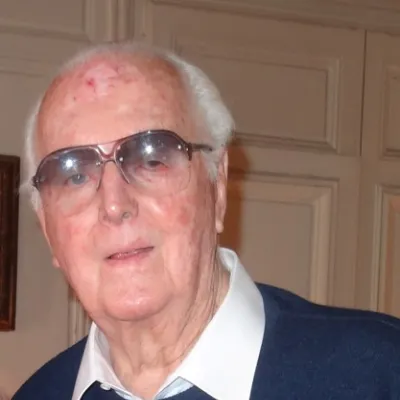
Hubert de Givenchy
Human Design Chart
Biography
His father was the Marquis Lucien Taffin de Givenchy, a military pilot who died on 5 January 1930. Hubert and his older brother Jean-Claude (b. 1925) were raised in the town of Beauvais, 40 miles north of Paris. His mother, Beatrice, was the daughter of the director of the famous Beauvais tapestry works. When Hubert was a young boy, he would accompany his mother on her shopping trips to Paris. He avidly read her fashion magazines. An excellent student, Givenchy sketched during his class lessons. His grandfather treated him to the excitement of exploring the trunks of rare, exquisite fabrics. He decided to enter into the vocation of textiles and fashion.
In 1944, at the age of 17, he set out to Paris to find his first paying position. He landed the job as sketch artist with the couturier, Jacques Fath. Five years later, he was designing for Elsa Schiaparelli. Under the mentoring eye of Schiaparelli, Givenchy decided to break out on his own and open his own fashion house.
His first collection premiered to an enthusiastic audience in February 1952. At the age of 25, Givenchy captured an elegance and beauty in his clothes giving him a phenomenal debut. The affluent French women were dazzled by the simple polish and exquisite taste of his designs. His reputation grew to international circles and soon clients such as Greta Garbo, Marlene Dietrich, Princess Grace, the Duchess of Windsor and Jacqueline Kennedy visited the House of Givenchy at Avenue George V. In 1954, a young actress named Audrey Hepburn asked Givenchy to design her wardrobe for the film, "Sabrina." He was delighted to clothe the actress and at 27 he won the Oscar for costume design in Hollywood.
Human Design Analysis: Hubert de Givenchy as Manifesting Generator 1/3
Manifesting Generator 1/3 — Design at a Glance
Hubert de Givenchy was someone who worked with hybrid energy: he had the constant power of a Generator but also possessed the ability to accelerate processes and skip steps. This design allowed him to quickly draw things into his life, shaping his creative output. The challenge lay in the speed; sometimes these impulses were too rapid, causing important intermediate steps to be missed. In such cases, he had to backtrack and make up for missing elements to avoid frustration – a classic risk of his configuration when inner resonance was off.
Furthermore, his design tended to push multiple projects forward simultaneously as he responded to different impulses. Crucial to his satisfaction was the strategy of not initiating himself but rather waiting and reacting to life first. Only when his Sacral Center gave a clear “yes” – signaling sustained enthusiasm – did he invest his energy. With this correct alignment, he found deep fulfillment in creation. The pressure to focus on one thing alone would have hindered him; instead, he thrived in a playful mode with variety. His strength lay in utilizing these parallel streams as long as inner authority and the Sacral Center remained in harmony, allowing him to effectively use his hybrid nature without falling into frustration due to haste or fragmentation.
Emotional Authority
Hubert de Givenchy's design carried emotional authority, meaning that his defined Emotional Center formed his internal decision-making instance. Regardless of other defined centers, he was subject to an emotional wave of perpetual ups and downs in feelings. The world appeared colored by the current mood; an object could be totally inspiring one moment and completely negative the next. His feeling, however, was only a snapshot, not a final truth claim. Spontaneous decisions based on these first impressions carried the risk of negative consequences.
The mechanics required patience: Hubert de Givenchy had to allow time for decisions to mature. Only through multiple reconsiderations and delays did he gain emotional distance. Intense feelings faded over time, leading to clarity and calmness. This process was especially crucial for long-term life decisions. By enduring in this emotional rhythm, he gained deeper insights rather than being led by passing moods. His inner truth only emerged after the initial wave subsided, necessitating disciplined restraint at important crossroads.
The 1/3 Profile — Investigator / Martyr
Hubert de Givenchy appeared as a researcher and experimenter whose design process was marked by the 1/3 Profile type. For him, this meant an ongoing balance between the deep drive for theoretical knowledge (Line 1) and the necessity to practically test ideas and learn from mistakes (Line 3). His Human Design underscores that his judgment on aesthetics or technology only became absolutely trustworthy once he had intellectually penetrated a matter as well as tested it in real life.
This attitude was supported by specific energetic configurations. Gate 55 in his Line-1 expression emphasized the importance of collaborating with strong forces as an essential aspect of growth. His mind needed this alliance to work effectively and not sink into isolation; Jupiter energy promoted principled expansion of activities. Simultaneously, Gate 34 in his Line-3 expression shaped his approach to power through trial and error. This process served to reach higher levels of self-determination and authentically define his role, where he learned to distinguish misinformation from genuine awakening. His path was thus not pure study but active experimentation, with each failed project seen as a necessary step towards refining his vision.
Single Definition — Defined & Open Centers
Hubert de Givenchy's Human Design shows a tendency towards deeply emotional but time-bound decision-making. As a Generator with a defined Sacral Center, he had an enormous source of vital energy that was only correctly available through reacting to external impulses; initiating steps often led to resistance and exhaustion. His inner authority lay in the Solar Plexus: truth revealed itself to him not immediately, but after waiting out the emotional wave. This created a seductive tension in negotiations – those who waited gained power.
At the same time, a defined Throat Center shaped his way of communicating and manifesting. His voice was a constant expression of his inner truth, coupled with the urge to bring ideas directly into the world. Another defined Root Center provided physical pressure and stress to move forward and establish existential security.
In contrast, his vulnerability showed through open centers. The open Head and Ajna Centers meant no consistent mental focus; he tended to be overwhelmed by doubts or foreign inspirations rather than having his own conceptual answers. His open G Center lacked a firm identity; he adapted to the environment and sought direction from others instead of asserting it himself. The open Heart Center lacked constant willpower – the need to keep promises or prove value was a conditioned trap that could pull him into spirals of self-doubt. Finally, his open Spleen Center was vulnerable to survival fears and spontaneous, unconsidered decisions if he did not rely on his strategy.
Channels for emotional waves, focus and powerful impact.
Hubert de Givenchy appeared as someone who worked through calm, unwavering concentration. His design featured the Channel of Concentration 52-9, a format energy between Root and Sacral Centers. This connection from the Gate of Non-Action (52) to the Gate of Focusing (9) created an inner pressure towards silence. He kept his body and senses still to avoid distractions so that his energy could be precisely directed at details. This logical process required patience; he waited for his Sacral Center to react before acting. Without this focus, the energy felt wasted.
At the same time, he had a powerful presence through the Channel of Charisma 34-20. Here, the physiological drive from the Gate of Power (34) met the Gate of Now (20) in the Throat Center. This combination allowed him to immediately bring generative energy into the world. It was self-reinforcing and kept him active over long periods. Crucial was that he only gave his
Individual Circuitry — Circuit Signature
Hubert de Givenchy's Human Design points towards emotional intensity directly translating into physical action. His Knowledge Circuit connects the Solar Plexus Center with the Root Center through the Channel 'Emotions Free'. This means that emotional waves and inner moods were not just felt but immediately translated as an energetic impulse into action – a pulsating power between feeling and reaction.
Parallel to this, his Understanding Circuit showed a clear focus on logical structuring. The Channel of Concentration connects the Sacral Center with the Root Center. Here, an emotionless ratio worked, turning strategic thinking and future-oriented planning directly into enduring energy. This connection allowed him to consistently and powerfully pursue rational insights independent of momentary moods.
A third aspect was charisma in the Integration Circuit. The Channel of Charisma connects the Throat Center with the Sacral Center. This created a bridge between intuitive knowledge and the ability to manifest it through speech or expression. The strength derived from reacting to life thus translated into visible results.
As Hubert de Givenchy was simply defined, these three circuits – Knowledge, Understanding, and Integration Circuit – formed one continuous energetic group. Root, Sacral, Solar Plexus, and Throat Centers did not act in isolation but as a continuous flow. Emotional impulses, logical strategies, and charismatic expression flowed into each other and shaped his way of forging new paths and initiating change.
Right Angle Cross of the Sleeping Phoenix 1
Hubert de Givenchy's design carried the signature of the right cross of the sleeping phoenix. This configuration was characterized by a deep, often unspoken longing for higher meaning or spiritual purpose beyond the everyday. It wasn't a loud demand but an inner compass guiding him towards paths that transcended purely material achievements.
This cross arises from specific interactions between the emotional center and the motoric center, combined with a strong orientation toward the universal or divine. It endows the person with a certain mystique and a drive for transcendence that often remains hidden – hence the term 'sleeping'. The energy is there but requires the right context to fully unfold. For Hubert de Givenchy, this meant his work was driven not only by technical perfection but by a deep desire to create something timeless and meaningful that touches the soul. It was a quiet dedication to an ideal he might never fully verbalize yet one that shaped his entire existence. This inner dynamic ensured his influence was subtle yet enduring as it operated on a level beyond mere trends or fashion.
Saturn Return · Uranus Opposition · Chiron Return · 2nd Saturn Return — Life Cycles
Hubert de Givenchy's design showed a tendency towards structured confirmation, where years of groundwork condensed into stable results recognized externally through consistent alignment with his inner authority and strategy. This corresponds to the first Saturn return, a cycle in which early life decisions often condense into solid foundations. In 1954, at age 27, Hubert de Givenchy won an Oscar for costume design in the film 'Sabrina'. This success was no coincidence but a typical moment of this cycle: long-term work on his craft found clear external validation here. The first Saturn return often marks the transition from experimental phase to defined position in life where strengths become visible and serve as a solid basis for future developments. For Hubert de Givenchy, this process became tangible through the Oscar award; it not only confirmed his artistic vision but anchored it within a broader cultural context. This recognition served as a catalyst to establish his further career on a solid foundation while always focusing on the authenticity of his expression.
Manifesting Generator · Emotional Authority — Synthesis
Hubert de Givenchy lived a life deeply marked by a connection between inner perception and external expression. His design followed a pattern where sacral energy (defined in the Sacral Center) was filtered through emotional waves (emotional authority) before taking shape through the voice (defined Throat Center). This combination led to a work style characterized by intense scrutiny and experimental freedom (Profile Researcher/Experimentor) – an ongoing search for perfect form through repeated review and refinement. The channel of concentration (52/9) points to a capacity for focusing with great detail on tasks and implementing them purposefully, evident in his work.
A central paradox lay in his nature as a Manifesting Generator: he possessed the energy to quickly initiate things but potentially skipped important steps (Manifestor aspect), while simultaneously there was a need for thorough preparation and emotional maturity (emotional authority). This led to a tension between the impulse for quick action and the necessity of considering decisions over an extended period, manifesting in a pulsation between creative innovation (Knowledge Circuit) and melancholic self-reflection – particularly after proven success (Oscar, 1954).
3 Defined Channels
Incarnation Cross - Right Angle Cross of the Sleeping Phoenix 1
Solar Return
The Solar Return shows the moment when the sun returns to its exact birth position - your personal solar year.
Life Cycles
Discover the life cycles with a detailed triple view (birth chart, cycle chart, composite).
Human Design Profile
- Strategy
- To respond - wait for something to respond to
- Authority
- Emotional Authority
- Profile
- 1/3 - Investigator / Martyr
- Definition
- Single Definition
- Incarnation Cross
- Right Angle Cross of the Sleeping Phoenix 1
- Date of Birth
- 20.02.1927 11:30
- Place of Birth
- Beauvais, France
Frequently Asked Questions
What was Hubert de Givenchy's Human Design type?
What Profile did Hubert de Givenchy have in Human Design?
What Authority did Hubert de Givenchy have?
What incarnation cross did Hubert de Givenchy have?
When was Hubert de Givenchy born?
Discover your own Human Design
Are you also a Manifesting Generator? Find out in a personal reading how to unfold your multi-talents and direct your energy wisely.
More Personalities
Back to overviewAldair

Alizée

Angeli

Arletty

Artus

Baekhyun