
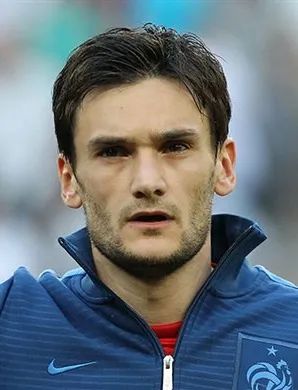
Hugo Lloris
Human Design Chart
Biography
Hugo Lloris — Generator with Profile 1/3
Generator 1/3 — Design at a Glance
Hugo Lloris revealed himself as someone with immense inner endurance and the ability to maintain consistency over long periods. His design indicated a tendency not to exhaust energy through constant initiation of new projects but rather to use it where there was clear internal resonance. As a Generator, he had abundant sacral energy that made him strong and resilient like a workhorse – provided he acted in harmony with his inner compass.
The key to his functioning lay in the strategy of responding. Instead of actively setting impulses from within himself, he waited for signals from his environment. When these confirmed his Sacral Center and produced a clear 'yes', he could respond with full force. This led him to deep satisfaction and a sense of true fulfillment.
If he initiated things without this internal confirmation or acted against his gut feeling impulse, he fell into a state of frustration. His design warned against wasting energy on tasks that did not resonate personally, as this quickly led to burnout. Similarly problematic was being distracted from his main focus while his energy was still present. Therefore, his strength lay in reacting to life and only taking action when his inner center clearly indicated the direction.
Sacral Authority
Hugo Lloris revealed himself as someone who did not make decisions through intellectual deliberation but waited for a physical resonance. His design established that sacral authority – carried by the defined Sacral Center – steered the process. This internal voice expressed itself as gut feeling or surge of energy triggered by external stimuli. Instead of planning, he observed his bodily signals: grunting, humming, or simply saying 'Hmm' marked the flow of energy and signaled lively participation.
This mechanism is specific to the Generator type whose strategy and inner authority are identical, simplifying decision-making fundamentally provided that the Emotional Center remains open. When Hugo Lloris reacted to something that sparked his motor, he felt vital and energized. He tackled tasks with great enthusiasm, fully immersed in action without aimlessness. The goal was joy and satisfaction in the act itself.
Additionally, a supportive Spleen-Authority worked in tandem. With the Spleen Center activated and possibly directly connected to the Sacral Center, this allowed for quick, spontaneous reactions. Hugo Lloris had immediate access to instinctive perception and physical well-being, guiding him reliably from these deep impulses. The combination of sacral vitality and spleen-based speed shaped his way of responding to the world: direct, lively, and without hesitant analysis.
The 1/3 Profile — Investigator / Martyr
Hugo Lloris revealed himself as someone who combined theoretical knowledge with practical experience inseparably. His design indicated a tendency not just to study things but to test them physically – a trait of Profile 1/3, the Researcher and Experimenter. Here arises an internal tension between the drive for complete preparation and the impulse to act. Line 1 brings love for life and the need to understand correcting processes through mindfulness. Without this mental foundation, frustration can arise. Simultaneously, Line 3, with its 'fanatical zeal', drives breaking connections and viewing errors as necessary learning moments. This line is material-oriented and seeks correction through direct confrontation with reality.
When Hugo Lloris deemed something correct or good, it was the result of a rigorous testing process. He had understood the matter intellectually as well as tested it thoroughly in practice. His credibility rested on not accepting unproven theories but only insights that had been validated by 'trial and error'. For him, errors were not failures but essential steps towards security and future-proofing. The fear of false patterns or authorities (Line 18) compelled him to validate everything himself. Thus, the combination of a studious mind and an experimental body resulted in absolute reliability in judgment. His life served continuous correction through experience, with the cyclic quality of the Moon in Line 1 ensuring that this zest for living renewed itself as long as it was lived attentively.
Split Definition — Defined & Open Centers
Hugo Lloris revealed himself as someone with an extremely high and constant energy base. His seven defined centers – Head, Ajna, G, Heart, Sacral, Spleen, and Root – created a strong, self-determined presence with clear identity and direction. This gave him a robust ego and the ability to feel secure in his love for himself without being dependent on others.
However, the central mechanical tension lay in the mental pressure from the defined Head and Ajna Centers. He was under constant internal compulsion to ask questions and form concepts. Since these centers are not connected to the motors, there was no direct energy available to immediately set these thoughts into the world. This state often led to mental worry or inspiration, as it always involved yet-to-be-understood things. Attempting to relieve this pressure through his own initiative would have only resulted in frustration and exhaustion. Instead, his structure required patience: he had to wait for the right answer to come rather than trying to force it.
His ability to act was purely reactive, controlled by the defined Sacral Center. Here he possessed immense vital energy and endurance but could use this energy only when responding to an external invitation. The immediate yes-or-no response of his gut determined whether full power was available. Initiatives from the Head contradicted this mechanism and led to resistance.
He made decisions intuitively-physically through the defined Spleen Center. This authority demanded spontaneous judgments in the "now" based on a non-rationalizable gut feeling for health and safety, without involving the mind. At the same time, his open Solar Plexus Center was vulnerable to absorbing and amplifying emotions from the environment, which made him tend to personalize other people's feelings as his own. His open Throat Center also made him susceptible to the pressure of seeking attention or speaking when actually waiting for invitations to communicate was necessary.
Channels & Gates
Hugo Lloris showed a vital, risk-taking presence. His design laid out an intense, instinctive drive for life, focused on the here and now. This energy came from the Sun in Gate 58/1: The insatiable will to live (Gate 58) met with the player's conscious decision-making freedom (Line 1), making risks appear as a natural part of the living act.
This vitality worked through the channel of Judgment 58-18. It connected Root energy with the Spleen Center, creating a constant impulse to review and correct patterns. It was not mere perfectionism but a deep need to keep life going through precise adaptation – "better and more," driven by the root, tempered by the intuitive perception of the Spleen Center.
Parallel to this, channels of self-determination and intuition shaped him. The channel of Discovery 34-10 connected the Sacral Center with the G Center. It fostered deep self-love and the courage to follow one's own convictions, independent of external expectations. This strength was complemented by the channel of Perfect Form 57-10, which directly transferred intuitive insight (Spleen) into behavior. Thus, spontaneous, appropriate action in the moment emerged, free from unnecessary analysis – an art of survival through pure presence.
The mental backdrop was formed by the channel of Logic 63-4 between Head and Ajna Centers. It ensured healthy skepticism that filtered patterns and sought consistent answers. Skepticism here was not a hindrance but the tool to find logically sustainable truths before sharing them.
Additionally, influences like the channel of Devotion 44-26 (Spleen-Heart) connected instinctive intuition with willpower, and the channel of Power 34-57 (Sacral-Spleen), which protected generative life force through intuitive awareness. Individual gates such as Gate 52 (Concentration) or Gate 17 (Following) fit into this structure, supporting but not dominating the prevailing dynamics of vitality, intuition, and logical scrutiny.
Circuit Signature
Hugo Lloris revealed himself as someone who drew his strength from a deep inner centring. His design connected the Sacral with the Identity Center (Channel 10-34), which directed pulsating life energy directly into his personal radiance. This created a solid, courageous personality with strong individual beliefs that appeared inwardly focused and individualistic. Since the Throat Center was missing, these firm convictions often remained unspoken.
Additionally, two separate segments of the Understanding Circuit were active: Head and Ajna Centers on one hand, and Spleen and Root Centers on the other. This promoted a focused, emotionless ratio and strategic improvement ideas for the future without being directly connected to intuition or instinct.
In the Ego Circuit, a channel connected the Heart with the Spleen Center (Channel 26-44). This emphasised dedication and cooperation within the family framework, where resources were created collectively. Here, there was no direct connection to the sacral life force, which made pauses for regeneration of support capacity necessary.
Finally, a third circuit integrated Identity, Spleen, and Sacral Centers (Channels 10-57 and 34-57). This allowed drawing strength from reacting to life, guiding it through intuitive knowledge, and acting in the present. This configuration strengthened the highest individuality and self-affirmation. Overall, these separate groups of parallel existing forces: inner reinforcement, rational strategy, cooperative dedication, and intuitive integration, without all centers forming a single continuous flow, shaped him.
Right Angle Cross of Service 4
Hugo Lloris' design established a fundamental orientation that was not focused on individual triumph but rather rooted in the responsibility of caring for others. His inner compass always pointed to the fact that personal value is defined by the quality of giving. This alignment stemmed from the configuration 'The Right Service Cross 4'. This aspect describes a deeper motivation to place oneself at the service of community or individuals. It's not about egoistic success but rather fulfillment derived from bearing this burden.
For Hugo Lloris, this meant that his life purpose lay in offering support and carrying others' needs. He did not find validation in isolated achievements but in the awareness of having contributed to the greater good. This mechanism shapes an attitude of surrender where 'I' steps back for the sake of 'We'. Personal value is measured by how reliably and empathetically this service is provided. It's a path that doesn't require external recognition to be valid; inner satisfaction arises solely from acting in service of others. This structure naturally inclined him towards offering protection and stability without losing his core, but rather realizing it through this surrender.
Saturn Return — Life Cycles
In this phase Hugo Lloris was marked by the necessity to reconcile internal values with external expectations. His first Saturn return signified the transition from youth into adult responsibility and identity formation. This cyclical turning point challenged him to develop a stable structure that would support both his personal core and societal demands.
During this period, years of experience condensed into a solid foundation for further development. The confrontation between who he truly was and what was expected of him created space for profound self-reflection. It wasn't an abrupt event but rather a process of consolidation where priorities were reorganized.
This mechanism describes a universal rhythm in Human Design: the first Saturn return serves as a test for the strategy and authority lived up to that point. Those who had previously moved authentically could now see which parts of their identity held true and which needed adjustment. For Hugo Lloris, this meant a phase of clarification where he learned to articulate his own voice more clearly and set boundaries protecting him from overextension.
The energy of this time was less explosive than formative. It laid the groundwork for an adult attitude based on self-acceptance and realistic assessment of one's capabilities. Through this engagement with responsibility, he gained access to a deeper level of his personality that helped him face future challenges with more composure.
Generator · Sacral Authority — Synthesis
A central red thread runs through the design: the deep necessity to learn and gain insights through active engagement with the world (Profile Researcher/Experimenter). This Line 1/3-Dynamics is powered by strong sacral energy (Generator) but tied to conditions – interest and joy in the activity must be present. The defined Head Channel (Logic) strengthens this process through constant questioning and pattern analysis, while the Centering Circuit creates inner stability and clear convictions once a topic has been examined and deemed valid. This combination of energetic capacity, investigative curiosity, and critical thinking shapes a character that grows through experience and continually redefines itself.
The design reveals a paradox between the need for continuous examination (Head Center, Logic Channel) and dependence on vital sacral response (sacral authority). While thought constantly raises questions and analyzes patterns, energy for actual action requires immediate physical approval. This can lead to internal tension as the mind often moves faster than sacral reaction – an ongoing balance between mental exploration and energetic readiness. Fear in the Logic Channel intensifies this by sowing doubt until practical evidence is present.
6 Defined Channels
Incarnation Cross - Right Angle Cross of Service 4
Solar Return
The Solar Return shows the moment when the sun returns to its exact birth position - your personal solar year.
Life Cycles
Discover the life cycles with a detailed triple view (birth chart, cycle chart, composite).
Human Design Profile
- Type
- Generator
- Strategy
- To respond - wait for something to respond to
- Authority
- Sacral Authority
- Profile
- 1/3 - Investigator / Martyr
- Definition
- Split Definition
- Incarnation Cross
- Right Angle Cross of Service 4
- Date of Birth
- 26.12.1986 16:15
- Place of Birth
- Nice, France
Frequently Asked Questions
What is Hugo Lloris' Human Design type?
What Profile does Hugo Lloris have in Human Design?
Which Authority governs Hugo Lloris' decisions?
What incarnation cross is Hugo Lloris assigned to?
When was Hugo Lloris born?
Discover your own Human Design
Are you also a Generator? Find out in a personal reading how to use your sacral energy correctly and discover deep satisfaction.
More Personalities
Back to overviewAaliyah

Aldair

Alexia

Angèle

Anne-Marie

Arcángel
