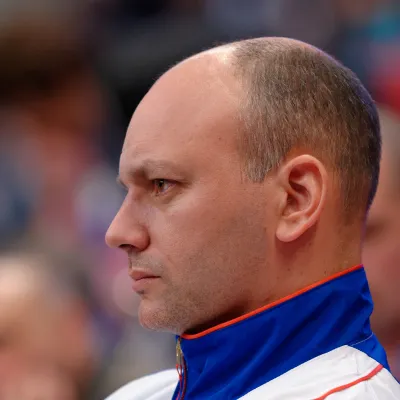
Hugues Obry
Human Design Chart
Biography
Hugues Obry as a Generator 4/1 in Human Design
Generator 4/1 — Design at a Glance
Hughes Obry's design shows a tendency towards great endurance as long as he pursues tasks that resonate with him internally. As a Generator, he has a lot of sacral energy, driving him like a strong workhorse – but only when he uses this power for his own goals. His design highlights two specific pitfalls: Firstly, burnout threatens if he continuously tackles tasks that do not excite him and merely waste his energy. Secondly, he suffers when prevented from working on his heart project, even though he still feels full of power to continue. The successful use of his energy does not depend on initiating but on responding. Hughes Obry is most effective when he waits for signals from life and acts only when his sacral center gives a clear 'yes'. This strategy of waiting and reacting from the gut is crucial. If he follows this pattern, nothing can stop him, and he is rewarded with a sense of deep fulfillment. If he does not live according to this design, for example by constantly initiating himself, he encounters persistent frustration and a lack of energy sooner or later. His strength therefore lies not in pushing forward but in powerfully responding to what is offered.
Sacral Authority
Hughes Obry's design shows a tendency towards direct, body-based decision-making. As a Generator, he possesses sacral authority, which also serves as his strategy. This configuration simplifies his process: He does not need complex analysis but reacts to external stimuli. If an internal confirmation appears – as a gut feeling, a quiet grunting, or a surge of energy – he feels vital and energized. This reaction signals that a task can be performed with joy and inexhaustible energy, without the need for an external goal. His design promotes a life in which he can fully immerse himself in activities. Additionally, his activated spleen center acts as a supporting authority. This gives him quick, spontaneous reaction capability and immediate access to instinctive perception. He can rely on this physical well-being. Crucial is the prerequisite that his emotional center is open. This ensures that the sacral response is not distorted by temporary emotional waves. Thus, Hughes Obry shows himself as someone who gains clarity by listening to his body sounds and uses his energy where it is internally triggered.
The 4/1 Profile — Opportunist / Investigator
Hughes Obry's design shows a tendency towards deep rooting and unchangeable individuality. As a 4/1 profile, the only fixed profile in Human Design, his innate essence is so strongly anchored in him that he hardly deviates from his individual path. This marks the transition from 'I' to 'You'. Hughes Obry shows himself as someone with a big heart that needs to be protected from injuries. Well-meaning impulses for change from the outside lead to him quickly excluding these people from his heart, as he neither can nor wants to change his essence. Others often describe this as stubbornness or a lack of critical thinking, which can impair his self-confidence. The fourth line emphasizes respect and recognition in the network. Hughes Obry recognizes the gifts of others and promotes them, where communication and individuality are crucial for changing the collective. Restrictions are irrelevant; everyone can contribute their unique contribution. The first line, connected with Gate 55, highlights cooperation with strong forces as a key aspect of spiritual growth. Jupiter in elevation emphasizes the expansion of activities through principle-based actions. Without this cooperation, the spiritual process cannot be effective. Hughes Obry seeks out strong forces to strengthen the spirit and maintain harmonious relationships, without guaranteeing further progress. Once he recognizes himself and his life theme, he is like a rock in the surf and can teach others magnificently.
Single Definition — Defined & Open Centers
Hughes Obry exhibited a fundamental disposition characterized by profound bodily intelligence and a persistent inner drive. His defined Sacral Center provided a constant source of vitality and energy, which proved satisfying and sustainable only when he responded to external requests rather than initiating actions himself. This mechanism created a natural persistence: Once his sacral response was affirmative, full power was available for the undertaking, helping him to overcome stagnation until a breakthrough occurred. Simultaneously, his defined Spleen Center functioned as an intuitive authority. It allowed him to make spontaneous, instinctive judgments in the present moment, giving him a strong sense of health, well-being, and the essential. This existential intelligence operated independently of the mind and protected him from false decisions as long as he trusted the subtle warning signals of his body.
Additionally, Hughes Obry possessed a defined Root Center, generating a fixed, adrenalized pressure. This stress served not as a burden but as a driving force to advance materially and maintain the life impulse. In combination with the sacral energy and the spleen intuition, this created a robust foundation for action in the physical world.
At the same time, Hughes Obry was sensitive to his environment through several open centers. His open Head Center meant that he did not have a constant mental focus; he tended to absorb inspirations from the environment and could easily get entangled in doubts or questions that did not originate from him. Similarly, his open Ajna Center was reflected in a flexible but unstable thought process that mirrored concepts and ideas from the environment without identifying them as his own truth. This made him a good observer of intellectual currents, but it required the ability not to drown in the necessity of understanding or answering everything immediately.
His open G Center lacked a fixed identity or direction. Hughes Obry relied on external initiation and the right place to discover who he was in a specific context. He tended to blend with his environment and could feel lost if he was not in the right place, where then the correct identity and love would automatically show themselves. His open Heart Center meant that he was not designed to prove willpower or keep promises to demonstrate his worth. He was vulnerable to the pressure to prove himself or others, which often led to frustration when he realized he did not have the constant energy for it. Instead, he learned not to need to prove his worth.
Finally, his open Solar Plexus acted as a barometer for the emotional mood in his environment. Hughes Obry absorbed and amplified the emotions of others, making him emotionally vulnerable. He tended to personalize foreign emotions and avoid confrontation to avoid being rejected. His health depended on not identifying with these emotional waves and regularly retreating into silence to release conditioning influences and rediscover his own emotional clarity.
Channels for focus, judgment and transformative ambition.
Hughes Obry's design inclined towards precise, almost unshakable concentration, coupled with a deep, instinctive urge to correct and perfect patterns. This disposition was shaped by the Channel of Concentration 52-9, which represents a formative energy: it keeps the focus on details as long as one remains still and keeps distractions at bay, applying logic step by step. Simultaneously, the Channel of Judgment 58-18 worked, linking an insatiable drive to improve life with the ability to recognize what is out of balance and needs correction. This created a dynamic tension between a love for life and the critical examination of what is sustainable.
Another essential aspect was the Channel of Transformation 54-32. It drove ambition through constant effort and talent to improve one's position and be supported by the tribe. Here, a desire for recognition and advancement was motivated by the awareness of the fragility of one's existence and the will to rise through competence.
Additionally, individual Gates were at work: Gate 8 promoted contribution to the group and the activation of uniqueness, while Gate 14 supported skillful power preservation and direction finding. Gate 55 introduced emotional instability and genetic mutation, Gate 59 the genetic strategy of pairing without personal preference. Gate 19 sought resources and spiritual community, Gate 57 intuitive clarity in the here and now. Gate 53 enabled new developmental cycles, Gate 60 the acceptance of limitations as a path to transformation. Together, these energies formed a profile based on logical precision, corrective judgment, and ambivalent, tribal advancement.
Collective Circuitry — Circuit Signature
Hughes Obry's design inclined towards structured, rational analysis, always aimed at concrete improvement and future orientation. This disposition results from his simple definition, which allows the energy of a connected flow. In the Understanding Circuit, his Sacral, Root, and Spleen Centers were connected. This created an 'emotionless ratio,' sharing logical insights free from conditioning. The Channel of Concentration (9-52) provided the focus, while the Channel of Judgment (18-58) secured strategic evaluation. Simultaneously, the Ego Circuit was at work in Hughes Obry, connecting his Spleen and Root Centers. Here, the individual self was not in the foreground, but cooperation and the joint creation of resources. The Channel of Transformation (32-54) promoted a balance between giving and taking as well as mutual support. Since this circuit does not connect to the Sacral Center, the necessity of rest periods for resource regeneration was an integral part of his mechanics. Both circuits shared the Root and Spleen energy, forming a stable, traditional basis for his strategic and cooperative efforts. Hughes Obry thus showed himself as someone who linked rational clarity with the ability for sustainable, communal resource creation, always conscious of the necessary pauses to maintain this power.
Juxtaposition Cross of Contribution
Hugues Obry's Human Design shows a tendency towards a deep, often unconscious search for the meaning of one's own existence, coupled with the drive to bring this meaning into the world through concrete action. This configuration, the Projection Cross of Service, describes a life task that involves not just understanding theoretically what life means, but actively living this understanding and making it accessible to others.
It is a structure that unites intuition and logical thinking. Hugues Obry showed himself to be someone who was eager to decipher the hidden connections of his own essence and to present these insights in a form that is understandable and helpful to others. The focus is on "service": it is not about fame or personal achievement in a narrower sense, but about the quality of giving.
This mechanism often acts as an inner compass. When Hugues Obry acted, it was often an attempt to manifest a personal truth – in the sense of making it visible and effective – through service to others or through the creation of something that transcends the individual. The challenge of this configuration lies in not keeping one's spiritual or philosophical convictions silent, but in translating them into a practical, tangible form. Thus, an inner realization becomes an external offer that can enrich the environment. Hugues Obry was therefore predisposed by his design to build bridges between the abstract and the concrete.
Saturn Return · Uranus Opposition · Chiron Return — Life Cycles
Hugues Obry's Human Design shows a tendency towards extreme focus and endurance, which condensed into long phases of internal preparation. This structure did not accelerate sudden breakthroughs but required patience and persistence in processes until maturity was reached. The first Saturn return marks the transition in Human Design mechanics from the experimental youth phase to the serious acceptance of one's life task. In this cycle, which begins around age 27, previous learning and training often condense into a solid result resting on a firm foundation.
This mechanism was evident in Hugues Obry's life in the year 2000. At the age of 27, he won the silver medal in the individual event at the Olympic Games. This success was no accident but the visible result of years of disciplined work that now bore fruit. The Saturn return acted here as a catalyst, making the internal structure visible externally. It was the moment when the previous phase of preparation culminated in recognized achievement. The design did not support through spontaneous inspiration but through the ability to remain consistent over long periods and withstand pressure. The medal was proof that the internal architecture was stable enough to bear the highest demands. This cycle confirmed the direction Hugues Obry had taken and anchored his self-confidence in his own competence.
Generator · Sacral Authority — Synthesis
A central red thread in this design is the deep rooting in sacral energy (Sacral Center, Sacral Authority) and the resulting need for authentic action. This energy source, which is consistently available, shapes the way life force is experienced – as a constant hum that is nourished through active participation. The profile as Networker/Researcher (4/1) amplifies this aspect, as the deep, unchanging essence (Line 4) brings a natural tendency towards specialization and building connections, which are created through the sacral reaction (Gate 52/9) to true resonance. The ability to focus on details and invest energy in what truly matters seems to be a recurring theme, underscored by the Channel of Concentration.
A central paradox lies in the combination of the deep rooting and the need for authenticity (Line 4) with the ability to generate and focus energy (Sacral Center, Channel 52/9). On one hand, there is the stable, almost unshakable nature that protects against change and foreign influences. On the other hand, there is a strong drive to be active and use energy for activities that bring joy – a seeming contradiction that is resolved through sacral authority by listening to the inner voice that signals when energy is available and when it is not. A documented event that shows this expression of energy and focus is the silver medal in the year 2000.
3 Defined Channels
Incarnation Cross - Juxtaposition Cross of Contribution
Solar Return
The Solar Return shows the moment when the sun returns to its exact birth position - your personal solar year.
Life Cycles
Discover the life cycles with a detailed triple view (birth chart, cycle chart, composite).
Human Design Profile
- Type
- Generator
- Strategy
- To respond - wait for something to respond to
- Authority
- Sacral Authority
- Profile
- 4/1 - Opportunist / Investigator
- Definition
- Single Definition
- Incarnation Cross
- Juxtaposition Cross of Contribution
- Date of Birth
- 19.05.1973 07:45
- Place of Birth
- Enghien, France
Frequently Asked Questions
What is Hugues Obry's Human Design type?
What Profile does Hugues Obry have?
What authority does Hugues Obry have?
What incarnation cross does Hugues Obry have?
When was Hugues Obry born?
Discover your own Human Design
Are you also a Generator? Find out in a personal reading how to use your sacral energy correctly and discover deep satisfaction.
More Personalities
Back to overviewAaliyah

Aldair

Alexia

Angèle

Anne-Marie

Arcángel