
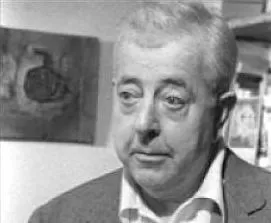
Jacques Prévert
Human Design Chart
Biography
Jacques Prévert — Manifesting Generator with Profile 3/5
Manifesting Generator 3/5 — Design at a Glance
Jacques Prévert's design featured a tendency towards hybrid energy: He had the constant power of a generator but also possessed manifestor qualities through a connection between his motor centers and Throat Center. This created an internal conflict between the need to respond to impulses and the ability to leapfrog steps quickly.
As a manifesting generator, he could swiftly draw things into his life, but tended to skip important stages in the process. When these steps were missing, he often had to backtrack and make up for them, which caused frustration – the specific non-self theme of this type. Additionally, he frequently reacted to multiple impulses simultaneously and started several projects at once. Without clear internal consent, his creative drive was prone to turning into frustration.
The strategy involved only acting when his Sacral Center clearly said "yes." Regular checks to see if his authority still approved of the paths he had begun were essential. When correctly applying this approach to life, he drew deep satisfaction from his work. Then, advice like "finish one thing before starting another" was not helpful; instead, variety and a playful mode characterized his effective creative power.
Emotional Authority
Jacques Prévert's design inclined towards emotional wave motion. His inner authority was the defined emotional center, which always takes precedence in Human Design mechanics, regardless of other defined centers in the chart. This meant that his perception and decision-making were always colored by the current mood.
The mechanics of this authority describe a process of rising and falling emotions. What seemed absolutely right or inspiring at one moment could appear negative in the next. Jacques Prévert was subject to this rhythm: his immediate feeling was often only a provisional snapshot, not the final truth. Quick, spontaneous decisions made from an emotional peak thus appeared risky and potentially harmful to his life path.
Instead of acting immediately, his configuration required patience and distance. The strategy involved letting decisions ripen, ideally by sleeping on them multiple times. Over time, intense feelings subsided, emotional distance gained strength, and a deeper clarity emerged. This process of calm was crucial for long-term directional setting, as it ensured that not just the passing emotion but also his deeper essence chose the direction. Jacques Prévert thus revealed himself to be someone who arrived at authentic insights through temporal suspension and inner tranquility.
The 3/5 Profile — Martyr / Heretic
Jacques Prévert revealed himself as someone who initially had to try everything for himself before offering solutions to others. His design featured the Profile 3/5, the Experimenter and Hero. Line 3 of the Adventurer shaped a stance of radical openness: He believed nothing in advance but sought concrete evidence instead. Skepticism towards abstract promises was normal; satire served as a humorous response to this pessimism. From his own experiments and failures, he learned what worked.
This practical experience became the foundation for his role on Line 5, the Hero. Jacques Prévert presented his rich treasure trove of life experiences to others who felt drawn to this authenticity. Society projected high expectations onto him, which increased his appeal but also created pressure. His creativity was especially evident in crisis times as a source of practical solutions. Resilience helped him handle interference and maintain his creative process despite eccentric tendencies. Failing in public could be painful, yet it was precisely this transparency that made his stories credible. He was no abstract theorist but a storyteller who learned from life itself and shared this knowledge with others.
Split Definition — Defined & Open Centers
Jacques Prévert's Human Design profile suggests a tendency towards clear, identity-strong communication that stems from deep inner conviction. His defined G Center gave him a firm sense of direction and self-love; he knew who he was without being determined by external expectations. This internal security flowed into his defined Throat Center, allowing his voice not just to repeat thoughts but to convey a reliable, authentic message. He spoke from the Higher Self, enabling him to act with ease and honesty.
As a Generator, he had a powerful sacral energy source that required reaction. His strategy was to wait for life to initiate action before responding from the gut with a 'Yes' or 'No'. This protected his vitality from exhaustion caused by false initiatives. Additionally, he possessed emotional authority in the Solar Plexus Center. Truth revealed itself not in the moment but after experiencing an emotional wave. He learned to practice patience and make decisions only when emotions were clear, rather than reacting impulsively to highs or lows.
At the same time, he was vulnerable to mental confusion due to his open Head and Ajna Centers. Without constant inner inspiration, he tended to engage with others' questions or seek answers that weren't his own theme. This could lead to an internal monologue of uncertainty where he tried to grasp the unknown rationally rather than trusting his emotional clarity. His open Heart Center lacked consistent willpower; he successfully avoided making promises to prove his worth and learned that self-worth isn't dependent on performance. Similarly, his open Spleen Center made him susceptible to survival fears and the temptation to cling to unhealthy situations for a sense of security. Instead, he developed wisdom in distinguishing intuition from conditioned fear. His open Root Center absorbed external stress, which he didn't misinterpret as personal pressure but observed and released to prevent burnout.
Channels for self-acceptance and emotional openness.
Jacques Prévert's Human Design profile suggests a tendency towards deep self-acceptance coupled with a strong need for emotional authenticity in communication. This attitude stems from the Channel of Investigation 34-10, connecting the Sacral Center with the G Center. Gate 34 provided inner strength to hold onto personal convictions while Gate 10 initiated behavior based on self-love and honor. This channel fostered an individual note that allowed him to act independently and lead others by authentically reacting from his sacral authority, showing how one can live their uniqueness without imposing it on others.
Parallel to this, the Channel of Openness 22-12 between Solar Plexus and Throat Centers also played a role. It connected the emotional wave (Gate 22) with cautious articulation (Gate 12). This configuration meant that his expression – whether through words or art – was strongly dependent on his current mood. Gate 22 brought passion and melancholy, while Gate 12 ensured this openness only manifested when emotional energy was high enough to have a transformative effect on the environment. He patiently waited for the right emotional moment to use his voice and thus inspire new states of awareness in others.
Additionally, prioritized gates shaped his profile: Gate 13 promoted reflection on time and collective memory, while Gate 7 projected leadership patterns. Gate 1 emphasized creative mutation in the here and now, and Gate 2 ensured receptivity towards evolutionary directions. Further influences came from Gates 42 (closure processes), 5 (rhythm and habits) as well as Gates 9 (detail work), 35 (change through interaction), and 45 (tribal energy). Together they formed a design based on authentic self-discovery and mood-driven, profound communication.
Individual Circuitry — Circuit Signature
Jacques Prévert's Human Design profile suggests an inclination towards inner stability coupled with a specific form of expression. As someone with split definition, his energy consisted of two parallel streams not directly connected to each other. One stream linked the Sacral Center to the Identity Center via the Channel of Investigation (10-34). This gave him internal consistency and clear self-perception but without direct connection to the Throat Center; thus, his deepest convictions often remained unspoken or hard to verbalize. The second stream connected the Solar Plexus with the Throat Center through the Channel of Openness (12-22). Here, the emotional wave directly influenced expression: feelings were not processed but immediately articulated acoustically and impulsively. This separation created a tension between stable yet silent inner depth and an emotionally driven, often melancholic or creative urge to express. The Energy Circuit expressed itself primarily through this emotional openness – new impulses entered the world not through rational planning but by speaking emotions directly. The Centering Circuit colored his entire being with a pulsating individual presence less dependent on external validation than on preserving his identity. Both systems coexisted: one anchored him internally, while the other let his emotions flow freely.
Right Angle Cross of the Sphinx 1
Jacques Prévert's design indicated a tendency towards deep and often painful confrontations with his own fate. He was someone who not only carried the burden of life but transformed it into something meaningful through intensive inner processing. This attitude stemmed from the configuration of the right cross of the Sphinx 1. In Human Design mechanics, this pattern describes a specific energy: integrating personal trials and suffering experiences rather than denying or superficially covering them up. For Jacques Prévert, this meant that his authenticity depended on how honestly he faced his own wounds and the challenges of his path. It was not passive endurance but an active, though arduous, work on the soul. Through constant reflection and enduring dissonances, he developed a profound wisdom born from lived experience rather than theoretical knowledge. His design challenged him to acknowledge and transform the dark aspects of his being, giving his presence a unique depth and groundedness. This mechanism shaped his entire essence: distilling a clear yet often melancholic truth from the pain of existence was no coincidence but a direct result of this energetic structure in his chart.
Saturn Return · Uranus Opposition · Chiron Return · 2nd Saturn Return — Life Cycles
Jacques Prévert's design indicated a tendency towards cyclical, structural turning points. His life did not follow arbitrary fluctuations but rhythmic phases of consolidation and change. The first Saturn return marked the time when early impulses condensed into a viable life structure. It was not just a transition but a moment of anchoring in which he learned to carry his own authority.
Later came the Uranus opposition, bringing often sudden insights or necessary breaks to dissolve old patterns. Jacques Prévert did not appear as a victim of change but someone who used these tensions to gain new perspectives. It was a phase of liberation from outdated elements that allowed him to act more authentically.
With his Chiron return, his design reached its blooming phase. In this fulfillment cycle, the individual's incarnation cross increasingly unfolded in life. For Jacques Prévert, meaning and purpose became experiential; it was not healing old wounds but realizing his deepest purpose. His life task revealed itself in full clarity.
The second Saturn return concluded this arc. It brought another deepening of structure and wisdom. Jacques Prévert did not experience these phases as isolated events but as a connected rhythm of building, change, and fulfillment. His design thus presented a clear pattern: through structural discipline and open adaptability, his life became a coherent expression of his inner architecture.
Manifesting Generator · Emotional Authority — Synthesis
Jacques Prévert lived a lifestyle marked by a constant interplay between internal reaction and external expression. His defined Sacral Center (from the design perspective) provided a constant energy source, but he did not react to it initiatively but rather filtered through emotional waves (emotional authority). This combination of sacral responsiveness and emotional maturity led to a deep engagement with his own behavior (Channel 34-10), which he then carried as a unique voice outward – a process facilitated by the connection between Sacral Center and Throat Center. His profile as an experimenter/hero and rescuer underscored this tendency to collect experiences and pass them on in the form of stories, always encouraged by the pursuit of individuality within the knowledge circuit.
A central paradox shaped Jacques Prévert's design: the tension between the impulse for quick action (Manifesting Generator) and the necessity of emotional clarification. He possessed the ability to initiate things quickly, yet his emotional authority required patience and sleeping on decisions. This discrepancy may have led to an internal conflict between the desire for immediate implementation and the realization that deeper processes require time. The right cross of the Sphinx 1 suggests he accepted this tension as part of his life path and transformed it in his work.
2 Defined Channels
Incarnation Cross - Right Angle Cross of the Sphinx 1
Solar Return
The Solar Return shows the moment when the sun returns to its exact birth position - your personal solar year.
Life Cycles
Discover the life cycles with a detailed triple view (birth chart, cycle chart, composite).
Human Design Profile
- Strategy
- To respond - wait for something to respond to
- Authority
- Emotional Authority
- Profile
- 3/5 - Martyr / Heretic
- Definition
- Split Definition
- Incarnation Cross
- Right Angle Cross of the Sphinx 1
- Date of Birth
- 04.02.1900 19:00
- Place of Birth
- Neuilly-sur-Seine, France
Frequently Asked Questions
What was Jacques Prevert's Human Design type?
What Profiles did Jacques Prevert have?
What Authority did Jacques Prevert have?
What incarnation cross did Jacques Prevert have?
When was Jacques Prevert born?
Discover your own Human Design
Are you also a Manifesting Generator? Find out in a personal reading how to unfold your multi-talents and direct your energy wisely.
More Personalities
Back to overviewAlain-Fournier

Aldair

Alizée

Angeli

Arletty

Artus
